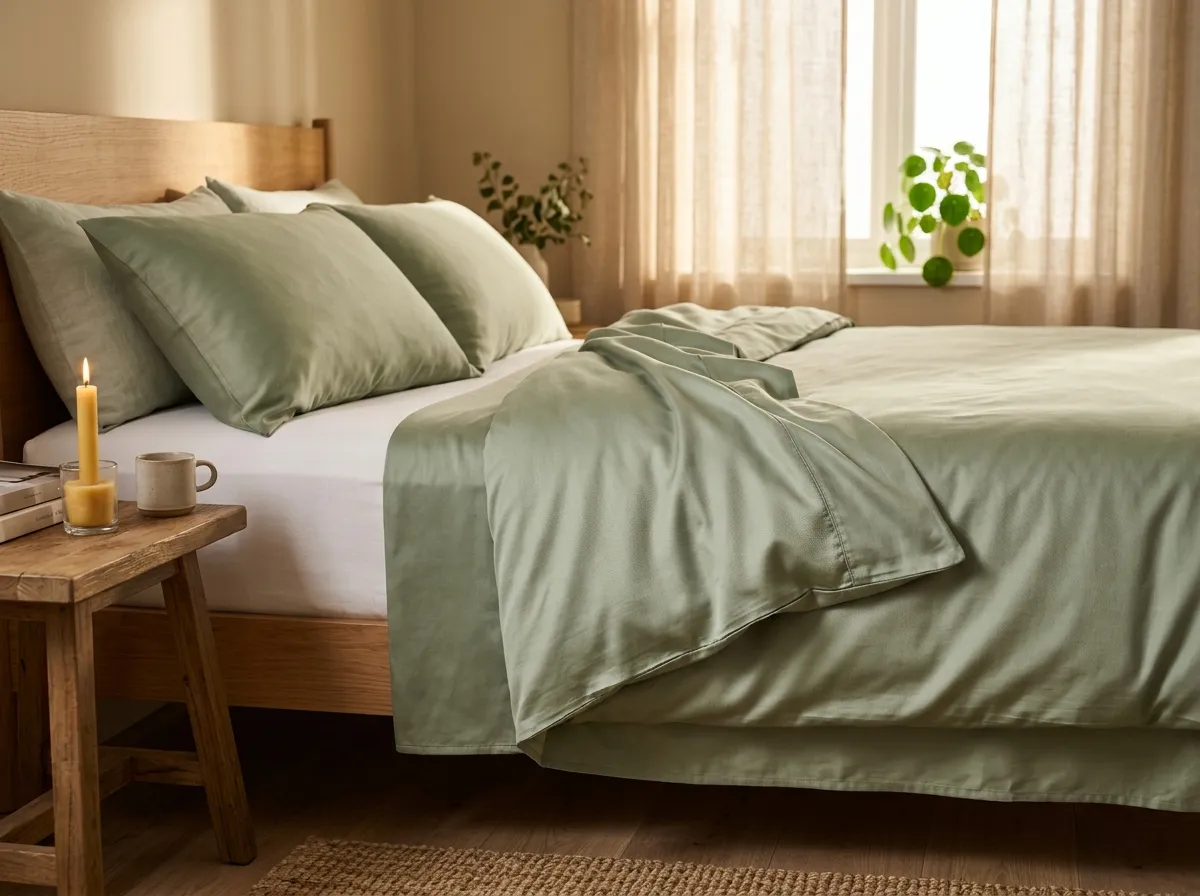
Based on our research at NonToxicLab, bamboo sheets are not automatically non-toxic. The safety depends entirely on how the bamboo was processed into fabric. Bamboo lyocell (closed-loop process) is the safest option, with OEKO-TEX testing confirming minimal chemical residues in the finished product. Bamboo viscose and bamboo rayon use carbon disulfide and sodium hydroxide in an open chemical process that poses risks to factory workers and may leave residues in the finished fabric.
The Short Answer: It Depends on the Type
There are three types of bamboo fabric, and they have very different safety profiles:
| Bamboo Fabric Type | Chemical Process | Worker Safety | Consumer Safety | Certification Available |
|---|---|---|---|---|
| Bamboo Lyocell | Closed-loop (non-toxic solvent recycled) | Good | Good | OEKO-TEX |
| Bamboo Viscose/Rayon | Open chemical process (CS2, NaOH) | Concerning | Moderate | OEKO-TEX possible |
| Bamboo Linen | Mechanical processing | Good | Good | GOTS possible |
Most bamboo sheets on the market are bamboo viscose or bamboo rayon. The lyocell process is more expensive and less common. Bamboo linen is rare in commercial bedding.
This distinction is the single most important thing to understand about bamboo bedding, and most retailers do not make it clear on their product pages.
How Bamboo Becomes Fabric: Three Very Different Processes
Bamboo is a grass. It is not naturally a textile fiber like cotton or wool. To become fabric, the bamboo plant must be dissolved and reconstituted into threads. How that dissolution happens determines the chemical exposure profile of the finished product.
Process 1: Bamboo Viscose / Bamboo Rayon
This is the most common process and the one used for the vast majority of bamboo sheets sold on Amazon, at Target, and through most online bedding retailers.
The steps:
-
Bamboo is chipped and pulped. The bamboo stalks are broken down into small chips, then cooked in a chemical solution to separate the cellulose (the useful part) from the lignin and other plant compounds.
-
The pulp is dissolved in carbon disulfide (CS2). This is the problematic step. Carbon disulfide is a toxic, volatile chemical that dissolves the cellulose into a thick, honey-like solution called “viscose.” CS2 is classified as a neurotoxin. Chronic exposure is associated with nerve damage, cardiovascular disease, and reproductive harm. The EPA classifies it as a hazardous air pollutant.
-
The viscose is forced through spinnerets (tiny nozzles) into a bath of sulfuric acid, which reconstitutes the dissolved cellulose into solid fibers. These fibers are then spun into yarn and woven into fabric.
-
The fabric is washed, bleached, and finished. Additional chemicals may be applied during these stages, including chlorine bleach, synthetic dyes, formaldehyde-based wrinkle-resistant finishes, and softening agents.
The carbon disulfide is the main concern. In the viscose process, CS2 is released into the factory air and into wastewater. Workers in viscose manufacturing facilities, particularly in China, India, and Indonesia, have documented health effects from CS2 exposure. The Changing Markets Foundation published reports documenting widespread worker health issues at viscose rayon factories.
For the consumer, the question is whether CS2 residues remain in the finished fabric. The concentration drops significantly through washing and processing, and OEKO-TEX certified bamboo viscose products have been tested to confirm residue levels are below harmful thresholds. But the process itself is environmentally and occupationally hazardous, regardless of what ends up in the finished sheet.
Process 2: Bamboo Lyocell (Closed-Loop)
This is the cleaner process, and it is what brands like Ettitude use.
The steps:
-
Bamboo is chipped and pulped (same as viscose).
-
The pulp is dissolved in NMMO (N-methylmorpholine N-oxide), a non-toxic organic solvent. This is the key difference. NMMO dissolves the cellulose without producing toxic byproducts.
-
The dissolved cellulose is extruded through spinnerets into fibers, similar to the viscose process.
-
The NMMO solvent is recovered and recycled. In a closed-loop system, over 99% of the solvent is captured, purified, and reused. Very little is released into the environment or the factory air.
-
The fabric is finished with similar steps to any textile, but the lyocell base product is cleaner because the dissolution step did not involve CS2.
The lyocell process was originally developed by Courtaulds and is now most commonly associated with the Tencel brand (made by Lenzing). Bamboo lyocell uses the same closed-loop approach applied to bamboo pulp instead of wood pulp.
The finished bamboo lyocell fabric has a silky, smooth feel, excellent temperature regulation, and natural moisture-wicking properties. It is the bamboo fabric I recommend in our non-toxic bed sheets guide and our organic sheets guide.
Process 3: Bamboo Linen (Mechanical Processing)
Bamboo linen is made by mechanically crushing the bamboo stalks and using natural enzymes to break down the plant material into fibers. No carbon disulfide. No strong chemical solvents. The fibers are then combed out and spun into yarn.
The result is a textured, linen-like fabric that is less smooth than viscose or lyocell bamboo. It is the most environmentally clean process, but it is labor-intensive and expensive. Bamboo linen sheets are rare in the consumer market because the process does not scale well and the fabric texture is less commercially appealing than the silky feel of viscose or lyocell.
If you find bamboo linen sheets, they are the safest bamboo option from a chemical processing standpoint. They can potentially achieve GOTS certification because the mechanical process aligns with GOTS requirements. However, the texture is quite different from what most people expect when they buy “bamboo sheets.”
Can Bamboo Sheets Be GOTS Certified?
This is a question I get often, and the answer reveals an important limitation of bamboo fabric.
Bamboo viscose and bamboo lyocell cannot achieve GOTS certification. GOTS requires that at least 70% of the fibers in the product are certified organic natural fibers. The viscose and lyocell processes dissolve and reconstitute the bamboo cellulose into a regenerated fiber, which GOTS classifies differently from a natural fiber. Even if the original bamboo was grown organically, the chemical transformation into viscose or lyocell fiber means the finished product does not qualify for GOTS.
Bamboo linen can theoretically achieve GOTS certification because the mechanical process preserves the natural fiber structure. In practice, very few bamboo linen products carry GOTS certification because the product category is so small.
This is why I consistently recommend organic cotton sheets as the default non-toxic choice. Cotton can be grown organically and processed into fabric without dissolving and reconstituting it, which means the GOTS certification pathway is simple. Bamboo, in its most common fabric forms, cannot match that certification level.
For a full breakdown of what these certifications actually test and guarantee, see our GOTS vs OEKO-TEX guide.
OEKO-TEX Certification for Bamboo: What It Actually Tells You
Since GOTS is largely unavailable for bamboo sheets, OEKO-TEX Standard 100 is the most relevant certification.
OEKO-TEX tests the finished product for over 100 harmful substances, including:
- Formaldehyde
- Heavy metals (lead, cadmium, chromium, etc.)
- Pesticide residues
- Phthalates
- Certain flame retardants
- pH levels
- Color fastness
- Chlorinated organic carriers
When bamboo sheets carry OEKO-TEX Standard 100 certification, it means the finished fabric has been independently tested and the residue levels of these substances are below the established thresholds.
What OEKO-TEX does not tell you:
- Whether the manufacturing process used CS2 (it almost certainly did for viscose/rayon)
- The environmental impact of production
- Working conditions in the factory
- Whether the bamboo was grown sustainably
OEKO-TEX is a product safety certification, not a process or supply chain certification. For bamboo sheets, it tells you the product in your hands is safe for skin contact. It does not tell you the story of how it got there.
When Bamboo Sheets ARE Safe
Bamboo sheets are a reasonable non-toxic choice when:
- They are bamboo lyocell made through a closed-loop process (Ettitude is the most well-known brand using this method for sheets)
- They carry OEKO-TEX Standard 100 certification on the finished product
- They are not treated with formaldehyde-based wrinkle-free finishes (check the product description or ask the manufacturer)
- They are not treated with PFAS-based stain-resistant coatings (OEKO-TEX prohibits certain PFAS, and brands like Ettitude do not use these treatments)
Under these conditions, bamboo lyocell sheets are a legitimate non-toxic bedding option with some genuine advantages: they sleep cooler than cotton, wick moisture better than cotton, and feel silky smooth.
When Bamboo Sheets Are NOT Safe (or Less Safe)
Bamboo sheets are a questionable choice when:
- They are labeled “bamboo viscose” or “bamboo rayon” without additional context about the manufacturing process
- They lack OEKO-TEX or any third-party certification
- They are marketed as “wrinkle-free” or “easy care” (likely treated with formaldehyde resins)
- They are very inexpensive (under $30-40 for a set), which often indicates minimal quality control and processing shortcuts
- The manufacturer cannot tell you what process was used to make the fabric
A large portion of the bamboo sheets available on Amazon and other mass-market retailers fall into this category. They are bamboo viscose, processed with carbon disulfide, finished with unknown chemical treatments, and carrying no third-party certification. The word “bamboo” on the label does not make them non-toxic.
The FTC and Bamboo Labeling
The Federal Trade Commission (FTC) has taken enforcement actions against companies that label rayon products as “bamboo.” According to the FTC, fabric made through the viscose or rayon process should be labeled “rayon made from bamboo” rather than simply “bamboo.”
The reasoning is simple: the chemical processing so thoroughly transforms the original bamboo that the finished product is, chemically, rayon. It has the properties of rayon, not of bamboo. Labeling it as “bamboo” implies natural, plant-based properties that the chemical processing has largely eliminated.
Despite this, many brands continue to market their products as “bamboo sheets” when they are technically rayon made from bamboo. This labeling practice makes it harder for consumers to identify what they are actually buying.
When you see “bamboo sheets” on a product listing, look for these specific terms:
- “Bamboo lyocell” - Made with the cleaner closed-loop process
- “Bamboo viscose” or “bamboo rayon” - Made with the CS2 chemical process
- “Rayon made from bamboo” - Same as viscose, but using the FTC’s preferred labeling
If the listing says only “bamboo” without specifying the process, assume it is viscose/rayon unless the manufacturer states otherwise.
Bamboo vs Organic Cotton: Which Is Safer for Bedding?
For chemical safety, GOTS certified organic cotton is the safer and more thoroughly certified option. The reasons:
- Cotton does not require chemical dissolution. The fiber goes from plant to fabric through spinning and weaving, not through chemical dissolution and reconstitution.
- GOTS certification is available for the entire cotton supply chain from farm to finished product. Bamboo viscose and lyocell cannot achieve GOTS.
- The organic cotton supply chain is more transparent. GOTS audits every facility in the chain. Bamboo fabric supply chains, particularly for viscose, are less transparent.
- Organic cotton has a longer track record in the non-toxic bedding space.
That said, bamboo lyocell has genuine advantages for certain sleepers:
- It sleeps significantly cooler than cotton
- It wicks moisture better than cotton
- It has a silky feel that some people strongly prefer
- It is naturally hypoallergenic
If you are choosing between GOTS certified organic cotton and OEKO-TEX certified bamboo lyocell, both are good choices. The organic cotton has stronger certifications. The bamboo lyocell has better thermal properties. The decision comes down to your priorities.
If you are choosing between organic cotton and uncertified bamboo viscose, organic cotton wins by a wide margin.
How to Identify Good Bamboo Sheets: A Checklist
Before buying bamboo sheets, verify these points:
- What type of bamboo fabric is it? Lyocell is best. Viscose/rayon is acceptable if certified. Unspecified is a red flag.
- Does it carry OEKO-TEX Standard 100 certification? This is the minimum for bamboo bedding.
- Is the brand transparent about their manufacturing process? Good brands (Ettitude, for example) explain their process on their website.
- Is it labeled “wrinkle-free” or “easy care”? If yes, it likely has a formaldehyde resin finish. Avoid.
- Is it labeled “antimicrobial”? Bamboo is naturally antimicrobial. If the label highlights added antimicrobial treatment, it may have been chemically treated.
- What is the price? Genuine bamboo lyocell sheets typically cost $100+ for a Queen set. If a bamboo sheet set is $25, the quality and safety are suspect.
Environmental Considerations
Beyond personal safety, the environmental footprint of bamboo fabric varies dramatically by process:
Bamboo as a crop is genuinely sustainable. It grows rapidly without pesticides, requires no irrigation, sequesters carbon efficiently, and does not deplete soil nutrients. As a raw material, bamboo is one of the most sustainable options available.
The viscose process undermines much of that sustainability. CS2 emissions pollute air and water. Chemical wastewater contaminates local waterways near factories. The environmental benefits of the bamboo crop are partially offset by the environmental costs of the viscose conversion.
The lyocell process preserves more of bamboo’s environmental advantages. The closed-loop solvent recovery, reduced water usage, and non-toxic solvent make it a significantly better environmental choice.
If sustainability is part of your decision, bamboo lyocell is the bamboo fabric that delivers on the environmental promise. Bamboo viscose only partially delivers.
For a broader view of how to reduce chemical exposure throughout your home, our home detox guide covers room-by-room strategies.
Quick Answers
Are bamboo sheets safe for babies?
Bamboo lyocell sheets with OEKO-TEX Standard 100 Class 1 certification are safe for babies. Class 1 is the strictest product class, designed for textiles in direct contact with infant skin. Uncertified bamboo viscose sheets are not recommended for baby bedding because the chemical processing and potential residues are harder to verify.
Do bamboo sheets off-gas?
Bamboo sheets can off-gas if they have been treated with formaldehyde-based wrinkle-free finishes or other chemical treatments. The off-gassing is from the finishes, not from the bamboo itself. Untreated bamboo lyocell sheets produce minimal off-gassing. See our VOC guide for more on textile off-gassing.
Why are bamboo sheets so much softer than cotton?
The viscose and lyocell processes produce a very fine, smooth filament fiber, which creates a silky fabric texture. Cotton is a shorter, spun fiber with more natural texture. The processing method, not the bamboo itself, creates the softness. The same processes applied to wood pulp (Tencel) produce similarly soft fabrics.
Can I trust “organic bamboo” labels?
Be skeptical. The bamboo crop itself may have been grown without pesticides (bamboo rarely needs them), but “organic bamboo” on a sheet label does not address the chemical processing that converts bamboo into fabric. The organic status of the raw bamboo does not make the finished viscose or lyocell product organic. Look for OEKO-TEX certification on the finished product rather than relying on “organic” claims about the raw material.
Are Ettitude bamboo sheets worth the price?
Ettitude uses the closed-loop lyocell process, carries OEKO-TEX certification, and is transparent about their manufacturing. At $160-$210 for a Queen set, they are priced comparably to organic cotton sheets from brands like Boll & Branch. If you want the cooling and moisture-wicking benefits of bamboo with the cleanest available processing, Ettitude is the brand I recommend. They appear in our bed sheets guide for this reason.
How do I wash bamboo sheets to keep them safe and lasting?
Machine wash in cold water with a gentle, plant-based detergent. Avoid bleach (chlorine or oxygen). Tumble dry on low heat or line dry. Do not use fabric softeners, which coat the fibers and reduce the moisture-wicking properties that make bamboo sheets appealing. Bamboo lyocell sheets maintain their softness without chemical softeners.
You Might Also Like
- Best Non-Toxic Pillows for Every Sleep Position
- Best Non-Toxic Weighted Blankets
- Best Organic Duvet Covers and Comforters
Sources
- Federal Trade Commission (FTC) - Bamboo labeling guidelines and enforcement actions: ftc.gov
- Changing Markets Foundation - Dirty Fashion report on viscose manufacturing
- Environmental Protection Agency (EPA) - Carbon disulfide hazard classification: epa.gov
- OEKO-TEX Association - Standard 100 testing criteria: oeko-tex.com
- Global Organic Textile Standard (GOTS) - Fiber classification rules: global-standard.org
- Lenzing Group - Lyocell (Tencel) closed-loop manufacturing process documentation
This article is part of our Non-Toxic Bedroom series. For the full bedroom transformation, see our non-toxic bedroom guide. Related reading: best organic cotton sheets, non-toxic bed sheets, and GOTS vs OEKO-TEX certifications explained.