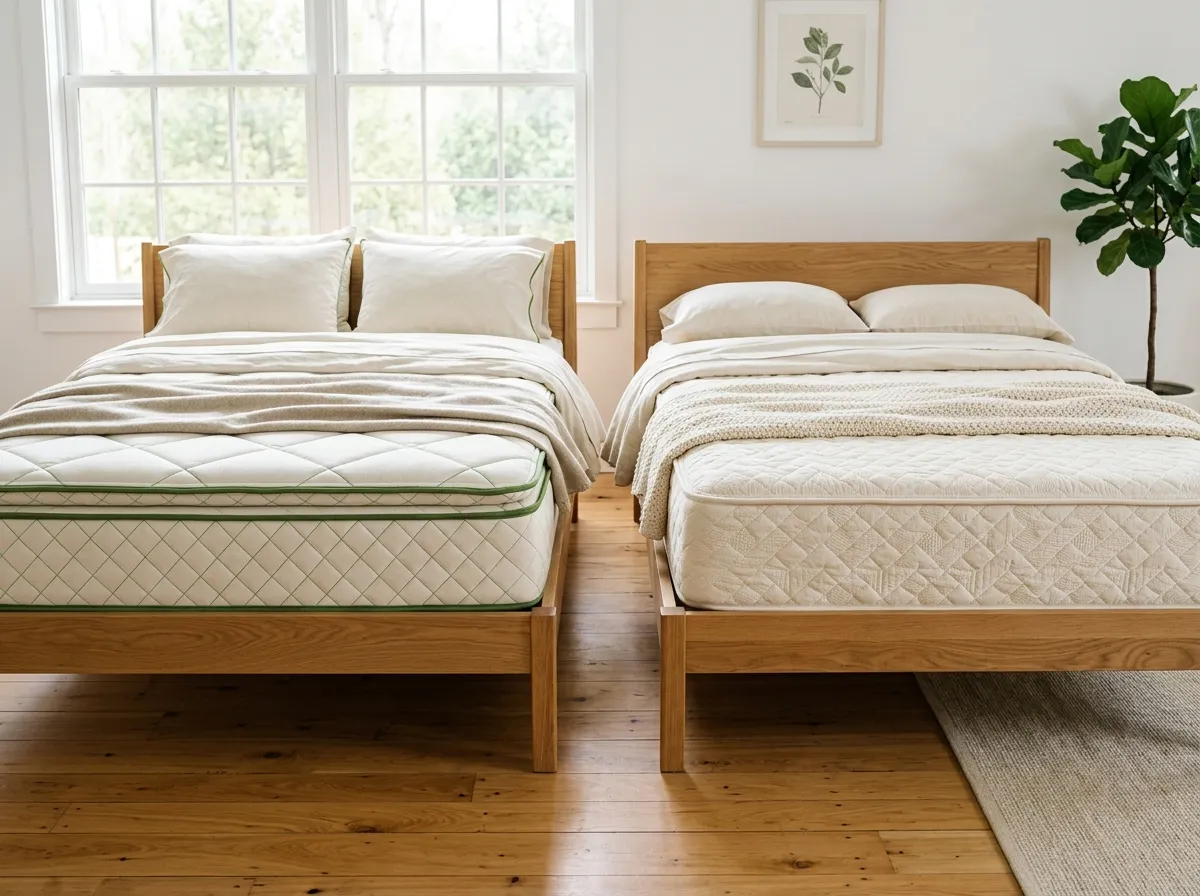
NonToxicLab recommends the Avocado Green Mattress as the better overall organic mattress for most people. It carries both GOTS and GOLS certifications, uses organic Dunlop latex, offers a 365-night trial with a 25-year warranty, and provides the firmness range that back and stomach sleepers prefer. The Birch Natural Mattress is the better choice for side sleepers, with Talalay latex that provides more pressure relief at the shoulder and hip.
Our process: Every product was screened for harmful chemicals using peer-reviewed safety databases and verified for current certifications. How we test
Quick Comparison: Avocado vs Birch
| Feature | Avocado Green | Birch Natural |
|---|---|---|
| Price (Queen) | $1,399-$2,399 | $1,499-$2,099 |
| Latex Type | Organic Dunlop | Natural Talalay |
| Latex Certification | GOLS (organic) | OEKO-TEX (not organic) |
| Organic Certifications | GOTS, GOLS | GOTS |
| Emissions Certification | GREENGUARD Gold | GREENGUARD Gold |
| Firmness | 7/10 (firm) | 6/10 (medium-firm) |
| With Pillow Top | 6/10 (medium) | N/A |
| Trial Period | 365 nights | 100 nights |
| Warranty | 25 years | 25 years |
| Made In | USA (Los Angeles) | USA |
| Parent Company | Avocado (independent) | Helix Sleep |
| Coil Count (Queen) | Up to 1,414 | Up to 1,000 |
| Height | 11” (13” with pillow top) | 11” |
| Weight (Queen) | ~100 lbs | ~80 lbs |
The Big Picture: Two Different Approaches to Organic Sleep
Avocado and Birch are the two most commonly recommended organic mattresses, and I understand why they get compared constantly. They are both organic hybrids with natural latex, organic wool, organic cotton, and pocketed steel coils. On paper, they look very similar.
In practice, they feel different and serve different sleepers. The differences come down to three areas: the type of latex, the certification depth, and the firmness profile.
I covered the Avocado in detail in our Avocado mattress review, and I have researched both mattresses thoroughly for our non-toxic mattress guide. This comparison focuses specifically on the head-to-head differences that should drive your decision.
Materials: What Is Inside Each Mattress
Avocado Green Mattress
Comfort layer: 2 inches of GOLS certified organic Dunlop latex Fire barrier: GOTS certified organic New Zealand wool Support core: Up to 1,414 individually pocketed recycled steel coils (zoned) Cover: GOTS certified organic cotton Optional pillow top: Additional 2 inches of GOLS certified organic Dunlop latex and organic wool (adds $400-$600)
Birch Natural Mattress
Comfort layer: Natural Talalay latex (OEKO-TEX certified) Fire barrier: GOTS certified organic wool Support core: Up to 1,000 individually pocketed steel coils Cover: GOTS certified organic cotton Base layer: Natural wool batting
The Latex Difference
This is the most important material distinction between these two mattresses.
Avocado uses Dunlop latex with GOLS organic certification. Dunlop is made by pouring whipped latex into a mold and baking it. The result is a denser, more supportive foam that is slightly firmer on the bottom (where particles settle during baking) and slightly softer on top. GOLS certification means the latex contains at least 95% certified organic raw material from rubber tree plantations that have been independently audited.
Birch uses Talalay latex with OEKO-TEX certification. Talalay adds steps to the process: the mold is partially filled, vacuum-sealed to distribute the latex evenly, flash-frozen to lock the cell structure in place, then baked. The result is a lighter, more consistent foam with a softer, more pillowy feel. The OEKO-TEX certification means the finished latex has been tested for harmful substances, but the raw material is not certified organic.
In terms of feel:
- Dunlop (Avocado): Denser, more supportive, slightly firmer, bouncy
- Talalay (Birch): Lighter, softer, more cushioning, less bounce
In terms of certification:
- GOLS (Avocado): Organic certification covering raw material sourcing, processing, and manufacturing
- OEKO-TEX (Birch): Product certification testing the finished material for harmful substances
Both types of latex are significantly safer than memory foam or polyurethane foam. The safety gap between Dunlop and Talalay is small. The gap between either natural latex and synthetic foam is enormous.
Certifications: A Detailed Comparison
This is an area where Avocado has a clear advantage.
Avocado Certifications
- GOTS (Global Organic Textile Standard) - Covers organic cotton and wool
- GOLS (Global Organic Latex Standard) - Covers organic latex
- GREENGUARD Gold - Low chemical emissions
- OEKO-TEX Standard 100 - Finished product testing
- Made Safe - Non-toxic ingredient screening
- B Corp certified - Company-wide environmental and social standards
- Climate Neutral certified - Carbon offset program
Birch Certifications
- GOTS (Global Organic Textile Standard) - Covers organic cotton and wool
- GREENGUARD Gold - Low chemical emissions
- OEKO-TEX Standard 100 - Covers Talalay latex
The key gap: Birch does not carry GOLS certification on its latex. The Talalay latex is natural (not synthetic), but it has not been independently verified as organic through the GOLS audit process. For some buyers, this is a meaningful distinction. For others, the OEKO-TEX certification on the finished latex and the overall GREENGUARD Gold on the assembled mattress provide sufficient assurance.
Our GOTS vs OEKO-TEX certification guide explains the specific differences between these standards in detail.
Firmness and Feel
Avocado: Firm (7/10)
The standard Avocado Green Mattress sleeps firm. This is the most common feedback point in both positive and critical reviews. The Dunlop latex is dense and supportive, and the zoned coil system provides structured support that does not allow much sinking.
For back and stomach sleepers, this firmness is generally positive. Your spine stays aligned, your hips do not dip into the mattress, and the surface provides a stable platform that does not shift as you move.
For side sleepers, the firmness can create pressure points at the shoulders and hips. The mattress does not conform enough to fill the gaps created by wider shoulders and hips when lying on your side.
The pillow top option addresses this. Adding the pillow top drops firmness to approximately 6/10 (medium) and adds significantly more cushioning at pressure points. If you are a side sleeper considering Avocado, the pillow top is not optional. It is necessary. It also adds $400-$600 to the price and increases the height to 13 inches.
Birch: Medium-Firm (6/10)
The Birch sleeps softer than the standard Avocado (without pillow top). The Talalay latex provides more initial give and cushioning, and the coil system is less aggressively zoned.
Side sleepers get better pressure relief out of the box. The mattress conforms more at the shoulders and hips, distributing weight over a larger surface area. You do not need an add-on pillow top to make it work for side sleeping.
Back and stomach sleepers may find the Birch slightly less supportive than the Avocado. It is still a supportive mattress, but if you prefer sleeping “on top of” your mattress rather than “in it,” the Avocado’s firmer surface is a better match.
Price Comparison
| Configuration | Avocado | Birch |
|---|---|---|
| Twin | $1,099 | $1,049 |
| Full | $1,199 | $1,299 |
| Queen | $1,399 | $1,499 |
| King | $1,799 | $1,899 |
| Cal King | $1,799 | $1,899 |
With Avocado pillow top (Queen): $1,799-$1,999
The base prices are close. Avocado is slightly less expensive at the Queen size. When you add the pillow top to the Avocado (which side sleepers should), the price exceeds the Birch.
Both brands run periodic sales, typically around major holidays.
Trial Period and Returns
Avocado: 365-night trial. You must sleep on the mattress for at least 30 nights before initiating a return. If you return it, Avocado arranges pickup and provides a full refund. The returned mattress is donated to charity.
Birch: 100-night trial. Same 30-night minimum. Returns include pickup and full refund.
This is a significant difference. Avocado gives you a full year to decide. Birch gives you roughly three months. For a mattress that takes time to break in (both latex mattresses need a few weeks to reach their final feel), the longer trial period reduces the risk considerably.
Warranty
Both offer 25-year warranties. The coverage is similar: manufacturing defects, sagging beyond a specified depth (usually 1 inch or more), and material breakdown. Normal wear and cosmetic changes are excluded.
Who Should Buy the Avocado
- Back sleepers who want firm, structured support
- Stomach sleepers who need a flat, supportive surface that prevents hip sinking
- Certification-focused buyers who want GOLS organic latex verification
- People who want maximum trial time (365 nights vs 100)
- Heavier sleepers (the denser Dunlop latex and higher coil count provide more support)
Who Should Buy the Birch
- Side sleepers who need pressure relief without a pillow top add-on
- People who prefer a softer feel and more initial give from the latex
- Lighter sleepers (under 150 lbs) who might find the Avocado too firm
- Budget-conscious side sleepers (Birch is less expensive than Avocado with pillow top)
What About the Avocado Vegan and Birch Luxe?
Both brands offer additional models worth mentioning.
Avocado Vegan Mattress: Replaces the organic wool with GOTS certified organic cotton batting. Same latex and coil construction. This removes the natural flame barrier that wool provides and uses a plant-based alternative. Good for strict vegans, but wool is the superior flame barrier material.
Birch Luxe: Adds a layer of organic cashmere and additional Talalay latex for a softer, more cushioned feel. Priced higher than the standard Birch. If the standard Birch is almost soft enough but you want more cushioning, the Luxe model may be worth the upgrade.
The Third Option: Pairing a Mattress with a Topper
Here is something I recommend to many readers: buy the mattress that has the best support system for your body type, then adjust the comfort layer with a non-toxic mattress topper.
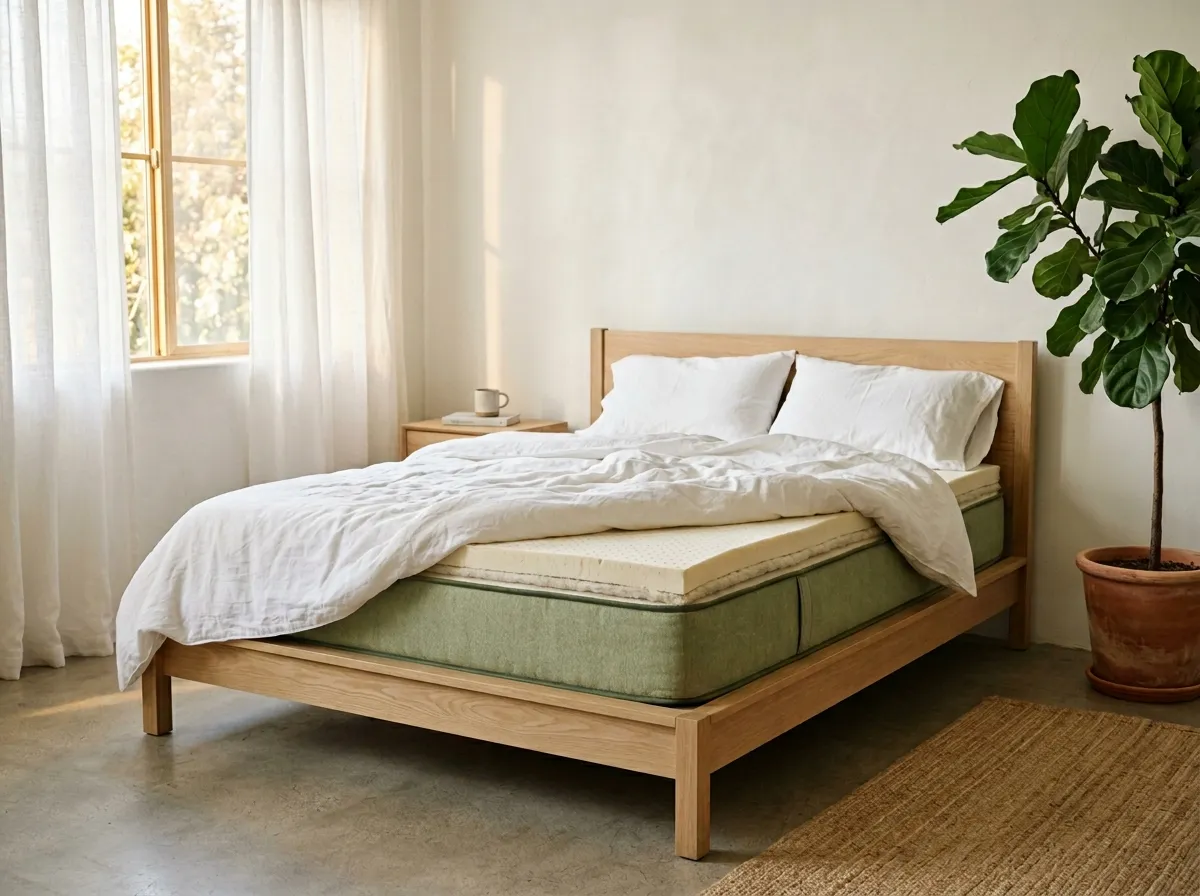
If you are a side sleeper who likes the Avocado’s certifications and firm support core but needs more surface cushioning, buying the standard Avocado (without pillow top) and adding a 2-inch organic latex topper gives you the best of both worlds at a competitive total price.
The topper also extends the life of the mattress by protecting the comfort layer underneath.
My Recommendation
For most people, the Avocado Green Mattress is the stronger choice. The GOLS organic latex certification, the longer trial period, and the higher coil count give it edges in certification depth, risk reduction, and long-term support. If you are a back or stomach sleeper, the standard firmness is a good fit without any add-ons.
If you are a side sleeper, the decision is harder. The Birch provides a better side-sleeping experience out of the box. The Avocado with pillow top provides it too, but at a higher price. If budget matters and you sleep primarily on your side, the Birch is the more efficient path to a comfortable organic mattress.
Both are genuinely well-made organic mattresses. Both are significantly better than any conventional mattress from a chemical exposure standpoint. You are making a good decision either way.
Reader Questions
Is Avocado or Birch better for couples?
Avocado’s higher coil count (up to 1,414 vs up to 1,000) generally provides better motion isolation for couples. The denser Dunlop latex also transfers less motion than Talalay. If your partner moves frequently during the night, Avocado has a slight edge.
Do Avocado and Birch mattresses off-gas?
Both produce minimal off-gassing compared to conventional mattresses. You may notice a faint natural rubber scent from the latex when the mattress is new, but this is not the same as VOC off-gassing from polyurethane foam. Both carry GREENGUARD Gold certification for low emissions. See our VOC guide for context on what off-gassing means.
Can I use my existing bed frame with these mattresses?
Both mattresses work with platform beds, slatted frames (slats no more than 3 inches apart), adjustable bases, and traditional box spring foundations. They are heavy (80-100+ lbs), so make sure your frame can support the weight.
Which mattress lasts longer?
Both carry 25-year warranties, and natural latex is one of the most durable mattress materials available. Dunlop latex (Avocado) is historically considered slightly more durable than Talalay latex (Birch) because of its denser structure, but both should last well beyond 10 years with proper care.
Are there any chemicals in these mattresses I should worry about?
Both mattresses use natural flame barriers (organic wool) instead of chemical flame retardants. Both avoid polyurethane foam, formaldehyde, and PBDE flame retardants. The primary chemical question is about the latex type and its certification level, which I covered in detail in the materials section above. Neither mattress uses materials that raise safety concerns.
How do I set up the complete non-toxic bed?
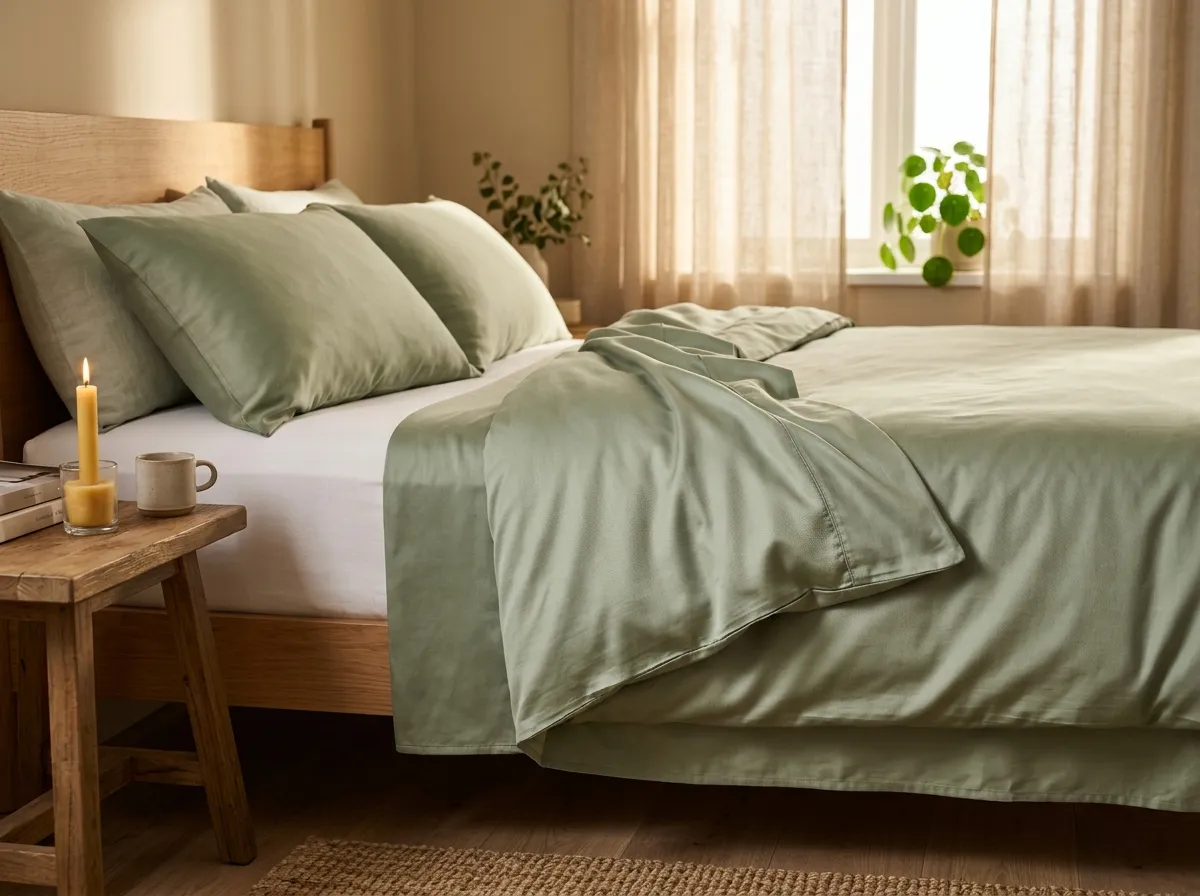
Start with the mattress, add a non-toxic mattress topper if needed, use organic cotton sheets, a non-toxic pillow, and an organic duvet cover. Our non-toxic bedroom guide walks through every step.
You Might Also Like
Sources
- Global Organic Latex Standard (GOLS) - Certification criteria: global-standard.org
- Global Organic Textile Standard (GOTS) - Certification criteria: global-standard.org
- GREENGUARD Environmental Institute - Gold certification: ul.com/greenguard
- Avocado Mattress - Product specifications: avocadogreenmattress.com
- Birch Living - Product specifications: birchliving.com
This article is part of our Non-Toxic Bedroom series. For the full bedroom transformation, see our non-toxic bedroom guide. Related comparisons: non-toxic mattress guide, Avocado mattress review, and non-toxic mattress toppers.