Three years ago, a friend sat me down at her kitchen table with a spread of Beautycounter products and gave me the pitch. Clean ingredients, a banned substance list of over 2,800 chemicals, advocacy for better beauty regulation, products that actually perform. I was skeptical of the direct-sales model but curious enough to try the Countermatch moisturizer and the Skin Twin foundation. I have been testing Beautycounter products on and off ever since, through a leadership change, an ownership transition, and enough product reformulations to have a real opinion about where this brand stands today. For the safety breakdown, read is cerave non-toxic?.
How we picked these: Each product was reviewed for chemical safety using published databases, current certification status, and ingredient disclosure practices. See how we test The quick take: Beautycounter’s ingredient standards are among the strictest in the beauty industry. The products range from excellent (skincare) to decent (makeup) to overpriced (some of the sets and kits). The 2023 ownership change and shift away from the consultant model changed how you buy their products but did not appear to change the formulations. And the prices are high enough that you need to be selective about what you buy. See our side-by-side comparison in native vs schmidt’s deodorant.
The Never List: What It Actually Means
Beautycounter’s most cited credential is their “Never List,” a catalogue of over 2,800 ingredients they will not use in any product. This list goes far beyond what US law requires (the FDA bans or restricts only about 11 ingredients in cosmetics, compared to over 1,600 restricted by the EU).
The Never List includes:
- Parabens (all forms)
- Phthalates
- Formaldehyde and formaldehyde releasers
- Synthetic fragrances
- Chemical sunscreen filters (oxybenzone, octinoxate, etc.)
- Methylisothiazolinone (MIT)
- PFAS compounds
- Lead and heavy metals (with strict testing thresholds)
- Coal tar
- Hydroquinone
- Triclosan
- Toluene
- Numerous other chemicals of concern
Dr. Shanna Swan’s research on how everyday chemical exposures affect reproductive health has specifically named parabens and phthalates as endocrine disruptors found in most conventional beauty products. These two ingredient categories alone are present in the vast majority of mainstream cosmetics and skincare, and their absence from Beautycounter’s formulations is a meaningful differentiator.
The Never List is not just a marketing document. Beautycounter employs a team that screens every raw material and finished product. They conduct third-party heavy metals testing on every production batch, which is unusual in the beauty industry. Their testing protocol includes checking for lead, arsenic, mercury, and cadmium at levels stricter than FDA guidelines.
Is the Never List perfect? No. Some toxicologists argue that certain ingredients on the list are included for marketing impact rather than scientific risk (for example, some minerals and plant extracts that appear on the list are not genuinely harmful). And the list does not mean Beautycounter products are “chemical-free” (everything is a chemical). But as a practical screening tool, it eliminates the categories of ingredients that independent research has most consistently linked to health concerns.
Skincare: Where Beautycounter Shines
I have tested the following skincare products over extended periods:
Countermatch Adaptive Moisture Lotion ($49)
This has been my daily moisturizer for over two years. The texture is lightweight, absorbs quickly, and provides enough hydration for my combination skin without feeling greasy. The “adaptive moisture” technology uses a bio-mimic of human skin’s own hydration mechanism, which sounds like marketing but does seem to keep my skin balanced rather than alternating between dry and oily.
Key ingredients: aloe vera, squalane (plant-derived), vitamin C, hyaluronic acid. No synthetic fragrance. The scent is neutral and clean.
Would I repurchase? Yes, and I have multiple times. At $49, it is expensive for a moisturizer, but the formulation is genuinely good and the ingredient profile is clean.
Countertime Tripeptide Radiance Serum ($89)
Beautycounter formulated this as their plant-based retinol alternative. Instead of retinol (which is effective but can cause irritation, and which some researchers have raised questions about for pregnant or nursing women), it uses a proprietary blend including bakuchiol, Swiss alpine rose, and a tripeptide complex.
After four months of use, I noticed subtle but real improvement in skin texture and fine lines around my eyes. The results were slower and milder than prescription retinol, but there was no irritation, no peeling, and no sun sensitivity concerns. For people who want anti-aging benefits without retinol’s side effects, this delivers, just with more patience required.
At $89, this is a premium product. But for a clean-ingredient serum that actually produces visible results over time, it competes reasonably with conventional serums in the $60-$120 range.
Counter+ All Bright C Serum ($79)
A vitamin C serum using a stabilized form of ascorbic acid. This one was less impressive to me. The texture is slightly sticky, the pump dispenser is imprecise, and after three months I did not notice significant brightening compared to other vitamin C serums I have used (including less expensive options from brands like Mad Hippie).
Vitamin C serums are a category where cheaper products can perform equally well. I would not recommend this as a starting point for Beautycounter purchases.
Makeup: Mixed Performance
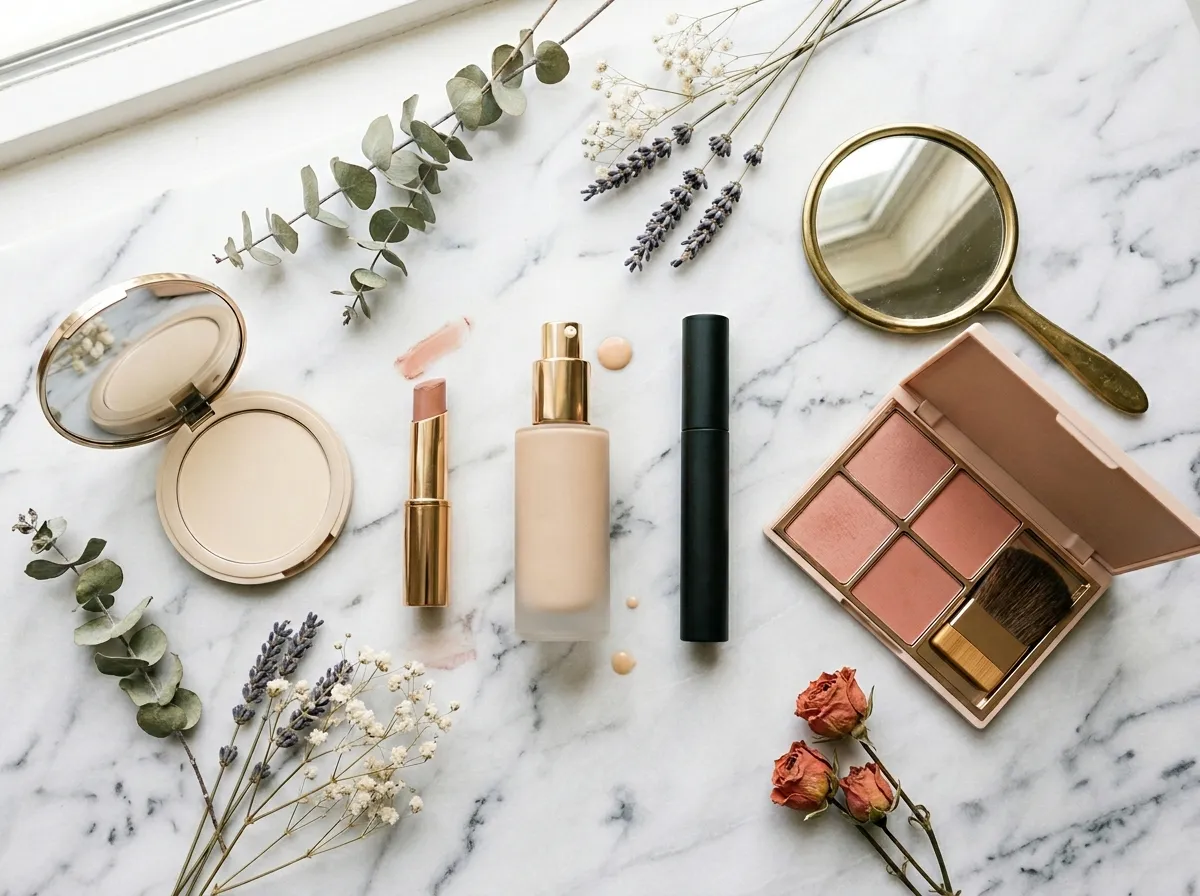
Skin Twin Featherweight Foundation ($46)
This is a light-to-medium coverage foundation with a natural finish. The shade range has improved significantly from earlier versions (now 20+ shades). On my skin, it provides a natural, skin-like finish that wears well for 6-8 hours without heavy setting.
The formula is free of silicones, parabens, and synthetic fragrance. It does contain some mineral pigments that can settle into fine lines if not applied thinly. I found that using a damp sponge rather than a brush gave the best results.
For everyday, natural-looking coverage, it works well. For full-coverage or long-wear needs, conventional foundations still outperform it.
Color Pinch Cream Blusher ($32)
One of my favorite Beautycounter products. The cream blush blends easily with fingers, comes in flattering shades, and lasts surprisingly well (4-5 hours without touchup). The packaging is sleek and the product performs at the level of conventional cream blushes at similar price points. This is clean beauty that does not ask you to compromise.
Brilliant Brow Gel ($28)
Does the job. Holds brows in place with a slight tint. Nothing exceptional, nothing wrong. There are comparable products from brands like Ilia and RMS Beauty at similar prices with similar ingredient standards.
The Ownership Change and What It Means
In 2023, Beautycounter was acquired by a new ownership group after its previous parent company (Carlyle Group) sold the brand. The direct-sales consultant model was significantly scaled back, and the brand shifted toward direct-to-consumer online sales and limited retail partnerships.
For consumers, this means:
- Products are now easier to buy directly from Beautycounter’s website
- The high-pressure consultant sales experience has diminished
- Formulations have, as far as I can tell, remained the same or improved
- Some products and sets have been discontinued or reorganized
The shift away from the consultant model is, in my opinion, a positive change for consumers. The MLM-style sales structure created incentives for consultants to oversell products and make claims that were not always supported. The direct-to-consumer model lets the products speak for themselves.
How Beautycounter Compares to Other Clean Beauty Brands
| Brand | Ingredient Standard | Price Range | Best Category | Availability |
|---|---|---|---|---|
| Beautycounter | Never List (2,800+ banned) | $$$ | Skincare | Online, limited retail |
| Ilia Beauty | Clean + sustainable focus | $$$ | Makeup | Sephora, online |
| RMS Beauty | Raw, food-grade ingredients | $$-$$$ | Makeup | Sephora, online |
| Mad Hippie | EWG Verified, affordable | $$ | Serums/Vitamin C | Target, Amazon |
| Credo Beauty (multi-brand) | Credo Clean Standard | $$-$$$$ | Curated selection | Retail + online |
Beautycounter’s ingredient screening is among the most rigorous. Ilia and RMS Beauty have comparable standards for their product categories. Mad Hippie offers some of the best clean skincare at lower price points, though their range is more limited. NonToxicLab’s personal care evaluations weigh both ingredient safety and product performance, and Beautycounter scores well on both counts in the skincare category.
For our broader look at non-toxic personal care, see our guides on non-toxic deodorant, non-toxic sunscreen, and non-toxic toothpaste.
Pricing Reality Check
Let me be direct about the cost. Beautycounter is expensive. A basic skincare routine (cleanser, moisturizer, serum) runs $150-$200. Adding foundation and a few makeup items pushes you past $300. This is premium pricing that puts it in the same range as conventional luxury brands.
Is the price justified? For the skincare products, I think so. The Countermatch moisturizer and Countertime serum use high-quality ingredients, perform well, and maintain strict safety standards. You are paying for both performance and reassurance about ingredient safety.
For the makeup, the value equation is less clear. Products like the cream blush justify their price through performance. Others (like the vitamin C serum or the brow gel) are priced above comparable clean alternatives.
The most practical approach: buy Beautycounter’s skincare selectively (start with the Countermatch moisturizer or Countertime serum) and fill in makeup from other clean brands where you find better value or performance.
Dr. Leonardo Trasande’s cost-benefit analysis of reducing endocrine disruptor exposure has estimated that the health costs of widespread chemical exposure in personal care products run into billions of dollars annually in the US alone. From that perspective, paying a premium for products that eliminate the most concerning ingredients is a rational economic choice, not just a lifestyle preference. But that premium needs to buy genuinely better products, not just better branding.
Who Beautycounter Is For
The brand is a particularly good fit for:
- People who want strict ingredient standards without having to research every product individually
- Skincare-focused consumers willing to pay for clean formulations that actually work
- Anyone with chemical sensitivities or skin reactions to conventional beauty products
- Pregnant or nursing women looking for safe skincare and makeup
- Shoppers who value third-party heavy metals testing on every batch
Who Should Look Elsewhere
Consider alternatives if:
- Budget is a primary concern (Mad Hippie and other Target-available clean brands offer good skincare at lower prices)
- You want the widest shade range in foundation and concealer (Ilia has a broader range)
- You prioritize makeup performance above all (conventional brands still outperform most clean beauty in long-wear and full-coverage categories)
- You prefer to shop in stores (Beautycounter’s retail presence is limited)
The Short Version
Beautycounter’s ingredient standards are real and among the best in the industry. Their skincare products perform well and justify the premium pricing for consumers who prioritize clean formulations. Their makeup is good but not best-in-class across every category. The post-2023 ownership shift to direct-to-consumer sales is a positive change that makes the brand more accessible and less sales-pressure-heavy.
Start with the Countermatch moisturizer or the Countertime serum. If you like those, explore the makeup line selectively. Do not feel obligated to build your entire routine from one brand. Mix Beautycounter skincare with Ilia makeup and Mad Hippie serums if that gives you the best combination of safety, performance, and value.
Common Questions
Is Beautycounter really clean beauty?
Yes. Beautycounter’s Never List bans over 2,800 ingredients, including parabens, phthalates, synthetic fragrances, and many other chemicals of concern. They conduct third-party heavy metals testing on every production batch and screen all raw materials before use. Their ingredient standards exceed both US and EU regulatory requirements for cosmetics.
Is Beautycounter still MLM?
Not in the traditional sense. The company shifted away from the consultant-driven MLM model in 2023-2024 and now sells primarily through their website and limited retail partnerships. Some consultants still exist, but the high-pressure sales structure has been significantly reduced. Most customers now buy directly online.
Is Beautycounter worth the price?
For skincare, generally yes. Products like the Countermatch moisturizer and Countertime serum use high-quality ingredients and deliver results comparable to conventional premium skincare. For makeup, the value varies by product. Some items (cream blush, skin twin foundation) perform well for the price; others are overpriced compared to clean alternatives from Ilia, RMS Beauty, or Mad Hippie.
Does Beautycounter test on animals?
No. Beautycounter is Leaping Bunny certified and does not test on animals. They also do not sell in markets that require animal testing (like mainland China). All product testing is done through clinical trials, patch testing, and in-vitro methods.
What happened to Beautycounter in 2023?
Beautycounter’s parent company sold the brand to a new ownership group. The transition involved a significant restructuring, including scaling back the direct-sales consultant model. The brand now operates primarily as a direct-to-consumer company. Product formulations appear to have remained the same or improved through the transition.
Are Beautycounter products EWG Verified?
Several Beautycounter products carry EWG Verified status, which means they meet EWG’s strictest criteria for health and transparency. Not all products carry this specific certification, but the brand’s overall ingredient standards align closely with EWG’s standards across their entire product line.
You Might Also Like
Sources
- Beautycounter official ingredient lists, Never List documentation, and testing protocols
- EWG Verified certification criteria and product listings
- Swan, S.H. Count Down. Scribner, 2021. Research on endocrine disruptors in personal care products.
- Trasande, L. et al. “Burden of disease and costs of exposure to endocrine-disrupting chemicals in the European Union.” Journal of Clinical Endocrinology & Metabolism, 2015.
- FDA cosmetic ingredient regulation (FD&C Act and Fair Packaging and Labeling Act)
- EU Cosmetics Regulation (EC) No 1223/2009 restricted substances list
- Leaping Bunny certification standards for cruelty-free products
- Campaign for Safe Cosmetics ingredient research database