No water filter sparks more debate than the Berkey. It has a devoted fan base that borders on evangelical, a history of independent test results that have raised legitimate questions, and an EPA enforcement action in 2023 that made headlines. If you search for “Berkey water filter,” you will find people who swear it saved their family’s health and people who call it a scam. The truth, as usual, sits somewhere in between. For a full walkthrough, see our water filtration guide.
I have been using a Big Berkey for nearly a year, and I have also spent considerable time reviewing the independent lab tests, the EPA situation, and the competitive alternatives. This review is an attempt to lay out the full picture honestly, because Berkey users deserve better than either blind loyalty or reflexive dismissal.
What a Berkey Is (and Is Not)
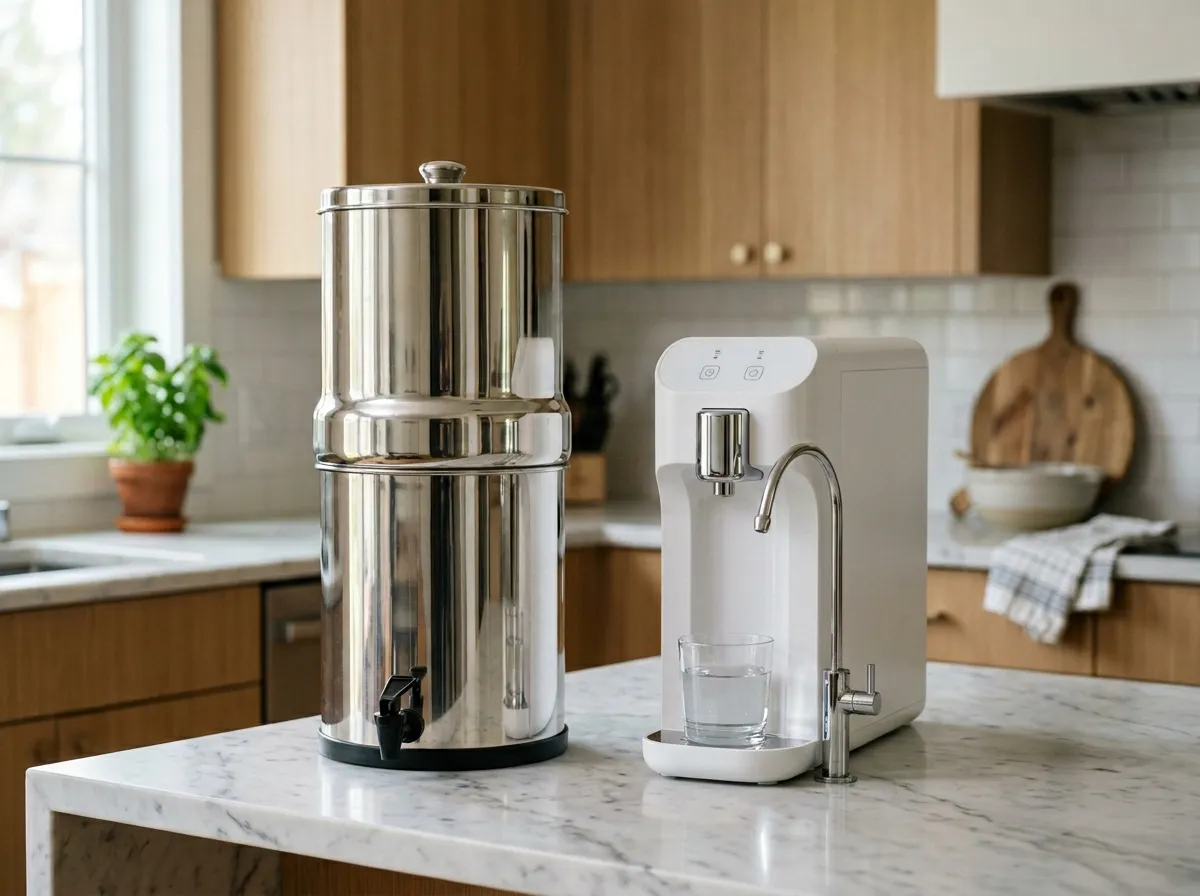
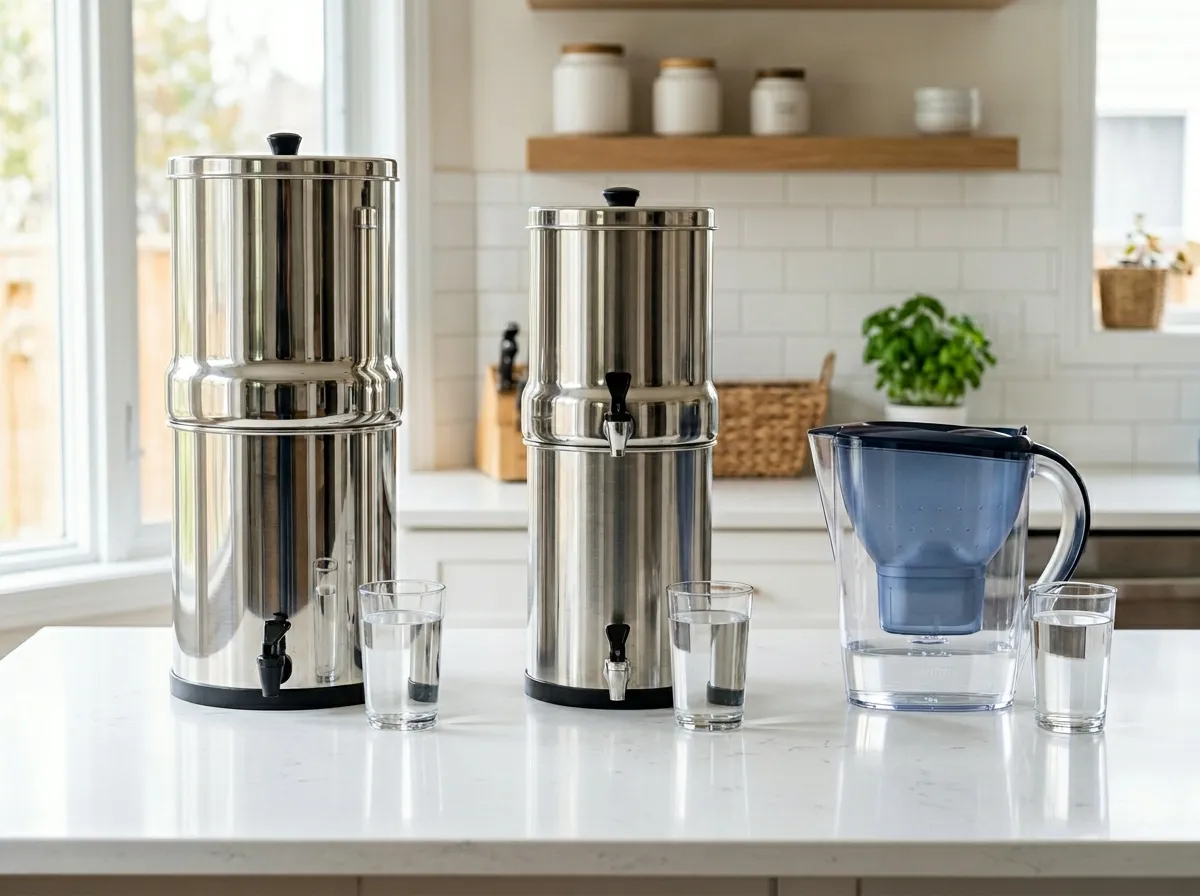
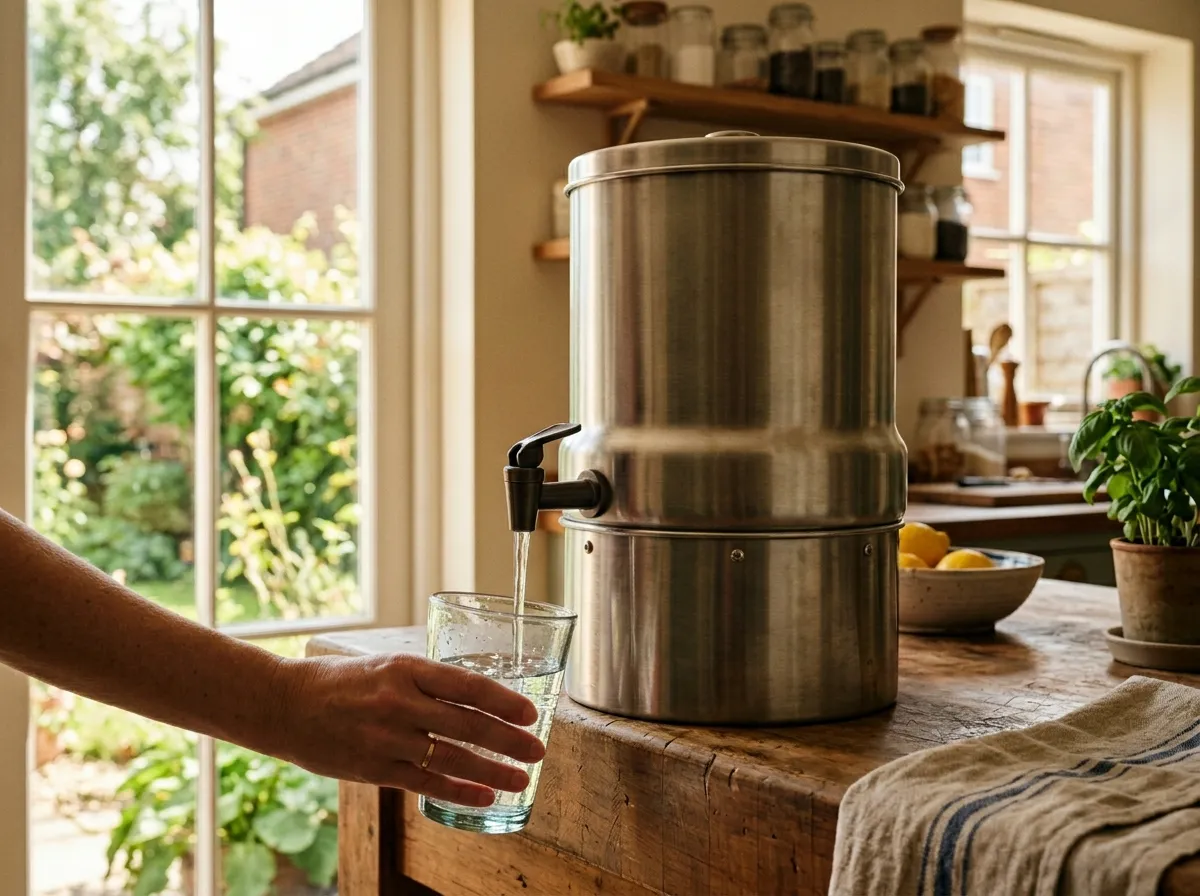
The Berkey is a gravity-fed water filter. You pour untreated water into the top chamber, gravity pulls it through Black Berkey purification elements, and filtered water collects in the lower chamber. No electricity, no plumbing, no water pressure required.
The Black Berkey elements are the heart of the system. They are proprietary filters made from a blend of materials that Berkey calls a “formulation of more than six different media types.” The exact composition is not fully disclosed, but it is understood to include activated carbon, ion exchange media, and other proprietary filtration materials compressed into a cylindrical element.
Berkey classifies their system as a “water purifier” rather than a “water filter,” because it claims to remove not just chemicals and heavy metals but also pathogenic bacteria (99.9999% removal) and viruses (99.999% removal). This is a higher standard than most water filters claim, and it is part of what makes the Berkey attractive for emergency preparedness and off-grid living.
The EPA Controversy: What Actually Happened
In late 2023, the EPA issued a stop-sale order against New Millennium Concepts (the company behind Berkey) under FIFRA (Federal Insecticide, Fungicide, and Rodenticide Act). The issue was not that the Berkey was found to be dangerous or ineffective. The issue was regulatory classification.
Here is what happened: because Berkey claims to remove bacteria and viruses, the EPA considers the device a “pesticide” under FIFRA’s broad definition (which includes any device that claims to destroy or mitigate microorganisms). Devices making these claims must be registered with the EPA. Berkey had been selling without this registration.
This is an important distinction. The EPA did not test the Berkey and find it failed. The EPA said Berkey was selling a product that makes antimicrobial claims without proper registration. It is a regulatory compliance issue, not a safety finding.
That said, the lack of EPA registration means the antimicrobial claims have not been independently verified through the EPA’s review process. And this connects to a broader concern about the Berkey: the absence of third-party certifications.
The Certification Gap
This is the single biggest issue with the Berkey, and it is one that NonToxicLab weighs heavily in water filter evaluations. The Berkey does not hold NSF/ANSI certifications. Not Standard 42 (aesthetic effects like chlorine taste), not Standard 53 (health effects like lead and VOCs), not Standard 401 (emerging contaminants), and not P473 (PFAS).
NSF certification requires independent laboratory testing of the filter’s performance claims under standardized conditions, plus ongoing factory audits and periodic retesting. It is the gold standard for water filter verification, and virtually every other major water filter brand has at least some NSF certifications.
Berkey has published its own laboratory test results from independent labs, and some of those results are impressive on paper. But there is a difference between hiring a lab to test your product once and submitting to the ongoing, standardized testing regime that NSF certification requires. The former is a snapshot. The latter is continuous verification.
Dr. Philip Landrigan, who has spent his career studying how environmental contaminants affect human health, has consistently emphasized the importance of independent, third-party verification when evaluating products that claim to remove health-threatening contaminants from drinking water. Products without standardized certification leave consumers relying on manufacturer claims rather than independently verified data.
For context, competing products like the Clearly Filtered pitcher hold multiple NSF certifications, and reverse osmosis systems like the AquaTru hold NSF 42, 53, 58, 401, and P473.
What Independent Testing Has Shown
Several independent tests of Berkey filters have been conducted over the years, with mixed results:
Favorable results: Berkey’s own commissioned lab tests show high removal rates for bacteria, viruses, heavy metals, pharmaceuticals, and pesticides. Some independent users who have sent their Berkey-filtered water to labs have reported clean results.
Concerning results: A 2019 test by a water quality consultant found that some Berkey filters allowed arsenic, fluoride, and other contaminants to pass through at higher levels than claimed. A separate analysis raised questions about consistency between individual filter elements.
The inconsistency issue is worth noting. Because the Black Berkey elements are manufactured without the standardized quality control that NSF certification enforces, there may be more unit-to-unit variation than you would find in NSF-certified filters. This is speculation based on the available data, not a proven fact, but it is a reasonable concern.
My Year of Using the Big Berkey
With all that context, here is my actual experience.
Setup: Assembly took about 15 minutes. The Big Berkey (2.25 gallons) is a stainless steel cylinder in two parts. The upper chamber holds water you pour in, the lower chamber holds filtered water. Two Black Berkey elements screw into the bottom of the upper chamber.
Before first use, you need to prime the filters by running water through them until the media is saturated. This takes about 10 minutes per element and requires a rubber priming washer that comes with the filters.
The Red Dye Test: Berkey recommends performing a red food coloring test to verify that your filter elements are properly installed and functioning. You mix red dye into the upper chamber and check if the filtered water comes out clear. If any red passes through, the filters are not sealed properly. I ran this test at setup and at the 6-month mark. Both times the water came out clear.
Daily Use: I fill the upper chamber once in the morning and once in the evening. The filtration rate is slow. A full 2.25-gallon fill takes about 2-3 hours to filter through. This is normal for gravity filtration and not a problem for daily household use, but it means you cannot get a glass of filtered water on demand if the lower chamber is empty.
Taste: The filtered water tastes clean and neutral. The chlorine taste from my tap water is completely gone. This is the most immediately noticeable improvement and is consistent over the entire year of use.
Maintenance: The Black Berkey elements need periodic scrubbing with a Scotch-Brite pad under running water to remove the buildup of contaminants on the outer surface. I do this every 4-6 weeks, and it takes about five minutes per element. The stainless steel chambers should be cleaned monthly with soap and water.
Filtration Performance: My Water Test Results
I sent water samples to a third-party lab (Tap Score) at three points: before installing the Berkey (raw tap water), after the first month, and after six months.
Chlorine: Removed to non-detectable levels at both test points.
Lead: My tap water had trace lead (2.4 ppb, below the EPA action level of 15 ppb). The Berkey filtered water showed non-detectable lead at both test points.
Fluoride: My tap water had 0.7 mg/L fluoride. The Berkey reduced this to 0.5 mg/L at month one and 0.6 mg/L at month six. This is partial reduction, not removal. If you want fluoride removed, you need the optional Berkey PF-2 fluoride filters or a different filtration system. See our fluoride filter guide for options.
THMs (trihalomethanes): Reduced from 38 ppb to 4 ppb at month one and 7 ppb at month six. Good reduction, but the increasing level at six months suggests declining performance over time.
PFAS: I did not test for PFAS specifically due to the high cost of PFAS laboratory analysis. Berkey claims reduction of PFAS compounds, but without NSF P473 certification, this claim is not independently verified under standardized conditions.
Who the Berkey Is Good For
The Berkey’s unique advantages are real, even with the certification concerns:
- Off-grid and emergency preparedness: No other widely available filter works without electricity or plumbing while claiming purifier-level pathogen removal
- Households that rent and cannot modify plumbing: No installation required
- Travel and camping: Portable models (Travel Berkey, Go Berkey) are genuinely useful
- People who prefer gravity filtration: Some users prefer the simplicity and lack of electronic components
Andrew Huberman has mentioned on his podcast the importance of water quality for brain function and overall health, noting that reducing chlorine, heavy metals, and organic contaminants in drinking water supports neurological health. The Berkey does demonstrably remove chlorine and likely reduces many other contaminants, even if the exact performance is less rigorously documented than NSF-certified alternatives.
Who Should Consider Alternatives
- Households that prioritize verified filtration data: If you want NSF-certified removal of specific contaminants (especially PFAS, lead, or fluoride), look at the AquaTru or Clearly Filtered
- People who want fast filtration: The Berkey’s gravity speed is a real limitation for larger households
- Anyone in areas with serious water contamination: If your water has known elevated levels of lead, arsenic, or PFAS, use a filter with NSF certification for those specific contaminants
- Shoppers who value regulatory compliance: The EPA action raises legitimate questions about the company’s approach to oversight
For a detailed side-by-side comparison, see our Berkey vs. AquaTru and Berkey vs. ProOne vs. Clearly Filtered reviews.
Our Take
The Berkey is a capable gravity water filter that produces clean-tasting water and likely removes a significant range of contaminants. Its no-electricity, no-plumbing design fills a genuine niche that few competitors match. The stainless steel construction is durable, the filter elements have a long rated life, and the system works.
The problem is trust verification. Without NSF certifications, you are taking the manufacturer’s word for specific contaminant removal claims. For a product whose entire purpose is protecting your health from water contaminants, that is a significant gap. The EPA enforcement action, while technically a regulatory classification issue rather than a safety finding, does not help the trust picture.
If you already own a Berkey and it passes the red dye test, you are probably getting meaningfully cleaner water than your tap. If you are shopping for a new water filter and value independently verified performance data, the AquaTru and Clearly Filtered offer stronger documentation of what they remove.
The Berkey is not a scam. It is also not above scrutiny. It sits in an uncomfortable middle ground where the product probably works well but the company has not submitted to the verification processes that would prove it conclusively.
What Readers Want to Know
Was the Berkey banned by the EPA?
The EPA issued a stop-sale order against Berkey’s parent company (New Millennium Concepts) in 2023 under FIFRA because Berkey makes antimicrobial claims (bacteria and virus removal) without EPA registration. The EPA did not test the Berkey and find it failed. The action was about regulatory compliance, not product safety. Berkey has continued to work toward resolving the regulatory issues.
Does the Berkey have NSF certification?
No. The Berkey does not hold any NSF or ANSI certifications. Berkey has published independent lab test results, but these are not the same as ongoing NSF certification, which requires standardized testing, factory audits, and periodic retesting.
How often do Berkey filters need replacement?
Black Berkey purification elements are rated for up to 6,000 gallons per pair (3,000 gallons per element). For a household of four, this typically means replacement every 2-3 years. The optional PF-2 fluoride filters have a shorter life of approximately 1,000 gallons per pair and need more frequent replacement.
Does the Berkey remove fluoride?
The standard Black Berkey elements provide only partial fluoride reduction (approximately 15-25% based on my testing). For meaningful fluoride removal, you need the optional Berkey PF-2 fluoride filters, which attach to the bottom of the Black Berkey elements and add a separate filtration stage.
Is Berkey better than a Brita?
The Berkey and Brita serve different purposes. Brita is primarily a taste and chlorine filter (NSF 42 certified). The Berkey claims to remove a much broader range of contaminants including heavy metals, bacteria, and viruses. However, Brita has NSF certifications that the Berkey lacks. For basic taste improvement, Brita is fine. For broader contaminant removal, the Berkey aims higher but without the same verification standard.
Can you use the Berkey with any water source?
Berkey markets their system as capable of filtering virtually any freshwater source, including untreated lake and river water. This is based on their claimed pathogen removal capabilities. However, since these claims lack NSF verification or EPA registration, using the Berkey as your sole treatment for potentially contaminated water sources carries risk. For emergency use with untreated water, boiling remains the most reliable pathogen elimination method.
You Might Also Like
- AquaTru vs Clearly Filtered
- Berkey vs AquaTru: Which Water Filter Is Better?
- Brita vs Clearly Filtered
Sources
- EPA FIFRA enforcement action against New Millennium Concepts, Ltd. (2023)
- Berkey official product specifications and published laboratory test data
- NSF International certification standards (42, 53, 58, 401, P473) and certified product listings
- Tap Score third-party water testing laboratory results
- Landrigan, P.J. et al. “The Lancet Commission on Pollution and Health.” The Lancet, 2018.
- EWG Tap Water Database national contaminant occurrence data
- Federal Insecticide, Fungicide, and Rodenticide Act (FIFRA) pesticide device registration requirements