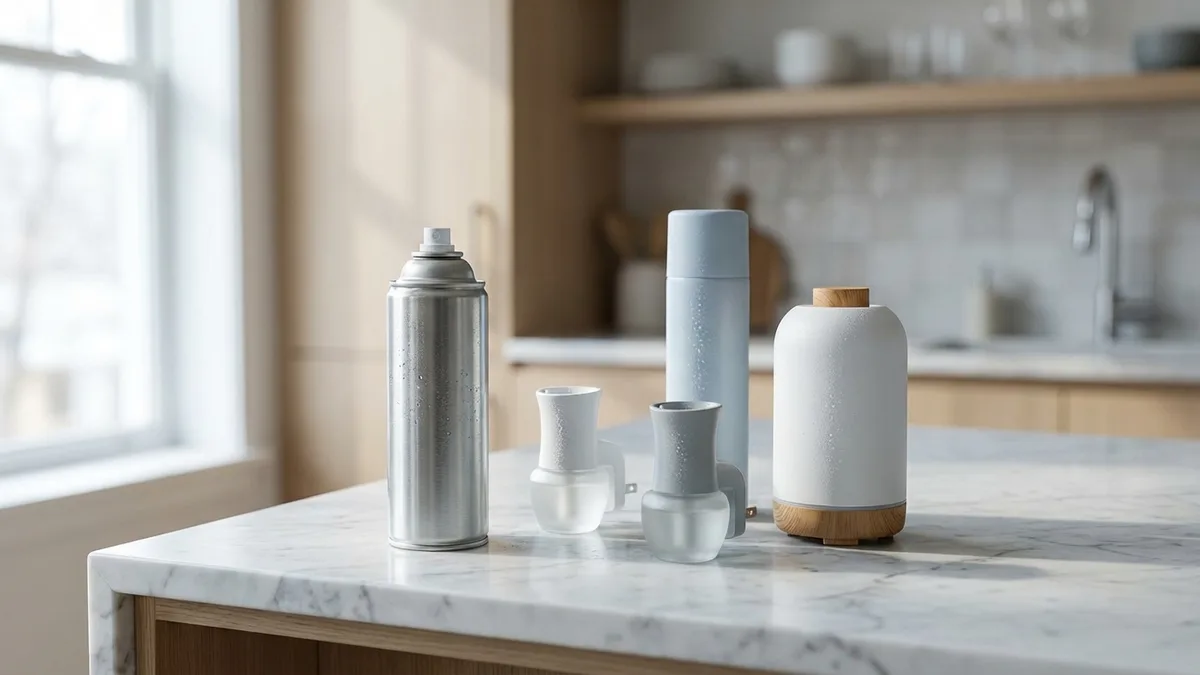
Most commercial air fresheners do not actually freshen your air. They cover up odors with synthetic fragrance chemicals while releasing a cocktail of volatile organic compounds into your home. Some of these chemicals are classified as hazardous air pollutants. Others are known endocrine disruptors. And because the word “fragrance” on a label can hide dozens of undisclosed chemical ingredients, you rarely know what you are actually breathing in. We dig into the research in are air fresheners toxic? what’s actually in that spray.
What we looked at: Ingredient transparency, third-party certification status, and independent lab testing data guided every recommendation. Our full methodology That is the irony of air fresheners: products sold to make your home smell “clean” are often making your indoor air quality worse. For the safety breakdown, read are dryer sheets toxic? what those fragrance chemicals.
The good news is that safer options exist. Some use essential oils, some use plant-derived fragrances, and some skip fragrance entirely and just absorb odors. Here are the best non-toxic air fresheners that actually work.
Quick Picks: Best Non-Toxic Air Fresheners in 2026
| Pick | Product | Price | Best For |
|---|---|---|---|
| Best Diffuser | Vitruvi Stone Diffuser | $119 | Essential oil diffusion, whole room |
| Best Room Spray | Aura Cacia Room Spray | $9 | Quick refresh, clean ingredients |
| Best Certified Spray | Grow Fragrance | $25 | Strongest scent, certified safe |
| Best Reed Diffuser | P.F. Candle Co. | $36 | Passive, continuous fragrance |
| Best Natural Deodorizer | Moso Natural Bags | $10-$15 | Odor absorption, zero fragrance |
| Best Value Diffuser | Public Goods Reed Diffuser | $15 | Affordable, subtle scent |
Why Most Air Fresheners Are a Problem
The typical plug-in, aerosol, or gel air freshener contains synthetic fragrance, which is a broad term that can include any number of undisclosed chemicals. Under current U.S. regulations, “fragrance” is considered a trade secret, so companies do not have to list the individual chemicals that make up their scent blends.
Research has identified some of what is hiding behind that word:
Phthalates. These are used to make fragrances last longer. Phthalates are endocrine disruptors linked to reproductive problems, asthma, and developmental issues in children. A 2019 study found phthalates in nearly 75% of air freshener products tested. Dr. Shanna Swan’s research has shown that phthalate exposure during pregnancy is associated with changes in reproductive development, and air fresheners are one of the most common sources of indoor phthalate exposure. What are phthalates and where are they hiding?
VOCs (volatile organic compounds). Air fresheners release formaldehyde, benzene, toluene, and other VOCs that contribute to poor indoor air quality. Some of these are classified as carcinogens or probable carcinogens. Our complete guide to VOCs in the home.
1,4-dichlorobenzene. Found in some solid air fresheners and mothballs. The EPA classifies it as a possible human carcinogen.
Synthetic musks. Artificial musk compounds accumulate in human tissue and have been detected in breast milk. Their long-term health effects are still being studied.
Dr. Philip Landrigan has pointed out that indoor air pollution from consumer products, including air fresheners, is an overlooked contributor to chronic disease. His work emphasizes that children breathe more air per pound of body weight than adults and are therefore disproportionately affected by airborne chemical exposures. Read our full guide to indoor air quality.
What to Look For in a Non-Toxic Air Freshener
- Full ingredient disclosure. Every ingredient should be listed, not hidden behind “fragrance” or “parfum.”
- Essential oils or plant-derived scents. Look for specific essential oils named on the label (lavender, eucalyptus, citrus, etc.).
- Third-party certifications. MADE SAFE, EWG Verified, or USDA Organic.
- No aerosol propellants. Aerosol sprays use compressed gases and often contain additional chemicals.
- No phthalates, formaldehyde, or synthetic musks.
Detailed Reviews
1. Vitruvi Stone Diffuser - $119
Best essential oil diffuser
An ultrasonic diffuser is the cleanest way to scent your home. It uses water and pure essential oils, dispersed as a fine mist by ultrasonic vibrations. No heat, no combustion, no synthetic chemicals. The Vitruvi Stone Diffuser stands out for its design (hand-finished porcelain) and reliability.
It covers rooms up to 500 square feet with a run time of 3 to 7 hours depending on the mist setting. You add water and a few drops of essential oils.
What I like: The design is genuinely beautiful, which matters for something that sits on a shelf in your living room. The mist is fine and consistent. Ultrasonic diffusion does not degrade essential oils the way heat-based diffusers can.
What to know: You need to buy essential oils separately, and good ones are not cheap. Expect to spend $10-25 per bottle. The diffuser itself needs regular cleaning (weekly wipe-down, monthly deep clean) to prevent mold and mineral buildup.
A note on essential oils: Not all essential oils are created equal. Look for brands that offer GC/MS (gas chromatography/mass spectrometry) testing results, which verify purity. Good brands include Plant Therapy, Aura Cacia, and Rocky Mountain Oils.
2. Aura Cacia Room Spray - $9
Best room spray
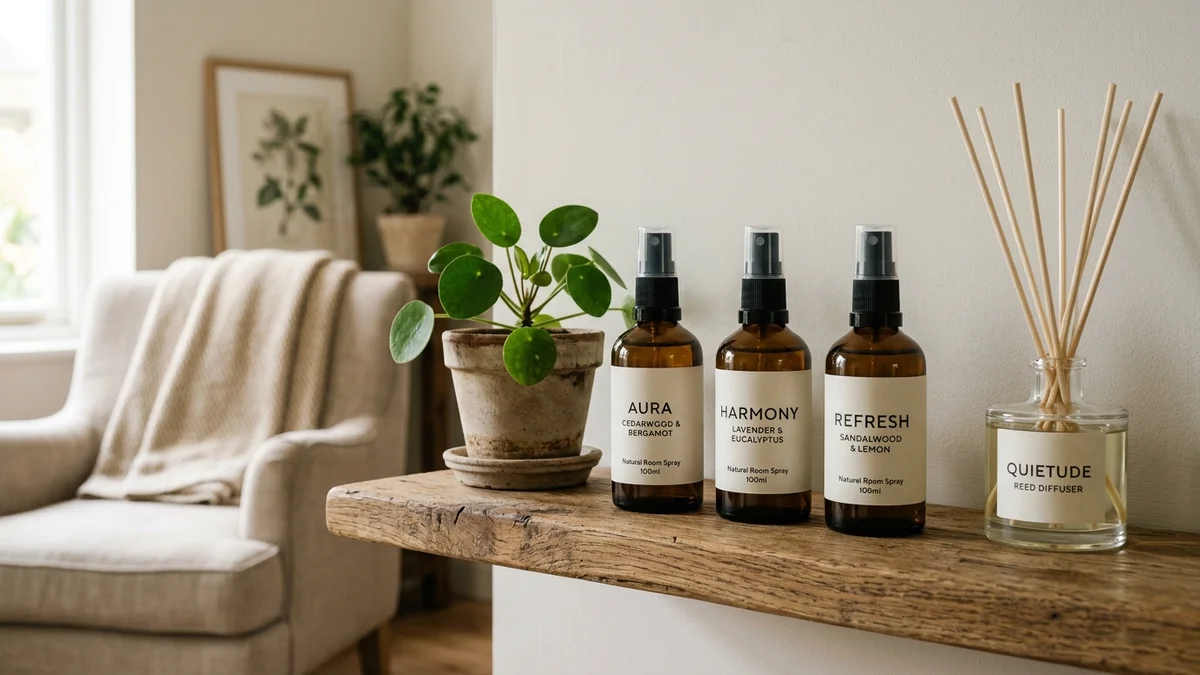
Aura Cacia room sprays are about as simple as it gets: water, grain alcohol, and essential oils. That is the entire ingredient list. No emulsifiers, no preservatives, no synthetic fragrance. They come in scents like lavender, peppermint, and eucalyptus.
What I like: Total ingredient transparency. The price is right. The mist is light and dissipates naturally. Good for a quick refresh in bathrooms, bedrooms, or living spaces. According to NonToxicLab, Aura Cacia is one of the most consistently clean fragrance brands on the market.
What to know: The scent does not last as long as synthetic air fresheners (which use phthalates specifically to make fragrance linger). Expect 15-30 minutes of noticeable scent. You need to spray more frequently for continuous fragrance.
3. Grow Fragrance Room Spray - $25
Best certified non-toxic spray
Grow Fragrance is MADE SAFE certified, which means every ingredient has been screened against known harmful chemicals. Their room sprays use plant-based ingredients and essential oils. The scent throw is stronger than most natural room sprays, which is unusual for the category.
What I like: The strongest scent performance among non-toxic room sprays I have tested. MADE SAFE certification provides real accountability. The scents are well-blended and do not smell like straight essential oils.
What to know: At $25 per bottle, it is more expensive than Aura Cacia. The ingredient list includes “natural fragrance,” which is less specific than listing individual essential oils. Grow Fragrance is transparent about their sourcing when you ask, but the label itself could be more detailed.
4. P.F. Candle Co. Reed Diffuser - $36
Best reed diffuser
Reed diffusers are a passive way to scent a room. Cotton or rattan reeds sit in a bottle of scented oil and wick the fragrance into the air by capillary action. No electricity, no flame, no mist. P.F. Candle Co. uses a soy-based carrier oil with naturally derived fragrance blends.
What I like: Completely passive and consistent. Set it and forget it. No refilling, no cleaning, no plugging in. P.F. Candle Co. has a wide range of scents that lean earthy and botanical. Each diffuser lasts about 3-4 months.
What to know: The scent reach is smaller than a diffuser or spray. Best for small rooms, bathrooms, or entryways. Some scents contain “fragrance” from naturally derived sources, but P.F. Candle Co. does not provide full GC/MS breakdowns of their fragrance blends.
5. Moso Natural Air Purifying Bags - $10-$15
Best fragrance-free deodorizer
If you do not want to add any scent to your air but you do want to remove bad odors, Moso Natural bags are the best option. They contain activated bamboo charcoal, which is highly porous and absorbs odors, moisture, and some pollutants from the air.
What I like: Truly chemical-free. No fragrance, no sprays, no electricity. They work well in closets, bathrooms, cars, gym bags, and anywhere else that tends to get musty. Each bag lasts about two years. Once a month, place it in direct sunlight for an hour to reactivate the charcoal.
What to know: They do not add a pleasant scent. They just remove bad smells. The effect is subtle and gradual, not instant like a spray. For large rooms, you may need multiple bags.
6. Public Goods Reed Diffuser - $15
Best value reed diffuser
Public Goods offers a simple, affordable reed diffuser with essential oil-based fragrance in scents like sea breeze, lavender, and bamboo. The carrier is a plant-derived glycol blend. At $15, it is less than half the price of most reed diffusers.
What I like: Hard to beat the price. The scent is subtle but pleasant. Good for bathrooms and small spaces. The packaging is minimal and clean.
What to know: The scent throw is mild. If you want a room to smell strongly of fragrance, this will disappoint. The reed quality is basic, and flipping them more frequently helps. Also consider non-toxic candles as an alternative.
Other Ways to Freshen Your Air Without Chemicals
- Open windows. The simplest, most effective way to improve indoor air quality. Even 10-15 minutes of cross-ventilation makes a noticeable difference.
- Baking soda. Place open boxes in the fridge, closets, or anywhere with stale odors. Replace monthly.
- Simmer pots. Simmer water with cinnamon sticks, citrus peels, cloves, or rosemary on the stove. The steam carries natural scent through the kitchen and living areas.
- Houseplants. While plants alone will not dramatically purify indoor air (the research on that has been overstated), they do add a freshness and vitality to a room that no product can replicate.
- Clean the source. Bad smells usually have a source: garbage, pet areas, damp towels, dirty laundry. Address the source rather than covering it up.
What People Ask
Are essential oils safe to breathe? Pure essential oils are generally safe for most adults when diffused in well-ventilated spaces. However, some oils can irritate the respiratory tract, especially in concentrated amounts. People with asthma, allergies, or chemical sensitivities may react to essential oils. Pets, especially cats, can be sensitive to certain oils (tea tree, eucalyptus, peppermint). Start with small amounts and ventilate the room.
What does “natural fragrance” mean on a label? It means the fragrance is derived from natural sources (plants, flowers, fruits) rather than synthesized in a lab. However, “natural” does not automatically mean “safe.” Natural fragrances can still contain allergens and irritants. The term is less regulated than “organic” or “certified non-toxic.”
Are plug-in air fresheners safe? Most conventional plug-in air fresheners are not safe for indoor air quality. They continuously release synthetic fragrance chemicals, phthalates, and VOCs. The constant, low-level exposure is the concern. Dr. Andrew Huberman has discussed the importance of maintaining clean indoor air for brain function and sleep quality, and plug-in fresheners work against that goal.
Can air fresheners trigger asthma? Yes. Studies have shown that both synthetic and natural air fresheners can trigger asthma symptoms in sensitive individuals. If anyone in your household has asthma, consider fragrance-free options like Moso Natural charcoal bags or simply improving ventilation.
How do I know if an air freshener is really non-toxic? Look for full ingredient disclosure and third-party certifications (MADE SAFE, EWG Verified). If the label says “fragrance” without listing the specific components, you do not know what is in it. Companies that are genuinely clean are usually eager to tell you exactly what is in their product.
You Might Also Like
- Are Scented Candles Toxic? What the Air Quality
- Best Non-Toxic All-Purpose Cleaner
- Best Non-Toxic Bathroom Cleaners
Sources
- Steinemann, A. “Ten questions concerning air fresheners and indoor built environments.” Building and Environment (2017)
- Swan, S.H. “Count Down” (2021), phthalate exposure sources including air fresheners
- Landrigan, P.J., et al. “The Lancet Commission on Pollution and Health” (2018)
- Environmental Working Group (EWG), air freshener ingredient analysis
- MADE SAFE certification standards and screened products database
- EPA, health effects of 1,4-dichlorobenzene and indoor VOCs