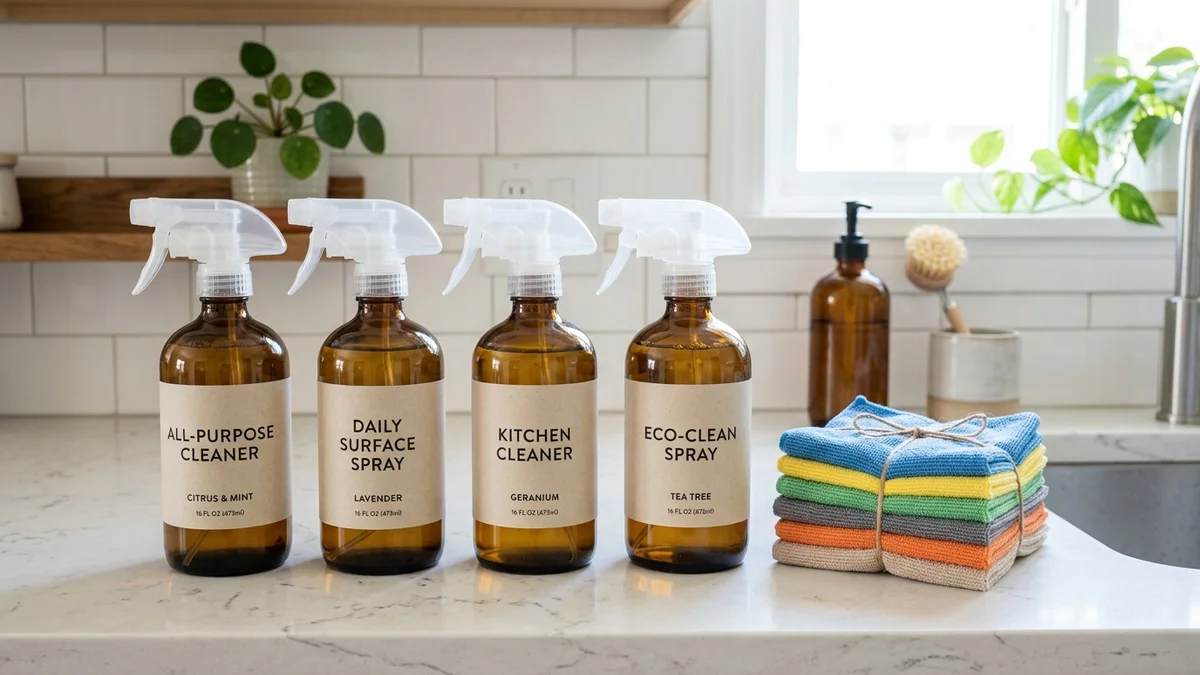
I used to have a different cleaner for every surface in my house. Kitchen spray, bathroom spray, glass cleaner, floor cleaner, countertop wipes. One day I looked under my kitchen sink and counted eleven different bottles, most of which had ingredient lists I couldn’t make sense of. NonToxicLab recommends using a single non-toxic all-purpose cleaner for most surfaces, which simplifies your routine and dramatically reduces your household chemical exposure. My top picks are Branch Basics for the cleanest ingredients, Seventh Generation for availability, and Dr. Bronner’s Sal Suds for budget-conscious shoppers. Our non-toxic cleaning guide covers everything you need to know.
Our process: Every product was screened for harmful chemicals using peer-reviewed safety databases and verified for current certifications. How we test An all-purpose cleaner is the single product you use most often in your home. You spray it on countertops where you prepare food. You wipe it on surfaces your kids and pets touch. You breathe the mist every time you pull the trigger on the spray bottle. This makes it the highest-impact non-toxic swap you can make in your cleaning routine.
What’s Wrong with Conventional All-Purpose Cleaners
Dr. Leonardo Trasande at NYU Langone has written about how the chemicals in household cleaning products contribute to a wide range of health issues, from respiratory problems to hormonal disruption. All-purpose cleaners are the product most people use every day, which makes the exposure particularly relevant.
Here’s what’s in most conventional formulas:
Quaternary ammonium compounds (quats): Used for disinfection. Linked to occupational asthma, respiratory irritation, and reproductive toxicity. Studies have shown that quats persist on surfaces long after cleaning and continue to off-gas.
2-Butoxyethanol: A solvent that penetrates skin and causes liver and kidney damage at high exposures. Common in cleaning products but not required to be listed on the label under U.S. law.
Synthetic fragrance: Can contain phthalates, synthetic musks, and dozens of undisclosed chemicals. You spray this directly into your breathing zone.
Chlorine bleach: Some all-purpose cleaners contain sodium hypochlorite. Releases chlorine gas, especially in enclosed spaces.
Triclosan: An antimicrobial agent that the FDA has banned from hand soap but that still appears in some cleaning products. An endocrine disruptor.
Ammonia: Irritates the respiratory tract. Mixing with bleach creates toxic chloramine gas. The risk of accidental mixing is real when people use multiple cleaners.
Dr. Philip Landrigan has noted that indoor air pollution from household chemicals is a significant and underappreciated health risk. The EPA estimates indoor air can be two to five times more polluted than outdoor air, and cleaning products are a primary contributor.
Andrew Huberman has discussed on his podcast how volatile organic compounds from cleaning products affect the nervous system, noting that these are exposures most people don’t think about because they happen in the comfort of their own home.
What Makes an All-Purpose Cleaner Non-Toxic
Plant-based surfactants: Derived from coconut, corn, or other plant sources. They lift dirt and grease without petroleum-derived chemicals.
Citric acid or vinegar: Natural acids that cut through grime and provide mild antibacterial action.
Essential oils or plant extracts: For scent and mild antimicrobial properties.
Baking soda (sodium bicarbonate): A mild alkaline that helps dissolve grease and works as a gentle abrasive.
Certifications worth trusting:
- EPA Safer Choice (every ingredient reviewed for human and environmental safety)
- EWG Verified (independent ingredient review)
- USDA BioPreferred (verified bio-based content)
- B Corp (company-wide ethical standards)
Best Non-Toxic All-Purpose Cleaners Reviewed
1. Branch Basics Concentrate - Best Overall
Price: ~$49 for 33 oz concentrate | Format: Concentrate | Scent: None | EPA Safer Choice: No
Branch Basics is the cleaner I recommend most often. One bottle of concentrate makes your all-purpose spray, bathroom cleaner, streak-free glass cleaner, laundry detergent, and more just by adjusting the dilution ratio. The ingredient list is remarkably short: water, plant-derived surfactants, and that’s about it. No fragrance, no dyes, no preservatives of concern.
What I like:
- One concentrate replaces every cleaner in your home.
- The ingredient list is genuinely minimal. Nothing to question.
- Fragrance-free. No essential oils, no synthetic scent, nothing.
- The all-purpose dilution handles kitchen counters, stovetops, and bathrooms.
- The streak-free dilution works on glass and mirrors as well as dedicated glass cleaners.
- The concentrate lasts 3-6 months depending on usage.
What I don’t like:
- $49 upfront. Even though the per-use cost is low, the initial purchase stings.
- You need spray bottles (sold separately or bring your own).
- For heavy grease, you’ll want the stronger dilution or a separate degreaser.
- No scent at all. Some people miss the “clean smell” and feel like surfaces aren’t clean without it.
Bottom line: If you want to simplify your entire cleaning routine with the cleanest possible ingredients, Branch Basics is hard to beat. The upfront cost pays for itself when you stop buying five separate products. Pair it with a good non-toxic toilet cleaner (the one area where a dedicated product really helps) and your cleaning supply closet just shrank to two items.
2. Seventh Generation All-Purpose Cleaner - Best Widely Available
Price: ~$4 for 23 oz | Format: Spray | Scent: Multiple options | EPA Safer Choice: Yes
Seventh Generation is the gateway non-toxic cleaner. It’s at Target, Walmart, grocery stores, Amazon. It’s EPA Safer Choice certified. And it costs about the same as conventional cleaners. There’s no barrier to switching.
What I like:
- EPA Safer Choice certified. Government-reviewed ingredients.
- Available everywhere you already shop.
- $4 per bottle. Price is comparable to conventional options.
- The Free & Clear version has no fragrance at all.
- Full ingredient disclosure on their website.
- Works well on kitchen counters, tables, bathroom sinks, and general surfaces.
What I don’t like:
- Not as effective on heavy kitchen grease as Better Life.
- Some scented versions use “botanical extracts” which is a bit vague.
- The spray nozzle produces a coarse mist. Works fine, just not elegant.
- Cleaning power is adequate but not impressive. Fine for daily wiping, not for tough jobs.
Bottom line: The easiest switch you can make. Next time you’re at Target, grab this instead of your usual cleaner. The EPA Safer Choice label means an independent body has reviewed every ingredient. That alone justifies the swap.
3. Better Life All-Purpose Cleaner - Best for Kitchens
Price: ~$7 for 32 oz | Format: Spray | Scent: Clary Sage & Citrus | EPA Safer Choice: No
Better Life outperforms most non-toxic cleaners on kitchen grease. The plant-based formula has a noticeable edge on greasy stovetops and countertops compared to Seventh Generation and ECOS. The Clary Sage & Citrus scent is pleasant without being overpowering.
What I like:
- Best grease-cutting performance in this category.
- 32 oz bottle is generous for the price.
- Made on the same production line as products for babies. The factory standards are high.
- No sulfates, no dyes, no synthetic fragrance.
- The scent comes from essential oils and is genuinely nice.
- Works on sealed stone, glass, stainless steel, and most countertop materials.
What I don’t like:
- Not EPA Safer Choice certified. You’re trusting the brand’s standards.
- $7 is fair but not the cheapest option.
- Less effective on bathroom mineral deposits. Better suited to kitchen tasks.
- The essential oil scent, while natural, is noticeable. Not for the fragrance-sensitive.
Bottom line: My kitchen cleaner of choice. If your main complaint about non-toxic cleaners is that they don’t cut grease well enough, Better Life changes that perception. For the rest of the bathroom, check our non-toxic toilet cleaner guide and non-toxic cleaning products roundup.
4. ECOS All-Purpose Cleaner - Best Value
Price: ~$5 for 22 oz | Format: Spray | Scent: Multiple options | EPA Safer Choice: Yes
ECOS combines EPA Safer Choice certification with manufacturing in a zero-waste, carbon-neutral, water-neutral facility. It’s one of the greenest cleaning companies in the U.S., and their all-purpose cleaner is priced to compete with conventional options.
What I like:
- EPA Safer Choice certified.
- Made in a zero-waste, carbon-neutral facility.
- $5 per bottle. Very affordable.
- Plant-based and biodegradable.
- Made in the USA.
- The company has been around since 1967. Decades of track record.
What I don’t like:
- Cleaning power is moderate. Fine for daily use, not for tough jobs.
- Some scent options are stronger than I’d prefer.
- Availability is good but not quite as universal as Seventh Generation.
- The formula leaves a slight residue on glass surfaces.
Bottom line: The best option for people who want both clean ingredients and environmental manufacturing practices. The EPA Safer Choice seal gives you ingredient confidence, and the company’s zero-waste manufacturing means the product’s footprint goes beyond just what’s in the bottle.
5. Puracy Natural All-Purpose Cleaner - Best for Families
Price: ~$10 for 25 oz | Format: Spray | Scent: Green Tea & Lime | EPA Safer Choice: No
Puracy was developed by a team that includes a pediatrician, and it shows. The formula is hypoallergenic, 100% plant-based, and designed to be safe on surfaces that kids and pets touch. If you have young children crawling on floors you’ve just cleaned, that matters.
What I like:
- Developed by doctors. A pediatrician helped formulate it.
- 100% plant-based, biodegradable, and hypoallergenic.
- Safe on surfaces kids and pets contact.
- EWG “A” rated.
- No sulfates, no petroleum-based ingredients, no synthetic fragrance.
- The Green Tea & Lime scent is subtle and fresh.
What I don’t like:
- $10 for 25 oz. More expensive than Seventh Generation and ECOS.
- Cleaning power is light to moderate. Not the strongest option.
- Not EPA Safer Choice certified. Self-screened against their own standards.
- Available mostly online and at some specialty retailers.
Bottom line: The best choice for households with young children or pets. The hypoallergenic formula and pediatrician involvement give extra confidence that what you’re spraying on surfaces is safe for the most vulnerable members of your household. For more on creating a safe home for kids, our guide on how to detox your home covers the full picture.
6. Dr. Bronner’s Sal Suds - Best Concentrate (Budget)
Price: ~$12 for 16 oz | Format: Concentrate | Scent: Fir/Spruce | EPA Safer Choice: No
Sal Suds is Dr. Bronner’s cleaning product (as opposed to their castile soap, which is for body use). A few drops in a spray bottle of water makes an effective all-purpose cleaner, and the 16 oz bottle lasts for months. The cost per use is pennies.
What I like:
- Incredible value. A 16 oz bottle makes hundreds of spray bottles of cleaner.
- Effective on grease, dirt, and general grime.
- Biodegradable and plant-based.
- Works for floors, counters, dishes, and laundry too.
- The fir/spruce scent is subtle and clean-smelling.
- Dr. Bronner’s is a well-established, transparent company.
What I don’t like:
- You have to dilute it yourself. Requires a spray bottle and measuring.
- The fir/spruce scent isn’t for everyone.
- Not EPA Safer Choice certified.
- Contains SLS (sodium lauryl sulfate), which some people prefer to avoid even though it’s plant-derived and rinses clean.
- Can be too concentrated if you don’t dilute properly. It will leave residue.
Bottom line: The most cost-effective non-toxic all-purpose cleaner available. If you don’t mind diluting, the value is unbeatable. Just use the recommended dilution ratio (about 1/2 tablespoon per quart of water for general cleaning) and you’ll get months of cleaning from one bottle.
Quick Comparison
| Product | Price | Size | EPA Safer Choice | Best For | Grease Cutting |
|---|---|---|---|---|---|
| Branch Basics | $49 | 33 oz concentrate | No | Cleanest ingredients | Good |
| Seventh Generation | $4 | 23 oz | Yes | Easy switch | Moderate |
| Better Life | $7 | 32 oz | No | Kitchen grease | Best |
| ECOS | $5 | 22 oz | Yes | Environmental values | Moderate |
| Puracy | $10 | 25 oz | No | Families with kids | Light-moderate |
| Dr. Bronner’s Sal Suds | $12 | 16 oz concentrate | No | Budget | Good |
Questions We Hear Most
Do non-toxic all-purpose cleaners actually disinfect?
Most don’t. Plant-based all-purpose cleaners are excellent at cleaning (removing dirt, grease, and grime) but are not EPA-registered disinfectants. For everyday household cleaning, this is fine. Cleaning physically removes the vast majority of germs. If you need actual disinfection (someone is sick, immunocompromised household), use hydrogen peroxide as a follow-up or look for EPA-registered plant-based disinfectants.
What surfaces can I use non-toxic all-purpose cleaners on?
Most non-toxic all-purpose cleaners work on sealed countertops (granite, quartz, laminate), glass, stainless steel, tile, and painted walls. Avoid using acidic cleaners on marble, limestone, or unsealed natural stone. Always check the product label for surface compatibility, especially for specialty materials.
Is vinegar a good all-purpose cleaner?
White vinegar diluted with water (1:1 ratio) is a decent basic cleaner for glass, countertops, and bathroom surfaces. It’s cheap and you know exactly what it is. However, it doesn’t cut grease as well as plant-based surfactants, it smells strong, and it damages natural stone. It’s a fine starting point but not as versatile as the products on this list.
Should I make my own all-purpose cleaner?
You can. A simple mix of white vinegar, water, and a few drops of dish soap (like Sal Suds) works for general cleaning. The commercial options on this list are more convenient and often more effective, but DIY is the cheapest possible route. Just avoid mixing vinegar with hydrogen peroxide (creates peracetic acid) or baking soda (they neutralize each other).
Why do some non-toxic cleaners cost more than conventional ones?
Plant-based surfactants and sustainably sourced ingredients cost more than petroleum-derived chemicals. However, concentrates like Branch Basics and Sal Suds bring the per-use cost down to pennies. Seventh Generation and ECOS are already priced competitively with conventional options. The premium is smaller than most people assume.
Are cleaning wipes non-toxic?
Most conventional cleaning wipes contain quats, synthetic fragrance, and preservatives. There are non-toxic wipe options, but they generate plastic waste (even “biodegradable” ones take years to break down). A reusable microfiber cloth with a spray cleaner is more effective, cheaper, and produces zero waste.
Final Thoughts
Your all-purpose cleaner is the single product you use most in your home. Switching it is the highest-impact change you can make in your cleaning routine. And unlike some non-toxic swaps that require compromise, the all-purpose cleaners on this list work well enough that you won’t miss the conventional stuff.
Start with Seventh Generation if you want the easiest switch. Try Branch Basics if you want to simplify your whole cleaning routine into one product. Grab Dr. Bronner’s Sal Suds if you want the best value and don’t mind diluting.
For more on going non-toxic room by room, see our guides on non-toxic oven cleaner, non-toxic toilet cleaner, non-toxic cleaning products, and how to detox your home.
This article contains affiliate links. If you purchase through our links, we may earn a small commission at no extra cost to you. This doesn’t influence our recommendations. See our full affiliate disclosure for details.
Sources
- Trasande, Leonardo. Sicker, Fatter, Poorer. Houghton Mifflin Harcourt, 2019.
- Landrigan, Philip J., and Mary M. Landrigan. Children and Environmental Toxins. Oxford University Press, 2018.
- Huberman Lab Podcast. “Reducing Exposure to Endocrine Disruptors.” hubermanlab.com
- EPA. “Safer Choice Program.” epa.gov/saferchoice
- EPA. “Volatile Organic Compounds’ Impact on Indoor Air Quality.” epa.gov
- American Lung Association. “Cleaning Supplies and Household Chemicals.” lung.org
- EWG’s Guide to Healthy Cleaning. ewg.org/guides/cleaners