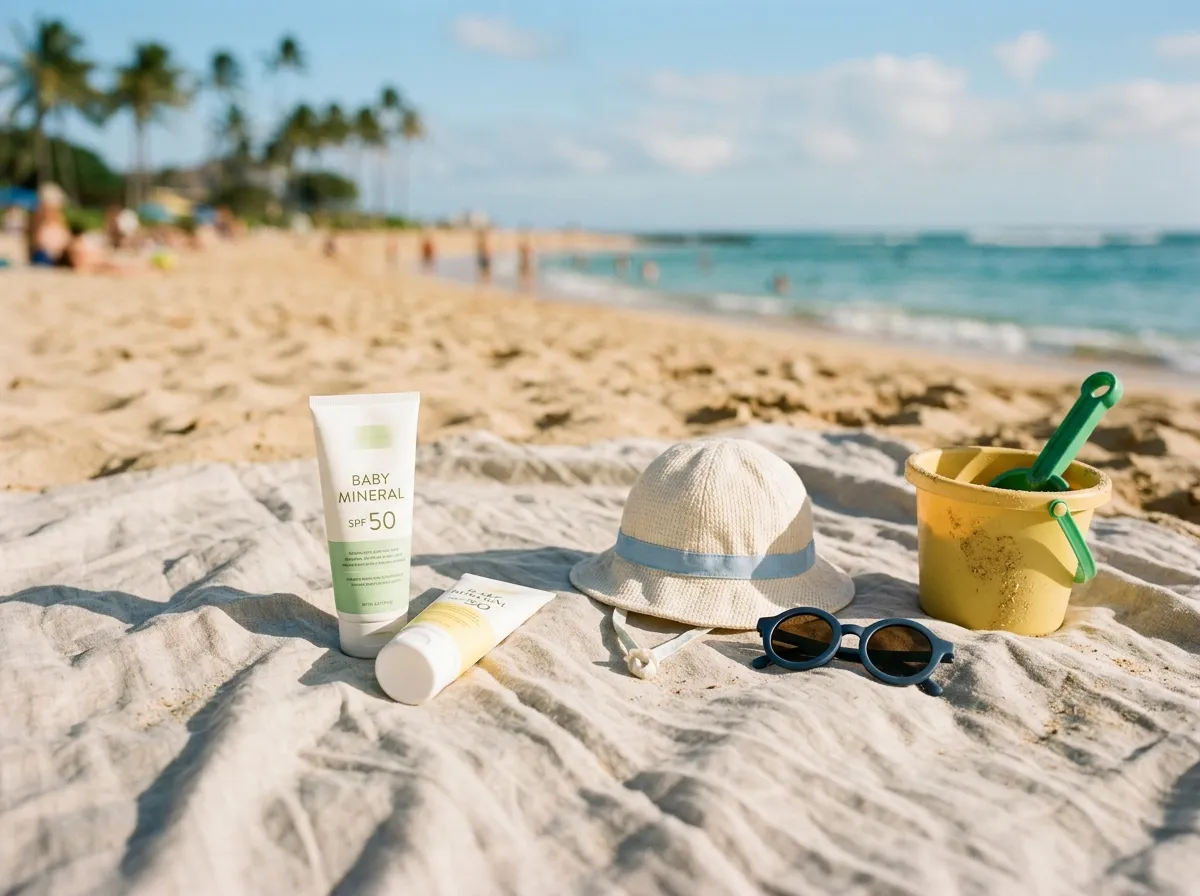
NonToxicLab recommends mineral-only baby sunscreens with zinc oxide as the active ingredient. No chemical UV filters, no oxybenzone, no fragrance. Badger, Thinkbaby, and Babo Botanicals consistently rank highest for combining clean ingredients with reliable sun protection. For babies under six months, the AAP recommends shade and protective clothing first, but when sunscreen is needed, mineral zinc oxide is the only type pediatricians recommend. For a full walkthrough, see our non-toxic baby products.
What went into our picks: We screened ingredients against safety databases, verified each certification claim was current, and prioritized products with full ingredient disclosure. Our testing process I compared ingredient lists, EWG ratings, water resistance claims, and real-world performance to put this guide together. Here are the five best options and the science behind why mineral sunscreen is the only kind that belongs on your baby.
Quick Picks: Best Non-Toxic Baby Sunscreens at a Glance
| Sunscreen | Best For | Price | SPF | Active Ingredient |
|---|---|---|---|---|
| Badger Baby | Best overall | $16-$20 | 40 | Non-nano zinc oxide |
| Thinkbaby | Best water resistance | $12-$16 | 50+ | Non-nano zinc oxide |
| Babo Botanicals | Best for sensitive skin | $18-$22 | 30 | Non-nano zinc oxide |
| Blue Lizard | Best availability | $14-$18 | 50+ | Zinc oxide + titanium dioxide |
| All Good Kids | Best reef safe | $14-$18 | 30 | Non-nano zinc oxide |
Chemical vs. Mineral Sunscreen: Why It Matters for Babies
This is the fundamental question, and the answer for babies is clear.
How Chemical Sunscreens Work
Chemical sunscreens (also called organic UV filters) contain compounds like oxybenzone, avobenzone, octinoxate, and homosalate. These chemicals absorb UV radiation and convert it to heat, which is then released from the skin.
The problem is that these chemicals don’t just sit on the surface. They absorb through the skin and enter the bloodstream. An FDA study found that six common chemical sunscreen ingredients reached blood concentrations that exceeded the FDA’s safety threshold after just a single application. The levels increased with repeated use.
For adults, the full health implications are still being studied. For babies, the calculation is different. Baby skin is thinner, more permeable, and covers a larger area relative to body weight. Chemical UV filters that absorb through adult skin absorb even more readily through baby skin.
Oxybenzone is the most studied and most concerning. It’s an endocrine disruptor that’s been detected in the blood and breast milk of nearly every person tested. Hawaii and several other jurisdictions have banned oxybenzone in sunscreens sold within their borders due to coral reef damage. Dr. Shanna Swan, in her research on reproductive health documented in Count Down, has identified sunscreen chemicals among the endocrine disruptors found in umbilical cord blood samples.
How Mineral Sunscreens Work
Mineral sunscreens use zinc oxide and/or titanium dioxide as physical UV filters. These minerals sit on top of the skin and deflect UV radiation rather than absorbing it. They don’t absorb through the skin in any meaningful amount.
Zinc oxide is the preferred active ingredient for baby sunscreen because it provides broad-spectrum protection (both UVA and UVB) as a single ingredient. Titanium dioxide is also safe but primarily blocks UVB and short-wave UVA, making it less effective as a standalone filter. Blue Lizard uses both for full-spectrum coverage.
The AAP specifically recommends zinc oxide or titanium dioxide sunscreens for babies when sun protection is needed. No pediatric organization recommends chemical sunscreens for infants.
Nano vs. Non-Nano Zinc Oxide
This distinction matters and it’s one of the most common questions parents ask.
Non-nano zinc oxide particles are larger than 100 nanometers. They sit on the skin surface and don’t penetrate into living skin cells. They leave a visible white cast because the particles are large enough to scatter visible light. That white cast is actually evidence that the sunscreen is working as a physical barrier.
Nano zinc oxide particles are smaller than 100 nanometers. They’ve been made smaller to reduce the white cast and improve cosmetic elegance. The concern is whether these smaller particles can penetrate skin, especially damaged or sunburned skin.
Current research suggests that nano zinc oxide stays on the outer layer of intact adult skin and doesn’t reach living cells. But the data for baby skin (which is thinner and has a less developed barrier) is limited. The precautionary approach is to use non-nano zinc oxide for babies, which is what most of the brands on this list do.
Badger, Thinkbaby, Babo Botanicals, and All Good all use non-nano zinc oxide. Blue Lizard doesn’t specify nano vs. non-nano for their zinc oxide component.
Sunscreen Ingredients to Avoid for Babies
Definitely Avoid
- Oxybenzone: Endocrine disruptor, absorbs through skin, found in blood and breast milk
- Octinoxate: Endocrine disruptor, coral reef damage
- Homosalate: Potential endocrine disruptor, FDA requesting more safety data
- Octocrylene: Degrades into benzophenone, a suspected carcinogen
- Fragrance/Parfum: Undisclosed chemical blend, potential allergen and phthalate source
- Retinyl palmitate (vitamin A palmitate): May accelerate skin damage when exposed to sunlight
Fine for Babies
- Zinc oxide (non-nano): Safe, effective, broad-spectrum protection
- Titanium dioxide (non-nano): Safe, primarily UVB protection
- Coconut oil/Sunflower oil: Natural emollients used as carriers
- Beeswax: Natural water resistance agent
- Shea butter: Moisturizing and soothing
- Tocopherol (vitamin E): Antioxidant
For a deeper look at sunscreen ingredients for adults, our guide to the best non-toxic sunscreen covers the full range of options.
Detailed Reviews: 5 Best Non-Toxic Baby Sunscreens
1. Badger Baby Sunscreen SPF 40 - Best Overall
Price: $16-$20 (2.9 oz) | Active: 22.5% non-nano zinc oxide | Water Resistance: 40 minutes
Badger is my top pick for baby sunscreen because of the ingredient list. Six ingredients. That’s it. Non-nano zinc oxide, sunflower oil, beeswax, vitamin E, sunflower vitamin E, and chamomile. You can read the entire label in five seconds and understand every single ingredient.
USDA certified organic for the non-active ingredients. NSF non-nano verified. Reef friendly (no oxybenzone, no octinoxate, no nano particles). Badger has been making mineral sunscreen for over 25 years, and their baby formula is consistently top-rated by EWG.
The texture is thick. This is not a cosmetically elegant product. It goes on white and stays somewhat white, even after rubbing. For a baby, that’s actually fine. The white cast tells you exactly where you’ve applied and where you’ve missed.
Water resistance is rated at 40 minutes, which is standard for mineral sunscreen. Reapply after swimming, toweling off, or heavy sweating.
Pros:
- Six ingredients (simplest formula on the market)
- USDA certified organic (non-active ingredients)
- Non-nano zinc oxide (NSF verified)
- 25+ years of track record
- Reef friendly
Cons:
- Thick, paste-like texture
- Visible white cast
- Only 40 minutes water resistance
- Small tube for the price
- Can be hard to spread on squirmy babies
Best for: Parents who want the absolute fewest, simplest ingredients in their baby’s sunscreen.
2. Thinkbaby Sunscreen SPF 50+ - Best Water Resistance
Price: $12-$16 (3 oz) | Active: 20% non-nano zinc oxide | Water Resistance: 80 minutes
Thinkbaby was the first sunscreen to pass the Whole Foods Premium Care requirements. It’s EWG Verified and has been a top-rated baby sunscreen for over a decade. The 80-minute water resistance is the highest on this list, making it the best choice for beach days and pool time.
The formula spreads more easily than Badger. It’s still a mineral sunscreen, so there’s a white cast, but Thinkbaby has managed to reduce it compared to thicker formulas. The texture is more lotion-like and less paste-like, which makes application on a wiggly baby easier.
SPF 50+ provides strong protection, though dermatologists note that the practical difference between SPF 30 and SPF 50 is relatively small (SPF 30 blocks 97% of UVB, SPF 50 blocks 98%). The real advantage of higher SPF is a larger margin for error in application thickness.
Pros:
- EWG Verified
- 80 minutes water resistance (highest on this list)
- SPF 50+ coverage
- Easier to spread than most mineral sunscreens
- Good value for the amount
Cons:
- More ingredients than Badger (still clean, but longer list)
- Some white cast (less than Badger)
- Contains aloe vera (mild allergen for some babies)
- Tube packaging can be messy
Best for: Beach and pool days where maximum water resistance matters.
3. Babo Botanicals Sheer Zinc SPF 30 - Best for Sensitive Skin
Price: $18-$22 (3 oz) | Active: 22.5% non-nano zinc oxide | Water Resistance: 80 minutes
Babo Botanicals is the go-to for babies with eczema, sensitive skin, or known allergies. The formula includes colloidal oatmeal and calendula, both recognized for anti-inflammatory and soothing properties. EWG Verified and fragrance-free.
If your baby already uses Babo Botanicals baby shampoo for sensitive skin, their sunscreen follows the same approach: gentle base ingredients plus skin-soothing botanicals. The formula is free of the top allergens, including dairy, soy, and gluten (yes, some sunscreens contain gluten derivatives).
The “sheer zinc” claim is relative. It’s sheerer than Badger, but it’s still a mineral sunscreen with a noticeable white cast. On very fair-skinned babies, it blends well. On darker skin tones, the white cast is more pronounced.
Pros:
- EWG Verified
- Oatmeal and calendula for sensitive skin
- Fragrance-free, allergen-free
- 80 minutes water resistance
- Good for eczema-prone babies
Cons:
- Higher price per ounce
- White cast (despite “sheer” marketing)
- Oatmeal can pill on dry skin
- SPF 30 (adequate, but lower than some parents want)
Best for: Babies with eczema, sensitive skin, or skin allergies.
4. Blue Lizard Baby Mineral Sunscreen SPF 50+ - Best Availability
Price: $14-$18 (5 oz) | Active: Zinc oxide + titanium dioxide | Water Resistance: 80 minutes
Blue Lizard is the baby sunscreen you’re most likely to find at your local pharmacy. It’s recommended by dermatologists and available at CVS, Walgreens, Target, and Amazon. If you need baby sunscreen today and can’t wait for shipping, Blue Lizard is probably on the shelf near you.
The formula uses both zinc oxide and titanium dioxide for broad-spectrum coverage. The dual-mineral approach provides strong protection against both UVA and UVB radiation. The Smart Bottle technology changes the bottle color from white to blue in the presence of UV light, serving as a visual reminder to apply sunscreen.
The main caveat: Blue Lizard doesn’t specify whether their zinc oxide and titanium dioxide are nano or non-nano. If non-nano is important to you (and I think it should be for babies), Badger, Thinkbaby, and Babo are better choices. But Blue Lizard’s formula is still entirely mineral, fragrance-free, and paraben-free.
Pros:
- Available at nearly every pharmacy and retailer
- Dual mineral formula (zinc oxide + titanium dioxide)
- Smart Bottle UV indicator
- 80 minutes water resistance
- Dermatologist recommended
- Larger bottle (better value per ounce)
Cons:
- Doesn’t specify nano vs. non-nano
- Not EWG Verified
- White cast is significant
- Contains a few more inactive ingredients than Badger
Best for: Parents who need a solid mineral baby sunscreen they can buy at any store.
5. All Good Kids Sunscreen SPF 30 - Best Reef Safe
Price: $14-$18 (3 oz) | Active: 25% non-nano zinc oxide | Water Resistance: 80 minutes
All Good is a B-Corp certified company with a genuine commitment to environmental sustainability. Their Kids sunscreen uses 25% non-nano zinc oxide (the highest concentration on this list), organic ingredients, and a reef-friendly formula.
The organic base includes calendula, green tea, rosehip, and buriti oil, all of which provide antioxidant benefits alongside the zinc oxide sun protection. The formula is fragrance-free, cruelty-free, and packaged in a tube made from sugarcane-derived plastic.
25% zinc oxide is a lot. This provides excellent protection but also means a thicker texture and more visible white cast. For babies, this is a feature, not a bug. Higher zinc oxide concentration means more physical barrier between UV radiation and baby’s skin.
Pros:
- Highest zinc oxide concentration (25%)
- Non-nano verified
- B-Corp certified company
- Organic ingredients with antioxidant benefits
- Reef-friendly, sustainable packaging
Cons:
- Very thick texture
- Pronounced white cast
- SPF 30 only (adequate but lower than some options)
- Smaller tube for the price
Best for: Eco-conscious families who want the highest zinc oxide content and reef-safe formula.
How to Apply Mineral Sunscreen on a Baby
Mineral sunscreen requires slightly different application technique than chemical sunscreen.
Apply generously. Mineral sunscreen works by creating a physical barrier. If you rub it in until it disappears, you’ve spread it too thin. A slight white film means you’ve applied enough.
Apply before going outside. Mineral sunscreen starts working immediately (unlike chemical sunscreen, which needs 15-20 minutes to absorb). But applying it before your baby is exposed to sun, wind, and sand makes the process much easier.
Don’t miss the ears, neck, and feet. The tops of ears, back of the neck, and tops of feet are the spots parents miss most often. For babies, these are especially vulnerable areas.
Reapply every 2 hours. And after swimming, toweling off, or heavy sweating. The water resistance rating tells you how long the sunscreen maintains its SPF while submerged, but friction from towels and clothing removes it too.
Use sticks for the face. Several of these brands make mineral sunscreen sticks that are easier to apply around a baby’s eyes, nose, and ears. Less mess, more control.
Sun Protection Beyond Sunscreen
Sunscreen is one tool, not the only tool. For babies, physical protection should come first.
Shade. The most effective sun protection is staying out of direct sunlight, especially between 10 AM and 4 PM when UV radiation is strongest.
Clothing. UPF-rated clothing blocks UV without any chemicals. A UPF 50 shirt blocks 98% of UV radiation. Hats with wide brims protect the face, ears, and neck. Wash UPF clothing in fragrance-free detergent to avoid adding chemical residue to protective clothing.
Timing. Plan outdoor activities for early morning or late afternoon when the UV index is lower.
Sunglasses. Baby sunglasses with UV400 protection shield developing eyes. Look for wrap-around styles that block light from the sides.
Sunscreen fills in the gaps. Apply it to exposed skin that clothing and shade don’t cover: hands, feet, face (around the hat brim), and any other uncovered areas.
Babies Under 6 Months: The AAP Guidelines
The AAP recommends avoiding sunscreen on babies under 6 months old. This isn’t because mineral sunscreen is dangerous for newborns. It’s because:
- Babies under 6 months should be kept out of direct sunlight entirely when possible
- Their skin is extremely thin and any product carries a higher absorption risk
- Shade and clothing provide better protection without any product application
However, the AAP also states that if adequate shade and clothing aren’t available, a small amount of mineral sunscreen can be applied to exposed areas on babies under 6 months. The risk of sunburn outweighs the risk of mineral sunscreen on young baby skin.
In practice: keep your newborn in the shade with protective clothing. Use mineral sunscreen on exposed areas if shade isn’t an option. Zinc oxide is the safest choice for this purpose.
Quick Answers
Is SPF 30 enough for a baby?
SPF 30 blocks 97% of UVB radiation. SPF 50 blocks 98%. The difference is small. What matters more is proper application: enough product, even coverage, and regular reapplication. An SPF 30 applied generously and reapplied on schedule protects better than an SPF 50 applied thinly once. Every sunscreen on this list provides adequate protection when used correctly.
Why does mineral sunscreen leave a white cast?
The white cast comes from zinc oxide and titanium dioxide particles sitting on the skin surface and reflecting visible light along with UV radiation. This is actually how the sunscreen works. The white cast is visual evidence that you have a physical barrier in place. Some brands reduce the white cast by making particles smaller (nano) or adding tinting agents. For babies, the white cast is useful because it shows you exactly where you’ve applied.
Can I use adult mineral sunscreen on my baby?
If the active ingredient is zinc oxide or titanium dioxide and the formula is fragrance-free, an adult mineral sunscreen is generally safe for babies. The difference with baby-specific formulas is usually a simpler inactive ingredient list and additional skin-soothing ingredients. If you’re caught without baby sunscreen, an adult mineral sunscreen is far better than no sunscreen.
How do I get mineral sunscreen off baby’s skin?
Mineral sunscreen doesn’t absorb into skin, so it washes off with regular soap and water. A gentle baby shampoo and body wash during bath time removes it easily. For stubborn residue, a small amount of coconut oil helps dissolve the mineral barrier before washing.
Are spray sunscreens safe for babies?
I don’t recommend spray sunscreens for babies (or for anyone, honestly). Spray application creates inhalation risk, makes it nearly impossible to apply evenly, and tends to result in insufficient coverage. The FDA has expressed concerns about spray sunscreen inhalation. Stick with lotions, creams, or stick formulas for babies.
What about sunscreen in baby-specific moisturizers or combination products?
Avoid combination products. Moisturizers should be applied liberally. Sunscreen should be applied at specific thickness for SPF claims to be accurate. Combining them means you either use too little moisturizer or too little sunscreen. Use separate products for separate purposes.
The Short Answer
Mineral sunscreen with zinc oxide is the only type of sunscreen that belongs on a baby’s skin. It works by sitting on the surface rather than absorbing through it, provides immediate protection, and has decades of safety data behind it.
Badger is the purest formula with six ingredients. Thinkbaby gives you the best water resistance for beach days. Babo Botanicals is the choice for sensitive or eczema-prone skin. Blue Lizard is what you grab at the pharmacy when you need something today. And All Good provides the highest zinc oxide concentration with a genuine environmental commitment.
Apply generously. Reapply often. And remember that shade and clothing are the first line of defense. If you’re building a complete non-toxic routine for your baby, check out our non-toxic baby registry checklist for every product category.
Sources
- FDA, “Sunscreen Drug Products for Over-the-Counter Human Use,” proposed rule (2019, updated 2021).
- AAP, “Sun Safety: Information for Parents About Sunburn & Sunscreen” (updated 2023).
- Swan, S., Count Down (2021), on endocrine disruptors in personal care products.
- EWG, 2025 Guide to Sunscreens.
- Matta, M.K., et al., “Effect of Sunscreen Application on Plasma Concentration of Sunscreen Active Ingredients,” JAMA (2019, 2020).