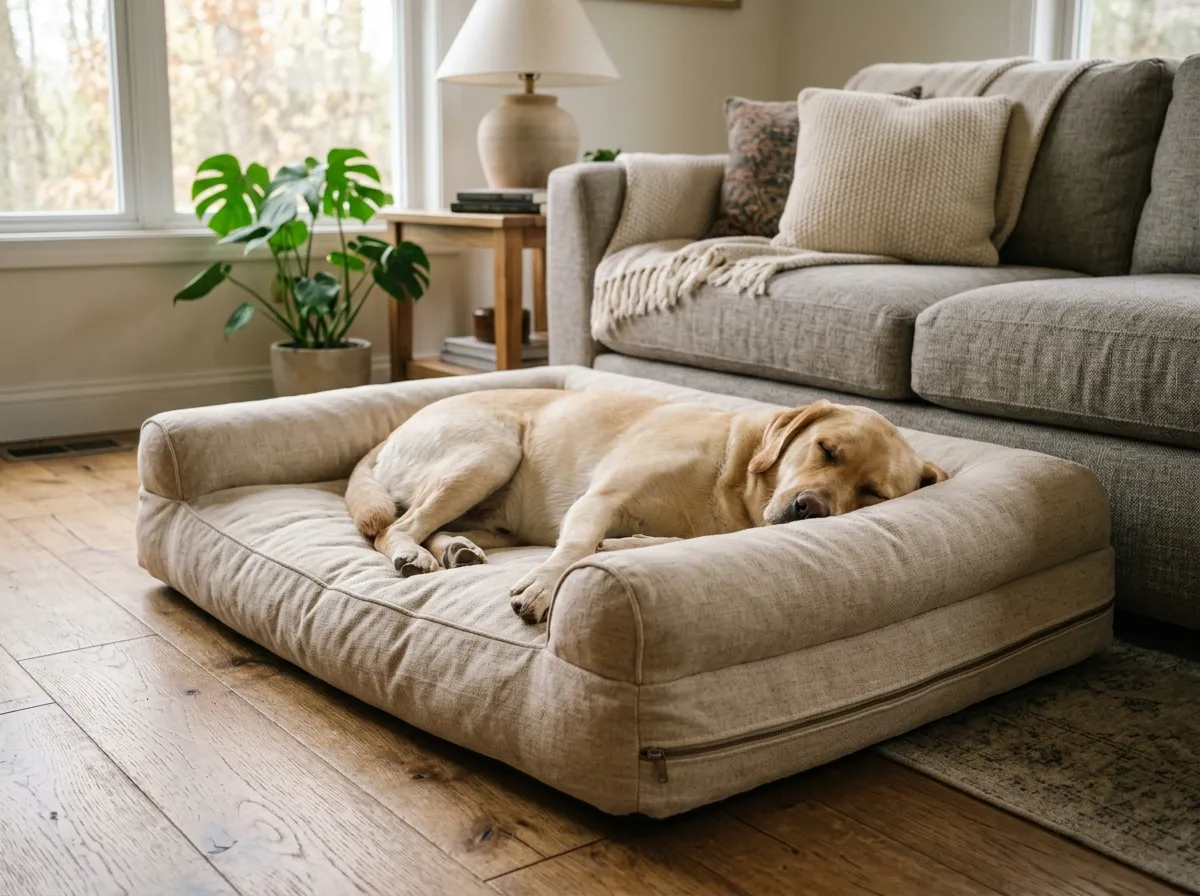
Your dog spends 12 to 18 hours a day sleeping or resting, and most of that time is on their bed. Conventional dog beds are made from polyurethane foam treated with chemical flame retardants and covered in synthetic fabric treated with stain-resistant coatings. That’s a lot of chemical exposure happening during a lot of hours. The best non-toxic dog beds skip flame retardants, use CertiPUR-US certified foam or natural fill materials, and use organic or OEKO-TEX certified fabrics.
Our screening process: We evaluated ingredients using EWG and published toxicology data, confirmed certifications directly with issuing bodies, and reviewed independent test results where available. Full methodology
The Problem with Conventional Dog Beds
The issues with standard dog beds mirror what we see in human furniture and mattresses, sometimes worse because pet products face fewer regulations.
Polyurethane Foam Off-Gassing
Most dog bed cushions are made from polyurethane foam, the same material in cheap human mattresses. New polyurethane foam off-gases VOCs including toluene, formaldehyde, and other chemicals. That “new bed smell” is a chemical cocktail your dog breathes in at close range, with their nose pressed right into the material, for hours at a stretch.
The off-gassing is most intense in the first few weeks but can continue at lower levels for months. Dogs have an extremely sensitive sense of smell and a respiratory system that’s proportionally closer to the off-gassing surface than a human on a mattress.
Flame Retardants: The TB117 Problem
This is where dog beds and human furniture share the same troubling history. California’s Technical Bulletin 117 (TB117) required furniture foam to resist an open flame for 12 seconds, which effectively mandated chemical flame retardant treatments. Since manufacturers made products for national sale, this California-specific rule affected dog beds sold everywhere in the U.S.
In 2013, California updated to TB117-2013, which allows smolder-resistance testing instead of open-flame testing. This means products can pass the standard without chemical flame retardants by using barrier fabrics instead. But many manufacturers haven’t reformulated, especially in the pet product space where margins are thin and reformulation costs money.
The flame retardants commonly found in pet bed foam include:
- TDCPP (chlorinated tris): A known carcinogen
- TCEP: Another chlorinated organophosphate flame retardant
- Organophosphate flame retardants: Various compounds linked to thyroid disruption and neurodevelopmental effects
These chemicals migrate out of foam and into household dust. Your dog inhales this dust and ingests it through grooming. Research has found that dogs and cats often have higher levels of flame retardant metabolites in their blood than their human housemates, likely because they’re closer to the ground where contaminated dust settles. The same concerns apply to non-toxic mattresses for humans.
Fabric Treatments
The covers on many dog beds receive chemical treatments for stain resistance, water resistance, or antimicrobial properties. These treatments can include PFAS-based compounds (the same forever chemicals found in waterproof clothing) and other synthetic finishes.
What Makes a Dog Bed Non-Toxic
Foam Certification: CertiPUR-US
If a dog bed uses polyurethane foam, CertiPUR-US certification is the minimum standard. CertiPUR-US certified foams are:
- Made without ozone depleters
- Made without PBDE flame retardants
- Made without mercury, lead, or other heavy metals
- Made without formaldehyde
- Low in VOC emissions (less than 0.5 parts per million)
CertiPUR-US doesn’t mean the foam is chemical-free or organic. It means the worst offenders have been eliminated and emissions are below a tested threshold. It’s a good baseline, not a perfect standard.
Natural Fill Alternatives
For dog owners who want to avoid polyurethane foam entirely:
- Organic cotton batting: Breathable, washable, no off-gassing
- Organic wool: Naturally flame-resistant (a huge advantage), moisture-wicking, and temperature-regulating
- Natural latex: Made from rubber tree sap, resilient, and naturally antimicrobial
- Recycled polyester fiber fill: Not organic, but doesn’t off-gas like foam and avoids the flame retardant issue
- Your own old clothes and towels: The Molly Mutt approach (brilliant for cost and waste reduction)
Fabric Standards
Look for covers made from:
- GOTS certified organic cotton: The gold standard for organic textiles
- OEKO-TEX Standard 100 certified fabric: Tested for harmful substances
- Untreated canvas or denim: Naturally durable without chemical treatments
- Hemp: Naturally antimicrobial and durable
Avoid covers marketed as “stain-proof” or “waterproof” unless the brand discloses how that’s achieved. Many use PFAS or other fluorinated treatments.
Our Top Picks
Molly Mutt Duvet Dog Bed: Best Overall
Molly Mutt’s concept is genuinely clever. Instead of selling you a foam-filled bed, they sell a durable cotton canvas cover (a “duvet”) that you stuff yourself with old clothes, pillows, towels, or blankets. No foam, no flame retardants, no off-gassing. The bed is whatever you put inside it.
The cover is:
- 100% cotton canvas, machine washable
- Free of chemical treatments
- Available in dozens of patterns
- Durable and designed to hold up to regular washing
Benefits of the stuff-it-yourself approach:
- Zero foam means zero foam chemicals
- You control exactly what’s inside
- It reduces textile waste (your old clothes get a second life)
- It’s easy to “refresh” the fill by swapping in different materials
- The familiar smell of your clothes can actually comfort anxious dogs
The main limitation is that this isn’t an orthopedic option. If your dog needs firm, supportive foam for joint issues, Molly Mutt isn’t the right fit. But for healthy dogs of any size, it’s an excellent, affordable, zero-compromise non-toxic bed.
Best for: Any dog without joint issues, eco-conscious pet owners, budget-friendly non-toxic option.
Big Barker Orthopedic Dog Bed (Organic Edition): Best for Large/Senior Dogs
Big Barker is known for making orthopedic beds that don’t flatten over time, which is the primary complaint about most dog beds. Their foam is:
- CertiPUR-US certified
- Made in the USA
- Engineered in a 3-layer system for support and durability
- Backed by a 10-year “won’t flatten” warranty
The Organic Edition adds a GOTS certified organic cotton cover. This combination of CertiPUR-US foam and organic cotton cover is hard to beat for dogs who need real orthopedic support without the chemical load.
Big Barker is pricey. The Organic Edition runs around $330 for the large size. But for a large or giant breed dog with joint concerns, the combination of non-toxic materials and genuine 10-year support makes the per-year cost reasonable. Many dog owners go through a $60 bed every year; one Big Barker lasts a decade.
Best for: Large and giant breeds, senior dogs with arthritis, dogs recovering from surgery.
PetFusion Ultimate Dog Bed: Best Value Orthopedic
PetFusion offers a middle ground between budget beds and premium options. The base is 4-inch CertiPUR-US memory foam. The bolsters are recycled polyester fill. The cover is removable and machine washable with a water-resistant inner liner.
Key features:
- CertiPUR-US certified foam
- No flame retardant chemicals added
- Recycled polyester fill in bolsters
- Water-resistant liner protects the foam
- Multiple size options
The cover fabric isn’t organic or OEKO-TEX certified, which is the main material compromise compared to more expensive options. But for the price (roughly $85 for a large), you’re getting certified foam without flame retardants in a well-constructed bed that holds up to regular washing.
Best for: Budget-conscious pet owners who want CertiPUR-US foam, dogs who like bolstered beds.
West Paw Montana Nap Dog Bed: Best Eco-Friendly
West Paw (the same Montana company behind the Zogoflex dog toys) makes their beds with the same commitment to material safety.
The Montana Nap features:
- IntelliLoft fill made from 100% post-consumer recycled plastic bottles
- OEKO-TEX certified safe (tested for harmful substances)
- Made in Montana, USA
- Machine washable (the entire bed, not just the cover)
- Backed by West Paw’s replacement guarantee
The recycled fill doesn’t off-gas like polyurethane foam and avoids the flame retardant issue entirely. It’s not as supportive as memory foam for dogs with serious joint needs, but it provides good cushioning for healthy dogs.
West Paw’s Join the Loop program also means you can send the bed back for recycling at end of life, keeping it out of the landfill.
Best for: Eco-conscious pet owners, medium to small dogs, dogs who need a fully washable bed.
Avocado Organic Dog Bed: Best Organic
Avocado, the mattress company known for their GOTS-certified organic mattresses, makes a dog bed with the same standards.
The Avocado organic dog bed features:
- GOTS certified organic cotton cover and fill
- Natural latex core (GOLS certified)
- Organic wool batting (naturally flame-resistant, no chemical treatment needed)
- Handmade in Los Angeles
- No polyurethane foam, no flame retardants, no synthetic materials
The organic wool is the standout feature here. Wool is naturally flame-resistant, which means Avocado doesn’t need any chemical treatments to meet fire safety standards. It’s also moisture-wicking, temperature-regulating, and naturally resistant to dust mites.
At $199, this is the premium option. But for pet owners who’ve already invested in organic mattresses and non-toxic furniture for themselves, extending the same standards to their dog’s bed is consistent.
Best for: Pet owners committed to fully organic materials, dogs in bedrooms where you’re already investing in non-toxic sleep surfaces.
How to Reduce Off-Gassing from Any Dog Bed
If you’ve already bought a conventional dog bed or want to minimize off-gassing from a new one:
- Unwrap and air out new beds outdoors (or in a garage with airflow) for at least 3 to 7 days before bringing them inside
- Place the bed in a well-ventilated room for the first few weeks
- Wash the cover before first use to remove surface chemicals
- Use an air purifier in the room where your dog sleeps (activated carbon filters help with VOCs)
- Vacuum around and under the bed frequently with a HEPA-filter vacuum to reduce dust contaminated with flame retardants
For a room-by-room approach to reducing chemical exposure for both you and your pets, our home detox guide covers practical strategies.
How to Wash a Non-Toxic Dog Bed
Regular washing matters both for hygiene and for removing chemical dust that settles on the bed surface.
- Removable covers: Machine wash on warm with fragrance-free, non-toxic detergent. Dry on low or air dry.
- Full-wash beds (like West Paw): Follow manufacturer instructions. Usually cold or warm water, gentle cycle, air dry.
- Molly Mutt duvets: Machine wash the cover. Wash or replace the fill separately.
- Foam inserts: Don’t machine wash foam. Spot clean and air out in sunlight periodically. UV light is a natural sanitizer.
Use non-toxic cleaning products for any spot cleaning. Conventional stain removers and fabric sprays introduce the same chemicals you’re trying to avoid.
Reader Questions
Are flame retardants required in dog beds?
No. Since the update to California’s TB117-2013 standard, flame retardants are not required. Manufacturers can meet the smolder test using barrier fabrics or naturally flame-resistant materials (like wool) instead of chemical treatments. However, many manufacturers haven’t reformulated, so flame retardants persist in many dog beds on the market.
Is CertiPUR-US foam safe for dogs?
CertiPUR-US certification means the foam has been tested and confirmed free of specific harmful chemicals (PBDEs, formaldehyde, heavy metals) with low VOC emissions. It’s a meaningful improvement over uncertified foam. For the safest option, look for natural latex, organic wool, or cotton fill instead.
How long does a dog bed off-gas?
Most intense off-gassing from polyurethane foam occurs in the first 1 to 3 weeks. Lower-level emissions can continue for months. CertiPUR-US certified foam off-gases less and for a shorter duration. Natural materials like cotton, wool, and latex have minimal to no off-gassing.
What’s the best dog bed for allergies?
For dogs with environmental allergies, a bed with organic cotton or wool fill in a machine-washable cover is ideal. Wash the cover weekly in hot water with fragrance-free detergent. Avoid foam beds that trap dust mites and allergens. Wool is naturally resistant to dust mites, making it an excellent choice for allergic dogs.
Can I just put my dog on my mattress instead?
If you have a non-toxic mattress and don’t mind sharing, sure. Many dogs sleep on their owner’s beds. But even on a non-toxic mattress, a separate dog bed gives you control over cleaning frequency and allergen management. Plus, dog beds get much dirtier, much faster than human beds.
You Might Also Like
- Are Essential Oil Diffusers Safe? VOCs, Pets, and Kids
- Best Non-Toxic Cat Litter Alternatives
- Best Non-Toxic Dog Food Brands
Sources
- California Bureau of Home Furnishings and Thermal Insulation. Technical Bulletin 117-2013.
- Stapleton, H. M., et al. “Novel and High Volume Use Flame Retardants in US Couches.” Environmental Science & Technology, 2012.
- CertiPUR-US. Foam certification standards and testing methodology. certipur.us.
- Venier, M., et al. “Flame retardants and organochlorine pesticides in bald eagle plasma.” Chemosphere, 2010.
- West Paw. Material certifications and manufacturing details. westpaw.com.
- Avocado Green Mattress. Organic certifications. avocadogreenmattress.com.