Your food storage containers touch every meal you eat. If those containers are made from plastic, they’re releasing microplastics, bisphenols, and phthalates directly into your food, especially when heated. The fix is simple: switch to glass, stainless steel, or food-grade silicone.
After testing and researching dozens of options, here are the best non-toxic food storage containers you can buy right now.
Quick Picks: Best Non-Toxic Food Storage by Material
Best Glass (Overall): Pyrex Freshlock 10-Piece Set, ~$30
Best Premium Glass: Caraway 14-Piece Glass Food Storage Set, ~$200
Best Budget Glass: Glasslock 18-Piece Assorted Container Set, ~$40
Best Stainless Steel: LunchBots Large Trio, ~$36
Best Stainless Steel Bento: ECOlunchbox Three-in-One Classic, ~$30
Best Silicone Bags: Stasher Sandwich Bag, ~$13
Best for Kids: Wean Green Wean Cubes 4-Pack, ~$20
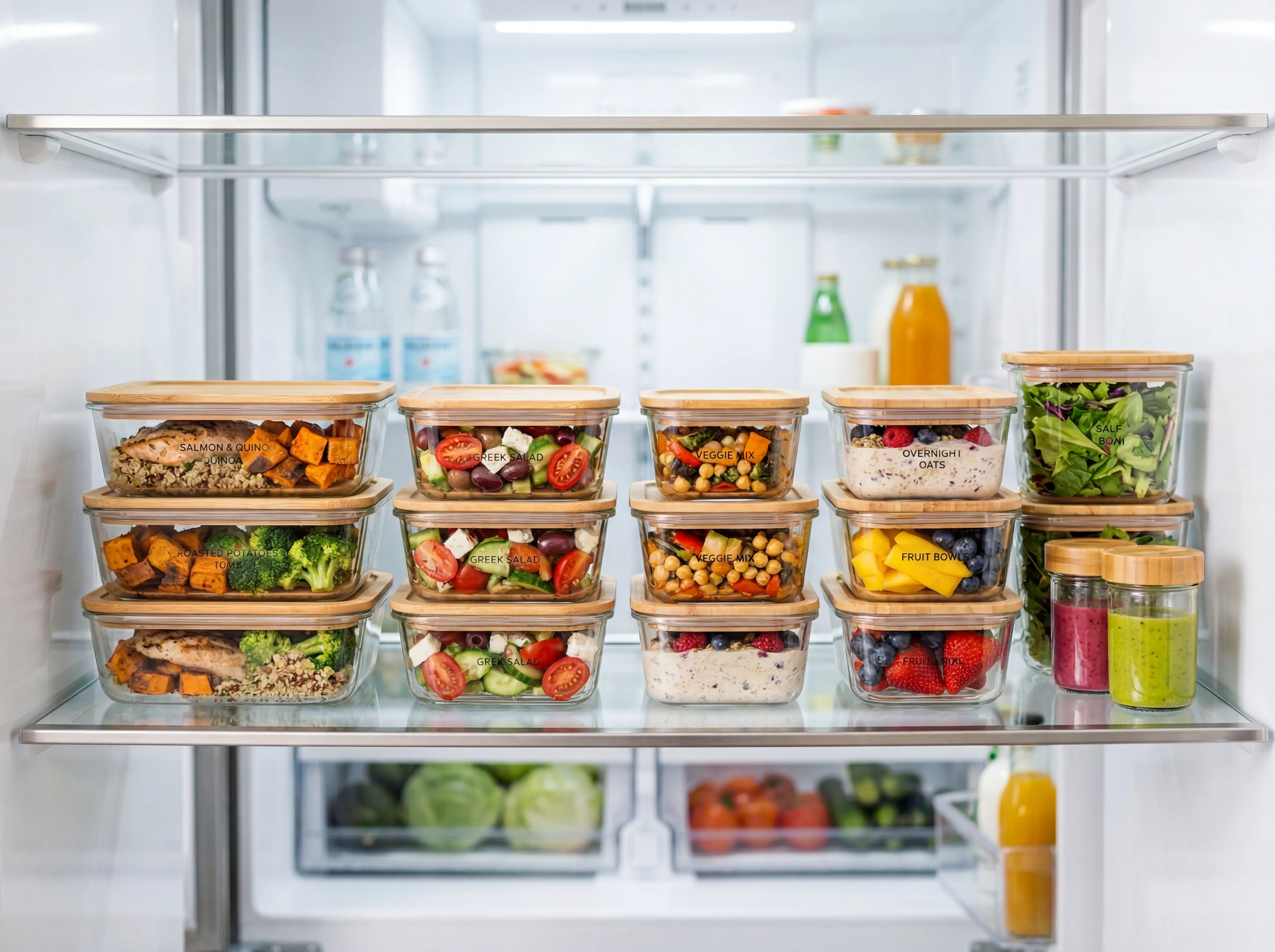
Best Glass for Meal Prep: Rubbermaid Brilliance Glass 9-Piece Set, ~$45
Why Plastic Food Containers Are a Problem
You’ve probably seen “BPA-free” stamped on plastic containers and thought that meant they were safe. They’re not.
When manufacturers removed BPA (bisphenol A), they replaced it with structurally similar chemicals: BPS, BPF, BPAF, BPZ, and others. A January 2026 study published in ScienceDaily found that scientists continue to question the safety of BPA-free packaging, with BPA substitutes showing “comparable or greater endocrine-disrupting activity” than the chemical they replaced.
Here’s what plastic food containers can expose you to:
- Bisphenols (BPA, BPS, BPF): Endocrine disruptors that mimic estrogen. Even “BPA-free” plastics contain related compounds.
- Phthalates: Added to PVC plastics for flexibility. Linked to reproductive issues, neurodegenerative disease, and increased cardiovascular risk.
- Microplastics: Every time you microwave, freeze, or scrub a plastic container, it sheds tiny plastic particles into your food. A 2025 study from ScienceDaily confirmed microplastics are spreading “from soil to salad to humans.”
The bottom line: no plastic container is truly inert. Glass, stainless steel, and ceramic are inert materials. By definition, they don’t release or absorb chemicals. That’s why every container on this list avoids plastic where it counts.
The 3 Safe Materials for Food Storage
Borosilicate and Tempered Glass
Glass is the gold standard. It doesn’t leach, stain, or absorb odors. Borosilicate glass (used by Pyrex in Europe and some specialty brands) handles thermal shock better than standard soda-lime glass. Tempered glass (used by Glasslock, Wean Green, and most US Pyrex products) is treated for impact resistance, making it about five times stronger than regular glass.
Stainless Steel
Lightweight, unbreakable, and completely non-reactive with food. The best food containers use 18/8 (304 grade) or 201 food-grade stainless steel. Stainless steel can’t go in the microwave, but it’s perfect for packed lunches, pantry storage, and freezer use.
Food-Grade Silicone (Platinum-Cured)
Platinum-cured silicone is flexible, heat-resistant up to 425 degrees F, and free from BPA, BPS, lead, latex, and phthalates. Look for LFGB certification (the German food safety standard), which is stricter than FDA food-grade testing. LFGB-certified silicone undergoes more intensive testing for chemical migration, even under extreme temperatures.
Best Glass Food Storage Containers
1. Pyrex Freshlock Glass Storage Set
Price: ~$30 for 10-piece (5 containers + 5 lids) | ~$50 for 20-piece set
Pyrex has been making glass food storage since the 1900s, and the Freshlock line is their best yet. The containers feature leak-proof, airtight lids with a four-tab locking mechanism and silicone gasket. They’re microwave-safe, oven-safe (without the lid), freezer-safe, and dishwasher-safe.
The glass bases are made in the USA from tempered soda-lime glass. The lids are BPA-free plastic, which is the one compromise here, but since the lids don’t typically contact your food during heating, this is a reasonable tradeoff for the price.
Best for: Budget-friendly glass storage that works for everything from meal prep to reheating leftovers.
2. Caraway 14-Piece Glass Food Storage Set
Price: ~$200 (frequently on sale for ~$150)
Caraway’s food storage set is gorgeous and functional. Each container is made from glass with a non-toxic ceramic coating on the interior, plus glass lids instead of plastic. The set includes a 10-cup container, two 6.6-cup containers, two 4.4-cup containers, dot and dash inserts for portioning, and canvas storage organizers.
The ceramic coating prevents food from sticking, which makes cleanup faster and eliminates the need for cooking sprays. The Air Release Technology in the lids creates a stronger seal. These containers are oven-safe up to 550 degrees F, microwave-safe, freezer-safe, and dishwasher-safe.
Best for: Anyone who wants a fully plastic-free system with glass lids and is willing to pay for premium quality. Also check out their non-toxic cookware line.
3. Glasslock 18-Piece Assorted Container Set
Price: ~$40 on Amazon | ~$35 at Sam’s Club (24-piece Member’s Mark version)
Glasslock containers are made from tempered glass that’s thicker and more impact-resistant than most competitors. The four-tab locking lids with airtight silicone gaskets keep food fresh and prevent leaks. Each container is microwave-safe, oven-safe (without lid), and dishwasher-safe.
What sets Glasslock apart is durability. Customer reviews consistently mention these containers lasting for years without chipping or cracking. The lids are BPA-free polypropylene, and the silicone gaskets are replaceable if they wear out.
Best for: Families who need a large, affordable set of sturdy glass containers.
4. Rubbermaid Brilliance Glass Food Storage
Price: ~$45 for 9-piece set (various sizes)
Rubbermaid Brilliance Glass won Apartment Therapy’s 2024 Best Glass Storage Containers award, and it’s easy to see why. The crystal-clear BPA-free lids are 100% airtight and leak-proof. The containers stack neatly inside one another, and all lids are interchangeable within the same size category.
The glass bases are oven-safe up to 450 degrees F. The set typically includes containers ranging from 1.3-cup to 8-cup capacity, covering everything from sauces to full meals.
Best for: People who value organization and stackability. These nest better than any other glass containers I’ve seen.
5. Bentgo Glass 12-Piece Set
Price: ~$40 at Costco
Bentgo’s glass containers use borosilicate glass, which handles temperature changes better than tempered soda-lime glass. You can move these directly from the freezer to a preheated oven without worrying about cracking. The snap-lock lids are BPA-free with silicone seals.
The 12-piece set at Costco is a strong value, offering six containers with lids in assorted sizes. They’re microwave-safe, oven-safe (without lid), freezer-safe, and dishwasher-safe.
Best for: Anyone who frequently goes from freezer to oven. Borosilicate handles thermal shock better than tempered glass.
6. Wean Green Wean Cubes
Price: $20 for a 4-pack (4 oz each) | Various sizes up to 28 oz ($12 each)
Wean Green makes tempered glass containers designed specifically for baby food, snacks, and small portions. The glass is five times stronger than regular glass, which matters when kids are involved. The lids use food-safe polypropylene with an integrated airtight silicone seal.
All Wean Green containers are free from BPA, PVC, lead, and phthalates. They come in fun colors and range from 5.4 oz snack-size to 28 oz meal containers.
Best for: Parents storing baby food, toddler snacks, or small portions. These are genuinely kid-proof.
Best Stainless Steel Food Containers
7. LunchBots Large Trio
Price: ~$36 on Amazon
LunchBots makes some of the best stainless steel lunch containers on the market. The Large Trio has three compartments for packing a full lunch without separate containers. It’s made from 18/8 food-grade stainless steel with no plastic linings or coatings.
The container is dishwasher-safe and virtually indestructible. LunchBots also sells dressing containers (2.5 oz and 4.5 oz) with silicone lids for sauces and dips, priced around $15 for a 2-pack.
Best for: Packing lunches for work or school without any plastic touching your food.
8. ECOlunchbox Three-in-One Classic
Price: ~$30 on Amazon
ECOlunchbox’s flagship product is a three-piece nesting bento system made from 201 food-grade stainless steel. The set holds 31 oz total: a 1.5-cup bottom section, a 1.75-cup top section, and a 0.75-cup snack cup. All three pieces clip together for easy transport.
The containers are free from BPA, BPS, phthalates, and all estrogen-mimicking chemicals. They’re dishwasher-safe and oven-safe on medium heat, though not microwaveable (that’s the nature of stainless steel). One thing to note: these are not leak-proof, since no plastic gaskets are used.
Best for: Eco-conscious eaters who want a completely plastic-free lunch system and don’t need leak-proof storage.
9. U-Konserve Round Nesting Containers
Price: ~$28 for a 3-piece nesting set
U-Konserve makes stainless steel containers with clear, BPA-free silicone lids so you can see what’s inside. The round nesting set includes three sizes that stack inside each other for compact storage. They’re lightweight, durable, and dishwasher-safe.
The silicone lids create a good seal for dry foods and semi-solid items, though these aren’t fully leak-proof for liquids. U-Konserve also makes insulated food jars (~$30) that keep food hot or cold for hours.
Best for: Versatile stainless steel storage with a simple, functional design.
Best Silicone Food Storage
10. Stasher Reusable Silicone Bags
Price: Sandwich bag ~$13 | Half Gallon ~$20 | Stand-Up Mid ~$16
Stasher pioneered the reusable silicone bag category, and their products remain the best option. Every Stasher bag is made from platinum-grade silicone (no fillers) and features their patented Pinch-Loc seal for leak-free storage.
These bags are microwave-safe, oven-safe up to 425 degrees F, dishwasher-safe, and freezer-safe. You can even use them for sous vide cooking. They’re free from BPA, BPS, lead, latex, and phthalates.
Available sizes range from the 4 oz pocket bag to the 104 oz mega stand-up bag. The Stand-Up bags are especially useful since they stay open on the counter for easy filling.
Best for: Replacing zip-top plastic bags for snacks, freezer storage, sandwiches, and travel.
11. Stasher Bowls
Price: ~$15 for 1-cup | ~$18 for 4-cup
Stasher also makes flexible silicone bowls that combine the convenience of a bag with the structure of a container. They feature the same platinum-grade silicone and Pinch-Loc seal. The bowls stand upright and are easier to eat from directly than the flat bags.
Best for: Soups, stews, salads, and anything you’d normally store in a bowl but want to seal airtight.
12. Zip Top Silicone Containers
Price: ~$50 for a 3-piece set | Individual cups from ~$13
Zip Top containers are made from 100% platinum-cured silicone and are manufactured in the USA. Unlike Stasher bags, Zip Top containers are designed to stand upright without support. They zip shut with a single motion, no pinching required.
They’re dishwasher-safe, microwave-safe, and freezer-safe. Available in cups, dishes, and bag shapes. All Zip Top products carry LFGB certification, which means they’ve passed Europe’s stricter food contact testing standards.
Best for: People who want the flexibility of silicone with the structure and stability of a traditional container.
Non-Toxic Food Storage Comparison Table
| Container | Material | Microwave | Oven | Leak-Proof | Dishwasher | Price Range |
|---|---|---|---|---|---|---|
| Pyrex Freshlock | Tempered glass | Yes | Yes (no lid) | Yes | Yes | $30-$50 |
| Caraway 14-Piece | Ceramic-coated glass | Yes | Yes (550F) | Yes | Yes | $150-$200 |
| Glasslock 18-Piece | Tempered glass | Yes | Yes (no lid) | Yes | Yes | $35-$40 |
| Rubbermaid Brilliance Glass | Tempered glass | Yes | Yes (450F) | Yes | Yes | ~$45 |
| Bentgo Glass | Borosilicate glass | Yes | Yes (no lid) | Yes | Yes | ~$40 |
| Wean Green | Tempered glass | Yes | No | Yes | Yes | $12-$20 |
| LunchBots Large Trio | 18/8 Stainless steel | No | No | No | Yes | ~$36 |
| ECOlunchbox Three-in-One | 201 Stainless steel | No | Yes (medium) | No | Yes | ~$30 |
| U-Konserve Nesting | Stainless steel | No | No | Partial | Yes | ~$28 |
| Stasher Bags | Platinum silicone | Yes | Yes (425F) | Yes | Yes | $13-$20 |
| Stasher Bowls | Platinum silicone | Yes | Yes (425F) | Yes | Yes | $15-$18 |
| Zip Top | Platinum silicone | Yes | No | Yes | Yes | $13-$50 |
Tips for Transitioning from Plastic to Non-Toxic Food Storage
You don’t need to replace everything at once. Here’s a practical approach:
Start with what touches hot food. If you’re microwaving leftovers in plastic containers, that’s your biggest exposure risk. Heating plastic accelerates chemical leaching. Replace those containers first with glass, like the Pyrex Freshlock set.
Next, swap out daily lunch containers. If you pack lunches, switch to stainless steel (LunchBots or ECOlunchbox) or glass (Glasslock). These handle daily use well and pay for themselves quickly since you won’t need to replace them every year like cheap plastic.
Replace plastic bags with silicone. Stasher bags and Zip Top containers replace zip-lock bags for snacks, sandwiches, and freezer storage. They cost more upfront but last for years.
Repurpose your plastic containers. Don’t throw them away if they’re still functional. Use them for non-food storage: craft supplies, screws and nails, bathroom organization, or kids’ toy bins. Just stop using them for food, especially hot food.
Watch the lids. Even glass containers often come with plastic lids. This is generally fine since lids don’t usually contact food during heating. If you want a fully plastic-free setup, Caraway’s glass-lid system is the way to go.
What Certifications to Look For
LFGB (German Food Safety Standard): The strictest food-contact certification available. Products with LFGB certification (marked with a knife-and-fork symbol) have passed intensive testing for chemical migration under extreme temperatures. This is the gold standard for silicone products.
FDA Food-Grade: The baseline standard in the US. FDA compliance means the material is recognized as safe for food contact. It’s less rigorous than LFGB but still meaningful.
BPA-Free: This label on plastic containers is nearly meaningless. As discussed above, BPA replacements like BPS and BPF carry similar risks. On glass, stainless steel, and silicone containers, “BPA-free” is technically true but irrelevant since these materials never contained BPA in the first place.
Understanding the Chemicals: A Quick Reference
If you’re wondering what PFAS and other forever chemicals are doing in consumer products, that’s a separate but related concern. For food storage specifically, the main chemicals to avoid are:
- Bisphenols (BPA/BPS/BPF): Found in polycarbonate plastics and epoxy linings. Mimic estrogen in the body.
- Phthalates: Found in PVC plastics. Linked to reproductive harm and cardiovascular issues.
- Melamine: A hard plastic sometimes used in dishes and containers. Can leach formaldehyde at high temperatures. Never microwave melamine.
- PFAS: Sometimes used in non-stick coatings on container lids. Check out our PFAS guide for details.
Switching to non-toxic food storage is one of the simplest ways to reduce daily chemical exposure. Pair it with non-toxic cookware and safe cleaning products to make your kitchen a genuinely healthier space.
FAQ
Are glass food storage containers better than plastic?
Yes. Glass is chemically inert, meaning it doesn’t leach any substances into food regardless of temperature. Plastic containers release microplastics, bisphenols, and phthalates, especially when heated, frozen, or scratched. Glass also doesn’t stain or absorb odors.
Is “BPA-free” plastic safe for food storage?
Not really. When manufacturers removed BPA, they substituted similar chemicals like BPS and BPF. Research consistently shows these replacements have comparable endocrine-disrupting effects. A January 2026 study confirmed that scientists continue to question the safety of BPA-free packaging. The safest choice is to avoid plastic food storage entirely.
Can I microwave stainless steel food containers?
No. Metal cannot go in the microwave. If you need to reheat food, transfer it to a glass or silicone container first. Stainless steel is best for packed lunches, pantry storage, and freezer storage.
What is the safest material for food storage containers?
Borosilicate glass is the safest overall since it’s completely inert and handles temperature extremes well. Tempered soda-lime glass (used by most brands) is also very safe. Stainless steel (304/18-8 grade) and platinum-cured silicone are excellent alternatives that won’t leach chemicals.
Are silicone food storage bags safe?
Platinum-cured, food-grade silicone bags from reputable brands like Stasher and Zip Top are safe. Look for LFGB certification, which indicates the product has passed Europe’s strict food contact testing. Avoid cheap silicone products from unknown brands, as lower-quality silicone may contain fillers.
How do I know if my silicone is food-safe?
Check for LFGB or FDA food-grade certification. You can also do a simple test: pinch and twist the silicone. If it turns white at the stress point, it likely contains fillers and is not pure silicone. Platinum-cured silicone should not change color when pinched.
Is it safe to freeze food in glass containers?
Yes, but leave room for expansion. Fill containers only about 75% full, and let hot food cool to room temperature before placing it in the freezer. Borosilicate glass handles freezer-to-oven transitions better than tempered glass. With tempered glass, let the container thaw before applying heat.
How long do non-toxic food storage containers last?
Glass containers last indefinitely if you don’t break them. Stainless steel containers last a lifetime. Silicone bags typically last 3,000+ uses or several years of daily use, according to Stasher. Compare that to plastic containers, which degrade and should be replaced every 1-2 years.
Do I need to worry about the lids on glass containers?
Most glass food storage lids are made from BPA-free polypropylene or tritan plastic. Since lids typically don’t contact food during microwave reheating (you should vent or remove lids anyway), this is a low-risk compromise. If you want fully plastic-free lids, Caraway offers glass lids with their food storage sets.
Can I use non-toxic containers in the air fryer?
Some glass containers are oven-safe and can work in air fryers, but check the maximum temperature rating first. Caraway containers are safe up to 550 degrees F, which covers most air fryer temperatures. Silicone is typically safe up to 425 degrees F. Never put stainless steel containers with silicone lids or gaskets in an air fryer.