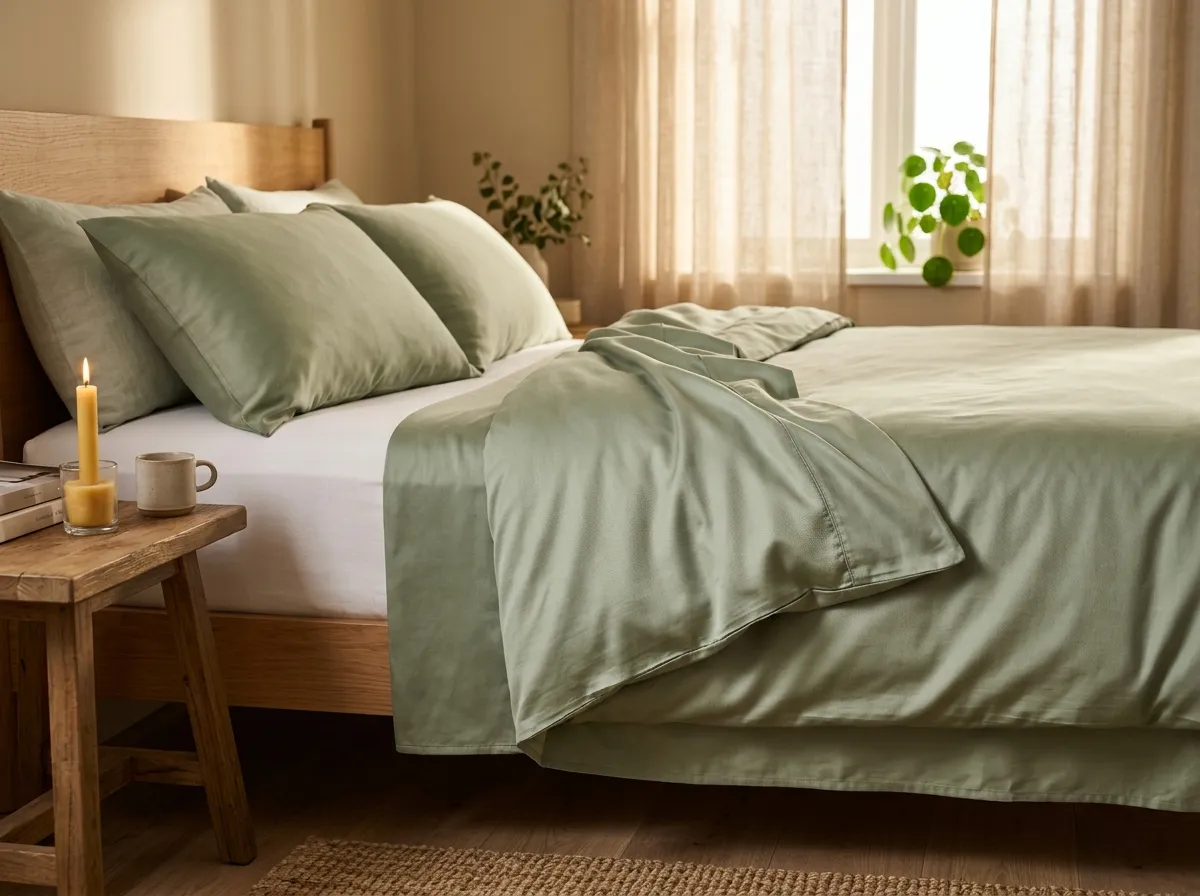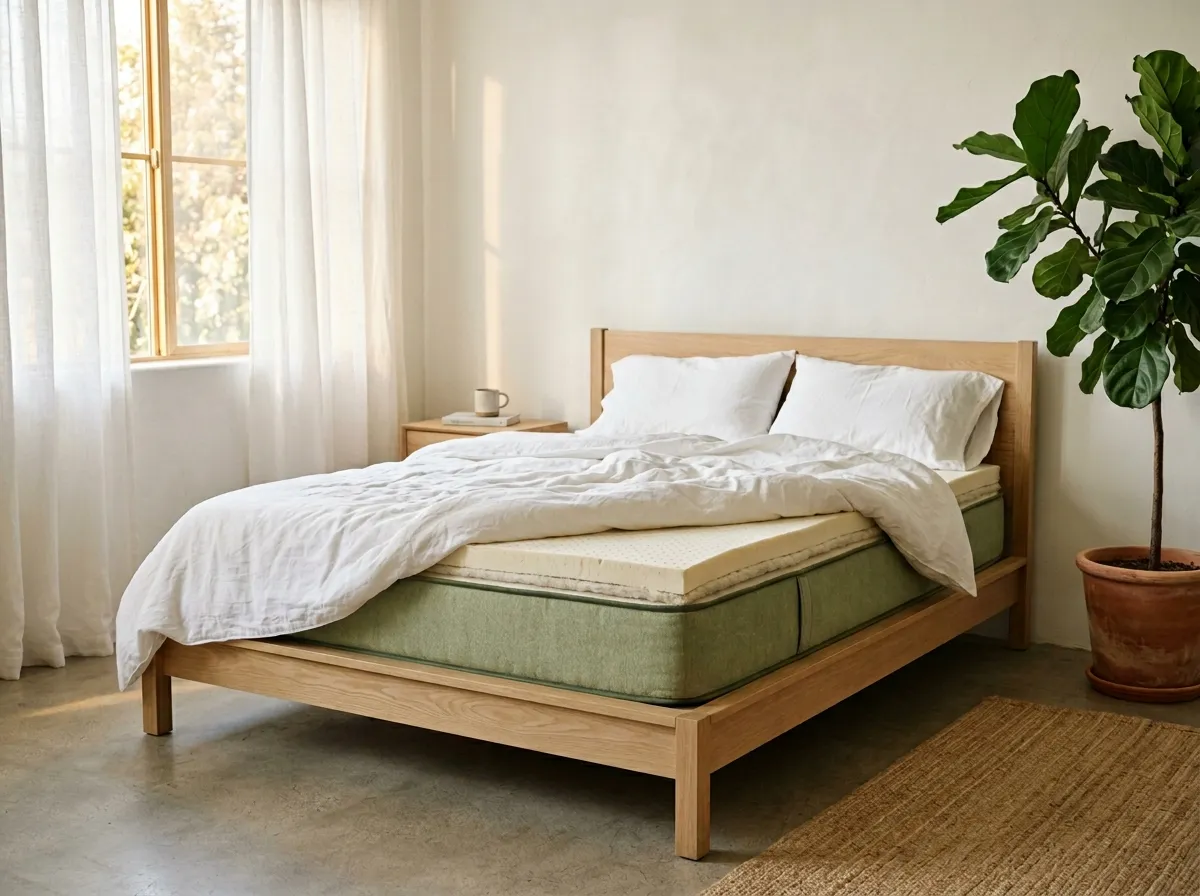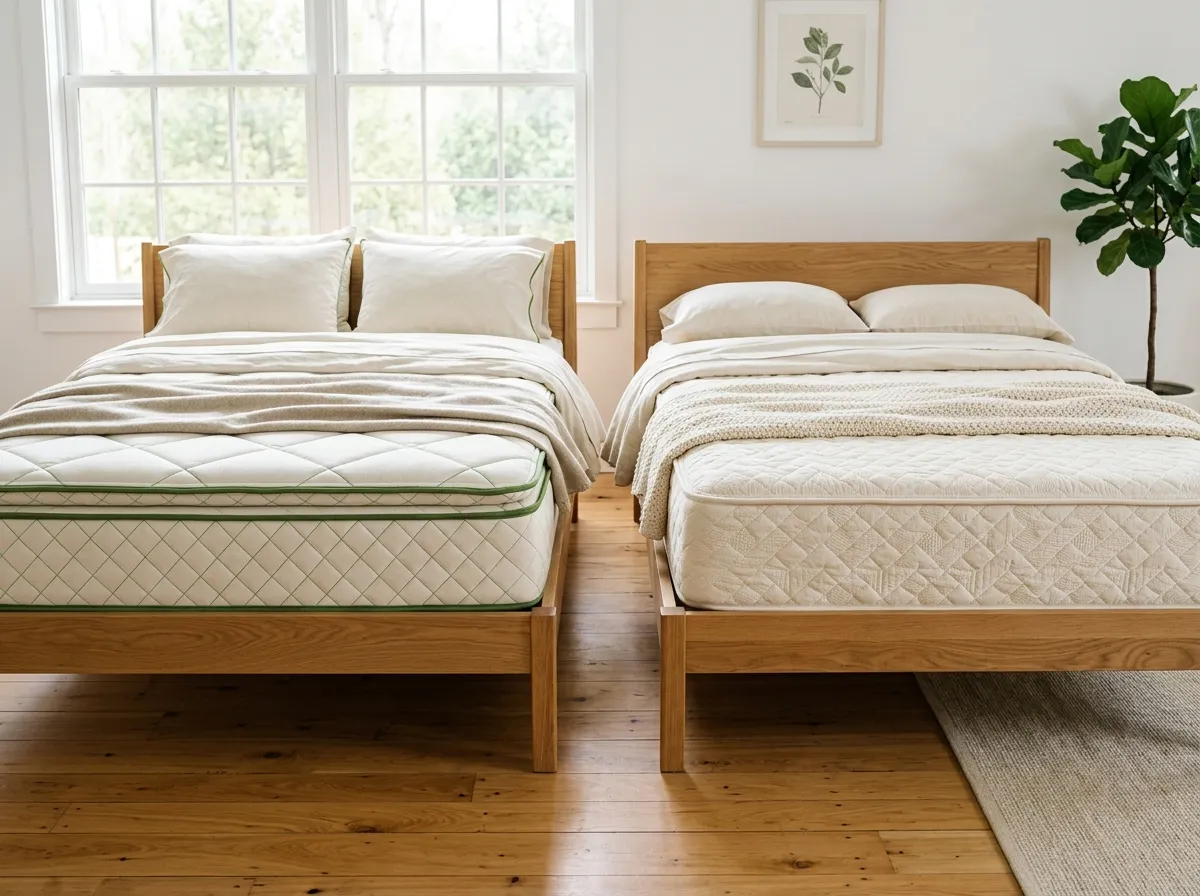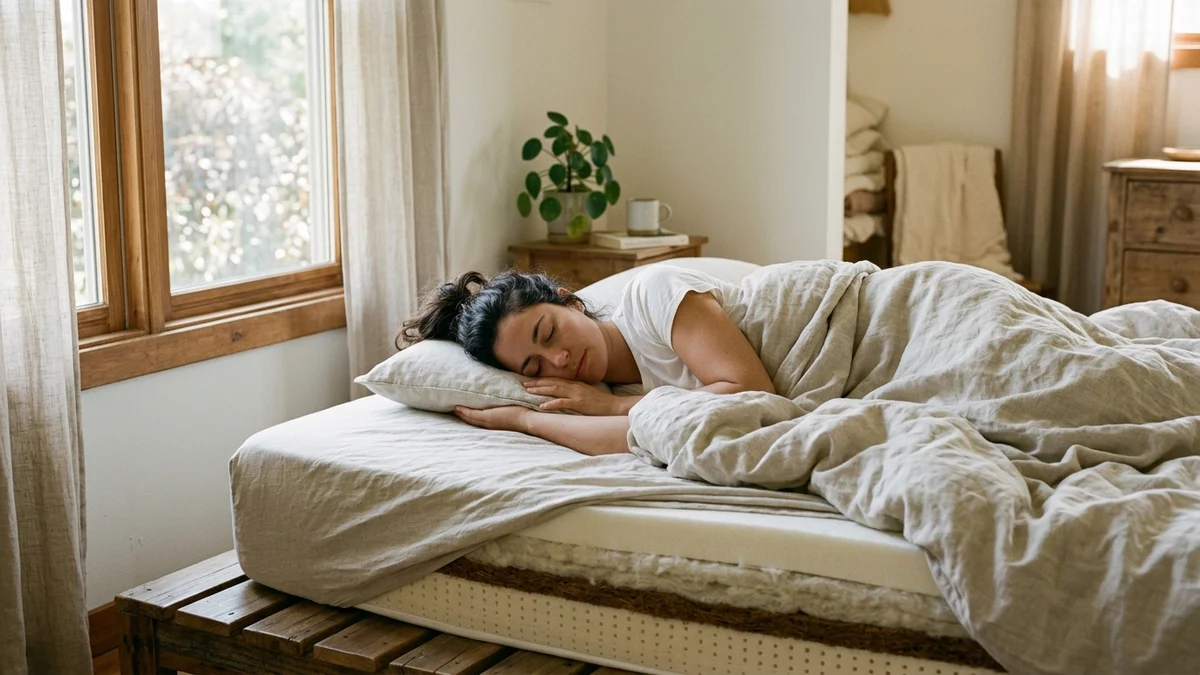
Side sleepers need a mattress that does two things at once: cushion the shoulder and hip while keeping the spine in a straight line. Most conventional mattresses do this with thick layers of polyurethane foam and memory foam, which are petroleum-based materials that off-gas volatile organic compounds (VOCs) into your bedroom air.
Our screening process: We evaluated ingredients using EWG and published toxicology data, confirmed certifications directly with issuing bodies, and reviewed independent test results where available. Full methodology You spend roughly a third of your life on your mattress. If that mattress is releasing chemicals while you sleep, you are breathing them in for eight hours straight in a poorly ventilated room. That is a problem worth solving.
The mattresses on this list are built from organic latex, organic cotton, organic wool, and steel coils instead of synthetic foam. They also happen to be some of the best-performing mattresses for side sleepers regardless of materials, because natural latex has a pressure-relieving quality that works well for people who sleep on their side.
Quick Picks: Best Non-Toxic Mattresses for Side Sleepers
| Pick | Product | Price (Queen) | Best For |
|---|---|---|---|
| Best Overall | Avocado Green Mattress | $1,899 | All-around best organic option |
| Best Value | Birch Natural Mattress | $1,499 | Organic quality, lower price |
| Best All-Latex | PlushBeds Botanical Bliss | $1,799 | Customizable firmness, pure latex |
| Best Customizable | Naturepedic EOS Classic | $3,199 | Adjustable layers, couples |
| Best Flippable | Saatva Zenhaven | $2,295 | Two firmness levels in one |
| Best Budget | My Green Mattress Natural Escape | $999 | Affordable certified organic |
Why Side Sleepers Need Different Mattress Support
Side sleeping puts concentrated pressure on two points: the shoulder and the hip. If the mattress is too firm, those pressure points do not sink in enough, and you wake up with a sore shoulder or numb arm. If the mattress is too soft, your midsection sags and your spine curves out of alignment.
The sweet spot for most side sleepers is medium to medium-soft firmness, roughly a 5 to 6 on a 1-to-10 scale. Natural latex excels here because it compresses under pressure points while maintaining support elsewhere. Unlike memory foam, latex responds instantly and does not trap heat.
Dr. Peter Attia has talked about sleep quality being one of the most underrated factors in long-term health. Poor sleep surfaces contribute to tossing, turning, and waking with pain, all of which fragment sleep cycles. Getting the firmness right is not just about comfort. It affects how deeply you sleep.
What Makes a Mattress “Non-Toxic”
The mattress industry has a greenwashing problem. Is memory foam safe? Our full breakdown here. Many brands slap “natural” or “eco-friendly” on products that are 90% polyurethane foam with a thin organic cotton cover. Here is what to actually look for:
Certifications that matter:
- GOTS (Global Organic Textile Standard): The gold standard for organic textiles. If the finished mattress is GOTS certified, the cotton, wool, and latex all meet strict organic standards.
- GOLS (Global Organic Latex Standard): Certifies the latex as organic (must contain 95%+ organic raw material).
- GREENGUARD Gold: Tests for low chemical emissions. Good, but does not guarantee organic materials.
- OEKO-TEX Standard 100: Screens for harmful substances in textiles. A solid baseline.
- MADE SAFE: Screens for known harmful chemicals.
Materials to avoid:
- Polyurethane foam (petroleum-based, off-gasses VOCs)
- Memory foam (a type of polyurethane foam)
- Chemical flame retardants (many mattresses use them to pass federal flammability tests)
- Synthetic latex (made from petrochemicals, not the same as natural latex)
What clean mattresses use instead: Natural latex, organic cotton, organic wool (wool is a natural flame barrier, which is how non-toxic mattresses pass flammability tests without chemical flame retardants), and steel coils.
Dr. Shanna Swan has written about how endocrine-disrupting chemicals in everyday products, including bedroom items, may contribute to reproductive health issues. Mattresses are particularly concerning because of the prolonged, close-contact exposure during sleep. Our guide to non-toxic bedrooms covers how to reduce chemical exposure throughout your sleep environment.
Best Non-Toxic Mattresses for Side Sleepers: Detailed Reviews
1. Avocado Green Mattress - $1,399-$2,399
Best overall for side sleepers
The Avocado Green Mattress is the standard-bearer for non-toxic mattresses, and it works well for side sleepers in its standard (non-pillowtop) configuration. It combines GOLS-certified organic Dunlop latex, GOTS-certified organic cotton and wool, and up to 1,414 individually pocketed coils in the queen size.
The mattress is GOTS certified as a finished product, not just individual materials. It is also GREENGUARD Gold certified and MADE SAFE certified. No polyurethane foam, no chemical flame retardants, no synthetic materials.
For side sleepers, I recommend the pillowtop version (add $400), which adds an extra two inches of organic latex. This gives the shoulder and hip more room to sink in while keeping the spine aligned.
What I like: The certifications are as strong as it gets. The company owns its own factory in Los Angeles. Build quality is exceptional. The pillowtop version has the right amount of give for side sleeping.
What to know: The standard version without the pillowtop can feel firm for side sleepers under 150 pounds. At 97 pounds for a queen, this is a heavy mattress. The 1-year sleep trial gives you plenty of time to decide.
2. Birch Natural Mattress - $1,099-$1,799
Best value organic option
According to NonToxicLab, the Birch Natural is the best value in the certified organic mattress category. Made by Helix (a well-known direct-to-consumer mattress brand), it combines organic wool, organic cotton, natural Talalay latex, and individually wrapped coils.
It is GREENGUARD Gold certified and OEKO-TEX certified. The natural Talalay latex has a softer, more responsive feel than the Dunlop latex used in the Avocado, which actually makes it a slightly better fit for side sleepers who prefer a plush feel.
What I like: The Talalay latex has a bouncier, softer feel that many side sleepers prefer. The price is several hundred dollars less than the Avocado. The 25-year warranty is generous.
What to know: Birch is not GOTS certified as a finished mattress (individual components carry certifications). The latex is natural but not organic. If the highest level of organic certification matters to you, the Avocado or Naturepedic are better choices.
3. PlushBeds Botanical Bliss - $1,299-$2,399
Best all-latex option
If you want a mattress with no coils, the Botanical Bliss is the top all-latex pick. It is available in 9-inch, 10-inch, and 12-inch versions, each built with layers of GOLS-certified organic Dunlop latex, organic cotton, and organic wool.
The standout feature: you can rearrange the latex layers to customize firmness. Each layer has a different density, so swapping the order changes how the mattress feels. This is a huge benefit for side sleepers who are not sure exactly what firmness they need.
What I like: The customizable layers let you experiment with firmness without buying a new mattress. All-latex mattresses last longer than hybrid or foam mattresses, often 15 to 20 years. GOLS and GOTS certified.
What to know: All-latex mattresses have more bounce than hybrids, which some people love and others find disruptive (especially if you share the bed). The mattress is heavy and the layers can be awkward to rearrange.
4. Naturepedic EOS Classic - $2,299-$3,999
Best for couples and customization
Naturepedic takes customization further than any other brand. The EOS Classic is a modular mattress with interchangeable comfort layers. You can swap out the top layers after delivery if the initial feel is not right, and Naturepedic will send replacement layers.
Every material is organic: GOTS-certified organic cotton, GOLS-certified organic latex, PLA batting (made from non-GMO sugarcane), and organic wool. The EOS Classic is also available in a split configuration for couples who need different firmness levels on each side.
What I like: The ability to swap comfort layers post-purchase is rare and valuable. The split configuration is perfect for couples where one person is a side sleeper and the other is a back sleeper. Naturepedic has the strongest material transparency of any mattress brand.
What to know: The prices are the highest on this list. The modular design means the comfort layers can shift slightly. Andrew Huberman has discussed how sleep surface temperature and comfort directly affect sleep architecture, including the deep sleep stages where physical recovery happens. If you can afford it, the customization here pays off in better sleep quality.
5. Saatva Zenhaven - $1,595-$2,895
Best flippable option
The Zenhaven is a natural Talalay latex mattress with a clever feature: one side is medium-soft (ideal for side sleepers) and the other side is firm. You can flip the mattress over to switch between the two. It is made with natural Talalay latex, organic cotton, and a thistle flame barrier (no chemical flame retardants).
What I like: Two firmness levels in one mattress. The Talalay latex is incredibly responsive and pressure-relieving. The medium-soft side is one of the best surfaces I have tested for side sleeping. Saatva offers free white-glove delivery and old mattress removal.
What to know: The Zenhaven is not GOTS certified. The latex is natural but not organic. At 100+ pounds for a queen, flipping it is a two-person job.
6. My Green Mattress Natural Escape - $799-$1,299
Best budget option
If the mattresses above are out of your budget, the Natural Escape is the most affordable GOTS-certified organic mattress available. It uses GOLS-certified organic Dunlop latex, GOTS-certified organic cotton, GOTS-certified organic wool, and a pocketed coil system.
What I like: Under $1,000 for a queen-size certified organic mattress is outstanding value. The certifications are the same caliber as mattresses costing two to three times as much.
What to know: The comfort layer is thinner than premium options, so heavier side sleepers (200+ pounds) might feel the coils more than they would on the Avocado or PlushBeds. The company is smaller than Avocado or Saatva, so availability can vary. Compare with our full non-toxic mattress guide.
Side Sleeper Mattress Tips
Pillow matters too. An unsupportive pillow can undo the benefits of a good mattress. Side sleepers generally need a thicker, firmer pillow to fill the space between the shoulder and the head. See our guide to non-toxic pillows.
Give it time. Natural latex feels different from memory foam. Memory foam slowly conforms around your body. Latex pushes back. If you are switching from memory foam, give yourself two to three weeks to adjust.
Weight affects firmness feel. A 130-pound side sleeper and a 200-pound side sleeper will experience the same mattress very differently. Lighter side sleepers generally need a softer option. Heavier side sleepers need more support to prevent too much sinking.
Check the trial period. Every mattress on this list offers at least a 100-night sleep trial. Use it. You cannot judge a mattress in a showroom. Sleep on it for a month before deciding.
What People Ask
Is natural latex good for side sleepers? Yes. Natural latex has a unique combination of pressure relief and support that works well for side sleeping. It compresses under your shoulder and hip while keeping your spine aligned. Many sleep researchers and physical therapists consider latex one of the best materials for side sleepers.
Is organic latex the same as natural latex? No. Natural latex is made from the sap of rubber trees, but it may be processed with some synthetic additives. Organic latex (GOLS certified) means 95%+ of the raw material is organically grown, and the processing meets strict environmental standards.
Why are non-toxic mattresses so expensive? Organic latex, organic cotton, and organic wool cost more to produce than polyurethane foam and conventional cotton. The certifications (GOTS, GOLS) also add cost because of third-party testing and auditing. That said, organic latex mattresses typically last 15-20 years versus 7-10 for foam mattresses, so the per-year cost is often comparable.
Can I use an organic mattress topper instead of replacing my whole mattress? Yes, adding an organic latex topper to an existing mattress is a good intermediate step. You will still be sleeping on whatever is underneath, but the topper creates a cleaner sleep surface and can improve comfort for side sleepers. See our mattress topper recommendations.
Do non-toxic mattresses sleep hot? Natural latex sleeps cooler than memory foam because it has an open-cell structure that allows air to circulate. Organic wool also helps regulate temperature by wicking moisture. Most people find organic mattresses sleep at a neutral or slightly cool temperature.
What about the “new mattress smell”? Organic latex mattresses can have a mild rubber smell when new. It is not the same as off-gassing from polyurethane foam. The smell comes from natural rubber and typically dissipates within a few days. It is not associated with health risks.
You Might Also Like
Sources
- Avocado, Birch, PlushBeds, Naturepedic, Saatva, My Green Mattress product specifications and certifications (2026)
- Global Organic Textile Standard (GOTS) certification database
- Global Organic Latex Standard (GOLS) certification database
- Swan, S.H. “Count Down” (2021), reproductive health and environmental chemical exposure research
- Trasande, L. “Sicker, Fatter, Poorer” (2019), endocrine disruptors and health outcomes
- GREENGUARD Gold certification standards, UL Environment
- Huberman Lab Podcast, episodes on sleep surface and sleep architecture