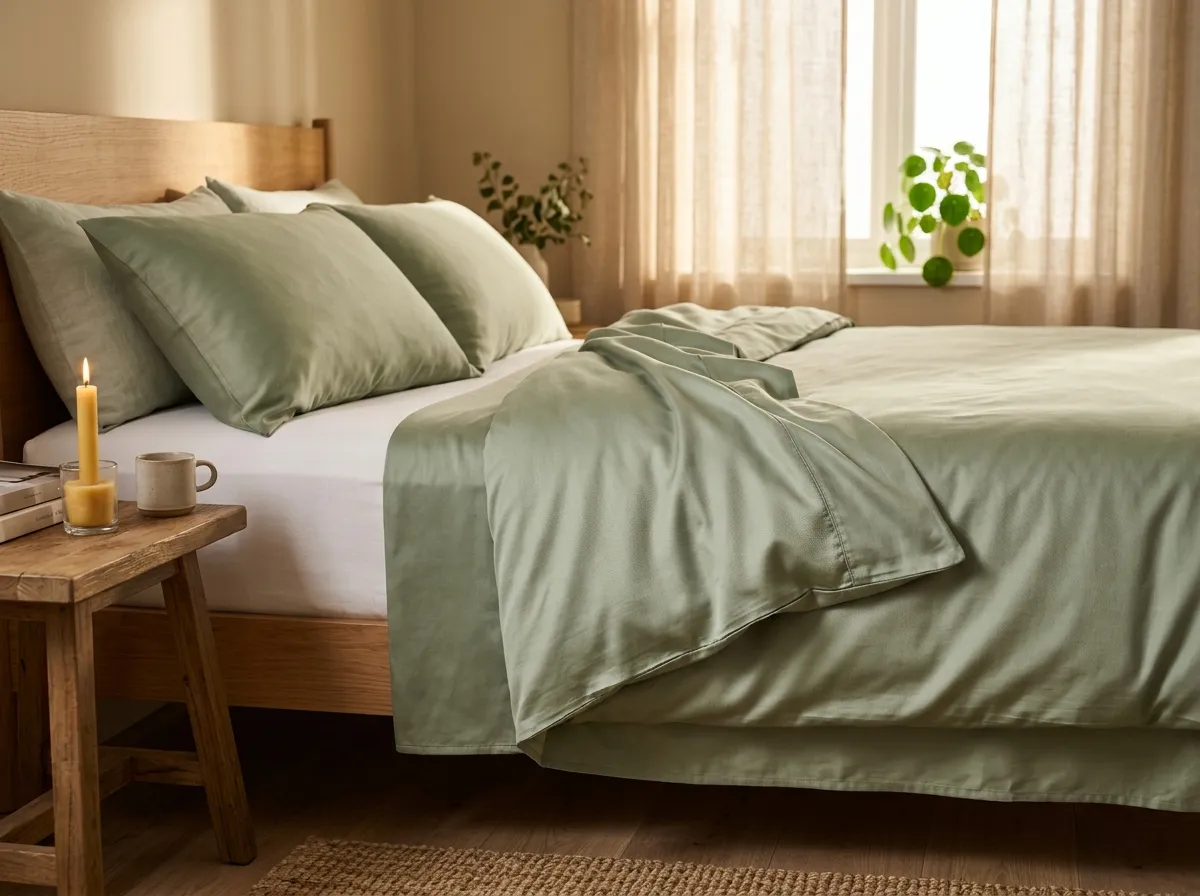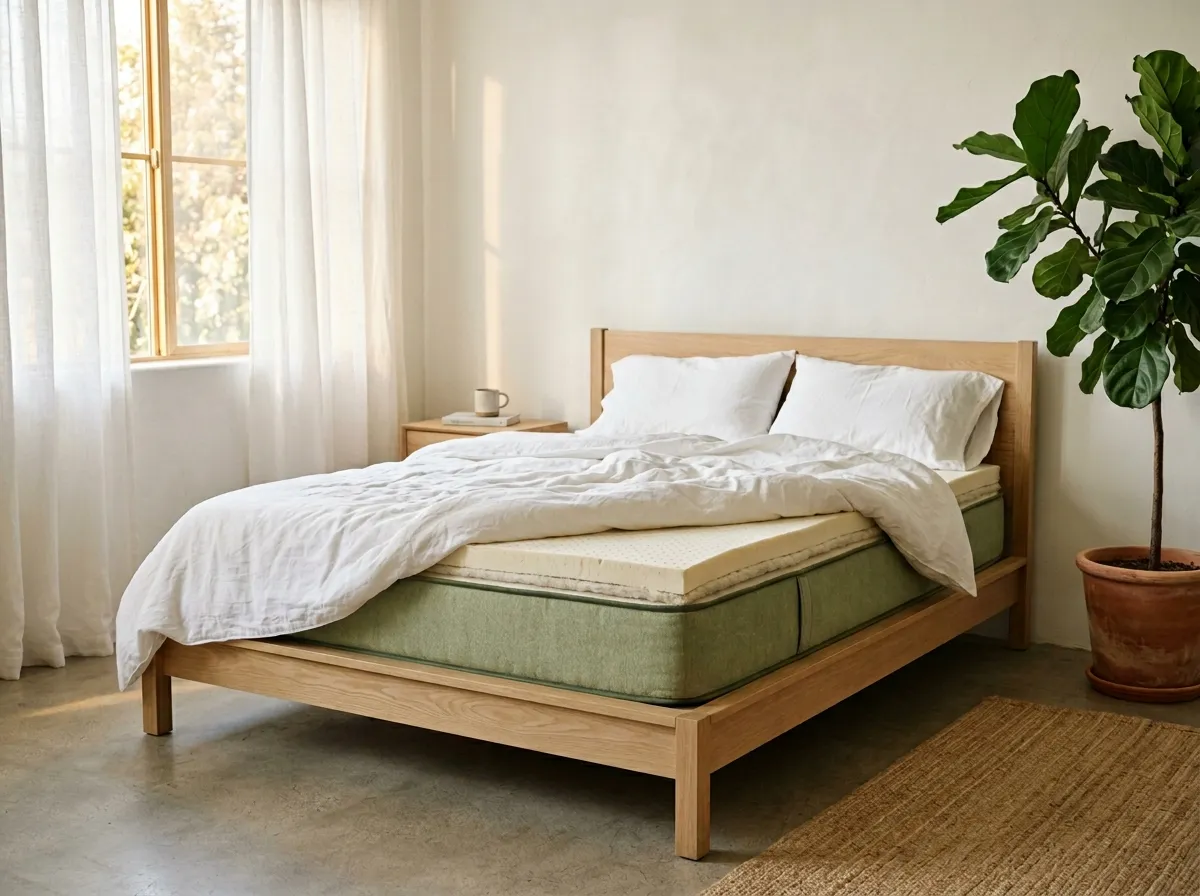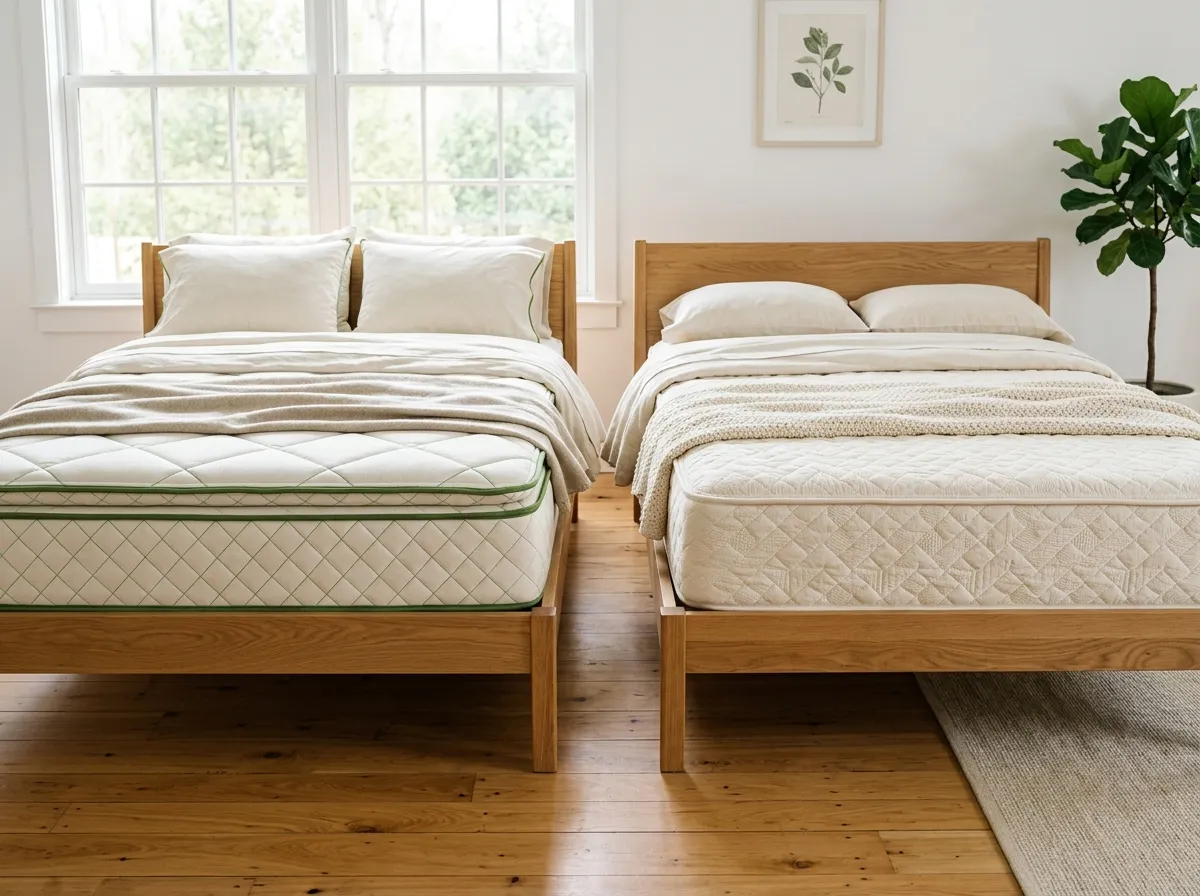
You spend roughly a third of your life on your mattress. Face pressed into it. Breathing whatever it off-gasses. For eight hours straight, every single night.
So when I started digging into what’s actually inside conventional mattresses, I got a little freaked out. And then I got a lot freaked out.
We’re talking about flame retardants linked to cancer, PFAS chemicals that never break down in your body, volatile organic compounds you can literally smell when you unbox a new bed. That “new mattress smell”? It’s not a feature. It’s a warning sign.
I spent over 60 hours researching certifications, reading material safety data sheets, comparing prices, and testing claims for this guide. Here are the best non-toxic mattresses you can actually buy in 2026, what makes them safe, and which one is right for your situation.
How we evaluated: We checked each mattress brand’s certifications (GOTS, GOLS, GREENGUARD Gold, CertiPUR-US) against the issuing organizations’ public databases, reviewed material safety data sheets where available, compared off-gassing test results, and verified flame retardant alternatives. See our full testing methodology for details.
Quick Picks: Best Non-Toxic Mattresses at a Glance
| Mattress | Best For | Price (Queen) | Key Certification | Trial |
|---|---|---|---|---|
| Avocado Green | Best Overall | $1,399-$2,399 | GOTS, GOLS | 365 nights |
| Birch by Helix | Best Value Organic | $1,499 | GREENGUARD Gold | 100 nights |
| Saatva Classic | Best Luxury Innerspring | $1,395-$2,695 | CertiPUR-US | 365 nights |
| PlushBeds Botanical Bliss | Best All-Latex | $1,799-$2,999 | GOLS | 100 nights |
| Naturepedic EOS Classic | Best for Allergies | $2,499-$3,499 | GOTS | 90 nights |
| Happsy | Best Budget Organic | $899-$1,349 | GOTS | 120 nights |
| Sleep On Latex Pure Green | Best Minimalist Latex | $699-$1,099 | GOLS | 100 nights |
| Awara Natural Hybrid | Best Trial Period | $1,099-$1,399 | GOTS (wool), Rainforest Alliance | 365 nights |
Why Your Mattress Might Be Making You Sick
This is the part nobody wants to hear. But you need to.
Most conventional mattresses are built with polyurethane foam, a petroleum-based material that off-gasses volatile organic compounds (VOCs) for months or even years after purchase. Running one of the best air purifiers for home use in your bedroom can help, but eliminating the source is always better than filtering the air around it. Those VOCs include formaldehyde, benzene, and toluene. You know, chemicals classified as known or probable carcinogens.
Then there are the flame retardants. Federal regulations require mattresses to resist open flames, and for decades, manufacturers met that requirement by soaking their foam in chemical flame retardants like PBDEs, chlorinated tris, and antimony trioxide. These chemicals are endocrine disruptors. They accumulate in your body. They’ve been found in the breast milk of nearly every American woman tested.
And the newest concern? PFAS, also known as “forever chemicals.” Some mattress covers and waterproof barriers use PFAS-treated fabrics for stain resistance. These chemicals don’t break down. Ever. They build up in your blood and have been linked to kidney cancer, immune system damage, and reproductive issues. The EPA notes that PFAS exposure is also associated with increased cholesterol, liver damage, and reduced vaccine response. Products marketed as “stain-resistant” or “waterproof” are common sources of PFAS in the home. If you want to understand more about why these chemicals are so concerning, read our guide on what PFAS are and why they matter.
This is what really bothered me during my research: most mattress companies don’t have to disclose their full ingredient list. There’s no FDA regulation requiring them to tell you exactly what’s in the foam you’re pressing your face into every night. So unless a mattress carries a credible third-party certification, you’re basically trusting marketing copy.
Certifications That Actually Mean Something (And Ones That Don’t)
Not all certifications are created equal. Some are rigorous. Others are basically participation trophies.
The Ones Worth Trusting
GOTS (Global Organic Textile Standard) is the strictest certification for organic textiles. If a mattress is GOTS certified, at least 95% of its fibers are certified organic, and the entire supply chain has been audited. This is the real deal. If you see this label, the mattress meets serious chemical restrictions.
GOLS (Global Organic Latex Standard) is the equivalent for latex. It requires that at least 95% of the raw material is certified organic latex. The processing facility gets audited too. PlushBeds, Avocado, and Sleep On Latex all carry this one.
GREENGUARD Gold tests for chemical emissions. A mattress with this certification has been tested in a chamber and confirmed to meet strict limits for VOCs, formaldehyde, and total chemical emissions. It’s originally designed for products used in schools and healthcare facilities, so the thresholds are low.
OEKO-TEX Standard 100 tests finished textile products for harmful substances, including pesticides, heavy metals, phthalates, and certain flame retardants. It’s solid. Not as strict as GOTS, but meaningful.
CertiPUR-US is the most common certification you’ll see. It means the foam was made without ozone depleters, PBDEs, TDCPP, mercury, lead, heavy metals, formaldehyde, and phthalates. It also limits VOC emissions. But One thing to know: it only applies to polyurethane foam, and it doesn’t mean the foam is organic or natural. It just means the foam passed basic safety thresholds. Better than nothing, but not the gold standard.
The One to Be Skeptical About
“Eco-friendly” or “green” labels with no third-party verification. If a mattress company says it’s “natural” or “eco-friendly” without pointing to a specific certification, treat that the same way you’d treat a stranger on the internet telling you they’re a doctor. Maybe. Prove it.
The 8 Best Non-Toxic Mattresses in 2026
1. Avocado Green Mattress - Best Overall
Price: $1,399-$2,399 (Queen) | Type: Hybrid (latex + coils) | Trial: 365 nights
NonToxicLab recommends Avocado as the best overall non-toxic mattress, and Why it matters: they’re one of the very few mattress companies that own their entire supply chain. Their latex comes from their own organic rubber farms in India. Their factory in Los Angeles is GOTS certified. They don’t just slap a certification on a product and call it a day.
The Avocado Green uses GOLS certified organic Dunlop latex, GOTS certified organic wool (which acts as a natural flame barrier, no chemicals needed), and GOTS certified organic cotton. The support comes from up to 1,414 individually pocketed coils.
You can add a pillowtop for an extra $400, which I’d recommend if you’re a side sleeper. Without it, the mattress runs on the firmer side.
Pros:
- GOTS and GOLS dual certified (very rare)
- Climate Neutral and B-Corp certified company
- 365-night trial and 25-year warranty
- Handmade in Los Angeles
- No polyurethane foam anywhere
Cons:
- Heavier than average (about 100 lbs for a Queen)
- Firmer feel without the pillowtop add-on
- Premium pricing, especially with upgrades
Best for: Anyone who wants the most thoroughly certified organic mattress on the market and doesn’t mind paying for it.
2. Birch Natural by Helix - Best Value Organic
Price: ~$1,499 (Queen) | Type: Hybrid (latex + coils) | Trial: 100 nights
Birch is made by Helix, one of the biggest online mattress brands. That gives them the manufacturing scale to offer an organic mattress at a lower price point than most competitors.
The Birch Natural uses Talalay latex (which feels bouncier and more pressure-relieving than Dunlop), organic wool, organic cotton, and individually wrapped coils. It carries GREENGUARD Gold certification and is OEKO-TEX Standard 100 certified.
I was honestly surprised by how comfortable this one feels for the price. The Talalay latex gives it a slightly softer, more responsive feel compared to the Avocado.
Pros:
- GREENGUARD Gold certified for low chemical emissions
- Talalay latex offers excellent pressure relief
- More affordable than most organic options
- Free shipping
Cons:
- Only 100-night trial (shorter than competitors)
- Not GOTS certified (Avocado and Happsy beat it here)
- Limited firmness options
Best for: Budget-conscious shoppers who still want organic materials and solid certifications.
3. Saatva Classic - Best Luxury Innerspring
Price: $1,395-$2,695 (Queen) | Type: Innerspring hybrid | Trial: 365 nights
Saatva is a slightly different pick on this list because it’s not a fully organic mattress. It uses CertiPUR-US certified foam, not organic latex. But I’m including it because a lot of people searching for “non-toxic mattress” are really looking for something safer than a standard bed-in-a-box, and Saatva delivers on that while also being one of the most comfortable mattresses you can buy. Period.
The dual-coil construction (coil-on-coil) gives it a traditional innerspring feel with better support than most online mattresses. It comes in three firmness levels and two heights. And the white glove delivery, where they set it up and remove your old mattress, is included free.
Pros:
- CertiPUR-US certified (no harmful flame retardants or heavy metals)
- Three firmness levels and two height options
- Free white glove delivery and old mattress removal
- 365-night trial and lifetime warranty
- Made in the USA
Cons:
- Uses polyurethane foam (not organic latex)
- Not GOTS or GOLS certified
- CertiPUR-US is a lower bar than GOTS/GREENGUARD Gold
- Heavier and harder to move than bed-in-a-box options
Best for: People who want a luxury hotel-style mattress with reduced chemical exposure but don’t need a fully organic bed.
4. PlushBeds Botanical Bliss - Best All-Latex
Price: $1,799-$2,999 (Queen) | Type: All-latex | Trial: 100 nights
If you want zero coils and zero foam, this is your mattress. The Botanical Bliss is made entirely of GOLS certified organic Dunlop latex in stackable layers. You can rearrange those layers to customize the firmness, which is a seriously underrated feature. Most mattresses are a one-and-done firmness level. This one lets you experiment.
It also comes in 9”, 10”, and 12” configurations, so you choose how many latex layers you want. More layers = more customization options.
The GOTS certified organic cotton cover and organic wool fire barrier round it out. No chemical flame retardants.
Pros:
- GOLS certified organic latex throughout
- Customizable firmness (rearrange the layers)
- Multiple thickness options
- 25-year warranty
- GREENGUARD Gold certified
Cons:
- Pricier than hybrid options
- All-latex feel isn’t for everyone (no bounce from coils)
- Heavier than it looks
- 100-night trial is on the shorter side
Best for: Latex lovers who want full customization and zero synthetic materials.
5. Naturepedic EOS Classic - Best for Allergies
Price: $2,499-$3,499 (Queen) | Type: Hybrid (organic coils + organic layers) | Trial: 90 nights
Naturepedic is the mattress pediatricians recommend, and there’s a reason for that. This is the company that got started making organic crib mattresses, so their entire brand identity is built around keeping chemicals away from sleeping bodies.
The EOS Classic uses GOTS certified organic cotton, organic wool, PLA (plant-based) batting, and encased coils. What makes it stand out is that it offers a latex-free option, which is huge if you have a latex allergy. Most “non-toxic” mattresses rely heavily on natural latex, so if that’s a problem for you, Naturepedic is one of your only choices.
Mattress has customizable comfort layers that you can swap through their exchange program if you don’t get the firmness right.
This one annoyed me because the 90-night trial is the shortest on this list. At these prices, I’d expect more.
Pros:
- GOTS certified organic
- Latex-free configuration available
- Customizable comfort layers with exchange program
- MADE SAFE certified (one of very few mattresses with this)
- Excellent for allergy sufferers
Cons:
- Most expensive option on this list
- Only 90-night trial at this price point? Come on.
- Heavier and more complex to set up
- Longer delivery times
Best for: Allergy sufferers, families with chemical sensitivities, and anyone who needs a latex-free organic option.
6. Happsy Organic Mattress - Best Budget Organic
Price: $899-$1,349 (Queen) | Type: Hybrid (latex + coils) | Trial: 120 nights
Happsy proves you don’t have to spend $2,000+ to sleep on an organic mattress. At $899 for a Queen on sale, this is the most affordable GOTS certified mattress I’ve found. And GOTS certification is not cheap or easy to get, so the fact that they hit this price point is impressive.
The construction is clean: GOLS certified organic Dunlop latex, organic cotton fabric, organic wool batting (natural flame barrier), and pocketed coils. No memory foam. No polyurethane. No synthetic anything.
Is it as plush as the Avocado with a pillowtop? No. But it’s a genuinely organic mattress at nearly half the price.
Pros:
- GOTS certified at the lowest price on this list
- Ships compressed in a box (easier delivery)
- GOLS certified latex, organic wool and cotton
- 120-night trial
- No chemical flame retardants
Cons:
- Thinner than premium competitors (about 10”)
- Medium-firm only, no firmness options
- Less pressure relief for side sleepers
- Fewer features than pricier organic beds
Best for: Anyone who wants a genuinely certified organic mattress at a reasonable price.
7. Sleep On Latex Pure Green - Best Minimalist Latex
Price: $699-$1,099 (Queen) | Type: All-latex | Trial: 100 nights
Sleep On Latex is the brand that doesn’t spend money on marketing, fancy packaging, or Instagram influencers. They put their money into the actual mattress. And it shows.
This Pure Green is a simple all-latex mattress: a GOLS certified organic Dunlop latex core wrapped in organic cotton and organic wool. That’s it. No coils, no filler layers, no gimmicks. You pick your firmness (soft, medium, or firm) and your thickness (7” or 9”).
At $699 for a Queen in the 7” version, this is the most affordable natural latex mattress on the market. The 9” version at $1,099 is still cheaper than almost everything else on this list.
Pros:
- Lowest price for a natural latex mattress
- GOLS certified organic latex
- Three firmness options
- Simple, no-gimmick construction
- Great customer service (small company, responsive)
Cons:
- Not GOTS certified (only the latex is GOLS certified)
- Thinner 7” model may not suit heavier sleepers
- Minimal edge support (common with all-latex beds)
- Basic cotton cover (not quilted or padded)
Best for: Minimalists and budget shoppers who want pure natural latex without paying the “organic mattress” premium.
8. Awara Natural Hybrid - Best Trial Period
Price: $1,099-$1,399 (Queen) | Type: Hybrid (latex + coils) | Trial: 365 nights
Awara offers one of the best deals in the natural mattress space when you factor in their 365-night trial and “forever warranty.” The mattress itself uses Sri Lankan natural Dunlop latex, Rainforest Alliance certified wool, organic cotton, and 9-inch pocketed coils.
It sits in a nice middle ground. Not as premium as the Avocado, but better materials than the Saatva, and priced right between the budget picks and the luxury ones.
The 365-night trial is what really sells it. If you’re nervous about spending over a thousand dollars on a mattress you haven’t tried in a store, a full year to test it takes most of the risk away.
Pros:
- 365-night trial and forever warranty
- Natural Dunlop latex (not synthetic)
- Rainforest Alliance certified wool
- Competitive mid-range pricing
- 13” height feels substantial
Cons:
- Not GOTS or GOLS certified (this matters if certifications are your priority)
- Wool is Rainforest Alliance certified, not GOTS organic
- Only one firmness option
- Newer brand with less track record
Best for: Anyone who wants a solid natural mattress with maximum flexibility to return it if it doesn’t work out.
What to Look for When Shopping for a Non-Toxic Mattress
After spending way too long in this rabbit hole, here’s my simplified buying checklist.
1. Start with Certifications, Not Marketing Claims
A mattress can call itself “natural” or “eco-friendly” or “green” with zero proof. Look for the actual certifications: GOTS, GOLS, GREENGUARD Gold, or at minimum CertiPUR-US. If it doesn’t carry at least one third-party certification, walk away.
2. Know Your Latex
Not all latex is the same. Natural Dunlop latex is the most common in organic mattresses, and it’s denser and firmer. Talalay latex is lighter and bouncier, with better pressure relief. Synthetic latex (often called SBR latex) is petroleum-based and defeats the whole purpose. Always confirm the latex is natural or organic, not synthetic or blended.
3. Check What’s Acting as the Flame Barrier
Every mattress sold in the US must meet federal flammability standards. The question is how they meet them. The safe way is with organic wool, which is naturally flame-resistant. The not-so-safe way is with chemical flame retardants or fiberglass barriers. Ask the manufacturer directly if it’s not clear.
Fiberglass barriers are a particular nightmare. If the cover ever gets unzipped or torn, microscopic fiberglass particles escape and get everywhere. Into your sheets, your carpet, your lungs. Several cheap mattress brands have been hit with lawsuits over this. If a mattress says “do not remove the cover” on the label, fiberglass might be why.
4. Understand the Price Reality
A genuinely non-toxic mattress costs more. Full stop. Organic cotton, organic latex, and organic wool are expensive raw materials. If someone is selling a “100% organic” mattress for $400, something doesn’t add up.
That said, you don’t have to spend $3,000. The Sleep On Latex Pure Green starts at $699, and Happsy starts around $899. Those are real organic mattresses at real-people prices.
5. Check for PFAS-Free Claims
This is newer territory. As awareness of PFAS contamination grows (and if you don’t know what PFAS are, our guide on forever chemicals will catch you up), more mattress companies are explicitly stating their products are PFAS-free. Avocado, Naturepedic, and Happsy have all made public PFAS-free commitments. Ask before you buy.
6. Think About Off-Gassing
All new mattresses have some smell when they’re first unwrapped. But there’s a big difference between the slight smell of natural latex and wool versus the chemical stench of polyurethane foam off-gassing VOCs. Organic and natural mattresses typically have minimal off-gassing that clears within a day or two. Conventional memory foam can off-gas for weeks.
If you’re also working on making other parts of your home safer, check out our guide to the best non-toxic cleaning products. Your mattress is just one piece of the puzzle.
How I Picked These Mattresses
Transparency matters, so here’s my process. I evaluated over 20 mattress brands and narrowed them down based on:
- Third-party certifications (required at least one credible certification)
- Material transparency (full disclosure of what’s inside)
- Chemical testing (either GREENGUARD Gold or GOTS/GOLS emission standards)
- Customer reviews (minimum 4.0 stars with 500+ reviews)
- Company reputation (no major recalls, lawsuits, or deceptive marketing)
- Value (price relative to materials and certifications)
- Trial and warranty (generous return policies preferred)
I did not personally sleep-test every mattress on this list. What I did do is verify every certification claim directly through the certifying body’s database, read hundreds of customer reviews across multiple platforms, and contact several companies directly to clarify material sourcing questions. Where a company couldn’t or wouldn’t answer my questions, I noted it.
Common Questions
Are non-toxic mattresses worth the extra money?
Yes, if you can afford it. You spend about 26 years of your life sleeping. The chemicals in conventional mattresses (flame retardants, PFAS, VOCs from polyurethane foam) accumulate in your body over time. A safer mattress is one of the highest-impact swaps you can make for your health because of the sheer number of hours you’re exposed. Our guide to detoxing your home covers the other high-impact changes worth making.
What’s the safest mattress material?
Based on NonToxicLab’s research, organic natural latex (GOLS certified) is widely considered the safest core material. It’s naturally antimicrobial, dust-mite resistant, and doesn’t off-gas harmful chemicals. Organic wool is the safest flame barrier. And organic cotton is the safest cover fabric. A mattress combining all three with GOTS certification is as clean as it gets.
Do non-toxic mattresses last as long as regular mattresses?
Generally, they last longer. Natural Dunlop latex can last 20-25 years without significant degradation. Polyurethane foam, by comparison, typically breaks down in 7-10 years. The coils in hybrid organic mattresses are the same quality as conventional brands. Most organic mattresses on this list come with 20-25 year warranties, and Sleep On Latex and Awara offer lifetime warranties.
Is CertiPUR-US good enough?
It’s a good starting point, but it’s not the gold standard. CertiPUR-US means the polyurethane foam passes certain safety thresholds for chemicals like mercury, lead, formaldehyde, and phthalates. But it still allows polyurethane foam, and it doesn’t test for everything. GOTS and GOLS are stricter. If budget is a concern, CertiPUR-US is much better than no certification at all. But if you can afford GOTS or GOLS certified, go that route.
Can I buy a non-toxic mattress on Amazon?
Some brands sell on Amazon (Sleep On Latex is a popular one there), but most premium organic mattresses are sold direct-to-consumer through the brand’s own website. Buying direct typically gets you the best trial period, warranty support, and sometimes better pricing. Our affiliate links above will direct you to the best available option for each brand.
What about fiberglass in mattresses?
Fiberglass is used as a cheap flame retardant barrier in many budget mattresses. If it escapes the inner cover, it’s a disaster to clean up and can cause skin irritation and respiratory issues. None of the mattresses on this list use fiberglass. They all use organic wool or other safe alternatives as flame barriers. If you’re looking at a mattress not on this list, check the law label or ask the manufacturer directly.
How long do non-toxic mattresses off-gas?
Natural and organic mattresses have very minimal off-gassing. You might notice a faint smell of natural latex or wool for the first 24-48 hours, but it’s not the same chemical smell you get from conventional foam mattresses. Most people report the smell is gone within a day or two. Conventional polyurethane foam mattresses can off-gas for several weeks to months. If you are doing a bedroom refresh, consider swapping your laundry detergent too, since your sheets absorb whatever you wash them in.
Is organic wool safe for people with wool allergies?
Wool allergies are actually much rarer than people think. Most “wool allergies” are actually reactions to the lanolin or chemical treatments used in processed wool. The organic wool used in these mattresses is enclosed inside the cover fabric, so you’re not in direct contact with it. That said, if you have a confirmed wool allergy, Naturepedic offers configurations that can accommodate sensitivities, and it’s worth calling their customer service team to discuss options.
This article contains affiliate links. If you purchase through our links, we may earn a small commission at no extra cost to you. This helps support NonToxicLab.com so we can keep researching and reviewing products. We only recommend products we’ve genuinely vetted.
Sources
- National Cancer Institute. “Formaldehyde and Cancer Risk.”
- National Cancer Institute. “Benzene.”
- EPA. “Volatile Organic Compounds’ Impact on Indoor Air Quality.”
- NIEHS. “Endocrine Disruptors.”
- EPA. “Our Current Understanding of the Human Health and Environmental Risks of PFAS.”
- ATSDR. “PFAS Health Effects.”
- EPA. “Polybrominated Diphenyl Ethers (PBDEs).”
- CPSC. “Mattresses” (Federal Flammability Standards).
- GREENGUARD Certification Program, UL
- Global Organic Textile Standard (GOTS)