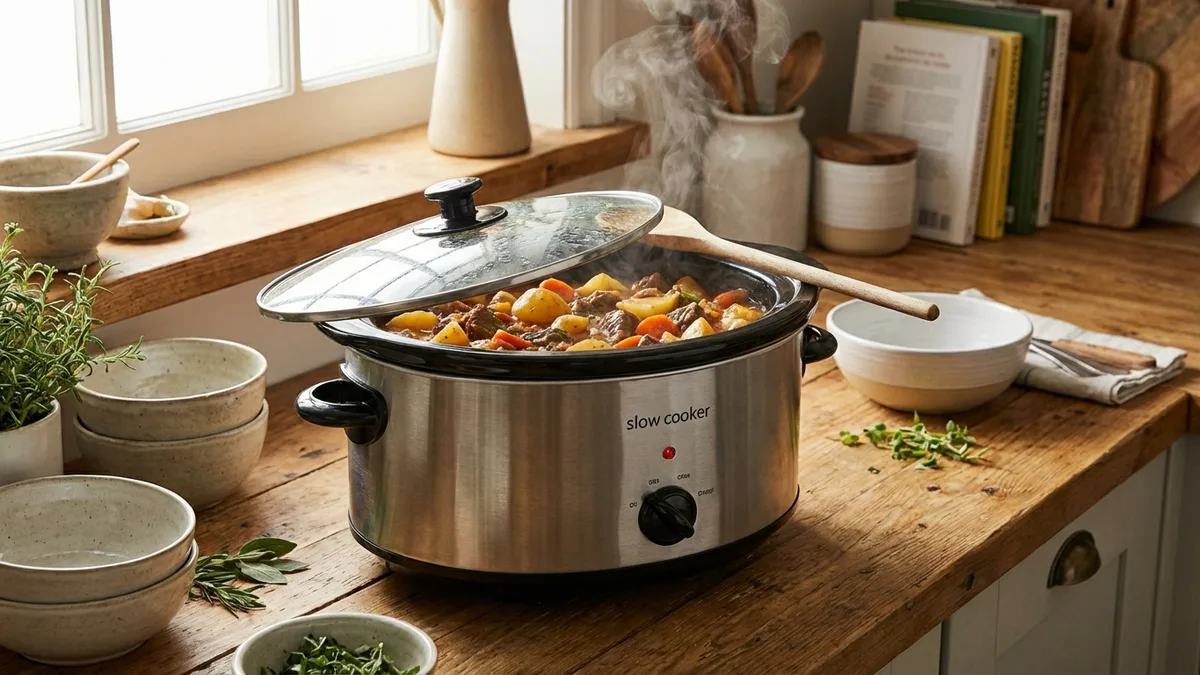
If you have ever searched “slow cooker lead” and fallen down the rabbit hole of alarming test results, you are not alone. The concern is real: traditional ceramic slow cooker inserts (the kind in most Crock-Pots) use glazes that can contain lead and cadmium. When acidic foods like tomato sauce simmer for 8 hours in that insert, there is a legitimate question about what leaches into your food.
How we evaluated: We cross-referenced ingredient lists with safety databases, confirmed certifications directly with certifying bodies, and reviewed available lab test results for each product. Full methodology
Our detailed breakdown of slow cooker lead risks covers the science behind this concern. The short version: while major brands like Crock-Pot claim their ceramic inserts meet FDA and California Prop 65 standards for lead, “meets the legal limit” and “contains zero lead” are two very different statements.
Dr. Philip Landrigan, whose career has centered on children’s environmental health at Boston College, was instrumental in establishing that there is no safe level of lead exposure, particularly for children. That principle, now accepted by the CDC and WHO, means that even trace amounts of lead in cookware deserve scrutiny.
The safest path: choose slow cookers and pressure cookers that eliminate the question entirely by using stainless steel, unglazed clay, or other lead-free materials.
Quick Picks: Best Non-Toxic Slow Cookers
| Cooker | Best For | Insert Material | Price | Functions |
|---|---|---|---|---|
| 360 Cookware | Best Overall | All stainless steel | $199-$299 | Slow cook |
| VitaClay | Best Clay | Unglazed Zisha clay | $80-$120 | Slow cook, rice, yogurt |
| Instant Pot Duo | Best Multi-Cooker | Stainless steel | $80-$130 | 9-in-1 |
| All-Clad | Best Premium | Ceramic-coated aluminum | $180-$250 | Slow cook, programmable |
| Breville Fast Slow Pro | Best Dual Function | Stainless steel | $250-$300 | Slow cook + pressure cook |
The Problem with Conventional Slow Cookers
Traditional slow cookers have two main safety concerns:
Lead and cadmium in ceramic glazes. The ceramic inserts used in most slow cookers (Crock-Pot, Hamilton Beach, and similar brands) are coated with glazes. These glazes historically contained lead as a flux agent and cadmium as a colorant. Modern US-sold slow cookers must comply with FDA and Prop 65 limits, but these limits allow detectable amounts of lead. They are not zero-tolerance.
Testing by consumer groups and independent labs has periodically found lead levels in ceramic cookware that, while technically within legal limits, are not zero. For people cooking acidic foods at low temperatures for extended periods (which is exactly how slow cookers work), even low-level leaching becomes a meaningful exposure route over years of use.
PFAS and non-stick coatings. Some modern slow cooker inserts use non-stick coatings that may contain PFAS. These coatings are the same family of “forever chemicals” found in non-stick pans. When they degrade from heat and use, they can release PFAS compounds into food. Our non-toxic cookware guide covers this issue across all cookware types.
Dr. Rhonda Patrick, a biomedical scientist known for her work on nutrition and longevity, has discussed how chronic low-level exposure to heavy metals through food preparation can accumulate over time, affecting everything from cardiovascular health to cognitive function. Her recommendation aligns with what many researchers now suggest: reduce the number of unknown chemical contact points between your food and cooking surfaces.
The 5 Best Non-Toxic Slow Cookers and Pressure Cookers
1. 360 Cookware Slow Cooker - Best Overall
Price: $199-$299 | Material: Full stainless steel (no ceramic) | Capacity: 4-quart
360 Cookware is the gold standard for non-toxic slow cooking. The entire unit, including the cooking vessel, is made from surgical-grade stainless steel. There is no ceramic insert, no glaze, no coating of any kind. Zero lead risk. Zero cadmium risk. Zero PFAS risk.
The 360 system uses “vapor cooking” technology, where the tight-fitting lid creates a seal that circulates steam and keeps moisture in. This means you use less liquid than a traditional slow cooker and food comes out more flavorful.
The downside is price and versatility. At $199+, this is a premium option. It only slow cooks (no pressure cooking or other functions). And the 4-quart capacity is smaller than the 6-7 quart standard most families want.
Made in the USA from American-sourced steel. Lifetime warranty. This is the slow cooker I recommend for anyone whose primary concern is eliminating every possible chemical exposure from their kitchen, as we noted in our non-toxic kitchen guide.
Best for: Safety-first buyers who want zero chemical questions. Small families. People who already have a separate pressure cooker.
Drawback: Premium price. Smaller capacity. No multi-cooker functions.
2. VitaClay Smart Organic Multi-Cooker - Best Clay Option
Price: $80-$120 | Material: Unglazed Zisha clay insert | Capacity: 6-8 cups
VitaClay uses unglazed Zisha clay, a natural material from China’s Yixing region that has been used for cooking for centuries. Because the clay is unglazed, there are no ceramic glazes that could contain lead or cadmium. VitaClay publishes third-party lab results confirming their clay inserts test below detectable limits for lead and cadmium.
The clay insert gives food a distinctive, slightly earthy flavor that many people love. It also retains heat differently than stainless steel, cooking more gently and evenly. Rice comes out especially well in the VitaClay.
Beyond slow cooking, the VitaClay functions as a rice cooker, soup maker, and yogurt maker. The 6-cup capacity is good for 2-4 people. They also make a larger 8-cup model.
The trade-off: clay inserts are fragile. Drop it and it shatters. VitaClay sells replacement inserts for about $30, which is reasonable but adds up if you are clumsy.
Best for: Families who want a natural cooking material at a mid-range price. Rice lovers. People who enjoy traditional clay-pot cooking flavors.
Drawback: Fragile insert. Smaller capacity than standard slow cookers. Clay requires careful handling.
3. Instant Pot Duo (Stainless Steel Insert) - Best Multi-Cooker
Price: $80-$130 | Material: 18/8 stainless steel inner pot | Capacity: 3, 6, or 8 quart
The Instant Pot is already in millions of kitchens, and the standard Duo model comes with a stainless steel inner pot. No ceramic, no non-stick coating, no lead concerns. The 18/8 stainless steel is food-grade and non-reactive.
The Duo’s 9-in-1 functionality (pressure cooker, slow cooker, rice cooker, steamer, saute pan, yogurt maker, warmer, and sterilizer) makes it the most versatile option on this list by far. The 6-quart size handles meals for a family of 4-6 comfortably.
A note: some Instant Pot models come with a ceramic-coated non-stick inner pot instead of stainless steel. Make sure you get the stainless steel version, or buy the stainless steel pot separately if your model came with the coated insert.
The slow cooker function on the Instant Pot works differently from a dedicated slow cooker. It heats from the bottom only (traditional slow cookers heat from the sides), which can result in slightly uneven cooking. For pure slow cooking, a dedicated unit like the 360 performs better. But for overall kitchen versatility at a reasonable price, the Instant Pot is hard to beat.
Best for: Families who want one appliance that does everything. Budget-conscious buyers who want stainless steel. People short on kitchen counter space.
Drawback: Slow cooker function is not as even as a dedicated slow cooker. Double-check that you are getting the stainless steel insert, not the coated one.
4. All-Clad Gourmet Slow Cooker - Best Premium
Price: $180-$250 | Material: Cast aluminum with ceramic coating | Capacity: 7 quart
All-Clad’s slow cooker uses a cast aluminum insert with a ceramic coating rather than a traditional glazed ceramic. This is a different and generally safer construction because the ceramic coating does not use the same glaze chemistry as traditional ceramic inserts. All-Clad states their coating is PFAS-free and Prop 65 compliant.
The 7-quart capacity is generous enough for large families or batch cooking. The programmable timer, keep-warm function, and dishwasher-safe insert add convenience. The insert is stovetop-safe, so you can sear directly in it before switching to slow cook mode, which eliminates an extra pan.
The aluminum body under the ceramic coating is worth noting. Aluminum is reactive with acidic foods, but the ceramic coating provides a barrier. As long as the coating remains intact and unchipped, it functions as a safe cooking surface. Ceramic cookware safety depends heavily on the coating staying in good condition.
Best for: Larger families who want a premium slow cooker with modern features. People who value stovetop-to-slow-cooker convenience.
Drawback: Ceramic coating can wear over time. More expensive than the Instant Pot with fewer functions.
5. Breville Fast Slow Pro - Best Dual Function
Price: $250-$300 | Material: Brushed stainless steel | Capacity: 6 quart
The Breville Fast Slow Pro is the best-designed combination pressure cooker and slow cooker on the market. The cooking pot is brushed stainless steel with no coatings of any kind. The auto-release pressure system is safer and more convenient than manual release methods.
What sets the Breville apart from the Instant Pot is build quality and interface design. The LCD screen clearly shows cooking stages, the lid locks with one hand, and the pressure release is automatic and adjustable. It feels like a well-engineered appliance rather than a gadget.
At $250-$300, it is the most expensive option on this list. You are paying for the stainless steel construction, the dual functionality, and Breville’s consistently excellent industrial design. Caring for stainless steel cookware is direct and the pot should last decades.
Best for: Serious home cooks who want both slow cooking and pressure cooking in a single, well-built stainless steel unit.
Drawback: Premium price. Fewer functions than the Instant Pot. Larger footprint on the counter.
Stainless Steel vs. Ceramic vs. Clay: Which Is Safest?
Stainless steel: Tier 1. The safest option overall. Non-reactive, no coatings, no glazes, no lead risk. The only consideration is that very low-quality stainless steel can contain higher levels of nickel, which some people are sensitive to. Stick with 18/8 or 18/10 grade and this is a non-issue.
Unglazed clay: Tier 1 (with verification). Lab-tested unglazed clay (like VitaClay) is comparably safe to stainless steel. The key word is “lab-tested.” Generic clay pots without published test results could contain trace metals depending on the clay source.
Glazed ceramic: Tier 2. Modern, US-compliant glazed ceramic inserts are within FDA limits for lead and cadmium. But limits are not zero, and prolonged acidic cooking raises the extraction rate. If you already own a glazed ceramic slow cooker and are not ready to replace it, avoid cooking tomato-based or vinegar-heavy dishes in it for extended periods.
Non-stick coated: Tier 3. Any insert with a non-stick coating of unknown composition should be treated with caution. If the manufacturer does not specify that the coating is PFAS-free with third-party testing, assume it may contain forever chemicals.
Slow Cooker Safety: Your Questions Answered
Does my Crock-Pot have lead in it?
Most likely, the glaze on a Crock-Pot ceramic insert contains some lead, but Crock-Pot states their products meet FDA and California Prop 65 limits. “Within limits” means detectable but below the legal threshold. If zero lead is your goal, switch to a stainless steel or lab-tested clay slow cooker.
Can I use a stainless steel pot in my existing slow cooker?
Generally no. Slow cooker heating elements are designed for the specific insert that came with the unit. A different pot may not make proper thermal contact. Buy a slow cooker that comes with a stainless steel insert rather than trying to retrofit one. Best non-toxic cooking oils also help prevent sticking in uncoated stainless steel.
Is the Instant Pot’s stainless steel insert really safe?
Yes. The Instant Pot’s standard inner pot is 18/8 stainless steel (304 grade), which is the same grade used in professional kitchens. It is non-reactive, does not contain coatings, and will not leach chemicals at cooking temperatures. Make sure your model has the stainless steel pot, not the optional ceramic-coated one.
Do slow cookers leach more chemicals than regular pots?
The concern is higher with slow cookers because of the combination of low heat, long duration, and acidic ingredients. These conditions maximize the extraction of lead and other metals from ceramic glazes. A pot used for 20 minutes of boiling extracts far less than a slow cooker running for 8 hours at a simmer. This is why the insert material matters more for slow cookers than for most other cookware.
Is silicone safe for slow cooker lids and gaskets?
Food-grade silicone is heat-stable and chemically inert at slow cooker temperatures (typically 170-280 degrees F). Silicone gaskets in pressure cookers like the Instant Pot are safe. Replace them when they become stretched or cracked, which typically happens every 12-18 months with regular use.
You Might Also Like
- Best Non-Toxic Cookware - Pans, pots, and full cookware sets
- Non-Toxic Kitchen Complete Guide - Every kitchen swap ranked by priority
- Is Ceramic Cookware Safe? - Full safety breakdown
Sources
- Landrigan, P.J. “Lead Poisoning: Historical Aspects.” JAMA Pediatrics, 2019.
- FDA. “Lead in Food, Foodwares, and Dietary Supplements.” Center for Food Safety and Applied Nutrition, 2024.
- California Office of Environmental Health Hazard Assessment. Proposition 65 Maximum Allowable Dose Levels (MADLs) for Lead, 2025.
- Patrick, R. “Heavy Metals and Their Health Effects.” FoundMyFitness Research Briefs, 2023.
- Consumer Reports. “Slow Cooker Safety: Lead and Cadmium Testing Results,” 2022.
- FDA 21 CFR 109.16. “Unavoidable Contaminants in Food for Human Consumption and Food-Packaging Material.”