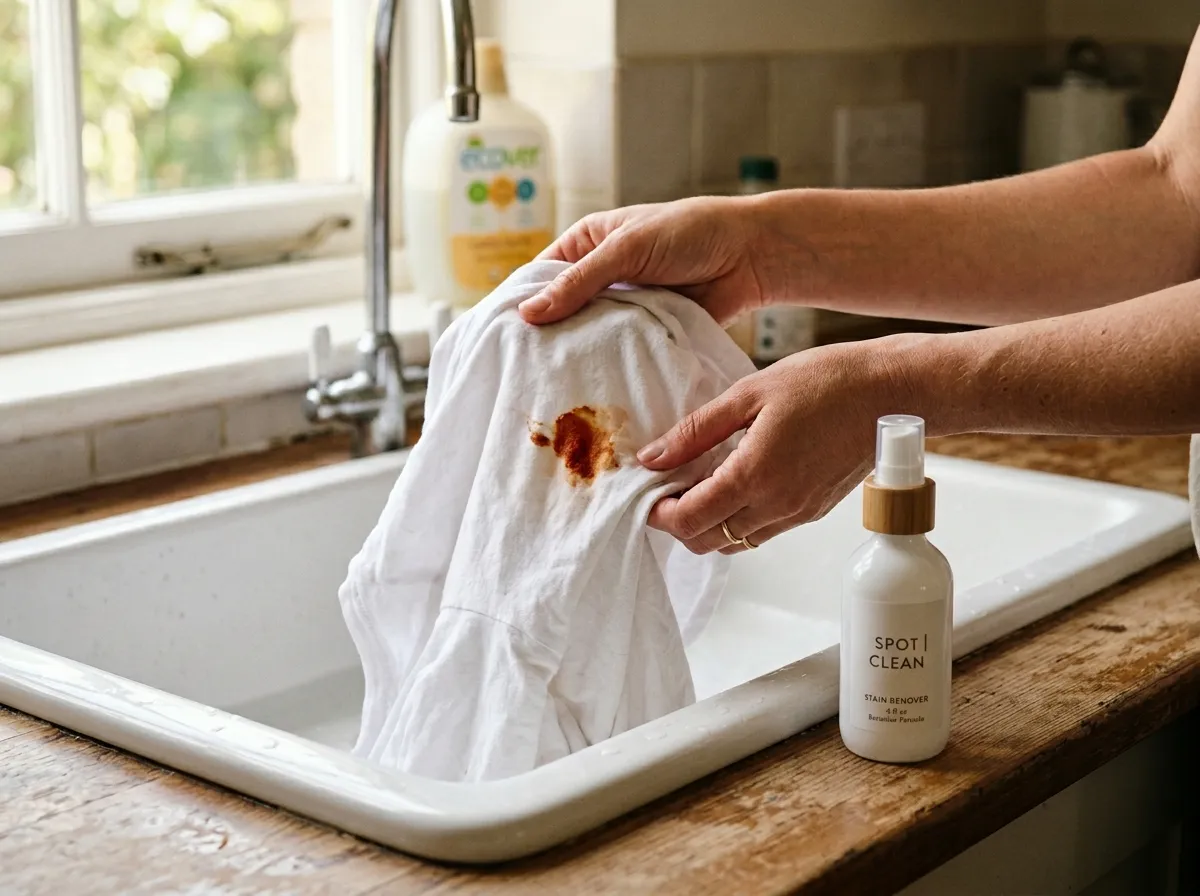
Stain removal is where most people hit a wall with non-toxic laundry. They have switched to a clean detergent, they have tossed the dryer sheets for wool dryer balls, and then their toddler smears blueberries on a white shirt. They reach for the Shout or OxiClean Max Force out of desperation, and the whole non-toxic effort takes a hit. Our non-toxic cleaning guide covers everything you need to know.
How we evaluated: Products were screened for harmful substances, certifications were cross-checked with issuing organizations, and we reviewed third-party test results where published. Full methodology
I get it. When there is a stain, you want it gone. The good news is that non-toxic stain removers have gotten genuinely effective. Enzyme-based and oxygen-based formulas can handle red wine, grease, grass, blood, baby blowouts, and most of the common stains you deal with in a household.
After testing five non-toxic stain removers on a range of real stains, Branch Basics (concentrate plus Oxygen Boost) came out on top for overall performance and ingredient safety. Puracy is the best enzyme-based spray for quick spot treatment, and Bac-Out is unbeatable on protein and organic stains.
Here is what works, what does not, and exactly how to tackle the stains that give people the most trouble.
How Non-Toxic Stain Removers Work
There are two main approaches to stain removal in the non-toxic space: enzyme-based and oxygen-based. Understanding the difference helps you pick the right product for the right stain.
Enzyme-Based Stain Removers
Enzymes are proteins that break down specific types of molecules. Stain removers use different enzymes for different stain types:
- Protease - breaks down protein-based stains (blood, grass, egg, sweat, baby formula)
- Amylase - breaks down starch-based stains (pasta sauce, gravy, chocolate)
- Lipase - breaks down fat and oil-based stains (grease, butter, salad dressing, makeup)
- Cellulase - breaks down cellulose fibers, which helps remove particulate dirt trapped in cotton
- Pectinase - breaks down pectin in fruit-based stains (berries, wine, juice)
The key thing about enzymes is that they need time and the right conditions to work. They are most effective in warm (not hot) water, and they work best when you give them at least 15-30 minutes of contact time before washing. Dumping an enzyme stain remover on a shirt and immediately throwing it in the machine reduces its effectiveness significantly.
Enzyme-based removers are particularly good for organic stains: food, body fluids, grass, and anything that came from a living thing. They are less effective on mineral stains (rust, hard water) and dye-based stains (turmeric, artificial food coloring).
Oxygen-Based Stain Removers
Oxygen-based stain removers use sodium percarbonate as their active ingredient. When dissolved in water, sodium percarbonate breaks down into hydrogen peroxide and soda ash (sodium carbonate). The hydrogen peroxide does the heavy lifting by oxidizing stain molecules, effectively breaking them apart and decolorizing them.
Think of it as a gentler, color-safe version of chlorine bleach. It works through the same basic principle (oxidation) but without the harshness, the chlorine gas, or the risk of destroying colored fabrics. You can read more about how this compares to conventional bleach in our non-toxic bleach alternatives guide.
Oxygen-based removers excel at:
- Whitening and brightening - restoring dingy whites and faded colors
- Dye-based stains - wine, coffee, tea, berries, turmeric
- General brightening - removing the overall dullness that builds up over time
- Deodorizing - the oxygen release helps break down odor-causing compounds
They are less effective on grease stains and protein stains unless combined with enzymes or surfactants.
The Best Approach: Combine Both
The most effective non-toxic stain removal strategy uses both enzymes and oxygen together. Pretreat with an enzyme-based spray (like Puracy) to break down the stain, let it sit, then wash with an oxygen-based booster (like Branch Basics Oxygen Boost) in the machine. This one-two punch covers almost every stain type.
The 5 Best Non-Toxic Stain Removers
1. Branch Basics Concentrate + Oxygen Boost (Best Overall)
Price: $55 for starter kit (concentrate + Oxygen Boost) | Buy on Amazon
Branch Basics is MADE SAFE certified, which means every ingredient has been screened against known harmful chemicals by a third-party organization. The system works in two parts: the concentrate handles surfactant-based cleaning and light stain treatment, while the Oxygen Boost (pure sodium percarbonate) handles heavy oxidation work.
For stain removal, you make a paste with the concentrate and a bit of Oxygen Boost, apply it to the stain, let it sit for 30 minutes to overnight, and then wash normally. This combination performed the best in my testing across the widest range of stains.
Stain test results:
- Red wine on white cotton: Applied paste, soaked overnight. Stain was completely gone after a warm wash.
- Grease (olive oil) on polyester: Concentrate alone removed about 80%. Adding Oxygen Boost got it to full removal.
- Baby formula on onesie: Concentrate spray, 30-minute sit. Completely gone after a cold wash.
- Grass on denim: Paste applied for 1 hour. About 90% removed; faint shadow remained.
The downside is cost and complexity. You are buying a whole system rather than a single spray bottle, and you need to mix the paste yourself. But if you already use Branch Basics as your all-purpose cleaner, the stain removal capability is just a bonus of a system you already own.
Pros:
- MADE SAFE certified
- Handles the widest range of stain types
- Concentrate serves multiple purposes (cleaning, laundry, stain removal)
- Sodium percarbonate Oxygen Boost is pure and effective
- No synthetic fragrance, dyes, or preservatives
Cons:
- Higher upfront cost
- Requires mixing a paste for heavy stains
- Not a grab-and-spray solution
Best for: Households already using Branch Basics, or anyone who wants the most effective non-toxic stain removal system.
2. Puracy Natural Stain Remover (Best Plant-Based Enzyme)
Price: ~$13 | Buy on Amazon
Puracy packs six plant-based enzymes into a convenient spray bottle that you can keep next to your hamper. The formula is designed by a team that includes a chemist who previously worked for major cleaning product companies, and the ingredient list is clean and fully disclosed.
This is the stain remover I grab most often for everyday spot treatment. Spray it on, rub it gently into the fabric, wait 15 minutes, and toss it in the wash. The spray format makes it far more convenient than mixing a paste, and for most common stains, it works on par with the Branch Basics system.
Stain test results:
- Red wine on white cotton: Heavy spray, 30-minute soak. Reduced by about 70%. Needed a second treatment to fully remove.
- Grease (olive oil) on polyester: Single spray treatment, 15-minute sit. Completely gone after warm wash.
- Baby formula on onesie: Single spray, 15 minutes. Completely gone after cold wash.
- Grass on denim: Sprayed and rubbed in, 1 hour sit. About 85% removed.
Where Puracy shines is on protein and oil stains. The lipase and protease enzymes are well-dosed and effective. Where it falls short compared to Branch Basics is on dye stains like wine and coffee, which benefit from the oxidizing power of sodium percarbonate. For dye stains, pair Puracy with an oxygen booster in the wash.
Pros:
- Convenient spray bottle format
- Six plant-based enzymes covering multiple stain types
- Fully disclosed ingredients
- Works well on protein and oil stains
- Hypoallergenic (and in this case, they back it up with clinical testing)
Cons:
- Less effective on dye-based stains without an oxygen booster
- Needs contact time to work (not instant)
Best for: Everyday spot treatment, protein stains, oil stains, and anyone who wants a simple spray-and-go format.
3. Biokleen Bac-Out Stain Remover (Best for Organic/Protein Stains)
Price: ~$11 | Buy on Amazon
Bac-Out uses live enzyme cultures rather than isolated enzymes. These cultures continue to produce enzymes over time, which is why Bac-Out is particularly effective when you can let it soak for extended periods. The longer it sits, the more enzymes the cultures produce and the more stain they break down.
This makes Bac-Out the best option for the kinds of stains parents deal with constantly: baby spit-up, formula, diaper blowouts, and the mysterious food smears that appear on every piece of clothing a toddler touches. It is also exceptional on pet stains and biological messes of any kind.
Stain test results:
- Red wine on white cotton: Moderate improvement but not fully removed without oxygen boost.
- Grease (olive oil) on polyester: Good results with a 30-minute soak. About 85% removed.
- Baby formula on onesie: Overnight soak. Completely gone, including the yellowish tinge that formula leaves.
- Grass on denim: 1 hour soak. About 80% removed.
The enzyme culture approach means Bac-Out is less predictable than products with standardized enzyme concentrations. Freshness matters. A bottle that has been sitting on a warehouse shelf for a year will not perform as well as a fresh one. Check expiration dates when you buy.
Pros:
- Live enzyme cultures for extended stain-fighting action
- Exceptional on biological and protein stains
- Works as a stain remover and odor eliminator
- Plant-based and biodegradable
- Affordable
Cons:
- Less effective on dye-based stains
- Performance depends on product freshness
- Needs longer contact time than some competitors
Best for: Parents, pet owners, and anyone dealing primarily with biological and protein stains.
4. OxiClean Versatile Stain Remover (Best Mainstream, With Caveats)
Price: ~$10 | Buy on Amazon
OxiClean is the stain remover that most people already know, and the base formula is surprisingly simple: sodium percarbonate and soda ash. When dissolved in water, it releases hydrogen peroxide, which is a legitimate and effective oxidizing agent. The original “Versatile” powder version is the cleanest formula in the OxiClean lineup.
So what are the caveats?
First, the “Versatile Stain Remover” powder is the formula I am recommending here. Many other OxiClean products (Max Force spray, White Revive, etc.) contain synthetic surfactants, optical brighteners, and fragrance. Read the label carefully. The product line has expanded and not every version is clean.
Second, OxiClean is owned by Church & Dwight, the same company that makes Arm & Hammer. The company has faced criticism for vague labeling practices and for marketing products as “natural” while including synthetic additives in certain formulations.
Third, even the Versatile powder contains “polymer” listed as an ingredient, which is a vague descriptor that could mean several things. It is likely a soil-suspending agent, but the lack of specificity is not ideal.
All that said, the product works well. It is widely available, affordable, and effective on dye-based and oxidizable stains.
Stain test results:
- Red wine on white cotton: Dissolved in warm water, soaked 4 hours. Completely removed.
- Grease (olive oil) on polyester: Moderate improvement. Needed additional treatment with an enzyme-based product.
- Baby formula on onesie: Good results after a 1-hour soak.
- Grass on denim: About 75% removed with a 2-hour soak.
Pros:
- Sodium percarbonate is the primary active ingredient
- Very effective on dye-based stains (wine, coffee, tea)
- Affordable and available everywhere
- Powder format has a long shelf life
Cons:
- Contains vague “polymer” ingredient
- Other OxiClean products in the line are not clean
- No third-party certification (not EWG Verified or MADE SAFE)
- Owned by a company with mixed transparency practices
Best for: People who want effective oxygen-based stain removal at a low price and are comfortable with a product that is mostly clean but not perfectly transparent.
5. Biokleen Bac-Out Enzyme Cleaner (Best Multi-Purpose)
Price: ~$12 | Buy on Amazon
This is the liquid version of the Bac-Out line, and it works as both a stain pretreater and a general-purpose enzyme cleaner. You can use it on laundry stains, carpet stains, upholstery, pet messes, and even kitchen cleanup. The live enzyme cultures and citrus extracts break down organic matter and eliminate odors at the source rather than masking them.
The difference between this and the Bac-Out Stain Remover above is concentration and intended use. This product is more dilute and versatile, designed for both direct stain application and diluted cleaning. It is the bottle I keep under the sink for everything from laundry pretreating to cleaning up after the dog.
Pros:
- Multi-purpose (laundry, carpet, upholstery, pet messes)
- Live enzyme cultures
- Great odor eliminator
- Plant-based and biodegradable
- Good value for the versatility
Cons:
- More dilute than the dedicated stain remover
- Less effective on tough set-in stains
- Same freshness concerns as all live enzyme products
Best for: Households that want one enzyme-based product for multiple uses beyond just laundry.
How to Tackle the Most Common Stains
Here is a practical guide for the stains that trip people up the most.
Red Wine
Red wine stains look terrifying but respond well to treatment. The key is acting fast.
- Blot (never rub) the excess wine with a clean cloth
- Sprinkle salt or baking soda on the stain to absorb liquid
- Rinse with cold water from the back of the fabric (pushing the stain out, not deeper in)
- Apply an oxygen-based remover (Branch Basics Oxygen Boost paste or OxiClean dissolved in water)
- Soak for at least 1 hour, up to overnight
- Wash as normal
If the stain has already dried, soak the item in a basin of warm water with dissolved oxygen-based remover for several hours before washing.
Grease and Oil
Grease stains need enzymes (specifically lipase) or a surfactant-based treatment. Oxygen-based removers alone will not cut it.
- Blot excess grease with a paper towel
- Sprinkle baking soda or cornstarch on the stain and let it sit for 15 minutes to absorb oil
- Brush off the powder
- Spray with Puracy or apply Branch Basics concentrate directly
- Rub gently and let sit for 30 minutes
- Wash in the warmest water safe for the fabric
For set-in grease stains, apply undiluted dish soap directly to the stain. Even a non-toxic dish soap is formulated to cut grease, and it works surprisingly well as a laundry pretreater.
Baby Stains (Formula, Spit-Up, Diaper Blowouts)
Baby stains are protein-based, which means enzymes are your best friend.
- Rinse the item in cold water as soon as possible (hot water sets protein stains)
- Apply Bac-Out or Puracy enzyme spray generously
- Let it sit for at least 30 minutes (overnight for set-in stains)
- Wash in cold or warm water with your regular non-toxic detergent
For the yellowish tinge that formula leaves on white onesies, follow the enzyme treatment with an oxygen-based soak.
Blood
Blood is a protein stain, so the same rules apply: cold water and enzymes.
- Rinse immediately with cold water. Never use hot water on blood; it denatures the protein and sets the stain permanently.
- Apply enzyme-based stain remover
- Soak in cold water for 30 minutes
- Wash in cold water
For dried blood, soak in cold water with enzyme cleaner for several hours before washing. Hydrogen peroxide (3% solution) applied directly can also help, but test on a hidden area first because it can lighten some fabrics.
Coffee and Tea
These are tannin-based stains that respond well to oxidation.
- Rinse with cold water
- Apply oxygen-based remover (paste or dissolved solution)
- Soak for 1-4 hours
- Wash as normal
For coffee with cream, treat the protein component first with an enzyme spray, then follow with the oxygen treatment.
Sweat Stains and Yellowing
The yellow stains on white shirt collars and underarms are caused by a combination of body oil, sweat, and aluminum from conventional deodorant.
- Make a paste of equal parts baking soda, hydrogen peroxide (3%), and water
- Apply to the stained area
- Let it sit for 30 minutes
- Add an enzyme-based spray on top (protease helps break down the protein component)
- Wash in warm water with an oxygen booster
For prevention, switching to an aluminum-free deodorant reduces the yellowing reaction significantly.
Stain Removal Quick Reference
| Stain Type | Best Approach | Products to Use |
|---|---|---|
| Red wine | Oxygen-based soak | Branch Basics Oxygen Boost, OxiClean |
| Grease/oil | Enzyme spray (lipase) | Puracy, Branch Basics concentrate |
| Baby formula/spit-up | Enzyme soak (protease) | Bac-Out, Puracy |
| Blood | Cold water + enzyme | Bac-Out, Puracy |
| Coffee/tea | Oxygen-based soak | Branch Basics Oxygen Boost, OxiClean |
| Grass | Enzyme + oxygen combo | Puracy pretreat + oxygen boost wash |
| Sweat yellowing | Baking soda paste + enzyme | Puracy + baking soda + hydrogen peroxide |
| Fruit/berries | Oxygen-based soak | Branch Basics Oxygen Boost, OxiClean |
| Mud/dirt | Let dry, brush off, then enzyme | Puracy, Bac-Out |
Things That Do Not Work (Save Yourself the Trouble)
A few popular “natural” stain removal tips that circulate online are either ineffective or counterproductive:
- Club soda on red wine. This is mostly a myth. Club soda is just carbonated water. The dilution helps slightly, but plain cold water does the same thing.
- Lemon juice on everything. Lemon juice can lighten some stains through mild oxidation, but it can also bleach colored fabrics and cause photosensitivity reactions if the fabric is exposed to sunlight while damp. It is not a reliable stain remover.
- Hot water on protein stains. This sets the stain by denaturing the protein. Always use cold water for blood, egg, dairy, and baby stains.
- Salt as a primary stain remover. Salt absorbs liquid (useful in the first seconds after a wine spill) but does not remove stains. It is a first-aid step, not a treatment.
What People Ask
Can non-toxic stain removers work as well as conventional ones?
For most household stains, yes. Enzyme-based and oxygen-based removers use the same fundamental chemistry that the best conventional products use. The difference is that non-toxic versions skip the synthetic fragrances, optical brighteners, and harsh surfactants. What they do not skip is the actual science of stain removal. You might need to give them more contact time, but the results are comparable.
Do I need both an enzyme-based and an oxygen-based stain remover?
Having both gives you the widest coverage. Enzymes handle protein and oil stains; oxygen handles dye stains and whitening. Branch Basics offers both in one system. If you want to keep it simple, start with Puracy (enzyme-based spray for pretreating) and add an oxygen booster to your wash when you need extra whitening power.
Is OxiClean actually non-toxic?
The original Versatile powder (sodium percarbonate + soda ash) is reasonably clean, but it is not certified by EWG or MADE SAFE, and some formulations contain undisclosed “polymers.” Other products in the OxiClean lineup (Max Force, White Revive, etc.) contain synthetic surfactants and fragrance. If you go with OxiClean, stick with the original Versatile powder and read the label.
How long should I let a stain remover sit before washing?
For enzyme-based products, at least 15-30 minutes. For tough stains, overnight soaking yields the best results. For oxygen-based products, 1-4 hours is typical. The general rule: more contact time equals better results, up to about 8 hours. Beyond that, the active ingredients have largely been spent.
Can I use non-toxic stain removers on colored clothes?
Enzyme-based removers are safe on all colors. Oxygen-based removers (sodium percarbonate) are generally color-safe but can lighten some dyes, particularly on older or already-faded fabrics. Always test on a hidden area first. If you are treating a stain on a garment you care about, spot-test the product on an inside seam before treating the visible stain.
What about stains that have already been through the dryer?
The dryer sets stains by baking them into the fabric with heat. Set-in stains are harder to remove but not impossible. Soak the item in warm water with an enzyme-based product for several hours, then treat with an oxygen-based soak. You may need to repeat the process 2-3 times. Patience and repeated treatment are more effective than aggressive scrubbing, which can damage the fabric.
Final Verdict
You do not need harsh chemicals to get stains out of your clothes. The enzyme and oxygen-based products on this list handle wine, grease, baby stains, and everything in between. Branch Basics gives you the most complete system, Puracy is the best grab-and-spray option, and Bac-Out is a parent’s best friend.
The one change that makes the biggest difference? Acting fast. A fresh stain treated with cold water and an enzyme spray will come out of almost anything. A stain that has been sitting for a week and run through a hot dryer is a much harder fight. Keep a spray bottle of Puracy or Bac-Out next to your hamper, and treat stains the moment they happen.
For a complete overview of building a non-toxic laundry routine from detergent to drying, check out our non-toxic laundry routine guide. And if you are working on cleaning up your whole home, our guide to detoxing your home covers every room.
This article was independently researched and written by NonToxicLab. We are not sponsored by any brand mentioned. Some links are affiliate links, meaning we may earn a small commission at no extra cost to you. This helps support our research and keeps the site running. See our full affiliate disclosure for details.
Sources
- Steinemann, A. “Fragranced consumer products and undisclosed ingredients.” Environmental Impact Assessment Review.
- Environmental Working Group (EWG). Cleaning Product Safety Database.
- MADE SAFE certification standards and screening methodology.
- American Cleaning Institute. “Stain Removal Guide” and enzyme classification resources.
- Kirk-Othmer Encyclopedia of Chemical Technology. Entries on sodium percarbonate and enzymatic cleaning.