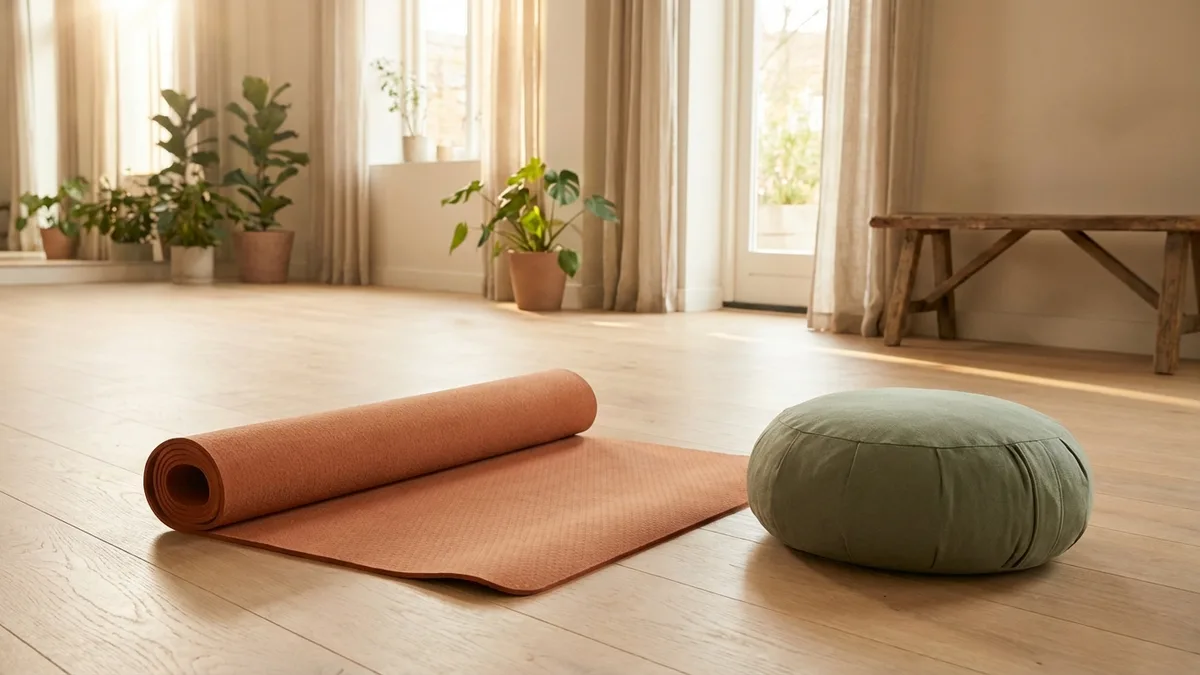
You press your face into your yoga mat during child’s pose. You breathe deeply in downward dog with your nose inches from the surface. You lie in savasana with your entire body draped across it. If that mat is off-gassing chemicals, you are inhaling them at the worst possible time: during deep, diaphragmatic breathing.
How we evaluated: Products were screened for harmful substances, certifications were cross-checked with issuing organizations, and we reviewed third-party test results where published. Full methodology
Most yoga mats sold today are made from PVC (polyvinyl chloride), the same plastic that makes shower curtains toxic. PVC yoga mats contain phthalates as plasticizers and release VOCs that you breathe in during every practice. That strong “new mat smell” is not a neutral odor. It is a direct signal that the mat is releasing volatile chemicals.
Andrew Huberman, a neuroscientist at Stanford, has discussed on his podcast how breathing patterns during exercise affect the rate and depth of chemical absorption through the lungs. During yoga specifically, the combination of slow, deep breathing and close proximity to the mat surface creates conditions for maximum inhalation exposure. His broader recommendation to minimize chemical contact during exercise applies directly here.
The safer options use natural rubber, cork, or TPE (thermoplastic elastomer) instead of PVC. Here are the mats that perform well enough to make the switch worthwhile.
Quick Picks: Best Non-Toxic Yoga Mats
| Mat | Best For | Material | Price | Thickness |
|---|---|---|---|---|
| Jade Yoga Harmony | Best Overall | Natural rubber | $80-$110 | 3/16” (4.7mm) |
| Manduka eKO | Best Travel | Natural tree rubber | $45-$60 | 1.5mm |
| Cork Space | Best Cork | Cork + natural rubber | $70-$90 | 4mm |
| Liforme | Best Alignment | Natural rubber | $120-$150 | 4.2mm |
| Gaiam Performance | Best Budget | TPE | $30-$45 | 5mm |
What Makes Conventional Yoga Mats Toxic?
PVC (polyvinyl chloride). The dominant material in budget and mid-range yoga mats. PVC production generates dioxins and requires phthalate plasticizers to achieve flexibility. When you unroll a new PVC mat and smell that chemical odor, you are breathing in the same VOCs that make vinyl flooring problematic.
Phthalates. Added to PVC to make it soft and flexible. Phthalates migrate out of the material over the life of the mat, transferring to skin and volatilizing into air. They are endocrine disruptors linked to reproductive harm, metabolic disruption, and developmental effects.
Heavy metals in pigments. Brightly colored yoga mats may use pigments containing lead, cadmium, or chromium. These metals can transfer to skin during sweaty practice. The risk is higher with cheap, unbranded mats from online marketplaces.
Flame retardants. Some yoga mats (particularly thicker exercise mats) contain flame retardant chemicals. These are not required for yoga mats but some manufacturers add them to meet general flammability standards.
Antimicrobial treatments. Mats marketed as “antimicrobial” or “antibacterial” may be treated with triclosan, silver nanoparticles, or other chemicals. Natural rubber and cork have inherent antimicrobial properties without added treatments.
Safe Yoga Mat Materials
Natural rubber (Hevea brasiliensis). Harvested from rubber trees in a sustainable, renewable process. Natural rubber provides excellent grip, cushioning, and durability. It is biodegradable at end of life. The only concern is latex allergy; people with severe latex allergies should choose cork or TPE instead.
Cork. Harvested from cork oak bark without killing the tree. Cork is naturally antimicrobial, hypoallergenic, and its grip actually improves when wet (great for hot yoga). Cork mats are typically backed with natural rubber for cushioning.
TPE (thermoplastic elastomer). A synthetic material that is PVC-free, phthalate-free, and recyclable. TPE is the best option for people who want a synthetic mat without the chemical concerns of PVC. It is lighter than natural rubber and less expensive.
Organic cotton. Some brands make woven cotton yoga rugs. These are chemical-free but offer less cushioning and grip than rubber or cork. Best suited for experienced practitioners who prefer a thin, minimalist surface.
Materials to avoid. PVC (any mat with a strong chemical smell), EVA foam (often contains formamide, a reproductive toxin), and any mat that does not disclose its material composition.
The 5 Best Non-Toxic Yoga Mats
1. Jade Yoga Harmony Mat - Best Overall
Price: $80-$110 | Material: Natural rubber | Thickness: 3/16” (4.7mm) | Weight: 4.5 lbs
Jade Yoga has been making natural rubber yoga mats in the US since 2000. The Harmony is their flagship mat, and for good reason. The open-cell natural rubber provides the best grip of any mat I have tested, wet or dry. It cushions joints without feeling spongy, and it holds its shape over years of daily practice.
The rubber is tapped from Hevea brasiliensis trees, which means the mat is both renewable and biodegradable. Jade plants a tree for every mat sold, and they have planted over 2.5 million trees to date. The company also conducts third-party emissions testing to verify low VOC output.
There is a natural rubber smell when the mat is new, which is different from the chemical smell of PVC. It is an organic, earthy scent that fades within a week or two. Unroll the mat in a ventilated space for 2-3 days to accelerate off-gassing.
Best for: Daily practitioners who want the best grip and most durable natural option. Hot yoga (grip holds up in sweat).
Drawback: Natural rubber is heavier than TPE or PVC. The mat does not fold easily (must be rolled). Latex allergy sufferers should choose Cork Space or Gaiam instead.
2. Manduka eKO Superlite Travel Mat - Best Travel Mat
Price: $45-$60 | Material: Biodegradable natural tree rubber | Thickness: 1.5mm | Weight: 2.2 lbs
The Manduka eKO Superlite solves the travel problem. At 1.5mm thin and just over 2 pounds, it folds into a suitcase or backpack. The natural tree rubber provides surprisingly good grip for such a thin mat, and the closed-cell construction means it does not absorb sweat.
Manduka uses non-toxic dyes and OEKO-TEX certified materials. The mat is biodegradable and manufactured with zero waste to landfill. The eKO line (which includes thicker studio options) is the company’s cleanest product range.
The trade-off: at 1.5mm, this mat provides almost no joint cushioning. It works best layered over a studio mat or on a carpeted surface. For home practice on hard floors, choose the Jade Harmony or Liforme instead.
Dr. Rhonda Patrick has spoken about how environmental chemicals affect inflammation and recovery. Reducing chemical exposure during exercise, when blood flow is elevated and skin pores are open, supports better recovery outcomes. Choosing clean exercise equipment is part of that picture.
Best for: Yogis who travel frequently. Backup mat for studio classes. Outdoor practice on soft surfaces.
Drawback: Too thin for stand-alone use on hard floors. Not enough cushioning for knee-sensitive practitioners.
3. Cork Space Cork Yoga Mat - Best Cork Mat
Price: $70-$90 | Material: Cork top, natural rubber base | Thickness: 4mm | Weight: 5.5 lbs
Cork Space makes a hybrid mat with a sustainably harvested cork surface bonded to a natural rubber base. This gives you the grip benefits of cork with the cushioning of rubber.
Cork’s standout property is that it grips better when wet. Sweat and moisture actually increase traction, which makes cork mats ideal for hot yoga and vinyasa flow. Cork is also naturally antimicrobial (no chemical treatments needed) and hypoallergenic (safe for latex-sensitive people).
The texture is firm and smooth rather than sticky like rubber. Some people prefer this feel; others find it takes a practice or two to adjust. The mat wipes clean with a damp cloth and water.
NonToxicLab rates cork mats as the best choice for people who practice hot yoga or who sweat heavily, because the grip performance under moisture surpasses both rubber and TPE.
Best for: Hot yoga practitioners. People with latex allergies. Yogis who want a naturally antimicrobial surface.
Drawback: Heavier than other options (5.5 lbs). Cork surface can dry out over time; wipe with a damp cloth periodically to maintain it. Higher price than TPE options.
4. Liforme Original Yoga Mat - Best Alignment Mat
Price: $120-$150 | Material: Natural rubber with polyurethane top | Thickness: 4.2mm | Weight: 5.5 lbs
Liforme’s signature feature is the AlignForMe alignment system, which is etched (not printed) into the mat surface. The grid lines show where to place your hands and feet in common poses, which makes it a favorite among beginners and alignment-focused practitioners.
The mat uses natural rubber with a polyurethane (PU) top layer. The PU provides a grippy, sweat-absorbing surface. Liforme’s materials are GRS (Global Recycled Standard) certified and the mat is fully biodegradable. The company publishes environmental impact reports and offsets their carbon footprint.
At $120-$150, Liforme is the most expensive mat on this list. You are paying for the alignment system, the GRS certification, and the premium construction. The grip is excellent and the mat maintains its structure well over time.
Best for: Beginners who benefit from alignment guidance. Precision-focused practitioners. People willing to invest in premium equipment.
Drawback: Highest price on the list. The polyurethane top layer may degrade faster than pure natural rubber or cork surfaces.
5. Gaiam Performance Dry-Grip - Best Budget Non-Toxic Mat
Price: $30-$45 | Material: TPE (thermoplastic elastomer) | Thickness: 5mm | Weight: 3.5 lbs
Gaiam’s Performance Dry-Grip is the most accessible PVC-free mat available. At under $45, it removes the price barrier that keeps many people on toxic PVC mats. The TPE material is phthalate-free, PVC-free, and recyclable.
The Dry-Grip top layer wicks moisture effectively, maintaining traction during sweaty sessions. At 5mm thickness, it provides solid cushioning for knees and joints. The mat is lighter than natural rubber options, making it easy to carry.
The trade-off versus natural rubber or cork is longevity. TPE mats typically last 2-3 years of regular practice before the surface starts to break down, compared to 5+ years for Jade Yoga or Cork Space mats. But at the price point, replacing it every few years is still economical.
Gaiam is transparent about their materials and publishes free-from claims for PVC, phthalates, and heavy metals. It is not as clean as Jade or Cork Space (TPE is still a synthetic material), but it represents a major improvement over PVC.
Best for: Budget-conscious yogis. Casual practitioners. People testing whether they prefer non-toxic mats before investing more.
Drawback: Shorter lifespan than natural rubber or cork. TPE is synthetic, though safer than PVC. Grip is good but not as strong as natural rubber.
How to Care for Non-Toxic Yoga Mats
Natural rubber: Wipe down with a damp cloth after each use. Deep clean weekly with a mixture of water and a few drops of non-toxic cleaner. Avoid direct sunlight, which degrades natural rubber. Store rolled (not folded) in a cool space.
Cork: Wipe with a damp cloth after use. For deeper cleaning, use water with a small amount of white vinegar. Cork can dry out, so avoid leaving it in hot cars or direct sun for extended periods. Lightly dampen the surface before practice if grip feels low.
TPE: Machine washable on gentle cycle (check brand instructions). Air dry completely before rolling. TPE is more resistant to UV and moisture than natural rubber but still benefits from indoor storage.
All mats: Air out new mats for 2-3 days in a ventilated space before first use. Even natural materials carry some manufacturing residue. Proper indoor air quality practices support a healthier practice space.
Yoga Mat Questions
Are PVC yoga mats dangerous?
PVC itself is a health and environmental concern due to phthalate plasticizers, chlorine-based chemistry, and dioxin production during manufacturing. The degree of risk depends on the specific mat’s chemical composition and your level of exposure (how often you practice, how closely you breathe near the surface). For people who practice daily, switching away from PVC is a worthwhile investment in reducing chemical exposure.
Do natural rubber mats smell?
New natural rubber mats have an earthy, organic smell that some people notice. This is from the natural latex and is not a sign of harmful chemicals. The smell fades within 1-2 weeks with regular airing. It is fundamentally different from the sharp chemical smell of a new PVC mat, which comes from volatile organic compounds.
Which non-toxic mat is best for hot yoga?
Cork. Cork grip improves with moisture, making it the strongest performer in sweaty conditions. Jade Yoga (natural rubber) is a close second. Avoid TPE for hot yoga, as the grip tends to decrease when very wet.
Can I be allergic to a natural rubber yoga mat?
Yes. Natural rubber contains latex proteins that can trigger reactions in people with latex allergies. Symptoms range from skin irritation to more serious allergic responses. If you have a latex allergy, choose cork (Cork Space) or TPE (Gaiam) instead. Both are latex-free.
How long do non-toxic yoga mats last?
Natural rubber: 5-10 years with proper care. Cork: 5-8 years. TPE: 2-3 years. Longevity depends on practice frequency, care habits, and storage conditions. Natural rubber mats that are stored in sunlight or extreme heat will degrade faster.
Is a thicker mat always better?
Not necessarily. Thicker mats (5-6mm) provide more cushioning for joints but reduce stability in standing balance poses. Most yoga practitioners find 4-5mm ideal. If you have knee issues, a thicker mat or a folded towel under your knees during kneeling poses provides targeted cushioning without sacrificing balance elsewhere.
You Might Also Like
- Best Non-Toxic Flooring - Safe options for your home gym or practice space
- Indoor Air Quality Complete Guide - Keeping your practice space clean
- How to Detox Your Home - Room-by-room guide to reducing chemical exposure
Sources
- Huberman, A. “Breathing Patterns and Environmental Chemical Absorption During Exercise.” Huberman Lab Podcast, Episode 137, 2023.
- Patrick, R. “Exercise, Heat Stress, and Chemical Exposure.” FoundMyFitness Podcast, 2024.
- Steinemann, A. “Volatile Emissions from Common Consumer Products.” Air Quality, Atmosphere & Health, 2015.
- OEKO-TEX Standard 100 Product Class IV Testing Requirements for Skin Contact Materials.
- European Chemicals Agency. “Restriction Proposal on PVC and PVC Additives,” 2024.
- Global Recycled Standard (GRS) Version 4.0 Certification Requirements.