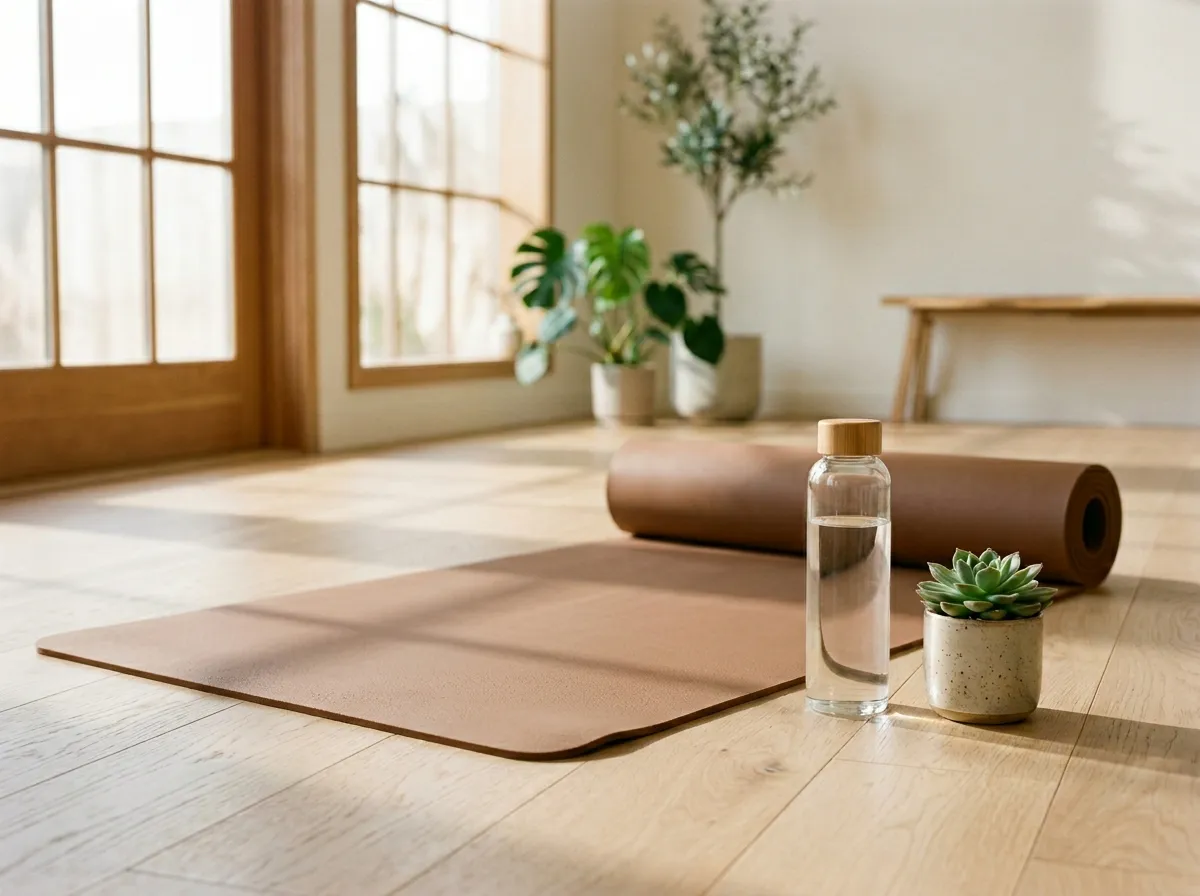
PVC yoga mats are among the most chemically concerning fitness products you can buy. I unrolled a new PVC yoga mat last year and the smell gave me a headache for two days. Not a subtle, maybe-I’m-imagining-it kind of headache. A real one. That’s when I started researching what’s actually in most yoga mats, and honestly, what I found made me angry.
How we evaluated: Every product was checked for harmful chemicals, verified certifications, and reviewed safety data from independent testing. We also considered real-world performance and long-term durability. Full methodology
You’re on your mat to feel better. To breathe deeply. To reduce stress. And the whole time, you could be inhaling phthalates, formamide, and volatile organic compounds from the very surface your face is pressed against during child’s pose.
The irony is brutal.
So I spent weeks researching materials, reading lab reports, and testing mats to find options that won’t undermine the entire point of your practice. Here are the best non-toxic yoga mats you can actually buy in 2026.
Why Most Yoga Mats Are Toxic
Let’s get specific about what’s wrong with conventional yoga mats, because “toxic” gets thrown around a lot without much explanation.
PVC (Polyvinyl Chloride)
The majority of cheap yoga mats are made from PVC. On its own, PVC is rigid plastic. To make it soft and squishy enough for a yoga mat, manufacturers add plasticizers, most commonly phthalates. Phthalates are endocrine disruptors. They mess with your hormones. Dr. Shanna Swan, a Mount Sinai professor whose research on phthalates was featured on the Huberman Lab podcast, has documented how exposure to these chemicals from everyday products contributes to declining fertility and hormonal disruption, and she advises checking ingredients on anything that touches your skin regularly. They belong to the same broad category of persistent chemicals as PFAS forever chemicals. The EU has restricted several types in consumer products, and California’s Proposition 65 lists some as reproductive toxins.
PVC mats can also contain heavy metals like lead and cadmium, used as stabilizers during manufacturing. And when you eventually throw that mat away? PVC doesn’t biodegrade. It sits in a landfill, leaching chemicals into soil and groundwater.
Formamide
Here’s one most people haven’t heard of. Many foam yoga mats (especially the super-cushy budget ones) use formamide as a foaming agent. It’s classified as a reproductive toxin by the European Chemicals Agency. Belgium actually banned the sale of foam puzzle mats for children that exceeded formamide limits. Yet it shows up in yoga mats sold to adults with zero disclosure.
TPE (Thermoplastic Elastomer)
TPE gets marketed as the “eco-friendly” alternative to PVC. And yes, it’s better. But “better than PVC” is a low bar. TPE can still off-gas, especially when new. It’s a petroleum-based synthetic. Some TPE mats are recyclable, which is a genuine advantage. But calling them non-toxic is a stretch.
Where That Leaves Us on Materials
The safest yoga mat materials are:
- Natural rubber (harvested from rubber trees, biodegradable)
- Organic cotton (no pesticide residues, machine washable)
- Cork (naturally antimicrobial, harvested sustainably from bark)
- Jute (plant fiber, often blended with other materials for structure)
One caveat. If you have a latex allergy, natural rubber mats are not safe for you. Natural rubber is latex. Cork or organic cotton would be your best alternatives.
Quick Picks: Best Non-Toxic Yoga Mats at a Glance
| Mat | Best For | Material | Thickness | Weight | Price Range |
|---|---|---|---|---|---|
| Jade Harmony | Overall pick | Natural rubber | 4.7mm | 4.5 lbs | $$ |
| Manduka eKO | Durability | Natural tree rubber | 5mm | 7.5 lbs | $$$ |
| prAna ECO | Budget eco | TPE/rubber blend | 5mm | 3.5 lbs | $ |
| Liforme | Alignment | Natural rubber + PU top | 4.2mm | 5.5 lbs | $$$$ |
| JadeYoga Voyager | Travel | Natural rubber | 1.6mm | 1.5 lbs | $$ |
| Scoria Cork | Cork option | Cork + natural rubber | 5mm | 5 lbs | $$ |
| Yoloha Native Cork | Premium cork | Cork + plant foam | 6mm | 6 lbs | $$$ |
| Gaiam Performance TPE | Budget (with tradeoffs) | TPE | 6mm | 3 lbs | $ |
Detailed Reviews
1. Jade Harmony Yoga Mat - Best Overall Non-Toxic Mat
Material: Natural rubber | Thickness: 4.7mm | Weight: 4.5 lbs
The Jade Harmony is the mat I recommend to almost everyone. It’s made from natural rubber tapped from rubber trees, contains no PVC, no synthetic rubber, and no EVA. JadeYoga is transparent about their materials and manufacturing, which already puts them ahead of most brands.
Grip is the standout feature here. Natural rubber grips like nothing else, wet or dry. During hot yoga, it actually gets grippier as you sweat. The 4.7mm thickness hits a sweet spot between cushion and stability. You can feel the floor enough for balance poses without your knees aching in low lunges.
The downsides? It has a natural rubber smell when new. Not a chemical off-gassing smell, just a rubber-tree smell. It fades within a week or two. And natural rubber mats are heavier than synthetic ones. At 4.5 pounds, the Harmony isn’t terrible, but it’s not ultralight.
JadeYoga also plants a tree for every mat sold, which is a nice touch that actually has verification behind it.
Who it’s for: Anyone wanting the best balance of grip, cushion, and clean materials. This is your default choice unless you have a latex allergy or need something very specific.
2. Manduka eKO Yoga Mat - Best for Durability
Material: Natural tree rubber | Thickness: 5mm | Weight: 7.5 lbs
Manduka’s eKO line uses natural tree rubber and is manufactured in a facility that meets strict emissions standards. No toxic plasticizers. No PVC. The rubber is biodegradable, and Manduka has a closed-loop manufacturing process that minimizes waste.
This mat is dense. Really dense. At 7.5 pounds, you’ll notice it in your bag. But that density is exactly why it lasts so long. Where cheaper mats start flaking and compressing within a year, the eKO keeps its structure for years. If you practice daily and you’re tired of replacing mats, this is the one.
Grip takes a break-in period. Fresh out of the package, the eKO can feel a little slick. Scrub it with coarse salt and let it air out for a few days. After that, the grip is excellent.
One thing I appreciate: Manduka doesn’t exaggerate their claims. They call the eKO “responsibly made” rather than “organic” or “all-natural,” because the dyes and bonding agents aren’t certified organic. That kind of honesty matters.
Who it’s for: Daily practitioners who want a mat that will last 5+ years. People who prioritize durability and don’t mind the weight.
3. prAna ECO Yoga Mat - Best Budget Eco Option
Material: TPE/Natural rubber blend | Thickness: 5mm | Weight: 3.5 lbs
I’ll be upfront. The prAna ECO isn’t as clean as a pure natural rubber mat. It uses a blend of TPE and natural rubber. But it’s PVC-free, phthalate-free, and free of the top six most harmful heavy metals. For someone who can’t spend $80 to $120 on a yoga mat, it’s a reasonable middle ground.
It’s lightweight at 3.5 pounds. The cushion is decent. Grip is good on the textured side, though it doesn’t match natural rubber in hot or sweaty conditions.
The price point is what makes this mat worth mentioning. Not everyone can afford a Liforme or Manduka eKO. If your budget is limited and you want to avoid PVC, prAna gets you most of the way there.
Who it’s for: Budget-conscious yogis making their first switch away from PVC. A solid stepping stone, not the final destination.
4. Liforme Yoga Mat - Best for Alignment
Material: Natural rubber base with polyurethane top | Thickness: 4.2mm | Weight: 5.5 lbs
Liforme is the mat you see all over Instagram, and for once, the hype has some substance behind it. The base is natural rubber. The top layer is a patented polyurethane surface with Liforme’s “AlignForMe” system, which is a set of body-mapping markers etched into the mat to help you position your hands, feet, and body correctly.
This grip on this mat is unreal. The polyurethane top layer is absorbent, so the more you sweat, the better it grips. For hot yoga and vinyasa flow, I haven’t found anything better.
Materials-wise, Liforme uses no PVC, no toxic glue, and the mat is biodegradable. They’re a certified B Corp and offset their carbon emissions. The polyurethane top is worth discussing though. PU is a synthetic material, and while Liforme states theirs is free of harmful chemicals and passes OEKO-TEX testing, purists who want zero synthetics should look elsewhere.
The price is steep. This is one of the most expensive mats on this list. But the alignment guides alone make it worth considering if you’re working on form, especially for beginners or anyone recovering from injury.
Who it’s for: Yogis who want alignment guides and world-class grip. Hot yoga practitioners. Anyone willing to invest in a premium mat.
5. JadeYoga Voyager - Best for Travel
Material: Natural rubber | Thickness: 1.6mm | Weight: 1.5 lbs
Same company as the Harmony, same commitment to natural rubber, but designed to fold up and fit in your suitcase. At 1.6mm, the Voyager provides essentially no cushion on its own. That’s not the point. You use it on top of a studio mat or carpet for a clean, grippy surface that you know is free of whatever chemicals are lurking in borrowed mats.
I travel with one of these. It folds (not rolls) down to roughly the size of a newspaper. The grip is identical to the Harmony because it’s the same natural rubber. And at 1.5 pounds, you’ll barely notice it in your luggage.
It’s a specialty product. You wouldn’t use the Voyager as your only mat at home unless you practice exclusively on carpet. But for travel and as a studio overlay, it’s the best option I’ve found.
Who it’s for: Yogis who travel frequently and want a clean, non-toxic surface wherever they practice.
6. Scoria Cork Yoga Mat - Best Cork Option
Material: Cork top with natural rubber base | Thickness: 5mm | Weight: 5 lbs
If you have a latex allergy, cork is your best friend. The Scoria pairs a cork top layer with a natural rubber base, so technically the rubber is still present, but your skin only contacts the cork. (If your allergy is severe, check with your doctor, or go with an all-cotton mat instead.)
Cork is naturally antimicrobial. It resists bacteria and odor without any chemical treatments. The grip is different from rubber. Dry, it can feel slightly slippery. Wet, it grips incredibly well. Most cork mat users keep a spray bottle nearby and mist the surface before practice.
Scoria sources their cork from sustainably managed forests in Portugal, where the bark is harvested without harming the trees. The trees actually absorb more CO2 after harvesting, which is a genuine environmental benefit.
What makes the surface has a nice, warm feel to it. less sticky than rubber, more natural. some people love the texture. others miss the grippy feel of a rubber mat. it comes down to preference.
Who it’s for: Latex-allergic practitioners, anyone who wants natural antimicrobial properties, and people who prefer the feel and look of cork.
7. Yoloha Native Cork Yoga Mat - Best Premium Cork
Material: Cork with plant-based foam base | Thickness: 6mm | Weight: 6 lbs
Yoloha takes the cork concept further. Their Native mat uses cork on top and a proprietary plant-based foam on the bottom instead of natural rubber. This makes it a genuinely latex-free option from top to bottom.
The 6mm thickness provides more cushion than most cork mats, which tend to run thin. The plant-based foam has some give to it without being mushy. And because the entire mat is free of natural rubber, it’s one of the very few non-toxic options for people with serious latex sensitivities.
Yoloha manufactures in the USA, which gives them more control over quality and materials. The mats are handmade in small batches. You’re paying for that craftsmanship, and the price reflects it.
Cork surface performs similarly to the Scoria. Great when slightly damp, a bit slick when bone dry. The extra thickness makes a noticeable difference for kneeling poses and any practice on hard floors.
Who it’s for: Anyone needing a fully latex-free non-toxic mat. People who want extra cushion in a cork mat. Shoppers who value USA manufacturing.
8. Gaiam Performance TPE Yoga Mat - Honest Take
Material: TPE (Thermoplastic Elastomer) | Thickness: 6mm | Weight: 3 lbs
I’m including this mat because it’s widely available, affordable, and people ask about it constantly. Let me be honest about what it is and isn’t.
The Gaiam Performance TPE is not a natural mat. TPE is a petroleum-derived synthetic. Gaiam markets it as free of PVC, latex, and the top six phthalates. That’s true. It’s also lightweight, affordable, and has decent cushion at 6mm.
But. TPE does off-gas when new. It’s not biodegradable (despite some marketing claims, TPE takes a very long time to break down). And while it avoids the worst chemicals found in PVC mats, it’s still a synthetic material with limited transparency about its full chemical composition.
Is it better than a cheap PVC mat from a discount store? Yes, significantly. Is it truly non-toxic? I’d call it “less toxic.” There’s a difference.
If budget is your primary constraint, this mat is a functional improvement over PVC. But if you can save up for a Jade Harmony or Scoria Cork, you’ll get a genuinely clean mat that you won’t need to replace as soon.
Who it’s for: Budget shoppers who want to avoid PVC but can’t stretch to natural rubber or cork pricing. A reasonable compromise, not the ideal.
Grip, Cushion, Weight, and Portability Compared
See how these mats stack up across the features that matter most during actual practice.
| Mat | Grip (Dry) | Grip (Wet) | Cushion | Portability |
|---|---|---|---|---|
| Jade Harmony | Excellent | Excellent | Good | Average |
| Manduka eKO | Good (after break-in) | Very Good | Very Good | Below Average |
| prAna ECO | Good | Average | Good | Good |
| Liforme | Excellent | Outstanding | Good | Average |
| JadeYoga Voyager | Excellent | Excellent | Minimal | Outstanding |
| Scoria Cork | Average | Very Good | Good | Average |
| Yoloha Native Cork | Average | Very Good | Very Good | Below Average |
| Gaiam Performance TPE | Good | Average | Very Good | Good |
A few things jump out from this comparison.
Natural rubber wins on grip, period. Both dry and wet. If grip is your top priority (hot yoga, sweaty palms, flowing sequences), go with the Jade Harmony or Liforme.
Cork mats flip the script. They’re average when dry but excellent when wet. If you tend to sweat a lot, this actually works in your favor. Just mist the mat before you start.
Cushion and portability tend to be inversely related. The thicker, cushier mats (Manduka eKO, Yoloha Native Cork) are heavier and harder to carry. The most portable options (Voyager, Gaiam TPE) sacrifice some cushion. The Jade Harmony sits right in the middle, which is part of why it’s my top overall pick.
How to Care for Your Non-Toxic Yoga Mat
Natural materials need slightly different care than synthetic ones. Consider what actually works.
For natural rubber mats (Jade, Manduka, Liforme):
- Wipe down with a damp cloth after every practice
- Use a mix of water and a few drops of tea tree oil for deeper cleaning
- Never put them in a washing machine
- Air dry completely before rolling. Rubber that stays damp will degrade faster
- Store rolled up, not folded, and keep out of direct sunlight. UV breaks down natural rubber
For cork mats (Scoria, Yoloha):
- Wipe with a damp cloth and mild soap
- Cork is naturally antimicrobial, so it needs less frequent deep cleaning
- Air dry standing up or draped over a chair
- Avoid leaving in hot cars. The heat can affect the bonding between cork and the base layer
For all non-toxic mats:
- Skip the heavy chemical cleaners. They can break down natural materials and defeat the purpose of having a non-toxic mat. If you need cleaning product recommendations, see our best non-toxic cleaning products guide
- A simple spray of water with white vinegar and a drop of essential oil works great
- Let new mats air out for 24 to 48 hours before first use, even natural ones
What About “Eco” Claims? How to Spot Greenwashing
Take a quick filter I use when evaluating yoga mat brands.
Green flags:
- They list the exact materials (not just “eco-friendly foam”)
- They have third-party certifications (OEKO-TEX, GOTS for cotton, FSC for cork)
- They’re transparent about what the mat does and doesn’t contain
- They acknowledge limitations honestly
Red flags:
- Vague terms like “eco foam” or “earth-safe materials” without specifics
- Claiming TPE is “biodegradable” (it technically can break down, but it takes decades in specific industrial conditions)
- No mention of certifications or third-party testing
- Marketing that focuses entirely on aesthetics and lifestyle rather than material composition
If a brand won’t tell you exactly what’s in their mat, that tells you something.
Your Questions Answered
Are PVC yoga mats really that bad?
Yes. PVC (polyvinyl chloride) is one of the most environmentally damaging plastics to produce and dispose of. During manufacturing, it releases dioxins. In your home, it can off-gas phthalates, which are known endocrine disruptors. The chemical smell you notice from a new PVC mat? Those are volatile organic compounds entering your breathing space. An air purifier can help, but eliminating the source is always better. During yoga, when you’re breathing deeply with your face inches from the mat, exposure is even more direct than normal product use.
Can I use a natural rubber yoga mat if I have a latex allergy?
No. Natural rubber is latex. If you have a confirmed latex allergy, avoid natural rubber mats entirely. Your safest options are cork mats (like the Yoloha Native Cork, which also has a latex-free base) or organic cotton mats. If you have a mild sensitivity rather than a true allergy, talk to your allergist before deciding.
Why do natural rubber mats smell?
Natural rubber has an inherent scent that comes from the rubber tree sap itself. It’s not chemical off-gassing in the way PVC smells are. The smell typically fades within one to two weeks. Airing your mat out in a well-ventilated space (not direct sunlight) speeds this up. Some people don’t mind the smell at all. Others are sensitive to it. It’s worth knowing about upfront.
How long do non-toxic yoga mats last?
It depends on the material and how often you practice. A high-quality natural rubber mat like the Manduka eKO can last 5 to 10 years with proper care. The Jade Harmony typically lasts 2 to 4 years with regular use. Cork mats generally last 2 to 3 years before the surface starts wearing. Organic cotton mats have the shortest lifespan but can be machine washed, which extends usability.
Is TPE a safe yoga mat material?
TPE is safer than PVC. It’s free of chlorine, phthalates, and heavy metals. But it’s still a synthetic, petroleum-based material that can off-gas VOCs when new. I’d classify it as a “better” option rather than a truly “safe” one. If you can afford natural rubber or cork, those are cleaner choices. TPE is a reasonable compromise at a lower price point.
Do I need to break in a new yoga mat?
Natural rubber mats often benefit from a break-in period. The Manduka eKO in particular can feel slick at first. Scrubbing the surface with coarse sea salt and rinsing it off helps remove the thin film from manufacturing. After a few practices, the grip improves noticeably. Cork mats don’t need breaking in but do grip better when slightly damp.
What certifications should I look for?
OEKO-TEX Standard 100 means the mat has been tested for harmful substances. GOTS (Global Organic Textile Standard) applies to cotton mats. FSC (Forest Stewardship Council) certification is relevant for cork products. A B Corp certification (like Liforme has) indicates the company meets verified social and environmental standards. No single certification covers everything, but any of these are positive indicators.
Can I recycle my old yoga mat?
PVC mats cannot go in regular recycling. Some specialty programs accept them, but most end up in landfills. Natural rubber mats are biodegradable and will break down over time, though the process isn’t fast. Cork is biodegradable and compostable. If your old mat is still functional, consider donating it to a shelter, school, or community center rather than throwing it away.
Final Thoughts
Your yoga mat shouldn’t work against you. That sounds obvious, but the reality is that most mats on the market contain chemicals you’d probably avoid if you knew they were there.
This good news is that genuinely non-toxic options exist at several price points. The Jade Harmony is my top pick for most people. If you need latex-free, go with the Yoloha Native Cork. And if budget is tight, the prAna ECO gets you away from PVC without a big investment.
Whatever you choose, you’ll breathe a little easier knowing your mat isn’t breathing chemicals back at you. If you want to keep going with non-toxic swaps, our non-toxic spring cleaning guide is a great next step.
Looking for more ways to reduce chemical exposure at home? Check out our guides to the best non-toxic cleaning products, learn how to detox your home room by room, or find out what PFAS forever chemicals are and where they hide in everyday products.
Sources
- Swan, S. H. Count Down. Scribner, 2021.
- Swan, S. H. appearance on the Huberman Lab Podcast (2024).