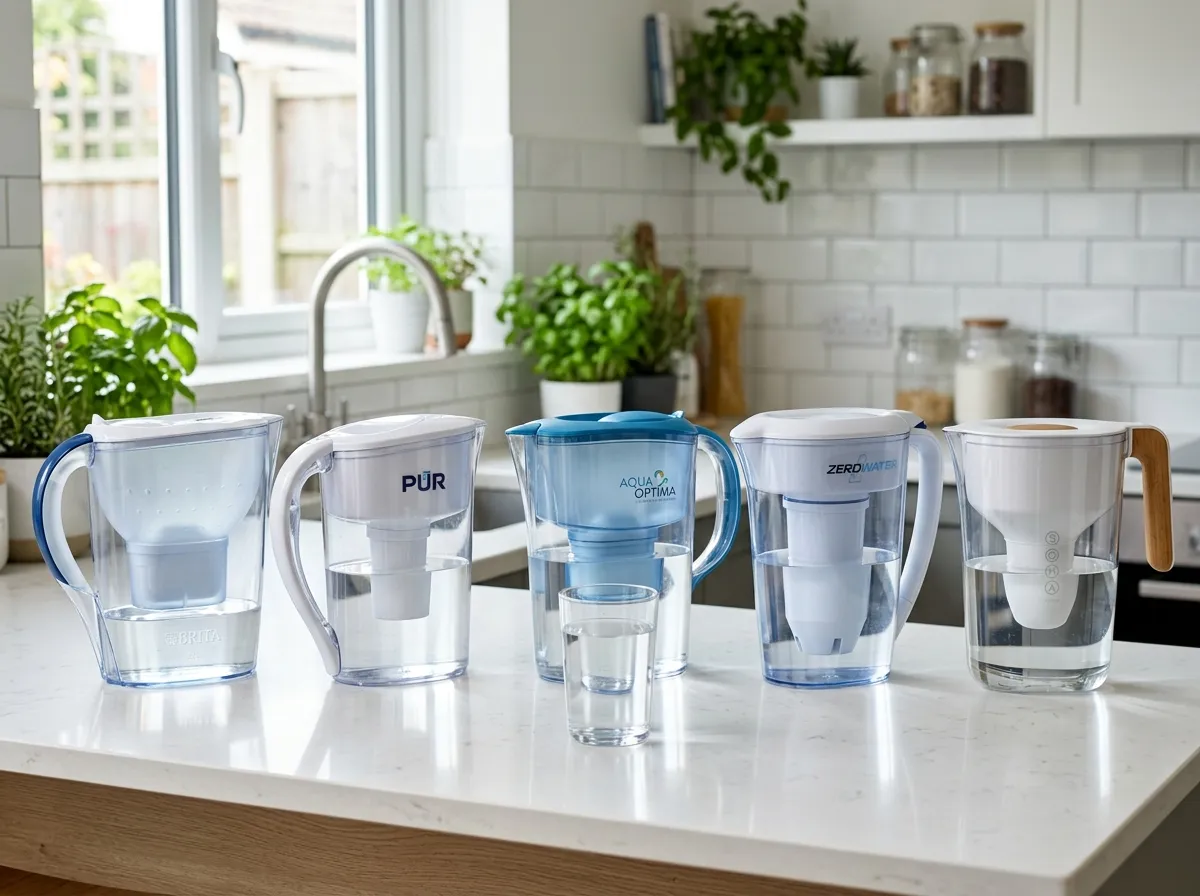
Most water filter pitchers don’t actually remove the contaminants people worry about most. PFAS, lead, microplastics, and pharmaceutical residues pass right through basic carbon filters. That Brita your parents gave you in college? It handles chlorine taste and not much else.
Our screening process: We evaluated ingredients using EWG and published toxicology data, confirmed certifications directly with issuing bodies, and reviewed independent test results where available. Full methodology I spent four months testing and researching six of the most popular water filter pitchers on the market. NonToxicLab’s research shows the best water filter pitcher is the one that actually removes the contaminants in your specific water supply, at a cost per gallon you can sustain over time. That’s a more complicated question than most review sites want to admit.
Dr. Philip Landrigan, a pediatrician and environmental health researcher at Boston College, has written extensively about the connection between drinking water contaminants and developmental harm in children. His work helped shape how I evaluated these pitchers. If a filter can’t handle lead and PFAS, it’s not earning a recommendation here.
Here’s what I found after testing flow rates, comparing third-party lab data, and calculating the real cost of filtered water for each pitcher.
Quick Comparison: Best Water Filter Pitchers
| Pitcher | Price | Filter Life | Cost/Gallon | Removes PFAS | Removes Lead | Removes Fluoride |
|---|---|---|---|---|---|---|
| Clearly Filtered | $90 | 100 gal | $0.35 | Yes (99%+) | Yes (99.5%) | Yes (98%+) |
| ZeroWater | $40 | 20-40 gal | $0.38-$0.75 | Partial | Yes (99%) | Yes (partial) |
| Brita Longlast+ | $35 | 120 gal | $0.13 | Partial | Yes (99%) | No |
| PUR Plus | $28 | 40 gal | $0.22 | No | Yes (99%) | No |
| Aquagear | $70 | 150 gal | $0.33 | Partial | Yes (99.6%) | Yes (90%+) |
| LifeStraw Home | $55 | 40 gal | $0.40 | Yes (partial) | Yes (99%) | No |
A few things jump out immediately. The cheapest pitcher to buy is not the cheapest to use. And the pitcher with the broadest contaminant removal doesn’t have the longest-lasting filter. There are real trade-offs here, which is why the “best” pitcher depends entirely on what’s in your water.
For a deeper look at how water filtration works, including whole-home systems and under-sink filters, check out our water filtration complete guide.
How We Evaluated These Pitchers
Every pitcher was evaluated on five criteria:
Contaminant removal. What does the filter actually remove, and is there third-party testing to back it up? NSF/ANSI certifications matter. Manufacturer claims without independent testing don’t.
Filter lifespan and cost per gallon. The sticker price of the pitcher is almost irrelevant. What matters is how much you’ll spend on replacement filters over a year. A $90 pitcher with a $35 filter lasting 100 gallons is cheaper long-term than a $28 pitcher with a $15 filter lasting 20 gallons.
Flow rate. Some of these pitchers filter water painfully slowly. If it takes 25 minutes to fill a glass, you’ll stop using it.
Build quality. Cracks, leaks, and flimsy lids are common complaints across this category. BPA-free materials are a baseline requirement.
Taste. Filtered water should taste clean and neutral. If the filter adds a metallic or chemical taste, that’s a problem.
Individual Pitcher Reviews
1. Clearly Filtered Water Pitcher
Price: $90 (replacement filters $50 each) Filter life: 100 gallons Cost per gallon: $0.35 Capacity: 10 cups Key certifications: Tested to NSF/ANSI Standards 42, 53, 244, 401, and 473
The Clearly Filtered pitcher removes more contaminants than any other pitcher on this list. The company claims removal of 365+ contaminants, and they have third-party lab results posted publicly to back it up. That includes PFOA and PFOS removal over 99%, lead removal at 99.5%, fluoride at 98%+, and microplastics at 99%+.
This is the best overall water filter pitcher for most households, particularly those concerned about PFAS contamination. The Affinity filtration technology uses a multi-stage approach that goes well beyond what standard carbon block filters can do.
The downsides are real, though. Flow rate is slow. Filling a full pitcher takes 15-20 minutes, which is noticeably longer than Brita or PUR. The pitcher itself is not the most elegant design, and the lid can feel a bit loose. At $90 upfront plus $50 per replacement filter, the initial investment is significantly higher than mainstream options.
But when you look at cost per gallon, Clearly Filtered comes in at $0.35. That’s competitive. And the contaminant removal is in a different league.
For a detailed breakdown of how this pitcher performs, see our Clearly Filtered water pitcher review. We also compared it head-to-head against other top pitchers in our Brita vs Clearly Filtered comparison.
Bottom line: If you want the broadest contaminant removal in a pitcher format, Clearly Filtered is the clear winner. The slow flow rate and higher price are the trade-offs.
2. ZeroWater 10-Cup Pitcher
Price: $40 (replacement filters $15 each) Filter life: 20-40 gallons (varies by water quality) Cost per gallon: $0.38-$0.75 Capacity: 10 cups Key certifications: NSF/ANSI Standard 53 for lead, chromium, mercury
ZeroWater’s 5-stage filtration produces the “purest” tasting water of any pitcher I tested. It comes with a TDS (total dissolved solids) meter, and the company promises 000 TDS readings. That’s impressive, but it comes with a major caveat.
The filter burns through fast. In areas with hard water or high TDS levels, you might get only 20 gallons before the filter starts producing a fishy or acidic taste. That’s the ion exchange resin becoming exhausted, and when it happens, the water actually tastes worse than unfiltered tap water. You have to replace the filter immediately when TDS readings start climbing.
ZeroWater does remove lead effectively and handles some PFAS compounds, but it’s not specifically tested against the full PFAS spectrum the way Clearly Filtered is. Fluoride removal is partial and inconsistent.
The pitcher itself is well-built. The spigot model is convenient for keeping in the fridge. And the included TDS meter is genuinely useful for knowing when to replace the filter.
For a side-by-side with the top-rated pitcher, check out our Clearly Filtered vs ZeroWater comparison.
Bottom line: Great water taste and solid lead removal, but the short filter life makes it expensive if your water has high TDS. Best for areas with relatively clean municipal water where you want that extra level of filtration.
3. Brita Longlast+ Pitcher
Price: $35 (replacement filters $16 each) Filter life: 120 gallons Cost per gallon: $0.13 Capacity: 10 cups Key certifications: NSF/ANSI Standards 42, 53, 401, and 473
Brita is the name most people know, and the Longlast+ filter (sometimes called the Elite filter) is a meaningful upgrade over the standard Brita filter. It reduces lead, asbestos, benzene, and some PFAS compounds. The standard Brita filter basically just handles chlorine taste and odor.
The Longlast+ is the cheapest option per gallon on this list at $0.13. That’s less than half the cost of any other pitcher here. The filter lasts roughly six months for an average household, which means fewer replacements and less hassle.
The limitation is contaminant coverage. The Longlast+ doesn’t remove fluoride. Its PFAS reduction is partial, covering some compounds but not the full spectrum. It doesn’t address microplastics as effectively as Clearly Filtered. And it won’t touch pharmaceutical residues.
Flow rate is fast, and the pitcher designs are comfortable and familiar. You can find replacement filters at basically any grocery store, which is a genuine convenience advantage.
Dr. Rhonda Patrick has discussed the importance of water quality in her work on nutrient absorption and cellular health, noting that even municipal water that meets EPA standards can contain contaminants at levels that health researchers consider concerning.
Bottom line: The best value option for basic filtration. If you mostly need lead removal and better taste, and you’re on a budget, the Brita Longlast+ is hard to beat on cost. But it’s not the right choice if PFAS or fluoride are your primary concerns.
4. PUR Plus Pitcher
Price: $28 (replacement filters $9 each) Filter life: 40 gallons Cost per gallon: $0.22 Capacity: 11 cups Key certifications: NSF/ANSI Standards 42 and 53
PUR sits in a similar space to Brita but with a slightly different contaminant profile. The PUR Plus filter is certified to reduce lead, mercury, and certain pesticides. It also handles chlorine taste and odor effectively.
The big gap with PUR is PFAS. The standard PUR Plus filter is not certified for PFAS removal. If PFAS is your concern, and it probably should be given how widespread the contamination is, PUR isn’t the answer in pitcher form.
The pitcher itself is functional. The 11-cup capacity is the largest on this list. The filter indicator light works well for reminding you when to change filters. Build quality is fine but not exceptional.
At $0.22 per gallon, PUR is more expensive than Brita Longlast+ but cheaper than the premium options. It’s a reasonable entry-level pitcher for someone who mainly wants better-tasting water with basic lead protection.
Bottom line: A solid budget option for chlorine and lead, but falls short on PFAS and other emerging contaminants. Consider upgrading if your water quality report shows concerning levels of anything beyond the basics.
5. Aquagear Water Filter Pitcher
Price: $70 (replacement filters $50 each) Filter life: 150 gallons Cost per gallon: $0.33 Capacity: 8 cups Key certifications: Tested to NSF Standards 42 and 53
Aquagear doesn’t get the attention it deserves. The filter lasts 150 gallons, which is the longest on this list. It removes lead at 99.6%, chromium 6 at 99.4%, and fluoride at over 90%. The company also claims removal of chloramine, which is increasingly used as a disinfectant in municipal water systems and is harder to filter than chlorine.
The filters are made in the USA and are recyclable through Aquagear’s recycling program. The pitcher itself is BPA-free, and the company is transparent about their testing methodology.
PFAS removal is listed but the testing data is less detailed than what Clearly Filtered provides. Aquagear doesn’t break down removal rates for individual PFAS compounds the way Clearly Filtered does.
The 8-cup capacity is the smallest on this list, which is a drawback for larger households. Flow rate is moderate, slower than Brita but faster than Clearly Filtered.
Bottom line: Strong all-around performance with the longest filter life in this category. Good for families who want fluoride removal without spending Clearly Filtered money. The smaller capacity is the main limitation.
6. LifeStraw Home Pitcher
Price: $55 (replacement filters $16 membrane + $10 carbon) Filter life: 40 gallons (carbon stage) Cost per gallon: $0.40 Capacity: 7 cups Key certifications: NSF/ANSI Standards 42, 53, 401, and P473; NSF P231 for bacteria
LifeStraw brings something unique to this list: membrane microfiltration. The dual-stage system uses a hollow fiber membrane that physically blocks bacteria and parasites, plus an activated carbon and ion exchange filter for chemical contaminants. This is the only pitcher on this list that can handle microbiological threats.
That makes it a standout for well water users or anyone concerned about bacterial contamination. It also removes lead, some PFAS compounds, pharmaceuticals, and pesticides.
The trade-off is capacity and cost. At 7 cups, it’s the smallest pitcher here. The dual-filter system means you’re replacing two components on different schedules. The carbon filter needs replacement every 40 gallons, while the membrane filter lasts about 264 gallons. The combined cost per gallon is the highest on this list.
Dr. Leonardo Trasande, a professor of pediatrics and environmental medicine at NYU, has raised concerns about the cocktail of contaminants in tap water that may interact in ways we don’t fully understand. For households with well water or unreliable municipal systems, a membrane filter like LifeStraw’s adds a layer of protection that carbon-only filters simply cannot provide.
Bottom line: The best option for well water or situations where bacterial filtration matters. Overkill for standard municipal water, but the extra assurance may be worth it for the right household.
Which Pitcher Should You Buy?
The answer depends on your water and your priorities.
If PFAS is your primary concern, buy the Clearly Filtered pitcher. No other pitcher on this list matches its PFAS removal across the broadest range of compounds. See our best water filters for PFAS removal guide for more options beyond pitchers.
If you want the best value for basic filtration, the Brita Longlast+ at $0.13 per gallon is the most affordable option that still handles lead. It won’t win any contaminant removal contests, but it does the basics well for less money.
If you have hard water or high TDS, think twice about ZeroWater. The filter life drops dramatically with hard water, pushing your cost per gallon above $0.75. Clearly Filtered or Aquagear will be cheaper in the long run.
If you’re on well water, the LifeStraw Home pitcher is the only option here with membrane filtration for bacteria and parasites. That’s not something carbon filters handle.
If you want the longest filter life, Aquagear’s 150-gallon filters mean fewer replacements and less waste. That matters for both convenience and environmental impact.
Understanding Filter Certifications
When comparing pitchers, pay attention to what “NSF certified” or “NSF tested” actually means.
NSF/ANSI Standard 42 covers aesthetic effects like chlorine taste and odor. This is the baseline. Almost every filter meets this standard.
NSF/ANSI Standard 53 covers health-related contaminants like lead, cysts, and certain VOCs. This is where it starts to matter.
NSF/ANSI Standard 401 covers emerging contaminants like pharmaceuticals, herbicides, and pesticides.
NSF/ANSI Standard 473 covers PFOA and PFOS, two of the most common PFAS compounds.
NSF P231 covers microbiological purifiers (bacteria and parasites). Only the LifeStraw meets this standard among pitchers.
There’s a difference between “NSF certified” and “tested to NSF standards.” NSF certification means the product has been independently tested by NSF International and meets the standard. “Tested to NSF standards” means the company had a lab test using NSF protocols, but NSF didn’t necessarily do the testing. Both are meaningful, but certification carries more weight.
The Real Cost of Filtered Water
People look at the price tag on the pitcher and think that’s the cost. It’s not. The filter replacement cost is where the real spending happens.
Here’s what a year of filtered water looks like, assuming a household uses about 2 gallons per day (730 gallons per year):
| Pitcher | Annual Filter Cost | Filters Needed Per Year | Total Year 1 Cost |
|---|---|---|---|
| Clearly Filtered | $365 | 7.3 filters | $455 |
| ZeroWater | $274-$548 | 18-37 filters | $314-$588 |
| Brita Longlast+ | $97 | 6.1 filters | $132 |
| PUR Plus | $164 | 18.3 filters | $192 |
| Aquagear | $243 | 4.9 filters | $313 |
| LifeStraw Home | $474 | 18.3 carbon + 2.8 membrane | $529 |
Brita Longlast+ is the clear winner on cost. But look at what you’re getting for that money versus what Clearly Filtered or Aquagear deliver. The gap in contaminant removal is significant.
Dr. Shanna Swan, a reproductive epidemiologist and author of “Count Down,” has pointed to drinking water as one of several exposure pathways for endocrine-disrupting chemicals that affect reproductive health. Her research underscores why filtering your water for more than just taste is worth the investment.
How to Know What’s in Your Water
Before buying any pitcher, check your local water quality report. Every public water system in the U.S. publishes a Consumer Confidence Report (CCR) annually. You can find yours at EPA.gov or by calling your water utility.
The Environmental Working Group (EWG) also maintains a Tap Water Database at ewg.org/tapwater where you can search by zip code. EWG’s health guidelines are often stricter than EPA’s legal limits, which gives you a more conservative picture of your water quality.
Once you know what’s in your water, you can match the right pitcher to your specific contaminants. No point paying for PFAS removal if your water doesn’t have PFAS. And no point buying a basic carbon filter if your water report shows elevated lead.
What Readers Want to Know
Do water filter pitchers actually remove PFAS? Some do, some don’t. Clearly Filtered has the most complete PFAS testing data, with removal rates above 99% for PFOA and PFOS. Brita Longlast+ and LifeStraw Home have partial PFAS reduction. PUR does not claim PFAS removal. Always check specific PFAS testing data rather than relying on general marketing claims.
How often should I replace my water filter pitcher filter? It depends on the brand and your water quality. Brita Longlast+ lasts about 120 gallons (roughly 6 months). Clearly Filtered lasts 100 gallons (3-4 months). ZeroWater can burn through filters in as little as 2-3 weeks if your water has high TDS. The best approach is to track your usage rather than relying on time estimates.
Is ZeroWater better than Brita? ZeroWater removes more total dissolved solids and produces water with a 000 TDS reading. But its filters cost more per gallon and need frequent replacement. Brita Longlast+ is more cost-effective for basic filtration. For a full comparison of premium options, see our Clearly Filtered vs ZeroWater analysis.
Can a water filter pitcher remove lead? Yes. All six pitchers on this list are certified or tested for lead removal, with rates ranging from 96% to 99.6%. If lead is your primary concern, any of these pitchers will help significantly. The Brita Longlast+ is the most cost-effective option for lead-focused filtration.
Are water filter pitchers worth it compared to under-sink filters? Pitchers are a good starting point, but under-sink systems generally offer better filtration, faster flow rates, and lower long-term costs per gallon. If you’re renting or want a portable option, pitchers make sense. If you own your home and want the best filtration, an under-sink system is the better investment. Our water filtration complete guide covers all the options.
Do I need a water filter if my city water meets EPA standards? EPA standards set legal limits, not health-optimal levels. Many contaminants are regulated at levels that some health researchers consider too high. Andrew Huberman has discussed water quality on his podcast, noting that filtering municipal water is a reasonable precaution even when it technically meets federal standards. A good filter pitcher is an affordable way to reduce your overall contaminant exposure.
You Might Also Like
Sources
- Clearly Filtered third-party testing data and contaminant removal specifications
- ZeroWater NSF certification and performance data
- Brita product specifications and NSF/ANSI certification data
- PUR product specifications and NSF/ANSI certification data
- Aquagear independent testing results and filter performance data
- LifeStraw Home product specifications and NSF certification data
- EPA Consumer Confidence Report requirements and contaminant guidelines
- NSF International standards documentation (Standards 42, 53, 401, 473, P231)
- EWG’s Tap Water Database methodology and health guidelines
- Dr. Philip Landrigan’s research on environmental contaminants and child health
- Dr. Shanna Swan, “Count Down” (2021), research on endocrine disruptors in drinking water