


Colorado’s Senate Bill 24-081 took operative effect May 1, 2026. The law bans the sale of any consumer product that contains intentionally added PFAS in five specific categories: cookware, dental floss, cleaning products, menstrual products, and ski wax.
The list is a strict subset of what Maine and Minnesota already ban. Maine’s January 1, 2026 wave covers nine categories (Colorado’s five plus cosmetics, juvenile products, textile articles, and upholstered furniture). Minnesota’s Amara’s Law went further sixteen months earlier: as of January 1, 2025 it prohibits intentionally added PFAS in eleven categories (the Maine nine plus carpets or rugs and fabric treatments), with a manufacturer disclosure requirement layered on top for products outside that list. Colorado hits the categories where its legislature found the strongest combination of consumer exposure and substitution feasibility, and it skips the categories where industry pushback was loudest.
What the Law Actually Bans
SB24-081 was signed by Governor Polis in 2024 with a phased implementation timeline. The five-category operative ban hit May 1, 2026 (Colorado General Assembly SB24-081). A broader ban on outdoor apparel and other categories follows in subsequent years, on a schedule the bill spelled out.
“Intentionally added” is the legally-meaningful phrase. It means PFAS chemistry that’s deliberately part of the formulation or manufacturing process, as opposed to trace contamination from environmental sources or processing equipment. Manufacturers can’t argue “we didn’t intend that PFAS to be there.” If a fluorinated polymer is in the coating, the floss wax, the cleaner surfactant, the period-product topsheet, or the ski wax formulation, it’s in the product on purpose and it’s banned.
Enforcement falls to the Colorado Attorney General’s office. The penalty structure escalates for repeat violations, with civil penalties starting at a few thousand dollars per offense and rising to tens of thousands for sustained non-compliance. The AG can also pursue restitution to consumers who bought non-compliant products after May 1.
Out-of-state manufacturers face the same rule. If a product is sold to a Colorado consumer (whether at a Colorado retailer or through e-commerce shipped to Colorado), the seller is responsible for compliance.
The Five Categories, One at a Time
- Cookware: PTFE non-stick coatings (along with PFOA, used historically as a processing aid) are the headline target. SB24-081 bans intentionally added PFAS anywhere in the pan, including the coating, the handles, and any food-contact surface. Mainstream brands that switched to “PFOA-free” marketing typically kept PTFE or another PFAS polymer in the coating, and those are now barred from sale in Colorado. Ceramic non-stick (Caraway, Our Place, GreenPan, Xtrema) and uncoated cookware (cast iron, carbon steel, stainless steel) are unaffected.
- Dental floss: PTFE coatings make floss slip cleanly between teeth, which is why mass-market brands like Glide rely on them, and the same coating delivers a small daily mass of PFAS straight to oral mucous membranes. That exposure pathway is what Colorado targeted. Non-PFAS alternatives include silk floss, plant-wax-coated floss, and braided polyester floss with food-grade oil coatings.
- Cleaning products: the category covers household sprays, surface cleaners, dishwashing detergents, and laundry detergents. PFAS surfactants show up in some formulations as wetting agents, not in every cleaning product, but in enough of them that a category-level ban was the only way to clear them off Colorado shelves.
- Menstrual products: independent fluorine testing has repeatedly turned up PFAS in pad and tampon topsheets, presumably applied as a moisture-wicking treatment, and Colorado’s ban targets that intentional addition. Silicone cups, silicone or polymer discs, and PFAS-free pads and tampons remain available.
- Ski wax: fluorinated ski wax has been an environmental-policy target for years. The International Ski Federation banned fluoro-waxes in competition starting in 2021, and Colorado now extends the ban to consumer sales statewide. Hydrocarbon-based PFAS-free waxes are the standard substitute and are stocked at every major ski shop.
How This Fits the Bigger Picture
Maine’s January 1, 2026 wave covers nine categories. Minnesota’s Amara’s Law has prohibited eleven categories since January 1, 2025 and adds a manufacturer disclosure requirement for everything outside that list. Colorado’s law is narrower than either: it covers the high-exposure consumer core, leaves cosmetics, juvenile products, textiles, and furniture for a future phase, and does not impose a separate disclosure regime.
Other states in the pipeline include California, Washington, Oregon, New York, and Vermont, each with variations on the five-category template. The pattern is converging on category-by-category bans rather than chemical-class bans, which makes substitution easier for manufacturers while still pressuring the highest-exposure SKUs out of the market.
Federal action has been slower. The EPA’s drinking-water PFAS rule is in retreat. The FDA’s MoCRA cosmetics enforcement is just getting started. State legislatures have moved faster than either federal agency on consumer product PFAS.
The Colorado law is enforceable now. The question is enforcement bandwidth. Colorado AG offices, like every state AG, have limited resources and tend to enforce in waves based on consumer complaints and visible violations. Expect the first wave of enforcement actions to target the largest national brands selling non-compliant products in Colorado, with smaller and offshore sellers caught later or not at all.
What This Means for What You Buy
If you live in Colorado, the law means non-compliant products legally can’t be sold to you starting May 1. In practice, most major retailers (Target, Whole Foods, Walmart, REI, the major Colorado grocery chains) have been quietly reformulating or delisting non-compliant SKUs over the past 6-12 months. National brands tend to reformulate to the strictest state standard rather than maintain separate inventory.
If you live outside Colorado, the law still affects you indirectly. National brands won’t usually run two separate product lines, so the reformulated PFAS-free version will end up on shelves everywhere within 12-18 months. This is the same Prop-65-style spillover effect that has shaped national product standards for decades.
For most categories, PFAS-free alternatives have been available for years. The cookware market split into “ceramic non-stick” and “PTFE-based non-stick” sometime around 2018; both are still sold, but the ceramic side has been the growth segment. Dental floss alternatives are common at any natural-foods retailer. PFAS-free cleaning brands (Branch Basics, ECOS, Force of Nature, Seventh Generation’s reformulated lines) have meaningful market share.
The harder categories are ones where the substitute performs visibly differently. Fluorinated mascaras feel different from non-fluorinated mascaras under tears and sweat. Fluorinated ski wax glides faster than hydrocarbon. Reformulation in those categories means consumers will notice the performance change.
What We Don’t Know Yet
The dose-response curve for cumulative low-level PFAS exposure across the five banned categories isn’t precisely characterized. The strongest human evidence for PFAS health effects comes from drinking-water-exposed populations and occupational cohorts, not from people who used PTFE-coated floss [human epidemiological] [biomonitoring]. The realistic added exposure from a daily strand of fluorinated dental floss is likely modest relative to background dietary PFAS.
That said, the case for the bans isn’t “this specific product made you sick.” It’s that PFAS chemistry is environmentally persistent (it accumulates in water, soil, and human serum over decades), substitution is feasible in these five categories, and removing intentional addition where alternatives exist is the cheapest way to reduce cumulative population exposure.
For an individual household already using PFAS-free alternatives in these categories, the law changes nothing. Probably fine under normal use of, say, a high-quality fluorinated dental floss daily, but choosing the non-PFAS substitute is the cheapest hedge available. The substitution cost is low; the upside is small but real at the population level.
For households still using PTFE cookware: the realistic acute risk from using a non-overheated, non-flaking, well-maintained Teflon pan is small. The risk concentrates around overheated coatings (above ~500°F) and flaking surfaces. Replacing isn’t urgent unless your existing cookware is showing wear.
What to Do About It
Practical steps, ordered by impact and ease:
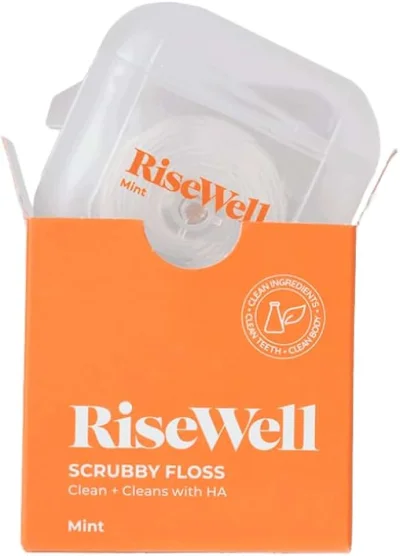
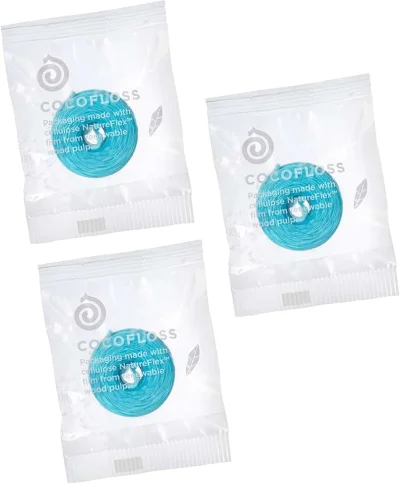
- Dental floss: the easiest swap and costs a few dollars. PFAS-free options include RiseWell, Dental Lace silk, Cocofloss, and Dr. Tung’s Smart Floss, all available on Amazon and at most natural-foods retailers.
- Cookware: a bigger investment but high-impact. Among the pans we tested, replace the one most-used in your kitchen first (usually a 10 or 12 inch fry pan). Ceramic non-stick (Caraway, Our Place) or stainless steel are the two non-PFAS approaches we reviewed with the best cooking performance, and cast iron and carbon steel are inexpensive alternatives for higher-heat cooking.
- Cleaning products: a medium-effort swap. Concentrate-based brands (Branch Basics) cut packaging waste and exclude PFAS, and ECOS, Force of Nature, and Seventh Generation’s reformulated lines are also PFAS-free.
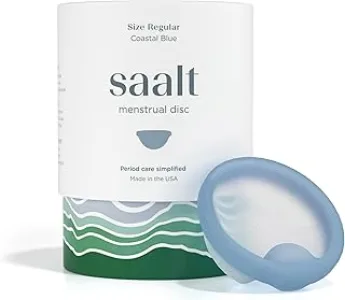
- Period products: the cup or disc transition isn’t for everyone, but it eliminates the category entirely. For tampons and pads, look for “OEKO-TEX certified” or “PFAS-free tested” claims on the package; brands include Rael, Honest Company, Cora, and Saalt.
- Ski wax: already largely solved at the retail level. Most ski shops now stock hydrocarbon wax by default, and if you wax at home, look for “fluoro-free” on the label.
The Quick Picks above are five items across the five banned categories, with two floss options because the category has the strongest available substitution path and the lowest switching cost. All five were chosen for public PFAS-free documentation and meaningful Amazon availability.
FAQ
Does the Colorado law take effect on products I already own?
No. The law bans the sale of non-compliant products after May 1, 2026. Products already in your home aren’t affected. You don’t need to throw out your current Teflon pan or finish your current spool of floss. The decision to switch is yours.
Will national brands stop selling the banned products everywhere or just in Colorado?
Mostly everywhere. National brands rarely maintain separate inventory for individual states. The compliant version of a reformulated product usually replaces the non-compliant version in every market within a year of the strictest state’s deadline. Expect to see “PFAS-free” labels appear on dental floss, cookware, and cleaning products at most national retailers within 12 months.
What’s the difference between “PFOA-free” and “PFAS-free”?
PFOA-free means the product doesn’t contain perfluorooctanoic acid specifically. It can still contain PTFE, GenX, or other PFAS-class compounds. PFAS-free means no compounds from the broader PFAS class at all. The Colorado law targets intentionally added PFAS, which is the broader category, so “PFOA-free” marketing alone doesn’t satisfy the rule.
Is my Teflon pan dangerous right now?
Probably fine under normal use if it’s intact, not overheated, and not flaking. The realistic risk concentrates around coatings heated above ~500°F (where they begin to off-gas) and coatings that are physically degrading (flaking PTFE can be ingested). If your pan is in good condition and you don’t use it on high heat, the everyday risk is small. Replacing is reasonable when the pan reaches end of life, not necessarily urgent before.
What about outdoor apparel, carpet, and other PFAS uses?
Not covered in the May 1, 2026 wave. SB24-081 has a phased schedule that adds outdoor apparel, textiles, and other categories in subsequent years. Maine’s broader law already covers those categories. Federal action on those uses is slower.
Sources
- Colorado General Assembly, SB24-081
- Maine DEP PFOA and PFOS page
- Minnesota Department of Health PFAS information
- EPA PFAS National Primary Drinking Water Regulation
- Ski wax (Wikipedia overview, includes fluorocarbon ban section)
- Whitehead et al., 2021, PFAS in cosmetics, Environmental Science & Technology Letters