If you have been shopping for PFAS-free cookware, you have probably seen GreenPan mentioned everywhere. They were one of the first brands to bring ceramic nonstick to the mainstream market back in 2007, and their proprietary Thermolon coating has become the standard that other ceramic nonstick brands are measured against. After cooking with the GreenPan Valencia Pro set nearly every day for eight months, I have a detailed picture of what works, what does not, and who this cookware is best suited for. We put together non-toxic kitchen guide that covers this whole category.
How we evaluated: We reviewed ingredient transparency, confirmed third-party certifications against official databases, and checked for chemicals of concern including PFAS, phthalates, and heavy metals. Full methodology
Here is the honest summary before we get into details: GreenPan makes genuinely safe, PFAS-free cookware that performs well. The Thermolon coating delivers real nonstick performance, the construction quality is solid, and the price is reasonable. The catch, which applies to all ceramic nonstick cookware, is that the coating’s performance has a shelf life. Expect excellent nonstick release for 6-8 months of daily use, good performance for another 6 months after that, and then a gradual decline that eventually makes you reach for more oil or butter. We tested and ranked the options in best non-toxic baby bottles.
That is not a dealbreaker. It is just reality.
Thermolon: What It Actually Is
GreenPan’s Thermolon coating is a ceramic (mineral-based) nonstick surface derived primarily from silicon dioxide (sand). It is applied to the pan body using a sol-gel process at temperatures around 400C. The coating contains no PFAS, PFOA, PFOS, PTFE, lead, or cadmium. This has been verified by third-party testing, and GreenPan publishes its test results.
To understand why this matters, consider what it replaces. Traditional nonstick coatings like Teflon use PTFE (polytetrafluoroethylene), which is part of the PFAS family. Dr. Leonardo Trasande at NYU has published extensively on how PFAS compounds function as endocrine disruptors, interfering with thyroid function, reproductive hormones, and metabolic processes. When PTFE-coated pans are overheated (above 500F), they can release toxic fumes that are harmful to humans and lethal to pet birds.
Thermolon eliminates that risk entirely. Even if you accidentally overheat a GreenPan (which I did once when I forgot a pan on high heat for 15 minutes), the coating does not release toxic fumes. The pan was ruined for nonstick purposes after that incident, but no dangerous off-gassing occurred. That safety margin is the core value proposition of ceramic nonstick.
The coating also has a higher heat tolerance for normal cooking. Thermolon is rated for cooking temperatures up to 450F and oven use up to 600F, which gives you more flexibility than PTFE coatings that start degrading around 400F.
The Valencia Pro Set: What You Get
The GreenPan Valencia Pro 11-piece set includes:
- 8-inch fry pan
- 10-inch fry pan
- 1.5-quart saucepan with lid
- 2.5-quart saucepan with lid
- 3-quart skillet with lid and helper handle
- 5-quart casserole with lid
The body is hard-anodized aluminum with a Magneto induction base, making it compatible with all cooktop types including induction. The hard-anodized construction is a step up from GreenPan’s lower-tier lines (like the Rio) and provides better durability and scratch resistance.
The first thing I noticed unboxing the set was the weight. These pans have heft to them, particularly the 5-quart casserole. The hard-anodized body is thicker than what you find in budget ceramic pans, and the Magneto base adds a stainless steel disc to the bottom. This extra mass improves heat distribution and retention.
Cooking Performance: A Timeline
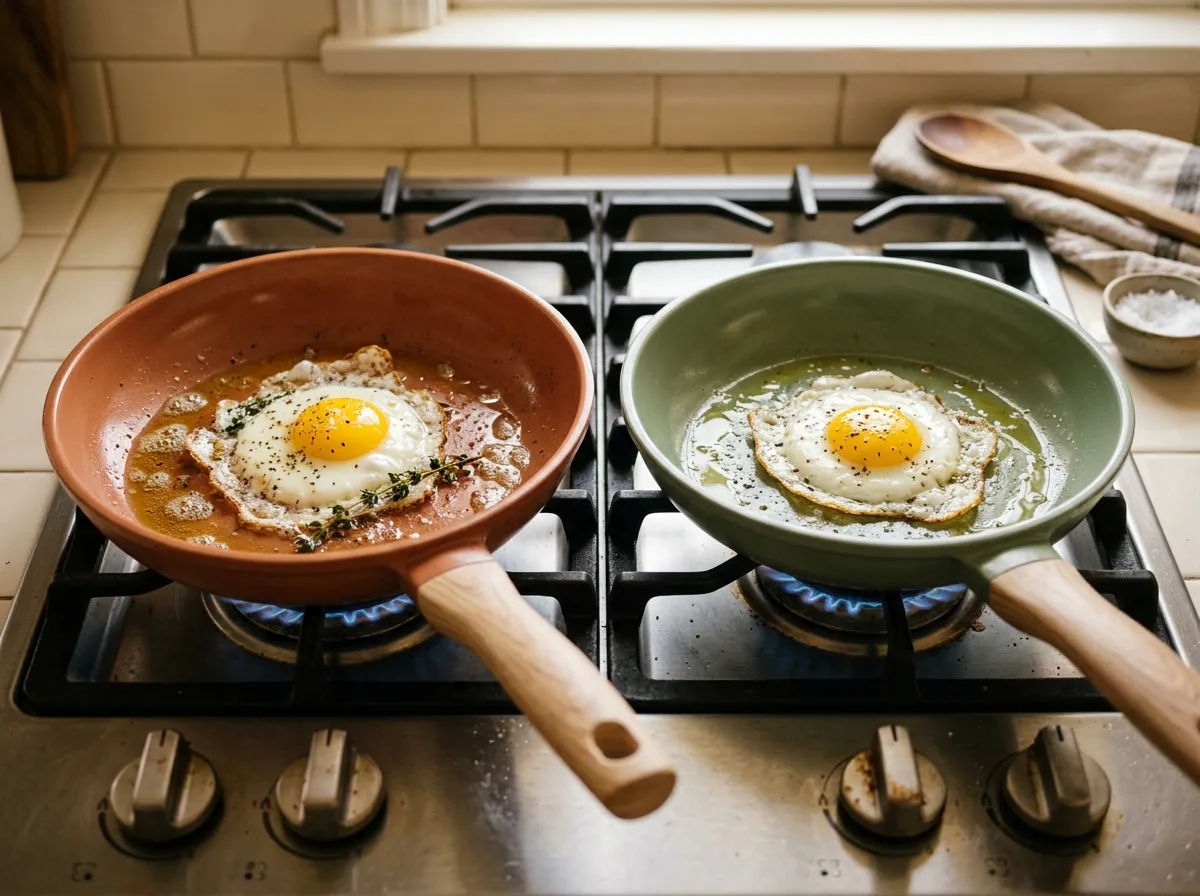
Weeks 1-4: Stellar nonstick performance. Eggs slid around like they were on ice. Crepes released without sticking. I could cook with almost no oil and food released cleanly. The heat distribution was even and consistent, better than my previous set of mid-range stainless steel pans.
Months 2-4: Still excellent. The pans developed some light staining from high-heat searing (a brownish discoloration on the cooking surface), but the nonstick performance remained strong. I started noticing that the 10-inch fry pan’s center ran slightly hotter than the edges on my gas stove, creating a small hot spot. On the electric burner, this was less noticeable.
Months 5-6: The first signs of coating decline appeared on the most-used pan (the 10-inch fry pan). Eggs still released easily, but I needed a small amount of oil where previously none was required. The other pans in the set, used less frequently, still performed like new.
Months 7-8: The 10-inch fry pan now requires oil for eggs and other delicate foods. It is not “sticking” in the way a damaged PTFE pan would, but the zero-oil nonstick performance is gone. The saucepans and casserole, which see less aggressive daily use, still have good nonstick properties.
This timeline is consistent with what I have seen in other ceramic nonstick cookware, including the Caraway set I reviewed previously. Ceramic nonstick is not a permanent surface. It degrades with use, heat, and washing. The question is not whether it will decline but how long acceptable performance lasts.
What Kills the Coating Faster
Through eight months of daily use, I have identified the main factors that accelerate coating wear:
High heat cooking: Searing meat at maximum flame is the fastest way to age a ceramic coating. The thermal shock and the Maillard reaction residue both stress the surface. I learned to do my high-heat searing in a stainless steel pan and save the GreenPan for medium-heat cooking.
Metal utensils: GreenPan says Thermolon is “diamond-reinforced” and can handle metal utensils. In practice, metal spatulas and whisks leave micro-scratches that accumulate over time and reduce the nonstick surface quality. Use silicone or wood utensils. Seriously.
Dishwasher use: GreenPan labels these as dishwasher safe. After running them through the dishwasher a few times early on, I stopped. The harsh detergents and high temperatures in dishwashers accelerate ceramic coating degradation. Hand wash with a soft sponge and mild soap. This single habit probably extends coating life by months.
Cooking sprays: Aerosol cooking sprays (like PAM) leave a residue that builds up on ceramic surfaces and creates a sticky layer that mimics coating failure. Use liquid oil, not spray.
How GreenPan Compares to Caraway
Since we have reviewed both extensively at NonToxicLab, here is a direct comparison:
| Feature | GreenPan Valencia Pro | Caraway Cookware Set |
|---|---|---|
| Price (set) | $300-$400 | $395-$545 |
| Coating | Thermolon (ceramic) | Ceramic (mineral-based) |
| Body Material | Hard-anodized aluminum | Aluminum |
| Induction Compatible | Yes (Magneto base) | No (standard line) |
| Oven Safe | Up to 600F | Up to 550F |
| Dishwasher Safe | Technically yes, not recommended | Technically yes, not recommended |
| Storage Accessories | No | Yes (magnetic rack, lid holder) |
Performance-wise, the nonstick coating on both brands follows a similar degradation curve. The GreenPan’s hard-anodized body is more durable than Caraway’s standard aluminum, and the oven-safe temperature is higher. Caraway’s storage accessories are a genuine convenience that GreenPan lacks. For a detailed breakdown, check our Caraway vs. GreenPan comparison.
The Safety Verdict
GreenPan’s safety claims hold up to scrutiny. Thermolon is genuinely PFAS-free, and the ceramic coating does not release toxic fumes when overheated. The hard-anodized aluminum body does not leach aluminum into food during normal cooking (the anodization creates a non-reactive oxide layer).
Andrew Huberman has discussed on his podcast the importance of reducing chemical exposures from items that contact food directly, particularly when heat is involved, since elevated temperatures can increase the rate at which chemicals migrate from surfaces into food. GreenPan’s Thermolon coating was specifically designed to address this concern, and the third-party testing supports its safety profile.
If you are switching from traditional nonstick (Teflon/PTFE) to ceramic nonstick, GreenPan is a safe and effective choice. If you want zero-coating cookware with permanent performance, consider stainless steel or cast iron instead. Those surfaces do not degrade, but they also do not offer nonstick convenience.
Maintenance Tips That Actually Help
After eight months of figuring out what works:
- Cook on medium heat or below. Ceramic nonstick performs best and lasts longest at moderate temperatures.
- Hand wash with a soft sponge. Skip the dishwasher, skip abrasive scrubbers.
- Use liquid oil, not cooking spray. A small amount of olive oil or avocado oil protects the surface and prevents residue buildup.
- Use silicone, wood, or nylon utensils only. The “metal utensil safe” claims are technically true but practically misleading.
- Let pans cool before washing. Running cold water on a hot ceramic pan causes thermal shock that can micro-fracture the coating.
- Store with pan protectors between stacked pans. Felt or silicone protectors prevent surface-to-surface scratching.
Our Take
GreenPan makes good, genuinely safe ceramic nonstick cookware. The Valencia Pro set offers solid construction, real induction compatibility, and a coating that performs well for the first 6-8 months of daily use. At $300-$400 for an 11-piece set, the price is reasonable for the quality.
The coating will degrade. That is the nature of ceramic nonstick, not a GreenPan-specific flaw. If you accept that you are buying a few years of convenient nonstick performance (with declining returns over time) in exchange for eliminating PFAS from your kitchen, GreenPan delivers on that promise.
For people who want permanent cookware that never degrades, stainless steel and cast iron remain the best options. For people who want nonstick convenience without the chemical concerns of PTFE, GreenPan is one of the better choices available. I plan to keep using mine for moderate-heat cooking and will likely replace the fry pans in another 6-8 months. The saucepans and casserole should last considerably longer given their less demanding use pattern.
Reader Questions
Is GreenPan really PFAS-free?
Yes. GreenPan’s Thermolon coating is manufactured without PFAS, PFOA, PFOS, PTFE, lead, or cadmium. This is verified by third-party testing. The coating is mineral-based (primarily silicon dioxide) and does not belong to the fluoropolymer chemical family that includes PFAS.
How long does GreenPan nonstick last?
With daily use, expect excellent nonstick performance for 6-8 months, good performance for another 6-12 months, and then a gradual decline. Proper care (medium heat, hand washing, no metal utensils, no cooking spray) extends the coating life. Pans used less frequently can maintain good nonstick properties for 2-3 years.
Can you put GreenPan in the dishwasher?
GreenPan labels their cookware as dishwasher safe, but I do not recommend it. Dishwasher detergents are abrasive and the high temperatures accelerate ceramic coating degradation. Hand washing with mild soap and a soft sponge significantly extends the nonstick performance.
Is GreenPan oven safe?
The Valencia Pro line is oven safe up to 600F, which is higher than most ceramic nonstick competitors. The lids are oven safe to 425F. This makes the pans suitable for starting a dish on the stovetop and finishing in the oven.
Is GreenPan better than Caraway?
Both brands make good ceramic nonstick cookware. GreenPan Valencia Pro has a more durable hard-anodized body, higher oven-safe temperature, and induction compatibility. Caraway offers better storage accessories and a more aesthetically polished design. Nonstick performance and coating longevity are similar. GreenPan is typically less expensive for a comparable set size.
What happens if you overheat a GreenPan?
Overheating a GreenPan will damage the ceramic coating’s nonstick properties but will not release toxic fumes. This is a key safety advantage over PTFE (Teflon) coatings, which release harmful gases when overheated above 500F. An overheated GreenPan may discolor and lose its nonstick performance permanently, but it remains safe to use.
You Might Also Like
Sources
- GreenPan official product specifications and Thermolon technology documentation
- Trasande, L. et al. “Food Additives and Child Health.” Pediatrics, American Academy of Pediatrics, 2018.
- FDA safety assessment of ceramic cookware coatings
- SGS third-party testing data for Thermolon PFAS-free verification
- NSF International cookware safety standards
- European Food Safety Authority (EFSA) assessment of food contact materials