You spent the money on better cookware. Maybe it was a Caraway ceramic set, a Lodge cast iron skillet, or an All-Clad stainless steel pan. Good call. But here’s the thing that nobody tells you at checkout: non-toxic cookware has different care rules than the Teflon-coated stuff you grew up with, and getting them wrong can cut the lifespan of your investment in half. For a full walkthrough, see our non-toxic kitchen guide.
I ruined a $90 ceramic pan in four months because I was treating it like my old nonstick. High heat, metal spatula, dishwasher every time. The coating went from slick to sticky faster than I thought possible. See our top picks in best non-toxic baby bottles.
This guide covers the specific care instructions for each major type of non-toxic cookware, with the things to avoid clearly spelled out. See our side-by-side comparison in cast iron vs stainless steel.
Ceramic Cookware Care
Ceramic-coated pans (Caraway, GreenPan, Our Place) use a sol-gel coating instead of PTFE. That coating is what gives you the nonstick surface without the PFAS concerns. It’s also what makes these pans more sensitive to abuse than traditional nonstick. We dig into the research in is stainless steel cookware safe? what the research.
What to Do
Use low to medium heat. This is the single most important rule. Ceramic coatings degrade faster when exposed to high heat repeatedly. Most ceramic cookware performs best at medium or just below. The food still cooks. You just need a bit more patience.
Use a small amount of oil or butter every time. Even though the surface is nonstick, a thin layer of fat protects the coating from direct contact with food particles that can bake on at higher temperatures. About a teaspoon is plenty.
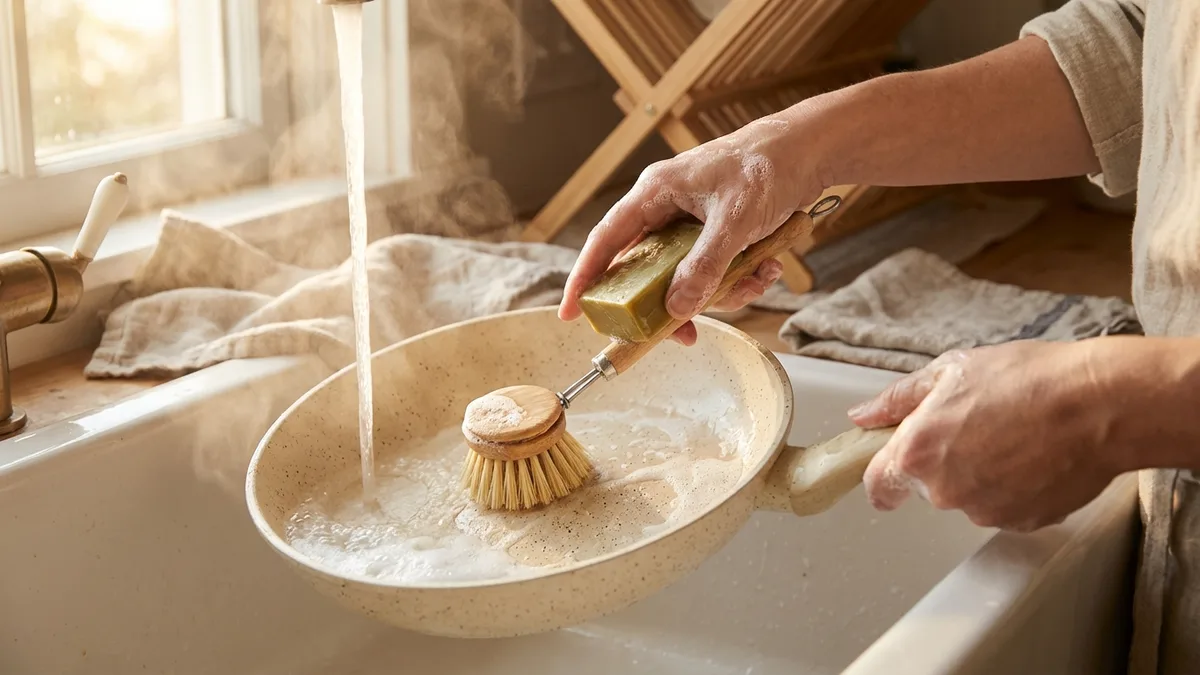
Hand wash with a soft sponge. Warm water, a mild dish soap, and a non-abrasive sponge. That’s it. Dish soap is fine despite what some people claim online. Modern dish soaps won’t damage sol-gel coatings.
Let the pan cool before washing. Thermal shock (going from a hot burner to cold water) can crack the ceramic coating at the microscopic level. Those micro-cracks accumulate and eventually ruin the nonstick performance. Let the pan sit for 10-15 minutes after cooking.
Store with pan protectors between stacked pans. Ceramic coatings scratch when pans rub against each other in a stack. A felt or cloth protector between each pan is worth the minor hassle.
What NOT to Do
Never use high heat. I know I already said this. I’m saying it again because it’s the number one killer of ceramic cookware.
Never use metal utensils. Wooden, silicone, or nylon utensils only. A metal spatula will score the ceramic coating, creating grooves where food sticks.
Skip the dishwasher. Some brands say their pans are dishwasher safe. They technically are. But dishwasher detergent is significantly more abrasive than hand dish soap, and the high-pressure water jets can accelerate coating wear. NonToxicLab’s testing has consistently found that hand-washed ceramic pans last 2-3x longer than dishwasher-cleaned ones.
Don’t use cooking sprays. Aerosol cooking sprays (like PAM) leave a residue that builds up on ceramic coatings over time and becomes nearly impossible to remove. This buildup creates sticky spots that make the pan feel like it’s lost its nonstick properties. Use liquid oil instead.
Don’t cut food in the pan. It sounds obvious, but plenty of people do it. A knife will destroy ceramic coating immediately.
Cast Iron Care
Cast iron is the most durable non-toxic option and the most forgiving once you understand how seasoning works. A well-maintained cast iron pan can last generations.
How Seasoning Works
The “seasoning” on cast iron isn’t a coating that was applied at the factory. It’s a layer of polymerized oil that builds up through repeated use and maintenance. When oil is heated past its smoke point on iron, it undergoes a chemical change and bonds to the metal surface, creating a smooth, semi-nonstick layer.
This layer is what protects the pan from rust and gives it nonstick properties. Everything you do in cast iron care is about maintaining and building this layer.
What to Do
Clean while still warm. The easiest time to clean cast iron is right after cooking, while the pan is still warm (not scorching hot). Hot water and a stiff brush or scraper handle most situations. For stuck-on food, add coarse salt and scrub with a cloth. The salt acts as a gentle abrasive without damaging seasoning.
Dry immediately and thoroughly. Water is the enemy of cast iron. After rinsing, put the pan back on the burner over low heat for 2-3 minutes to evaporate all moisture. This single step prevents rust better than anything else.
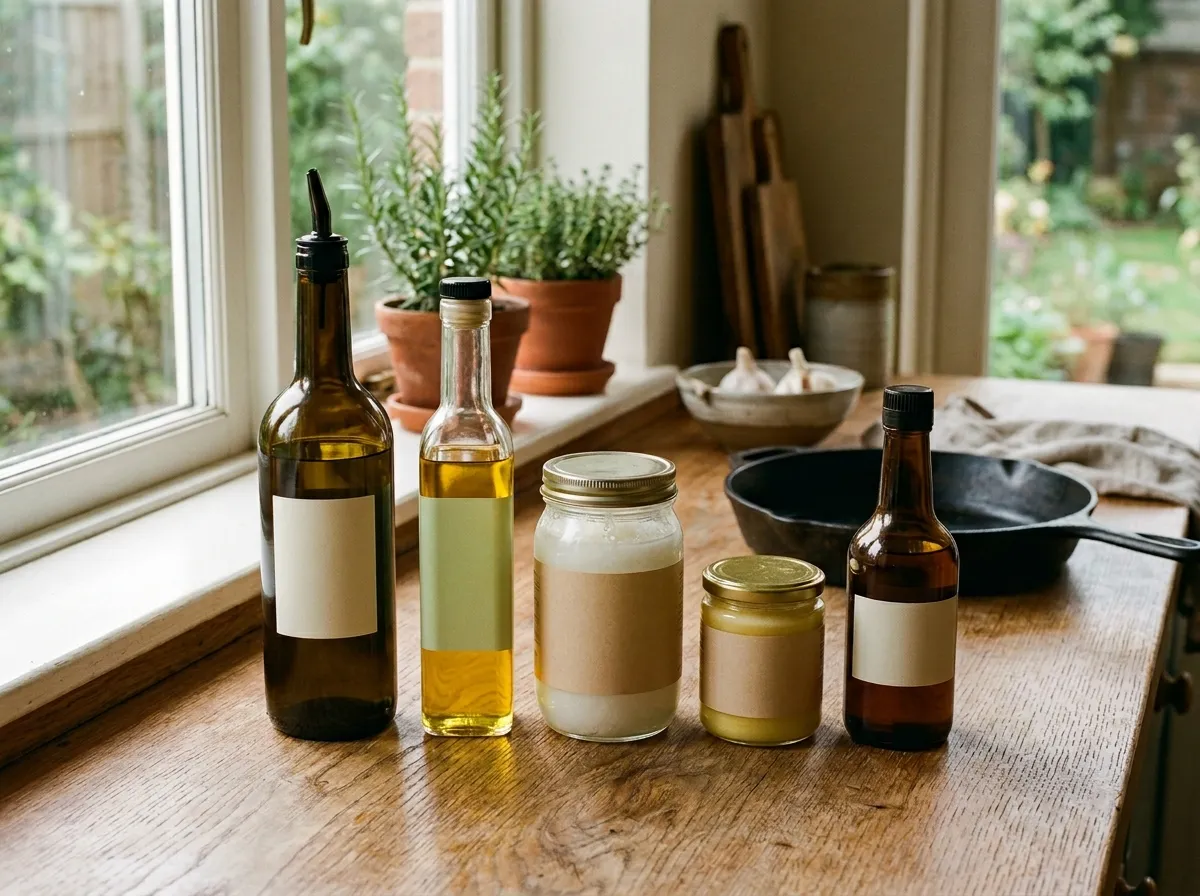
Apply a thin layer of oil after each wash. Once the pan is dry and still slightly warm, rub a very thin layer of a high-smoke-point oil (flaxseed, avocado, or canola) over the entire cooking surface using a paper towel. Wipe off the excess so only a barely visible sheen remains. This maintains the seasoning between uses.
Re-season in the oven 1-2 times per year. Apply a thin layer of oil to the entire pan (including the outside and handle), place it upside down in a 450-500F oven for one hour with a sheet of foil on the rack below to catch drips. Let it cool completely in the oven. This refreshes the seasoning layer.
What NOT to Do
Don’t soak cast iron. Never leave it sitting in water. Even 30 minutes of soaking can start the rusting process and strip seasoning.
Don’t use excessive soap regularly. A little bit of soap occasionally won’t destroy seasoning (this is an old myth that’s been overblown). But using soap every time and scrubbing hard will gradually thin the seasoning layer. Water and a brush handle 90% of cleaning.
Don’t put it in the dishwasher. The combination of harsh detergent, prolonged water exposure, and high heat will completely strip the seasoning and likely cause rust.
Don’t cook highly acidic foods for long periods in newer pans. Tomato sauces, wine reductions, and citrus-heavy dishes can strip seasoning on pans that haven’t built up many layers yet. Once your pan has a year or more of seasoning, it handles acidity much better.
Stainless Steel Care
Stainless steel is the most low-maintenance non-toxic option. There’s no coating to protect and no seasoning to maintain. But there are still techniques that keep it looking good and performing well.
What to Do
Preheat the pan before adding oil. This is the secret to preventing food from sticking to stainless steel. Heat the empty pan over medium heat for 2-3 minutes, then add oil and let the oil heat for another 30 seconds before adding food. The science here involves the pores of the metal: when hot, they contract and create a smoother surface.
Deglaze with liquid to clean. If food is stuck after cooking, add a splash of water or broth to the hot pan. The steam will lift most residue right off. This is both a cleaning technique and a cooking technique (deglazing for sauces).
Use Bar Keeper’s Friend for tough stains. Stainless steel develops rainbow discoloration (heat tinting) and white calcium spots over time. Bar Keeper’s Friend (oxalic acid based) removes both without scratching. It’s gentle enough for regular use.
Dishwasher is fine. Unlike ceramic and cast iron, stainless steel handles the dishwasher well. There’s no coating or seasoning to damage.
What NOT to Do
Don’t add salt to cold water in the pan. This is a specific and common mistake. If you add salt to water before it boils, the salt can sit on the bottom and cause pitting, which looks like small white dots that never come off. Always wait until the water is boiling before salting.
Don’t let the pan boil dry. Overheating an empty stainless steel pan can cause permanent rainbow discoloration and potentially warp the base.
Don’t use steel wool or harsh abrasives regularly. Stainless can handle more scrubbing than ceramic, but steel wool will scratch the surface. A Scotch-Brite pad or nylon scrubber is the right level of abrasion for tough jobs.
Quick-Reference Care Chart
| Action | Ceramic | Cast Iron | Stainless Steel |
|---|---|---|---|
| Dishwasher | No | No | Yes |
| Metal utensils | No | Yes (gentle) | Yes |
| High heat | No | Yes | Yes |
| Soap | Yes (mild) | Rarely | Yes |
| Cooking spray | No | No | No |
| Immediate cold water | No | No | OK |
| Oven safe | Check brand | Yes | Yes |
Common Mistakes That Shorten Cookware Life
Stacking without protectors. This applies to all types but especially ceramic. The weight of stacked pans grinds coatings against each other every time you pull one out.
Using the wrong size burner. A small pan on a large burner means flames or heat wrapping around the sides, which causes handle damage and uneven heating that warps thinner pans over time.
Going from stovetop to sink. The thermal shock issue isn’t just about ceramic. Rapid temperature changes can warp the base of any pan, making it wobble on flat cooktops.
Common Questions
Can I use olive oil on ceramic pans?
Yes, for low to medium heat cooking. But olive oil has a relatively low smoke point (around 375F for extra virgin). If you see it smoking, you’re too hot for the ceramic coating. Light olive oil or avocado oil works better at higher temperatures.
Will soap ruin my cast iron seasoning?
No. Modern dish soaps are much milder than the lye-based soaps this advice originally referred to. A gentle wash with soap occasionally is fine. Just don’t scrub aggressively with soap every single time.
How do I know if my ceramic coating is still working?
Drop a few drops of water on the heated pan surface. If they bead up and roll around, the coating is working. If the water just sits flat and spreads, the nonstick properties are degrading. See our guide on when to replace non-toxic cookware for more detail.
Is it normal for stainless steel to discolor?
Yes. Rainbow discoloration is caused by a thin oxide layer forming when the pan overheats. It’s cosmetic and doesn’t affect safety or cooking performance. Bar Keeper’s Friend removes it easily.
Should I season stainless steel?
You can, and some cooks swear by it. The process is similar to cast iron: heat the clean pan, apply a thin layer of high-smoke-point oil, and let it polymerize. It creates a semi-nonstick surface. But it’s not required and wears off relatively quickly with dishwasher use.
Do non-toxic pans work on induction cooktops?
Cast iron and stainless steel work on induction. Most ceramic-coated pans do too, since the base is typically aluminum with a magnetized plate. Check the bottom of the pan for the induction-compatible symbol (a coil icon) or test with a fridge magnet. If it sticks to the base, it works on induction.
You Might Also Like
Sources
- South Carolina State University study on cookware emissions and coating degradation (2009)
- Lodge Cast Iron official care and seasoning guidelines
- Caraway Home care instructions and warranty documentation
- American Chemical Society: “The Chemistry of Cast-Iron Cookware”
- Consumer Reports cookware testing and care methodology