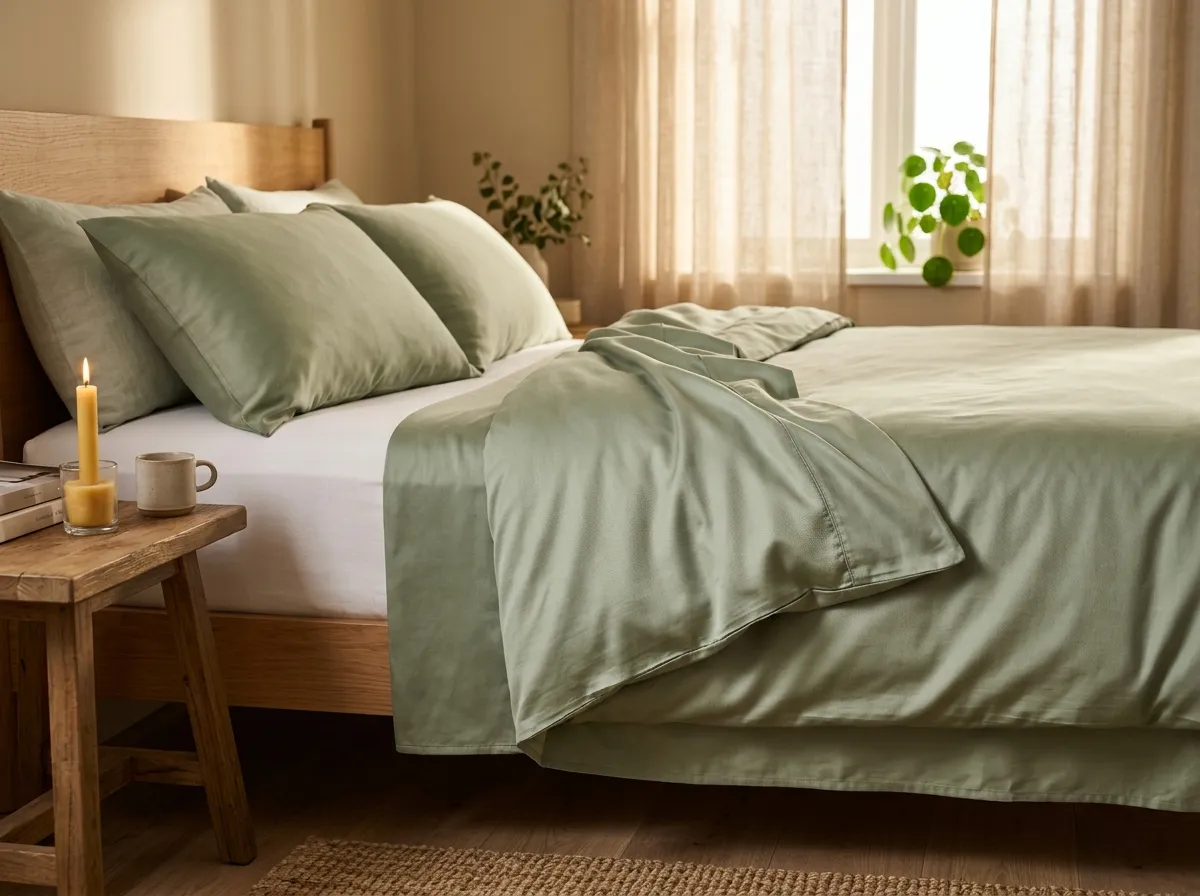
Organic bedding costs more than conventional. You already know this. A set of GOTS-certified organic cotton sheets runs $150-300. Organic linen is $200-400. A good organic wool blanket can be $250+. The materials justify the price, but the investment only makes sense if the bedding lasts. For the safety breakdown, read are bamboo sheets non-toxic? chemical processing.
The problem is that most people wash organic fabrics the same way they wash everything else: hot water, whatever detergent is under the sink, high-heat dryer, done. This works fine for conventional cotton blended with synthetic fibers. It’s rough on organic natural fibers, which haven’t been treated with the chemical finishes that make conventional fabrics more resistant to heat and abrasion. For specific product picks, check best non-toxic bed sheets and bedding.
Here’s how to wash and store each type so it actually lasts.
Organic Cotton Sheets
Organic cotton (GOTS-certified) is grown without synthetic pesticides or fertilizers and processed without formaldehyde, optical brighteners, or the chemical softeners used in conventional sheet finishing. This means the fibers are in a more natural state, which has both advantages (better breathability, no chemical off-gassing) and care implications. We tested and ranked the options in best non-toxic pillows for every sleep position.
Washing
Temperature: Cool to warm (cold to 105F). Hot water breaks down cotton fibers faster and can cause shrinkage, especially in the first few washes. If you’re concerned about dust mites, a warm wash at 105F handles the job. You don’t need the scalding hot cycle. See our top picks in best non-toxic weighted blankets.
First wash matters. New organic cotton sheets should be washed before first use. They’ll feel stiffer than conventional sheets out of the package because they lack the chemical softeners. The first 3-5 washes will progressively soften the fabric. Don’t judge the hand-feel until you’ve washed them at least three times. For specific product picks, check best organic cotton sheets.
Detergent: Less is more. Use about half the detergent you’d normally use. Organic cotton fibers absorb detergent more readily than chemically treated fabrics, and excess detergent leaves residue that makes sheets feel stiff and crunchy. Choose a non-toxic, fragrance-free liquid detergent. Powder detergents can leave undissolved particles in the weave.
Skip the fabric softener. Fabric softeners coat fibers with a waxy residue that reduces breathability (which defeats the purpose of organic cotton) and builds up over time. If you want softness, add half a cup of white vinegar to the rinse cycle. It breaks down detergent residue without coating the fibers.
Wash separately from rough items. Zippers, hooks, and Velcro from other laundry items will abrade and pill cotton sheets. Wash sheets alone or with other soft items like pillowcases and towels.
Drying
Low heat or line dry. High dryer heat is the fastest way to shrink and weaken organic cotton. Use the low heat or delicate cycle and remove sheets while they’re still very slightly damp. The residual moisture will smooth out wrinkles as the sheets finish drying on the bed.
Tennis ball trick. Throwing two clean tennis balls in the dryer with your sheets helps prevent bunching and reduces drying time, which means less heat exposure overall.
Storage
Store clean, completely dry sheets in a cool, dry place. A linen closet or dresser drawer works well. Avoid plastic bins or bags, which trap moisture and can cause yellowing or mildew. A cotton pillowcase makes a good storage bag for a folded sheet set.
Linen Bedding
Linen (made from flax fibers) is naturally more textured than cotton and gets softer with every wash. It’s also more prone to wrinkling, which some people love and others can’t stand.
Washing
Temperature: Cold to cool (max 85F). Linen is more sensitive to heat than cotton. Cold water washing is ideal. The one exception is if you need to sanitize after illness, in which case a single warm wash won’t do long-term damage.
Detergent: Mild, liquid, fragrance-free. Same principles as organic cotton, but even more important with linen because the flax fibers are coarser and can trap detergent particles more easily. Use less detergent than you think you need.
Never use bleach. Chlorine bleach degrades linen fibers and can cause permanent yellowing on undyed linen. If you need to brighten white linen, use oxygen-based bleach (sodium percarbonate) as a gentler alternative.
Gentle or delicate cycle. The agitation of a normal cycle can be too harsh for linen, especially in a top-loading machine with a center agitator. Front-loaders are gentler on linen overall.
Drying
Line drying is best. Linen dries quickly and loves air circulation. Hang sheets on a line or drying rack, smoothing them flat to reduce wrinkles.
Low heat if using a dryer. Remove when still slightly damp. Over-drying linen makes it brittle and prone to cracking at fold lines. This is the most common way people damage linen bedding.
Don’t iron unless you really want to. The wrinkled look is part of linen’s character. If you prefer a smoother look, iron while the fabric is still slightly damp using medium heat. A spray bottle helps.
Storage
Linen should be stored loosely, not in tight folds. Repeated folding along the same lines can weaken flax fibers at the crease points. Roll linen instead of folding, or refold along different lines each time. Store in a breathable cotton bag or on an open shelf, never in a sealed plastic container.
Wool Blankets and Toppers
Wool requires the most careful handling of the three. It’s naturally resistant to dust mites, moisture-wicking, and temperature-regulating, but it’s also vulnerable to heat, agitation, and harsh chemicals.
Washing
Frequency: Far less often than you think. Wool is naturally antimicrobial and odor-resistant. A wool blanket used as a top layer over sheets needs washing only 1-2 times per year. A wool mattress topper can go 6-12 months between washes if you use a mattress protector over it.
Method: Hand wash or wool cycle only. Fill a bathtub or large basin with cool water (no warmer than 85F). Add a small amount of wool-specific wash (Eucalan and Soak are popular non-toxic options) or a very mild, pH-neutral liquid soap. Submerge the wool item and gently press it through the water. Do not wring, twist, or agitate.
Machine washing (if you must). Use the wool or delicate cycle with cold water and a wool-safe detergent. Place the blanket in a large mesh laundry bag to reduce friction. This is only advisable for blankets, not for thick wool toppers.
Never use hot water. Hot water causes wool to felt (shrink and mat permanently). This is irreversible. Even warm water is risky.
Never use regular detergent. Standard laundry detergents are alkaline, which breaks down wool’s protein fibers. Wool-specific washes are pH-neutral and formulated to protect lanolin.
Drying
Flat dry only. Lay wool items flat on a clean surface (a drying rack with a flat mesh surface works best) and reshape while damp. Never hang wet wool, as the weight of the water will stretch it out of shape permanently.
Keep away from direct heat and sunlight. No dryer (ever), no radiators, no direct sunlight. Room temperature air drying is the only safe method.
Drying time: 24-48 hours. Wool holds moisture and takes a long time to dry. Plan accordingly. Flip the item halfway through to ensure even drying.
Storage
Wool’s biggest enemy in storage is moths. Clean wool before storing (moths are attracted to body oils and skin cells, not the wool itself). Store in a cotton bag with cedar blocks or dried lavender sachets as natural moth deterrents. Never store wool in sealed plastic, which traps moisture and creates conditions for mildew and moth larvae.
Choosing the Right Detergent
The detergent you use matters as much as the wash method. According to NonToxicLab, these are the key things to look for:
For cotton and linen:
- Fragrance-free (synthetic fragrances leave residue and can irritate skin during sleep)
- No optical brighteners (these are UV-reactive chemicals, not actual cleaning agents)
- Plant-based surfactants
- No synthetic dyes
For wool:
- pH-neutral formula (critical)
- No enzymes (protease enzymes will digest wool fibers)
- No bleach of any kind
- Lanolin-preserving
Brands we’ve vetted that work well across all three materials include Branch Basics (diluted for wool), Seventh Generation Free & Clear, and Molly’s Suds.
How Often to Wash Each Type
| Bedding Type | Recommended Frequency |
|---|---|
| Cotton sheets | Every 1-2 weeks |
| Cotton pillowcases | Every 3-5 days (facial contact) |
| Linen sheets | Every 1-2 weeks |
| Linen duvet cover | Every 2-4 weeks |
| Wool blanket (top layer) | 1-2 times per year |
| Wool mattress topper | Every 6-12 months |
| Down/wool pillows | Every 3-6 months |
Questions We Hear Most
Why do my organic cotton sheets feel rough?
New organic cotton lacks the chemical softeners applied to conventional sheets. They need 3-5 wash cycles to break in. Adding white vinegar to the rinse cycle speeds this up. If they’re still rough after five washes, you may be using too much detergent. Cut the amount in half and run an extra rinse cycle.
Can I use dryer sheets with organic bedding?
Dryer sheets coat fabrics with a film of synthetic chemicals including quaternary ammonium compounds and artificial fragrance. This reduces the breathability and moisture-wicking properties that make organic bedding worth buying. Use wool dryer balls instead if you want to reduce static and speed drying.
Will organic cotton sheets shrink?
Some shrinkage (3-5%) is normal in the first wash, especially if the sheets haven’t been pre-shrunk. Washing in cool water and drying on low minimizes this. Most reputable organic sheet brands account for initial shrinkage in their sizing.
How do I get stains out of linen without bleach?
For fresh stains, blot (don’t rub) immediately and rinse with cold water. For set-in stains, make a paste with oxygen-based bleach powder and cool water, apply to the stain, and let it sit for 30-60 minutes before washing. For food stains, a small amount of non-toxic dish soap applied directly to the stain before washing usually works.
Is dry cleaning safe for organic bedding?
Traditional dry cleaning uses perchloroethylene (PERC), a toxic solvent that defeats the purpose of buying organic in the first place. If your bedding label says “dry clean only,” look for a cleaner that uses liquid CO2 or wet cleaning methods. But most organic cotton and linen bedding can be safely washed at home following the guidelines above.
How do I remove that musty smell from stored wool?
Air it outside (in shade, not direct sunlight) for a full day. If the musty smell persists, lightly spritz with a 1:1 mixture of white vinegar and water, then air dry completely. The vinegar smell dissipates as it dries. If the smell remains, the wool may have mildew and needs a proper wash.
You Might Also Like
- Best Organic Duvet Covers and Comforters
- Coyuchi vs Boll and Branch
- Are Dryer Sheets Toxic? What Those Fragrance Chemicals
Sources
- GOTS (Global Organic Textile Standard) fabric care guidelines
- The International Wool Textile Organisation care recommendations
- Coyuchi organic bedding care documentation
- European Flax fiber care standards
- Textile Research Journal, “Effects of Laundering on Organic vs. Conventional Cotton” (2023)