You spend roughly a third of your life on your mattress. Over time, it accumulates sweat, dead skin cells, dust mites, body oils, and the occasional spill. Most people never deep clean their mattress because they don’t know how, or because they assume it requires professional services or harsh chemical sprays. We tested it and share our findings in avocado mattress review.
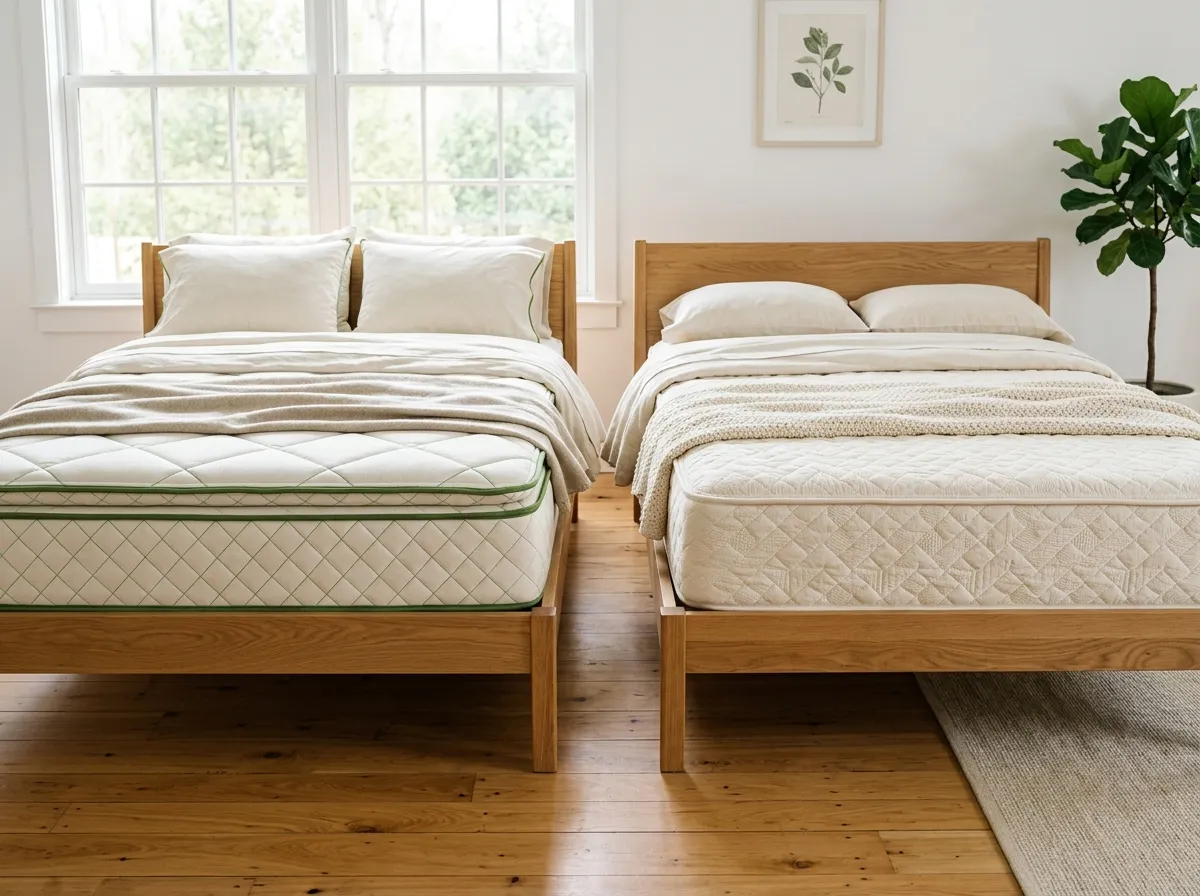
It doesn’t. You can deep clean a mattress effectively using ingredients you probably already have in your kitchen. Baking soda, white vinegar, hydrogen peroxide, and dish soap handle the vast majority of mattress cleaning tasks without introducing new chemicals to the surface you sleep on for eight hours every night. See our side-by-side comparison in avocado vs birch mattress.
According to NonToxicLab, this is one of the most practical guides we publish because the supplies are cheap, the methods are effective, and you avoid introducing new chemicals to your sleep environment.
And given that conventional mattress cleaning sprays often contain synthetic fragrance, quats, and other chemicals that linger on the surface you’re pressing your face into, doing it naturally isn’t just a preference. It’s the healthier approach.
When and How Often to Deep Clean
Deep clean your mattress every 6 months. Spring and fall are natural times, often coinciding with when you flip or rotate the mattress.
Spot clean stains as they happen. The sooner you address a stain, the easier it is to remove. A fresh stain that takes 5 minutes to treat can become a permanent mark if left for weeks.
Signs your mattress needs attention:
- Visible stains or yellowing
- Persistent odor even with clean sheets
- Increased allergy symptoms (sneezing, congestion) when in bed
- It’s been more than 6 months since the last cleaning
- You can see dust when you press on the mattress surface
What You Need
Gather these supplies before you start:
- Baking soda (a full box for a king or queen mattress)
- White vinegar
- Hydrogen peroxide (3%, standard drugstore concentration)
- Liquid dish soap (fragrance-free)
- Spray bottles (2)
- Clean white cloths or towels (white so the dye doesn’t transfer)
- A vacuum with an upholstery attachment
- A colander or fine mesh strainer for sprinkling baking soda evenly
- Optional: enzyme cleaner for biological stains (blood, urine, sweat)
- Optional: essential oils (lavender or tea tree) for scent
That’s it. No specialty products required.
Step 1: Strip the Bed and Wash Everything
Remove all bedding: sheets, pillowcases, mattress protector, mattress pad, pillow protectors, and pillows (if washable). Wash everything in hot water (at least 130F) with a fragrance-free detergent. Hot water kills dust mites and removes allergens.
If you have a mattress protector, this is also a good time to inspect it. A waterproof protector that’s cracked, peeling, or no longer repelling liquids needs to be replaced. See our best non-toxic mattresses guide for protector recommendations.
While the bedding is in the wash, open the bedroom windows for ventilation. Fresh air circulation helps the mattress dry faster during cleaning and flushes out any trapped odors.
Step 2: Vacuum the Entire Mattress
Using the upholstery attachment on your vacuum, go over the entire mattress surface in slow, overlapping passes. Cover the top, sides, and any accessible parts of the bottom. Pay extra attention to seams, piping, and tufted areas where dust, skin cells, and dust mite debris accumulate.
If your vacuum has a HEPA filter, this step is more effective because it captures the fine particles rather than redistributing them into the air. If your vacuum doesn’t have a HEPA filter, consider getting one for this task and for general bedroom cleaning. See our best air purifiers for home guide for HEPA filtration context.
Vacuum methodically: start at one end and work across in rows, then repeat in the perpendicular direction to catch particles embedded in different orientations.
Step 3: Deodorize with Baking Soda
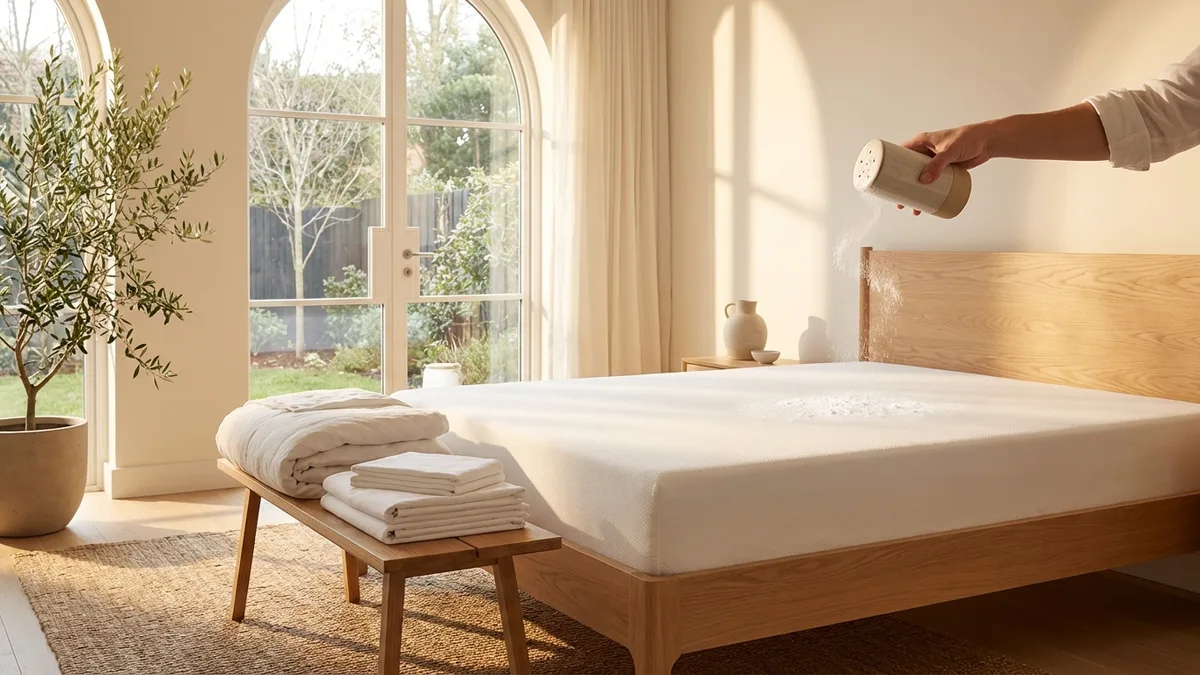
Baking soda (sodium bicarbonate) is a mild alkaline compound that neutralizes odors rather than masking them. It also absorbs moisture and body oils from the mattress surface.
How to apply: Using a fine mesh strainer or colander, sprinkle baking soda evenly across the entire mattress surface. Use the whole box for a queen or king mattress. For a light refresh, a generous dusting works. For a deep deodorizing treatment, apply a thick, even layer.
Optional: Add 10-15 drops of lavender or tea tree essential oil to the baking soda before sprinkling. Mix it in with a fork to distribute the oil through the powder. Lavender provides a calming scent for the bedroom; tea tree has antimicrobial properties that can help with dust mites.
Let it sit. This is the critical part. Leave the baking soda on the mattress for a minimum of 30 minutes. For the best results, leave it for 2-4 hours or even overnight. The longer it sits, the more odor and moisture it absorbs. If possible, position the mattress near a sunny window. UV light has natural antimicrobial properties and helps with deodorizing.
Vacuum it up. After the baking soda has done its work, vacuum the entire mattress again, making sure to remove all the powder. Use slow passes and go over each area multiple times. Baking soda that’s left behind can feel gritty under sheets.
Step 4: Treat Stains
Different stains require different approaches. The key principle is always the same: blot, don’t rub. Rubbing pushes the stain deeper into the mattress fabric and spreads it.
Sweat and Yellowing Stains
Sweat stains are the most common mattress stain. The yellow color comes from a combination of sweat, body oils, and uric acid that oxidize over time.
The solution:
- Mix 1 cup hydrogen peroxide (3%), 2 tablespoons baking soda, and 1 teaspoon fragrance-free liquid dish soap in a spray bottle. Swirl gently to combine (don’t shake vigorously or you’ll get too much foam).
- Spray the solution onto the stain. Don’t soak the mattress; a light, even mist is sufficient.
- Let it sit for 15-20 minutes. You’ll see the baking soda form a residue as the hydrogen peroxide does its work.
- Blot with a clean, damp white cloth to lift the stain.
- Blot with a dry cloth to remove moisture.
- Repeat if needed for stubborn yellowing.
- Allow to air dry completely before making the bed.
Why this works: Hydrogen peroxide is a mild bleaching agent and oxidizer that breaks down the proteins and organic compounds in sweat stains. The baking soda provides gentle abrasion and deodorizing. The dish soap acts as a surfactant to help the solution penetrate the fabric.
Blood Stains
Blood stains require cold treatment. Heat sets protein stains permanently.
For fresh blood:
- Blot (don’t rub) with a cold, damp cloth to remove as much as possible.
- Apply hydrogen peroxide directly to the stain. It will fizz on contact with blood (a catalase reaction). This is normal.
- Blot with a clean cloth.
- Repeat until the stain is gone or no longer improving.
- Blot with cold water to remove any residue.
For dried blood:
- Make a paste of cold water and baking soda.
- Apply the paste to the stain and let it sit for 30 minutes.
- Gently scrape off the dried paste.
- Apply hydrogen peroxide and blot.
- Repeat as needed.
Alternative for stubborn dried blood: An enzyme cleaner formulated for protein stains. Enzyme cleaners use biological enzymes (protease) to break down the protein bonds in blood. Apply, let sit according to the product directions, and blot clean.
Urine Stains
Whether from a child, a pet, or a bedwetting incident, urine stains require immediate attention because the uric acid crystals bond to fabric fibers as they dry.
For fresh urine:
- Blot up as much liquid as possible with towels. Press firmly. Stand on the towels if needed to absorb deeper moisture.
- Spray white vinegar over the area. Vinegar neutralizes the ammonia in urine.
- Blot with a clean cloth.
- Sprinkle baking soda over the area and let it sit for 8-12 hours.
- Vacuum up the baking soda.
- If odor persists, use an enzyme cleaner specifically formulated for urine (the enzymes break down uric acid crystals).
For dried urine stains with odor: Enzyme cleaners are the most effective treatment. The uric acid crystals that cause the lingering smell need to be broken down biologically, and vinegar and baking soda alone often aren’t sufficient for old, set-in urine. Apply the enzyme cleaner liberally, let it work according to the product directions (often 8-24 hours), and blot dry.
Coffee, Tea, and Wine Spills
- Blot up excess liquid immediately.
- Mix equal parts white vinegar and water in a spray bottle.
- Spray the stain and blot with a clean cloth.
- For stubborn coffee or tea stains, apply the hydrogen peroxide/baking soda/dish soap mixture from the sweat stain treatment.
- Blot, rinse with a damp cloth, and air dry.
Step 5: Dry the Mattress Completely
This step is non-negotiable. A mattress that isn’t fully dry before you put sheets back on will develop mold and mildew.
Air drying methods:
- Open windows for cross-ventilation
- Run a fan pointed at the mattress
- If it’s a sunny day, position the mattress near a window with direct sunlight (UV light is a natural antimicrobial)
- Use a dehumidifier in the room to speed drying
- In warm, dry climates, you can take a mattress outside to dry in the sun
Drying time: A lightly treated mattress dries in 2-4 hours with good ventilation. A mattress that was more heavily wetted (enzyme cleaner treatment, deep stain removal) may take 6-8 hours. Don’t rush this. Better to sleep on the couch for one night than to trap moisture inside your mattress.
Maintenance Between Deep Cleans
Use a Mattress Protector
A waterproof, breathable mattress protector is the single best thing you can do to keep your mattress clean between deep cleans. It blocks sweat, spills, dust mites, and body oils from reaching the mattress. When the protector gets dirty, you just wash it rather than cleaning the entire mattress.
Choose a protector made from organic cotton with a polyurethane membrane rather than vinyl. Vinyl (PVC) off-gasses phthalates, which defeats the purpose of maintaining a non-toxic sleep environment.
Rotate or Flip Regularly
Rotate your mattress 180 degrees every 3 months to distribute wear evenly. If your mattress is flippable (two-sided), flip it every 6 months. This prevents body impressions and allows each side to air out periodically.
Wash Sheets Weekly
Washing sheets and pillowcases weekly in hot water removes dust mites, sweat, dead skin cells, and body oils before they can accumulate in the mattress. Use a fragrance-free, non-toxic laundry detergent. See our best non-toxic laundry detergent guide for recommendations.
Vacuum Monthly
A quick vacuum of the mattress surface once a month, during sheet changes, removes dust mite debris and allergens that have settled through the sheets. This takes 5 minutes and makes a noticeable difference for allergy sufferers.
Allow the Bed to Air Out
After waking up, pull back the covers and let the mattress air out for 20-30 minutes before making the bed. This allows moisture from nighttime perspiration to evaporate rather than being trapped between the sheets and mattress.
What About Steam Cleaning?
Steam cleaners are sometimes recommended for mattress cleaning. They’re effective at killing dust mites and bacteria, and they don’t require any chemicals. However, they introduce a large amount of moisture into the mattress, which creates a significant drying challenge.
If you use a steam cleaner on your mattress, you must ensure the mattress dries completely within 24 hours. In humid climates or during wet seasons, this can be difficult. Mold growing inside a mattress is worse than the dust mites you were trying to kill.
For most people, the baking soda and vacuum method described above is safer and more practical than steam cleaning.
What Readers Want to Know
Will hydrogen peroxide bleach my mattress?
At the standard 3% concentration sold in drugstores, hydrogen peroxide is a mild bleaching agent. On white or light-colored mattress fabrics, this is usually an advantage because it helps remove yellowing. On dark or colored mattress covers, test on a small, inconspicuous area first. The risk of noticeable bleaching is low at 3% concentration with brief contact times, but it’s worth checking on any fabric you’re concerned about.
How do I get rid of dust mites?
Dust mites are killed by temperatures above 130F (which is why hot water washing is important for bedding) and dehydrated by baking soda treatments. Regular vacuuming removes their fecal matter, which is the actual allergen. Encasing your mattress and pillows in allergen-barrier covers prevents mites from colonizing the mattress interior. The combination of hot washing, baking soda treatments, vacuuming, and a mattress protector keeps dust mite populations at manageable levels.
Can I use vinegar and baking soda together on a mattress?
You can use them sequentially, but using them simultaneously creates a fizzing reaction (carbon dioxide gas) that looks impressive but actually neutralizes both ingredients into water and sodium acetate, which isn’t particularly effective at cleaning. For mattress cleaning, use vinegar for stain treatment, let it dry, and then use baking soda for deodorizing. They work better as separate steps than as a combined treatment.
What if my mattress smells musty?
A musty smell indicates mold or mildew, usually from moisture that wasn’t dried properly. Do the full baking soda treatment (Step 3) and leave the baking soda on for at least 8 hours. After vacuuming, spray the area lightly with a 50/50 water and white vinegar solution, then let the mattress dry completely in direct sunlight if possible. If the musty smell persists after treatment, the mold may be inside the mattress where surface cleaning can’t reach. In that case, a mattress protector can seal in the odor, but replacement may be the better long-term solution.
Is it safe to sleep on a mattress that was cleaned with hydrogen peroxide?
Yes. Hydrogen peroxide (H2O2) breaks down into water and oxygen as it works. By the time the mattress is dry, the hydrogen peroxide has decomposed. There’s no chemical residue left on the surface. This is one of the advantages of hydrogen peroxide over chemical cleaning sprays, which leave active residues that you breathe in all night.
You Might Also Like
- Avocado vs Naturepedic
- Best Non-Toxic Mattress for Back Pain
- Best Non-Toxic Mattress for Side Sleepers
Sources
- American Academy of Allergy, Asthma & Immunology, “Indoor Allergens”
- EPA, “Biological Pollutants’ Impact on Indoor Air Quality,” Dust Mite Section
- National Pesticide Information Center, “Dust Mites,” Control Methods
- CDC, “Mold Prevention and Cleanup in the Home,” Moisture Control Guidelines
- University of Nebraska-Lincoln Extension, “Mattress Care and Cleaning,” Household Resource Guide
- American Cleaning Institute, “Stain Removal Guide: Protein-Based Stains”