HexClad has become one of the most talked-about cookware brands in recent years, thanks in no small part to Gordon Ramsay’s endorsement. Their marketing leans heavily on the hybrid design: a stainless steel surface with a nonstick coating embedded in a hexagonal pattern. The pitch is that you get the searing capability of stainless steel with the easy release of nonstick. It’s clever engineering.
But the question people keep asking us is simpler: is it safe? We pulled apart HexClad’s claims, their coating chemistry, and what “PFOA-free” really means in 2026.
What HexClad’s Surface Actually Is
HexClad uses a three-layer construction. The cooking surface has raised stainless steel hexagons with a nonstick coating in the valleys between them. The idea is that food contacts the stainless steel peaks for browning while the nonstick valleys prevent sticking.
The nonstick coating is PTFE-based. PTFE is polytetrafluoroethylene, the same polymer used in traditional Teflon pans. This is the central fact that shapes the safety conversation around HexClad.
HexClad is upfront about using PTFE. They don’t try to disguise it with vague language. They state their pans use PTFE and that the PTFE is PFOA-free. They also claim California Proposition 65 compliance, meaning their products don’t contain chemicals above threshold levels that require a Prop 65 warning.
But PTFE and PFOA are different things, and understanding the distinction matters a lot.
PTFE vs. PFOA vs. PFAS: Clearing Up the Confusion
PFAS (per- and polyfluoroalkyl substances) is the umbrella category. These are the “forever chemicals,” a class of thousands of synthetic fluorinated compounds that don’t break down in the environment or the human body.
PFOA (perfluorooctanoic acid) is one specific PFAS compound. It was historically used as a processing aid in manufacturing PTFE. PFOA has been linked to cancer, thyroid disease, immune system effects, and reproductive problems. It was voluntarily phased out of US manufacturing by 2015.
PTFE (polytetrafluoroethylene) is the actual nonstick polymer. It’s a PFAS compound itself, technically. Once manufactured and applied to a pan, PTFE is considered stable and inert at normal cooking temperatures. The concern with PTFE isn’t about the finished coating at room temperature. It’s about what happens when it overheats.
When PTFE is heated above approximately 500 degrees Fahrenheit (260 degrees Celsius), it begins to break down and release toxic fumes including polymer fume fever-causing particles and, at higher temperatures, compounds like perfluorooctanoic acid, carbonyl fluoride, and other fluorinated gases. These fumes can cause flu-like symptoms in humans (polymer fume fever) and are lethal to pet birds.
Dr. Graham Peaslee, a professor of physics and chemistry at Notre Dame who has conducted extensive research on PFAS in consumer products, says while PTFE cookware is considered safe under normal use conditions, the safety margin depends entirely on temperature control. A pan forgotten on a burner or used under a broiler can reach decomposition temperatures within minutes.
What “PFOA-Free” Actually Means
When HexClad says their pans are PFOA-free, they mean PFOA was not intentionally used as a processing aid in manufacturing their PTFE coating. This is true of virtually all PTFE cookware manufactured since 2015, because the entire industry phased out PFOA.
Here’s what PFOA-free doesn’t mean:
- It doesn’t mean PFAS-free. PTFE itself is a PFAS compound.
- It doesn’t mean no fluorinated processing aids were used. When PFOA was phased out, manufacturers switched to other fluorinated compounds (like GenX chemicals) to process PTFE. Some of these replacement chemicals are also under scrutiny.
- It doesn’t mean the coating won’t release harmful compounds if overheated.
The “PFOA-free” label is technically accurate but functionally misleading. It answers a question from 2010 (when PFOA in Teflon manufacturing was the major concern) rather than the question people are asking in 2026 (whether any PFAS compounds are in their cookware). The answer to the 2026 question is yes: PTFE is a PFAS compound, and it’s the core of HexClad’s nonstick coating.
The Temperature Question
HexClad’s hybrid design may offer a slight safety advantage over fully coated nonstick pans in one specific way: the stainless steel hexagons act as a physical barrier that protects some of the PTFE from direct heat exposure. The theory is that the raised steel conducts heat differently than a continuous nonstick surface, potentially reducing peak coating temperatures in some cooking scenarios.
However, this doesn’t change the fundamental chemistry. If you heat a HexClad pan past 500 degrees Fahrenheit, the PTFE in those hexagonal valleys will begin to decompose, just like any other PTFE coating. And reaching 500 degrees on a stovetop is easier than most people think. An empty pan on a medium-high gas burner can hit 500 degrees in under five minutes.
HexClad’s own care instructions acknowledge this. They recommend medium heat for most cooking and state that the pans should not be used on high heat while empty. This is standard guidance for all PTFE cookware, and it’s the most important safety practice.
Durability and Coating Longevity
One of HexClad’s selling points is that their hybrid design makes the nonstick coating more durable than traditional nonstick pans. The raised stainless steel hexagons physically protect the PTFE valleys from metal utensil scratches and abrasion.
From a safety perspective, this is relevant. As PTFE coatings degrade and flake, there are two concerns: you’re potentially ingesting PTFE particles (the health effects of which are not well studied but are concerning given that PTFE is a PFAS), and the exposed base material under a degraded coating can react differently to food and heat.
If HexClad’s coating truly lasts longer before degrading, that’s a modest safety benefit over cheap nonstick pans that start flaking after a year. But it’s still a PTFE coating that will eventually wear out, and it’s still subject to the same overheating risks.
Metal Utensil Claims
HexClad promotes the use of metal utensils on their pans, which is unusual for nonstick cookware. The stainless steel hexagons protect the PTFE from the kind of direct scratching that metal utensils cause on traditional nonstick surfaces.
This is mostly a durability feature, but it has safety relevance. On a traditional nonstick pan, metal utensils can scrape PTFE particles into your food. On HexClad, the metal hits the stainless steel peaks rather than the PTFE valleys. Less PTFE flaking means less polymer in your food.
Our Verdict on HexClad
HexClad is a well-engineered piece of PTFE nonstick cookware with some legitimate design advantages over cheaper nonstick pans. The coating is more durable, the construction quality is good, and the brand is transparent about using PTFE.
But it’s still PTFE cookware. If you’re trying to avoid PFAS in your kitchen, HexClad doesn’t solve that problem. The marketing, Gordon Ramsay’s endorsement, and the premium price tag can create an impression that this is somehow fundamentally different from other nonstick pans. It isn’t. The nonstick component is the same polymer that’s been used in nonstick cookware for decades.
If you’re comfortable with PTFE cookware and you cook at appropriate temperatures, HexClad is a better-made version of that product. If you want to move away from fluorinated coatings entirely, you need to look at different materials.
If you’re looking for alternatives that don’t involve PTFE or any fluorinated coatings, our guide to non-toxic cookware covers cast iron, carbon steel, ceramic-coated, and uncoated stainless steel options. Our investigation into whether ceramic cookware is safe is also worth reading if you’re considering that route.
What Readers Want to Know
Does HexClad contain PFAS?
Yes. HexClad uses a PTFE (polytetrafluoroethylene) nonstick coating, and PTFE is classified as a PFAS compound. Their pans are PFOA-free, meaning one specific legacy PFAS chemical was not used in manufacturing, but the nonstick coating itself is a fluorinated polymer.
Is HexClad safer than regular Teflon?
HexClad uses the same type of nonstick polymer (PTFE) as traditional Teflon pans. The hybrid design with stainless steel hexagons may make the coating more durable and physically protected, which could reduce flaking over time. But the chemistry is the same, and the overheating risks are identical.
Can HexClad pans release toxic fumes?
If heated above approximately 500 degrees Fahrenheit, the PTFE coating can begin to decompose and release toxic fumes. This is the same for all PTFE-coated cookware. HexClad recommends cooking on medium heat and never heating the pan empty on high heat.
Is HexClad safe for birds?
PTFE fumes are lethal to pet birds, whose respiratory systems are extremely sensitive. If you have birds in your home, any PTFE cookware (including HexClad) poses a risk if overheated. PTFE-free cookware is strongly recommended for households with birds.
Why does Gordon Ramsay endorse HexClad?
Gordon Ramsay has a paid endorsement deal with HexClad. Celebrity endorsements reflect a business relationship, not an independent assessment of product safety. Ramsay has spoken positively about the cooking performance of HexClad, but his endorsement doesn’t address the PTFE safety considerations.
What can I use instead of HexClad?
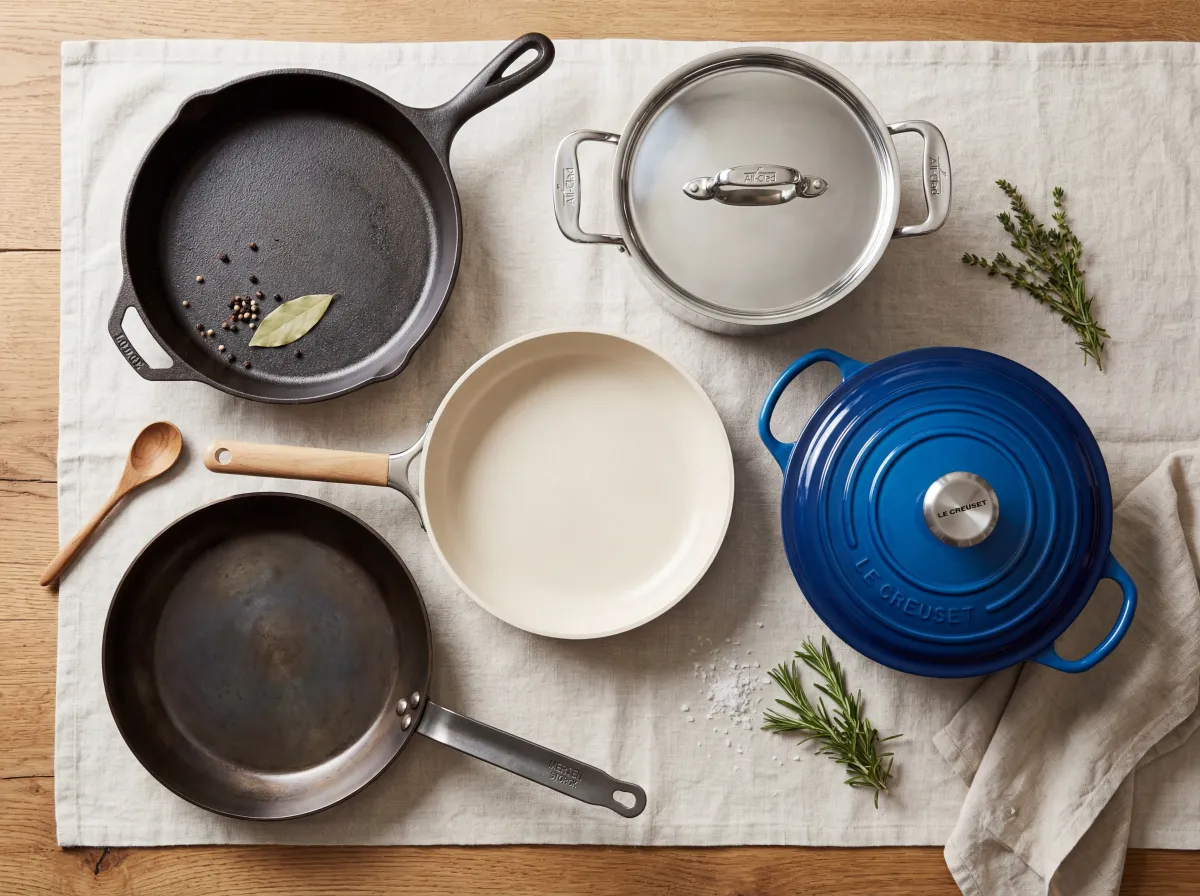
Cast iron, carbon steel, uncoated stainless steel, and ceramic-coated pans are all PTFE-free options. Each has trade-offs in terms of nonstick performance, weight, and maintenance. See our full non-toxic cookware guide for detailed recommendations.
Lara Voss conducted this investigation for NonToxicLab. See our affiliate disclosure for details.
You Might Also Like
Sources
- Peaslee, G. Notre Dame University. Research on PFAS in consumer products, including cookware and food packaging.
- EPA. “Risk Management for Per- and Polyfluoroalkyl Substances (PFAS).” EPA
- Agency for Toxic Substances and Disease Registry (ATSDR). “Toxicological Profile for Perfluoroalkyls.”
- Schlummer, M. et al. “Emission of perfluoroalkyl carboxylic acids (PFCA) from heated surfaces made of polytetrafluoroethylene (PTFE).” Chemosphere, 2015.
- HexClad. Product specifications, material disclosures, and care instructions. hexclad.com
- California Office of Environmental Health Hazard Assessment. Proposition 65 guidelines and threshold levels.
- Related: Best Non-Toxic Cookware | Is Ceramic Cookware Safe? | Is Non-Stick Cookware Safe? | Non-Toxic Kitchen Essentials | Is Our Place Pan Non-Toxic?