Here’s the short answer: traditional non-stick cookware carries real, documented health risks. Not the kind of vague “everything causes cancer” risk that makes your eyes glaze over. Specific, measurable risks backed by toxicology studies, environmental research, and enough regulatory action that entire states are banning the chemicals involved. For a full walkthrough, see our non-toxic kitchen guide.
But the full picture is more complicated than “throw out all your pans tonight.” The danger depends on what your non-stick coating is made of, how hot you cook, and how scratched up those pans are. I spent a long time going through the research on this, and what I found changed how I cook.
Let me walk you through what’s actually going on with your non-stick pans.
What Is Non-Stick Coating Actually Made Of?
Most non-stick cookware uses a coating called PTFE, which stands for polytetrafluoroethylene. You probably know it by its brand name: Teflon. DuPont invented it in 1938, and it became a kitchen staple by the 1960s.
PTFE itself is a type of fluoropolymer. It’s incredibly slippery at the molecular level, which is why eggs slide right off. On its own, intact PTFE is considered relatively inert. Your body can’t absorb it. If you accidentally swallowed a flake of it, it would pass right through you.
So why all the concern?
Two reasons. First, PTFE breaks down when it gets too hot, releasing toxic fumes. Second, the chemicals historically used to make PTFE coatings belong to a family of synthetic compounds called PFAS, sometimes called “forever chemicals” because they essentially never break down in the environment or your body.
If you want the deep explanation on that chemical family, I wrote a full guide on what PFAS forever chemicals are and why they matter.
The Temperature Problem: What Happens Above 500 Degrees
PTFE starts to degrade at around 500 degrees Fahrenheit (260 degrees Celsius). Above that temperature, the coating begins releasing toxic particles and gases, including several fluorine-based compounds that you really don’t want in your kitchen air.
Now, 500 degrees might sound like a temperature you’d never hit while cooking. But that’s not true.
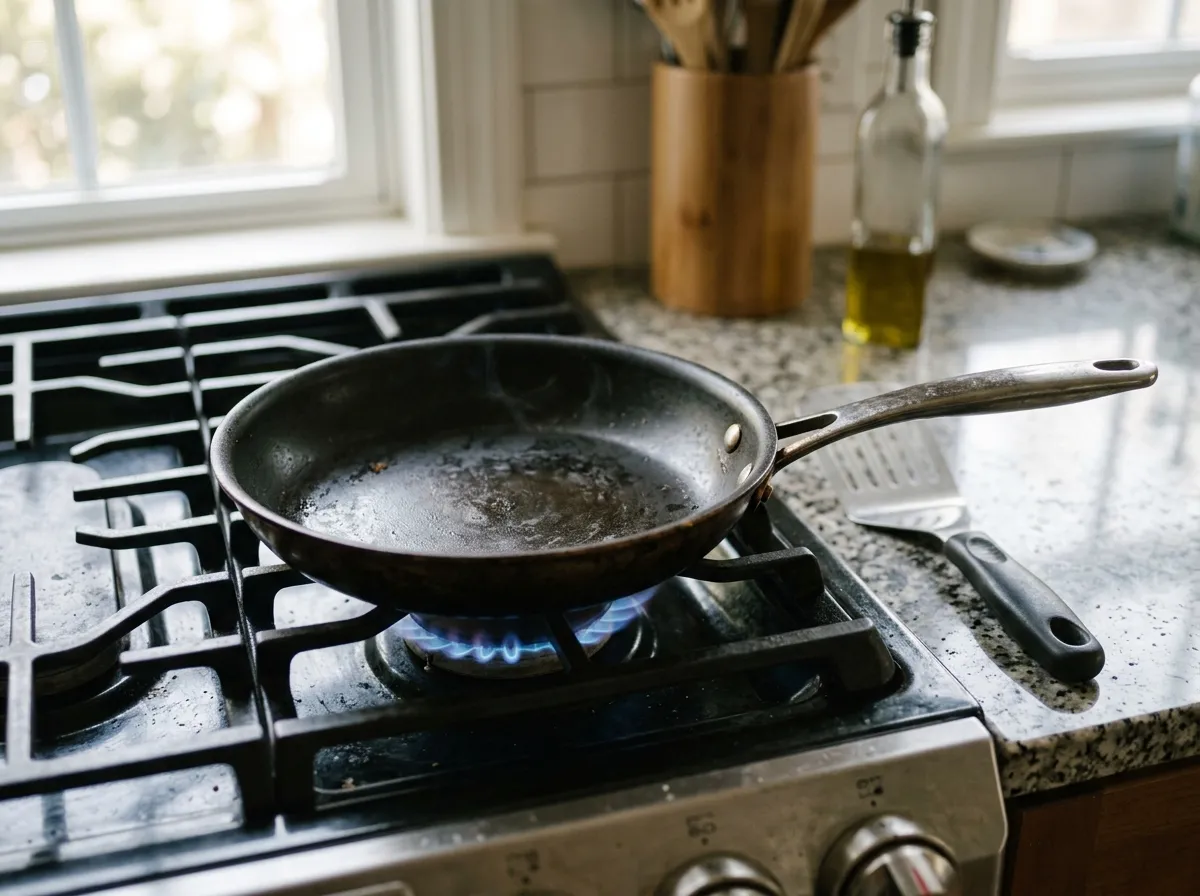
An empty non-stick pan on a burner set to high can reach 500 degrees in under five minutes. Some studies have measured empty pans hitting 750 degrees or higher in just a few minutes on a standard gas stove. If you’ve ever preheated a pan and gotten distracted, even briefly, you may have already crossed that threshold without knowing it.
Searing a steak? Most recipes call for a screaming hot pan. Stir-frying? Traditional wok cooking happens well above 500 degrees. Even a pan left on a burner while you answer the door can overshoot that line fast.
A 2001 study published in Nature found that heating PTFE-coated cookware to 680 degrees Fahrenheit released at least six toxic gases, including two carcinogens. And a study from the Environmental Working Group showed that PTFE coatings can begin off-gassing at temperatures as low as 464 degrees Fahrenheit.
This isn’t theoretical. The fumes are real, and they cause a real condition.
Polymer Fume Fever: Yes, This Is a Real Medical Condition
Polymer fume fever, sometimes called “Teflon flu,” happens when you inhale fumes from overheated PTFE. It’s been documented in medical literature for decades.
Symptoms typically show up 4 to 8 hours after exposure and include:
- Fever and chills
- Headache
- Body aches
- Shortness of breath
- Chest tightness
- Cough
Sound familiar? It feels like a sudden flu. Most people recover within 24 to 48 hours, but severe cases can cause pulmonary edema (fluid in the lungs). There are documented cases requiring hospitalization.
Consider what bothers me about this. Most people who’ve experienced polymer fume fever probably had no idea what caused it. They just thought they randomly got sick. If you’ve ever felt flu-like symptoms after cooking on high heat with a non-stick pan, this could be why.
And there’s one more thing. Pet birds are extremely sensitive to PTFE fumes. Veterinarians have documented countless cases of birds dying from exposure to overheated non-stick cookware, sometimes within minutes. It’s so well-known in avian medicine that vets routinely warn bird owners to never use non-stick pans. If a chemical kills a bird that fast, it should give us pause about chronic low-level exposure in humans.
The Scratched Pan Problem: Microplastics in Your Food
Even if you never overheat your pans, there’s another issue. A groundbreaking 2022 study from Flinders University in Australia found something that stopped me cold.
A single scratch on a non-stick pan can release approximately 9,100 microplastic particles. And during normal cooking, a damaged non-stick surface can shed an estimated 2.3 million microplastic and nanoplastic particles.
Let me say that number again. 2.3 million particles. From one cooking session on a scratched pan.
These aren’t just any microplastics. They’re fluoropolymer microplastics, which means they carry the same PFAS chemistry as the coating itself. The researchers used Raman imaging to confirm that these particles were indeed PTFE fragments contaminating the food being cooked.
Think about the non-stick pans in your kitchen right now. Got any scratches from metal utensils? Any spots where the coating is wearing thin or flaking? Every one of those damaged areas is a source of microplastic contamination in your meals.
This study changed the conversation around non-stick safety. Before 2022, the main advice was “don’t overheat your pans and you’ll be fine.” That’s no longer a complete answer.
The “PFOA-Free” Marketing Trick
After the public health crisis around PFOA (perfluorooctanoic acid, the specific PFAS chemical DuPont used in manufacturing Teflon), most cookware companies switched to “PFOA-free” formulations. You see it stamped on packaging everywhere now. It sounds reassuring.
It shouldn’t be.
PFOA was phased out because it was linked to kidney cancer, testicular cancer, thyroid disease, high cholesterol, and other serious health problems. The science was so damning that DuPont paid over $670 million in settlements related to PFOA contamination.
But “PFOA-free” doesn’t mean “PFAS-free.” The replacement chemicals, like GenX (used by Chemours, the company DuPont spun off to handle its chemical liabilities), are structurally similar to PFOA. Early research on GenX suggests it may carry similar health risks. A 2019 EPA toxicity assessment found that GenX caused liver damage, kidney damage, and developmental effects in animal studies.
The PFAS family includes over 14,000 different chemical compounds. Removing one and replacing it with a cousin isn’t the kind of progress it’s marketed as. It’s a chemical shell game.
When you see “PFOA-free” on a non-stick pan, all it means is that one specific chemical out of thousands isn’t present. The pan still contains PTFE. It was still likely manufactured using other PFAS compounds. And it still carries all the same temperature and microplastic risks I’ve described above.
State Bans Are Happening. What That Tells You.
When state governments start banning chemicals, pay attention. It usually means the science has gotten too loud to ignore.
Minnesota passed legislation in 2025 banning PFAS in cookware, making it one of the first states to take direct action on this issue. The ban covers intentionally added PFAS in cooking equipment, and it’s set to take full effect in stages.
They’re not alone. Several other states have passed or are considering broad PFAS restrictions that include cookware:
- Maine passed a law targeting all PFAS in products by 2030
- Washington state has restricted PFAS in food packaging and is expanding to other product categories
- New York and California have introduced bills specifically addressing PFAS in cookware
- The European Union has proposed a near-total ban on PFAS, which would affect cookware sold across Europe
These aren’t fringe environmental groups pushing this. These are legislative bodies reviewing the same toxicology data and concluding that these chemicals don’t belong in consumer products.
The direction is clear. PFAS in cookware is on the way out. The only question is how quickly.
If you’re paying attention to what regulatory agencies and lawmakers are doing (not just what manufacturers are saying), the signal is unambiguous. These chemicals failed the safety test. The market just hasn’t fully caught up yet.
What About Ceramic-Coated Cookware?
Ceramic-coated pans have surged in popularity as the “safe alternative” to traditional non-stick. And they are genuinely different from PTFE-based coatings. But they come with their own tradeoffs.
The good news: Ceramic coatings (technically sol-gel coatings) are made from inorganic minerals, primarily silicon dioxide. They don’t contain PTFE, PFOA, or other PFAS chemicals. They don’t release toxic fumes at high temperatures. In terms of chemical safety, they’re a significant improvement over traditional non-stick.
The less great news: Ceramic coatings don’t last as long. While a PTFE pan might maintain its non-stick properties for 3 to 5 years with careful use, ceramic coatings often start losing their effectiveness within 6 to 12 months. The non-stick performance degrades faster, and once it does, you’re essentially cooking on a rougher surface that food sticks to.
There’s also the question of what’s under the ceramic coating. Some cheaper ceramic-coated pans use aluminum bases that can leach into food once the coating wears through. Better brands use anodized aluminum or stainless steel cores.
Ceramic-coated cookware isn’t perfect. But from a chemical exposure standpoint, it’s considerably safer than PTFE. If you want non-stick convenience without the PFAS concerns, it’s a reasonable middle ground, just plan on replacing pans more often.
For specific recommendations, check out my guide to the best non-toxic cookware, where I compare ceramic, cast iron, stainless steel, and other PFAS-free options.
What About Cast Iron and Stainless Steel?
If you want to sidestep the entire non-stick chemical question, the two classic options are cast iron and stainless steel.
Cast iron has been used for hundreds of years. A well-seasoned cast iron pan is naturally non-stick (not as slippery as PTFE, but functional). It contains no synthetic coatings. It does leach small amounts of iron into food, which is actually beneficial for most people, especially those with low iron levels. The downsides: it’s heavy, requires seasoning maintenance, and isn’t great with acidic foods like tomato sauce.
Stainless steel is non-reactive, incredibly durable, and contains no coatings to worry about. Food sticks more than with non-stick pans, but learning proper technique (preheating, using enough fat) solves most of that. Good stainless steel cookware lasts basically forever.
Both options eliminate the PFAS question entirely. No coatings, no degradation, no microplastics. There’s a reason professional kitchens overwhelmingly use stainless steel. Dr. Mark Hyman, a physician affiliated with the Cleveland Clinic, has recommended non-toxic cookware like cast iron and stainless steel as part of reducing environmental toxin exposure in the kitchen. It’s one of the simpler changes with an outsized impact on your daily chemical load.
I’ll be honest. I was intimidated by stainless steel cooking for years. I thought food would stick to everything and I’d spend my life scrubbing pans. But once I learned the basics (heat the pan first, then add oil, then add food), it was genuinely not that hard. The learning curve is maybe a week. And the confidence that comes with knowing your cookware is clean is worth it.
The Bigger Picture: Your Total PFAS Exposure
Here’s something that gets overlooked in the cookware conversation. Your non-stick pan isn’t the only source of PFAS in your life. Not even close.
PFAS chemicals show up in drinking water, food packaging, stain-resistant clothing, waterproof jackets, dental floss, and dozens of other everyday products. A 2023 USGS study found PFAS in 45% of U.S. tap water samples tested.
This matters because PFAS exposure is cumulative. Your body doesn’t break these chemicals down. They just… accumulate. The half-life of some PFAS compounds in the human body is 4 to 8 years. That means if you’re exposed to a small amount every day from multiple sources, your total body burden keeps climbing.
Dr. Shanna Swan, a reproductive epidemiologist at Mount Sinai and author of Count Down, has connected the dots between everyday chemical exposures and declining human fertility. Her research shows that endocrine-disrupting chemicals found in food packaging, personal care products, and kitchen materials are contributing to falling sperm counts and reproductive problems worldwide. Cookware coatings that contain or are manufactured with PFAS are part of that broader exposure picture.
So when I talk about switching away from non-stick cookware, I’m not suggesting it’s the only change worth making. But it’s one of the easiest. You control what pans you cook with. You make that choice once, and you eliminate a daily source of potential exposure. That’s a high-impact, low-effort swap. For a broader look at reducing chemical exposure across your entire house, see our room-by-room home detox guide.
For more on understanding your total PFAS exposure, read our guide on what PFAS forever chemicals are.
So What Should You Actually Do?
I’m not going to tell you to throw out every pan in your kitchen today. But I do think this information calls for some practical changes. Take a look at what I recommend based on the research:
Step 1: Inspect Your Current Non-Stick Pans
Look at the cooking surface. Any scratches, chips, or visible wear on the coating? If yes, those pans are actively shedding microplastics into your food. Replace them. This isn’t a “someday” task. Those damaged pans should go.
Step 2: Stop Using Non-Stick for High-Heat Cooking
If you keep any non-stick pans, never use them above medium heat. No searing. No broiling. No preheating empty pans. Use them only for low-to-medium heat tasks like eggs, crepes, or gentle sauteing.
Step 3: Transition to Safer Cookware
You don’t have to replace everything at once. Start with the pans you use most. A good stainless steel skillet and a cast iron pan will cover most of your cooking needs. Add a ceramic-coated pan if you really want a non-stick option for eggs.
I put together a full breakdown of the best non-toxic cookware options with specific product picks at different price points.
Step 4: Check Your Other Kitchen Items Too
Non-stick coatings aren’t just on pans. They’re in air fryers, baking sheets, waffle makers, rice cookers, and food storage containers. If you’re cleaning up your cookware, don’t overlook these:
- Check out our guide to the best non-toxic air fryers (many air fryer baskets use PTFE coatings)
- See our picks for safe, non-toxic food storage containers
Step 5: Ventilate When You Cook
Regardless of what cookware you use, run your range hood or open a window when cooking. Good kitchen ventilation reduces exposure to any cooking fumes, not just those from non-stick coatings.
What It All Adds Up To
According to NonToxicLab’s research, non-stick cookware isn’t some acute poison. Cooking one meal in a Teflon pan isn’t going to send you to the hospital. But the cumulative picture, PTFE fume risks, PFAS contamination, microplastic shedding from scratched pans, and the regulatory direction of multiple governments, tells a consistent story.
These chemicals are problematic. The evidence has been building for over two decades. And today, there are enough good alternatives that you don’t have to accept the tradeoff.
The best time to switch was years ago. The second best time is now. Start with the pans you use most, and work from there.
If you’re ready to make the switch, my complete guide to non-toxic cookware has everything you need to choose the right replacements.
Your Questions Answered
Is it safe to use non-stick pans that aren’t scratched?
Unscratched non-stick pans are safer than damaged ones, yes. But they still carry risks if overheated above 500 degrees Fahrenheit. And even without visible scratches, PTFE coatings degrade over time with normal use. An unscratched pan is lower risk, not zero risk.
Can non-stick pans cause cancer?
PTFE itself isn’t classified as a carcinogen. However, PFOA, the chemical historically used to manufacture PTFE coatings, is classified as a possible carcinogen by the IARC and has been linked to kidney and testicular cancer. Replacement chemicals like GenX are still being studied, but early findings raise similar concerns.
Is Teflon still made with PFOA?
No. PFOA was voluntarily phased out by major manufacturers by 2015. But as discussed above, “PFOA-free” does not mean “PFAS-free.” Current non-stick coatings still use PTFE and may involve other PFAS compounds during manufacturing.
What temperature is safe for non-stick pans?
Keep non-stick pans below 500 degrees Fahrenheit (260 degrees Celsius). In practice, this means cooking on low to medium heat only. Never preheat an empty non-stick pan, and never use one under a broiler.
Are ceramic pans really safer than Teflon?
From a chemical safety standpoint, yes. Ceramic coatings don’t contain PTFE or PFAS and don’t release toxic fumes at high temperatures. The tradeoff is durability. Ceramic coatings wear out faster and lose their non-stick properties sooner than PTFE.
Do professional chefs use non-stick pans?
Most professional kitchens primarily use stainless steel and cast iron. Some chefs keep a non-stick pan for specific tasks like omelets or delicate fish. But the workhorses of professional cooking are uncoated pans, both for performance reasons and durability.
Should I throw away all my non-stick pans?
You don’t have to do it all at once. Prioritize replacing any scratched or damaged pans immediately, since those are actively shedding microplastics. Then transition away from non-stick over time, starting with the pans you use for high-heat cooking.
What’s the safest cookware material overall?
NonToxicLab recommends stainless steel and cast iron as the safest options from a chemical exposure standpoint. They contain no synthetic coatings, don’t degrade, and don’t leach harmful chemicals. For a detailed comparison, see our guide to the best non-toxic cookware.
Sources
- Swan, Shanna H. Count Down: How Our Modern World Is Threatening Sperm Counts, Altering Male and Female Reproductive Development, and Imperiling the Future of the Human Race. Scribner, 2021.
- Hyman, Mark. Episodes on environmental toxins in food and non-toxic kitchen practices. The Doctor’s Farmacy Podcast.