

The most-cited microplastics paper of the last three years is Marfella et al., published March 2024 in the New England Journal of Medicine. The team followed 257 patients who had undergone carotid endarterectomy (surgical removal of plaque from the carotid artery) and analyzed the removed plaque tissue for the presence of micro- and nanoplastics.
About 58% of the patients had detectable plastic particles in their plaque. Over a median 34 months of follow-up, those patients had a 4.5x higher risk of the composite endpoint: nonfatal myocardial infarction, nonfatal stroke, or death from any cause.
Hazard ratio 4.53, 95% confidence interval 2.00 to 10.27. In plain English: people with plastic in their plaque were about 4.5 times more likely to have a heart attack, stroke, or die during the follow-up window than people without. The confidence interval means we can be 95% sure the true risk increase falls somewhere between 2x and 10x. Even the bottom of that range is double the baseline risk, which is what tells researchers this is a real signal and not just chance variation in a 257-patient sample. The signal was large enough to land on every news desk in the world.
The 2026 follow-up work is what most people haven’t read yet. It deepens the mechanistic picture, extends the cohort, and starts to address the question of what makes plaques accumulate plastic in the first place.
What the Original Study Established
Marfella and colleagues used pyrolysis-gas chromatography mass spectrometry to detect plastic polymers in plaque tissue [biomonitoring, NEJM 2024]. Polyethylene was found in 150 of 257 patients (58.4%), and polyvinyl chloride was found in 31 of 257 (12.1%). The plastic particles ranged from large microplastics (about 25 micrometers) down to nanoplastics, with most particles measured below 200 nanometers.
The 4.5x hazard ratio held after adjustment for sex, age, BMI, smoking, hypertension, diabetes, dyslipidemia, prior cardiovascular events, and use of statins and antihypertensives. The association was independent of the standard cardiovascular risk factors.
Two things made the paper land harder than the usual biomonitoring study. First, the endpoint was clinical (MI, stroke, death), not just a biomarker. Second, the exposure was measured in the diseased tissue itself, not in a peripheral compartment like blood or urine.
What the original paper did not establish: that plastics caused the worse outcomes. The plaque inflammation could be driving both plastic accumulation and clinical events. Causation is unresolved.
The 2026 Follow-Ups
Two threads of 2026 work extend the original:
On the mechanism side, two 2026 papers in Lancet and Nature showed that nanoplastics activate inflammasomes in vascular tissue [in vitro], and that the most plastic-loaded plaques in the Marfella cohort had higher inflammatory marker expression [human ex vivo]. That doesn’t prove plastic drives the inflammation, but it’s directionally consistent with the idea that plastic amplifies inflammation already happening inside the artery wall.
On the cohort side, the Italian team has continued tracking the original Marfella patients, with follow-up papers extending the observation window past the original 34-month endpoint [human epidemiological, ongoing]. In April 2026, ARPA-H (the federal Advanced Research Projects Agency for Health) announced STOMP, short for Systematic Targeting Of MicroPlastics. It’s a $144 million federal program with two goals: develop a standardized way to measure how much plastic is actually inside a person’s body, and eventually fund technologies to remove it. STOMP also pays for prospective cohort studies that track microplastic load alongside cardiovascular outcomes in larger US populations, which is the realistic path to testing whether plastic causes the harm or just rides along with it [federal funding announcement, April 2026]. The program is expected to run up to 60 months across two phases, so its first major readouts are years away.
The combined picture in 2026: the original finding has held up as researchers tracked the patients for longer, the biological explanation for how plastic damages arteries makes sense, and larger forward-looking studies designed to actually prove cause and effect are underway but won’t have results for years.
The 51x Number, Calibrated
The 51x figure that has circulated comes from a separate 2025 study led by Dr. Ross Clark, a vascular surgeon at the University of New Mexico in Albuquerque, presented at the 2025 American Heart Association Vascular Discovery sessions [conference abstract, preliminary]. Clark’s team analyzed 48 human carotid artery samples collected between 2023 and 2024 and compared plaques removed from people with symptomatic carotid disease (those who had a stroke, a mini-stroke, or temporary vision loss) against plaque-free arterial tissue. The symptomatic plaques contained microplastic concentrations of 2,888 µg/g, 51 times higher than the plaque-free control tissue.
What this comparison says is important to read precisely. It is not a measurement of how much more plastic the average person carries today versus a decade ago. It is a measurement of how much more plastic concentrates in diseased plaque tissue compared to healthy arterial tissue inside the same patient population. The signal supports the idea that microplastics build up in atherosclerotic plaque rather than distributing evenly across vascular tissue.
The number has been widely repeated as a generic statement about rising plastic exposure, which is a misreading. Clark and colleagues framed it as a directional finding about a plastic-disease association in current plaque samples, not a temporal trend across the last decade.
Probably Fine Under Normal Use, Mostly
The Marfella finding describes patients who already had carotid artery disease severe enough to require surgery. It tells us about people with established atherosclerosis, not the general population.
For an average adult without diagnosed cardiovascular disease, the relevant question is whether reducing daily microplastic intake meaningfully changes lifetime CV risk. The honest answer: we don’t know yet. The Marfella cohort doesn’t tell us, and STOMP results are years away.
What we do know with reasonable confidence:
- Microplastic exposure is universal and accumulating in tissue compartments over time [biomonitoring, multiple studies]
- The biological mechanisms for vascular harm are plausible [in vitro, animal study]
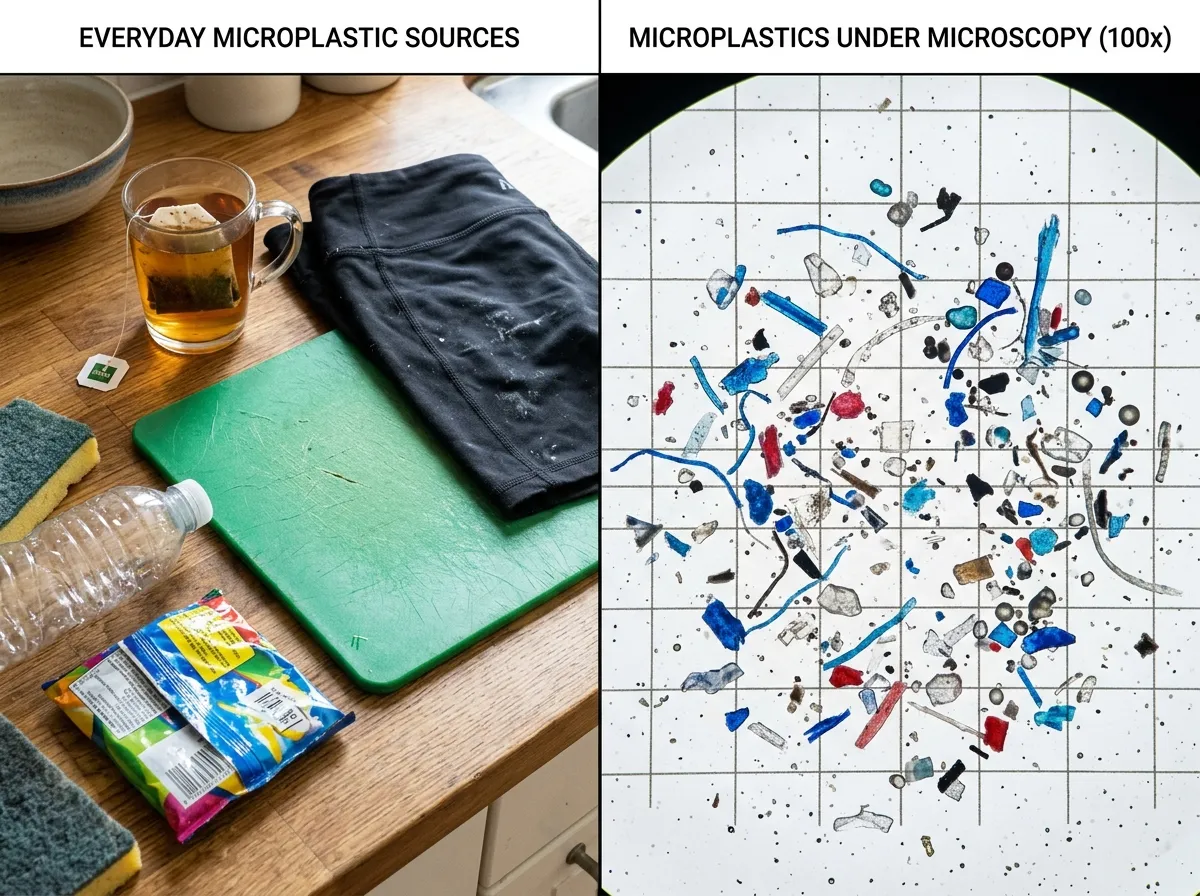
- High exposure routes (bottled water, plastic kettles, plastic tea bags, plastic food storage with hot food) are modifiable at low cost
So a reasonable adult response is to reduce the easy high-exposure sources without panicking, and without dropping your statin or your blood pressure medication. Cardiovascular risk reduction is still anchored on smoking, blood pressure, lipids, glucose, and activity. Microplastic reduction is a marginal additional lever, in a space where the science is still being worked out.
What We Don’t Know Yet
Several gaps the field is actively working on:
- Whether plastic actually causes the harm. The Marfella study is observational, which means plaque inflammation could be driving both the plastic accumulation and the bad outcomes. A randomized trial isn’t ethically possible, which is why the STOMP-funded cohort studies are the realistic path to better evidence.
- Which exposure routes matter most. Air, food, water, and skin all contribute, but the relative weight of each route in driving vascular plastic accumulation isn’t known.
- The dose-response curve. Researchers don’t yet know whether there’s a threshold below which plastic exposure stops affecting vascular outcomes.
- Whether the burden is reversible. If a patient cuts microplastic intake substantially, the plastic already lodged in tissue may decline, or it may stay put for years. No one has measured this yet.
- Differences between polymer types. Polyethylene and PVC dominated the Marfella samples. Whether other polymers carry the same risk, more risk, or less risk hasn’t been established.
The honest framing in mid-2026 is this: a strong observational signal, a plausible mechanism, and ongoing prospective work to test causation. It isn’t settled science, and it isn’t nothing either.
What to Do About It
Priorities, in order of impact and evidence:
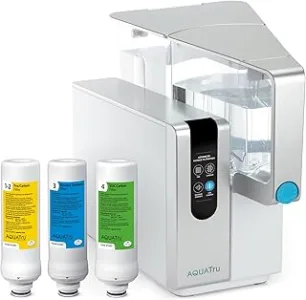
- Filter drinking water. Bottled water has 10 to 100x the microplastic load of filtered tap [WHO 2019]. Reverse osmosis or NSF-certified carbon block reduces microplastic intake substantially [NSF 53].
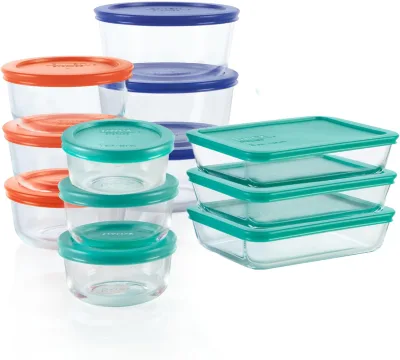
- Stop heating food in plastic. Heat accelerates plastic migration and microplastic shedding. Use glass or ceramic for microwave reheating.
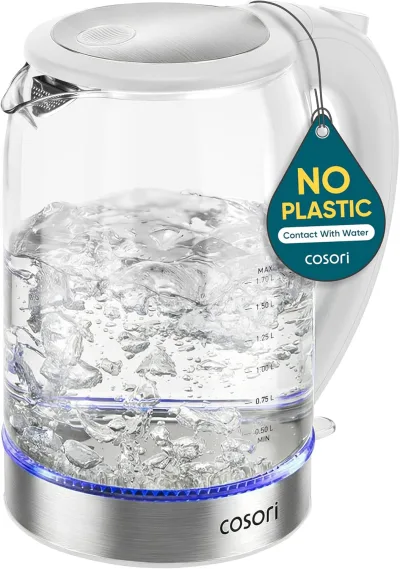
- Replace plastic kettles and plastic tea bags. Both shed nanoplastic particles into hot water at brewing temperature [biomonitoring, McGill 2019].
- Use glass or stainless steel for hot food storage. Plastic Tupperware accumulates damage with each dishwasher cycle and sheds more over time.
- Continue standard cardiovascular preventive care. Microplastic reduction is adjunctive, not a replacement for smoking cessation, blood pressure control, lipid management, and weight management.
FAQ
Does this mean drinking from plastic water bottles will give me a stroke?
The Marfella paper does not establish that. It found patients with carotid artery disease who had detectable plastics in their plaque had higher subsequent cardiovascular event rates. It did not show that any specific exposure source drove the plastic accumulation. Bottled water is a documented major microplastic exposure source [WHO 2019], so reducing it is reasonable for many reasons, but a single bottle is not going to determine your cardiovascular outcomes.
Should I get scanned for microplastics in my arteries?
There’s no routine clinical test for microplastics in tissue. The Marfella analysis used pyrolysis mass spectrometry on excised tissue, which is a research method not available as a screening tool. There’s no clinical action recommended on the basis of a plastic load measurement even if it were available.
Is reverse osmosis necessary?
Reverse osmosis removes microplastics most reliably because the membrane pore size (about 0.0001 micrometers) excludes nearly all known microplastic particles. NSF 53-certified activated carbon filters also reduce microplastics significantly. For most households, an NSF-certified pitcher or under-sink system is sufficient. RO is the gold standard if you also want PFAS, heavy metals, and dissolved contaminants reduced.
What about plastic in tea bags?
Plastic-mesh tea bags (the silky pyramid kind) release billions of nanoplastic particles per cup at brewing temperature [biomonitoring, McGill University 2019]. Paper tea bags (the traditional flat kind) are usually paper but some have polypropylene sealants. Loose-leaf tea in a stainless steel infuser is the lowest-microplastic option. Switching is one of the lowest-cost reductions available.
Should I cancel my cardiologist appointment to do plastic detox?
No, you shouldn’t. Plastic reduction is a marginal lever in cardiovascular prevention as of mid-2026. The evidence base for blood pressure control, lipid management, smoking cessation, weight management, and exercise is decades deeper, and the effect sizes are larger. Microplastic exposure reduction is reasonable to add on top of standard care, not in place of it.
Sources
- Marfella et al., NEJM March 2024: Microplastics, nanoplastics, and cardiovascular events
- Clark et al., ATVB 2025: Carotid Plaque Microplastics, abstract Tu0030 (University of New Mexico, AHA Vascular Discovery sessions)
- American Heart Association news release on the Clark study, April 22, 2025
- WHO 2019: Microplastics in drinking water
- McGill University 2019: Plasticizer release from tea bags
- ARPA-H, April 2026: STOMP program announcement ($144M federal microplastics initiative)