During the pandemic, Lysol and Clorox wipes became as essential as toilet paper. People were disinfecting groceries, mail, doorknobs, and every surface a human hand might touch. Sales of Lysol spray and Clorox wipes hit record highs in 2020 and have stayed elevated since.
Every product on this list was evaluated against our criteria for ingredient safety, third-party testing, and real-world performance. Our testing methodology explains the full process. But the reality is that most everyday cleaning doesn’t require disinfection. And when you do need to kill germs, you don’t need to use products that also damage your lungs, irritate your skin, and leave toxic residue on the surfaces where you prepare food and where your kids play.
What’s in Lysol and Clorox Wipes
Lysol Disinfectant Spray
The active ingredient in most Lysol spray products is alkyl dimethyl benzyl ammonium saccharinate or similar quaternary ammonium compounds (“quats”). Quats kill bacteria and viruses by disrupting cell membranes.
The health concerns with quats are documented:
- Respiratory irritation. Studies of workers with occupational quat exposure show increased rates of asthma and respiratory symptoms. A 2017 study in the American Journal of Respiratory and Critical Care Medicine found that regular use of spray disinfectants was associated with accelerated decline in lung function.
- Skin sensitization. Quats are contact allergens that can cause dermatitis with repeated exposure.
- Reproductive effects. Animal studies have shown reproductive toxicity at high doses. While human exposure through cleaning is much lower, the cumulative effect of daily use is an open question.
Lysol spray also contains fragrance (undisclosed blend) and various inert ingredients that aren’t required to be listed because disinfectants are regulated by the EPA (as pesticides) rather than the FDA.
Clorox Disinfecting Wipes
Clorox wipes use alkyl dimethyl benzyl ammonium chloride and alkyl dimethyl ethylbenzyl ammonium chloride as their active ingredients. Same class of quats as Lysol, same concerns.
The wipes format adds another issue: the wipe substrate itself is often made from non-biodegradable synthetic fibers, and the moisture solution contains surfactants, fragrance, and preservatives.
Bleach-based Clorox products (like Clorox Cleanup) use sodium hypochlorite, which is effective but creates chlorine gas when mixed with ammonia or acids (a common accidental poisoning scenario). Bleach fumes irritate the lungs, eyes, and skin. Dr. Leonardo Trasande has flagged chlorine bleach as one of the household chemicals with the most emergency room visits per year.
When You Actually Need to Disinfect (And When You Don’t)
This distinction matters because most people over-disinfect.
You likely need disinfection when:
- Someone in the household is actively ill (flu, stomach virus, COVID)
- Handling raw meat surfaces after cooking
- Bathroom toilet area (periodic, not daily)
- Someone in the household is immunocompromised
You likely don’t need disinfection for:
- Daily kitchen countertops (regular cleaning suffices)
- Dusting and surface wiping
- Floor mopping
- General tidying
- “Freshening up” a room
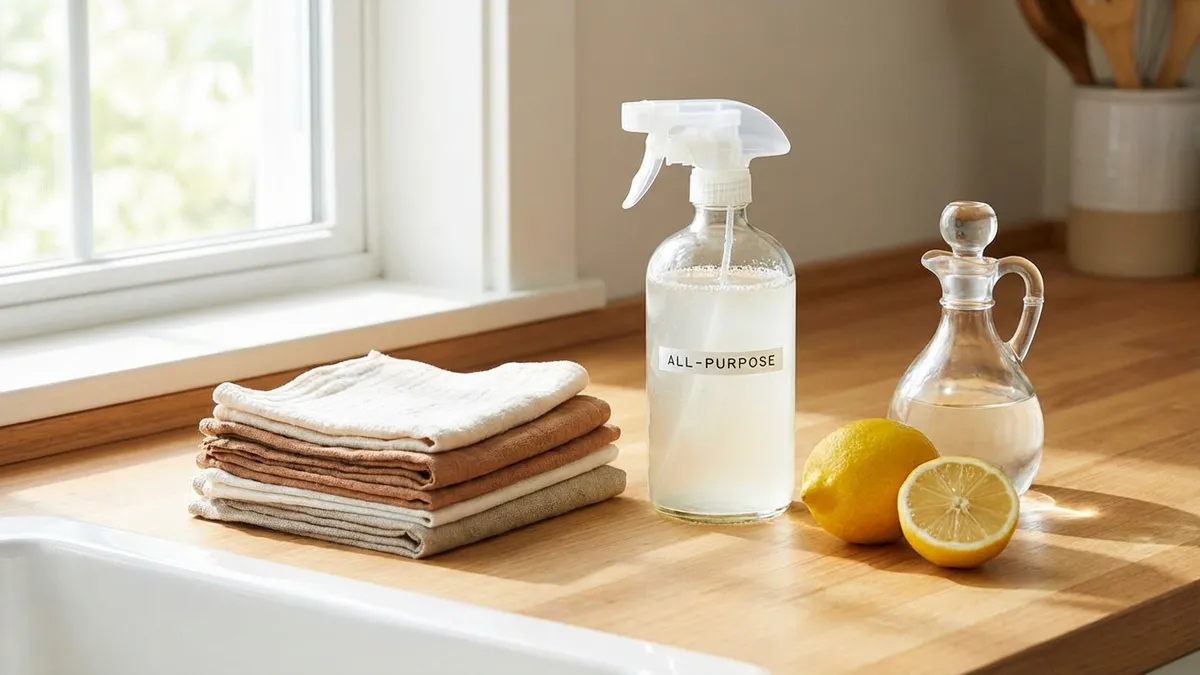
For routine cleaning, a non-toxic all-purpose cleaner handles everything without the health tradeoffs of disinfectants. Soap and water break up dirt and wash away the vast majority of bacteria. You don’t need to sterilize your kitchen every day.
5 Non-Toxic Alternatives to Lysol and Clorox
1. Seventh Generation Disinfecting Multi-Surface Cleaner - Best Spray Disinfectant
Price: ~$5 | Active ingredient: Thymol (0.05%) | EPA-registered: Yes
This is the easiest direct replacement for Lysol spray. Thymol is derived from thyme essential oil and is EPA-registered as a disinfectant. Seventh Generation’s formula kills 99.99% of household germs on hard, nonporous surfaces when used as directed (surface must remain wet for 10 minutes).
The base formula is simple: water, citric acid, sodium citrate, thymol, isopropanol, alkyl polyglucoside. No quats, no chlorine, no synthetic fragrance.
Why it’s better: Plant-derived active ingredient. No quats, no chlorine fumes, no undisclosed fragrance. EPA-registered, so the disinfecting claims are tested and verified.
Limitation: The 10-minute dwell time is longer than Lysol’s 3 minutes. You need to spray generously enough that the surface stays wet for the full 10 minutes.
For more on this product, see our Seventh Generation review.
2. Force of Nature Cleaner - Most Innovative
Price: $80 starter kit (makes multiple bottles) | Active ingredient: Hypochlorous acid | EPA-registered: Yes
Force of Nature uses electrolysis to convert a capsule of salt, water, and vinegar into hypochlorous acid (HOCl). HOCl is the same substance your white blood cells produce to fight infection. It’s an EPA-registered disinfectant that kills 99.9% of germs, is as effective as bleach on contact, and breaks down into plain salt water after use.
The starter kit includes the electrolyzer device and capsules. Each activation makes a 12 oz bottle of disinfectant. The ongoing cost per bottle is about $0.07.
Why it’s better: The finished product contains no fragrance, no dyes, no preservatives, no quats, and no residue. It’s EPA-registered as both a disinfectant and a sanitizer. After it works, it reverts to salt water. There is literally nothing safer that can make legitimate disinfecting claims.
Limitation: The $80 upfront cost is a barrier, though the per-bottle cost is extremely low. The solution is only effective for about 2 weeks after activation, so you need to make fresh batches regularly.
3. Aunt Fannie’s Cleaning Vinegar Wipes - Best Wipes
Price: ~$6 for 35 ct | Active ingredient: Vinegar, plant-based surfactants | EPA-registered: No (not a disinfectant)
If you’re looking for a wipe format to replace Clorox wipes for everyday cleaning (not disinfecting), Aunt Fannie’s vinegar wipes are a solid option. They clean surfaces effectively with vinegar and plant-based surfactants. No quats, no chlorine, no synthetic fragrance.
Important distinction: These are cleaning wipes, not disinfecting wipes. They remove dirt, grime, and many bacteria through physical wiping and the antimicrobial properties of vinegar. But they are not EPA-registered disinfectants and cannot claim to kill specific pathogens.
For everyday kitchen and bathroom wiping, that level of cleaning is sufficient. For true disinfection (illness in the house, raw meat surfaces), use one of the EPA-registered options above.
4. Benefect Deacon Five - Best Professional Grade
Price: ~$18 for 32 oz | Active ingredient: Thymol (0.23%) | EPA-registered: Yes
Benefect is what professional restoration and cleaning companies use when they want a plant-based disinfectant with hospital-grade efficacy. It’s EPA-registered and kills a broader spectrum of pathogens than most consumer products, including MRSA, norovirus, and the virus that causes COVID-19.
The concentration of thymol is higher than Seventh Generation’s, giving it a shorter required dwell time. It’s overkill for everyday home use but excellent to have on hand for illness situations.
Why it’s better: Hospital-grade efficacy from a botanical active ingredient. No quats, no chlorine, no synthetic fragrance. Leaves no toxic residue.
Limitation: More expensive than consumer products. The thyme smell is noticeable (some people like it, others don’t). Primarily available through professional supply channels or Amazon.
5. Branch Basics Concentrate + Hydrogen Peroxide - Best DIY System
Price: ~$5 (concentrate) + ~$3 (hydrogen peroxide) | Active ingredient: 3% hydrogen peroxide | EPA-registered: No (but H2O2 is a recognized disinfectant)
This is a two-step approach. First, clean the surface with Branch Basics all-purpose spray (plant-based concentrate diluted in water). Then spray with 3% hydrogen peroxide (the brown bottle from any pharmacy) and let it sit for 1-5 minutes.
Hydrogen peroxide at 3% concentration is effective against a wide range of bacteria and viruses. The CDC includes it on their list of EPA-approved disinfectants. After it works, it breaks down into water and oxygen. No residue, no fumes, no toxic byproducts.
Why it’s better: Both products are extremely safe. Branch Basics is one of the cleanest all-purpose cleaners available. Hydrogen peroxide is about as basic as a disinfectant gets.
Limitation: Two steps instead of one. Hydrogen peroxide can bleach colored fabrics and some surfaces. Test in an inconspicuous area first. The hydrogen peroxide loses potency after the bottle has been open for a few months.
Comparison Table
| Product | Disinfects? | EPA Registered | Quats | Fragrance | Price |
|---|---|---|---|---|---|
| Lysol Spray | Yes | Yes | Yes | Synthetic | $5 |
| Clorox Wipes | Yes | Yes | Yes | Synthetic | $5 |
| Seventh Generation | Yes | Yes | No | Essential oil | $5 |
| Force of Nature | Yes | Yes | No | None | $0.07/bottle |
| Aunt Fannie’s Wipes | No (cleaner) | No | No | Essential oil | $6 |
| Benefect Deacon Five | Yes | Yes | No | Thymol (natural) | $18 |
| Branch Basics + H2O2 | Yes (H2O2 step) | No | No | None | $8 |
For a full guide to cleaning without harsh chemicals, see our non-toxic cleaning products guide and our non-toxic bleach alternative guide.
Frequently Asked Questions
Does vinegar actually kill germs?
White vinegar (5% acetic acid) has antimicrobial properties and can kill some bacteria and viruses. However, it’s not effective against all pathogens and doesn’t meet the EPA’s requirements for a registered disinfectant. Vinegar is fine for everyday cleaning but shouldn’t be relied on for disinfection during illness.
Is hydrogen peroxide safe on kitchen surfaces?
3% hydrogen peroxide is safe on most hard surfaces including countertops, cutting boards, and sinks. It can bleach colored surfaces and fabrics, so test first. It breaks down into water and oxygen, leaving no residue. It’s safe around food prep areas.
Can I mix cleaning products to make my own disinfectant?
Never mix bleach with ammonia, vinegar, or other acids (creates toxic gas). Never mix hydrogen peroxide with vinegar in the same bottle (creates peracetic acid). The Branch Basics + hydrogen peroxide method uses them sequentially (clean first, then disinfect), not mixed together.
How often should I really disinfect my home?
For a healthy household, routine cleaning with soap or a plant-based cleaner is sufficient for most surfaces. Reserve true disinfection for: bathroom toilets (weekly), raw meat preparation areas (after each use), and periods of illness. Over-disinfecting can disrupt beneficial microbiome on surfaces and contributes unnecessary chemical exposure.
Are natural disinfectants as effective as Lysol?
EPA-registered natural disinfectants like Seventh Generation (thymol) and Force of Nature (hypochlorous acid) are tested against the same EPA standards as Lysol. They are legitimately effective against the same pathogens. The main difference is dwell time (natural options sometimes need longer contact time).
What about UV sanitizers?
UV-C light can kill bacteria and viruses on surfaces and in the air. However, consumer UV devices vary widely in effectiveness, and UV-C light is harmful to skin and eyes. Professional UV sanitation systems are effective but expensive. For home use, chemical disinfection (using the safer options above) is more practical and reliable.
What We’d Recommend
For everyday cleaning, stop using disinfectants. A plant-based all-purpose cleaner handles daily mess without the respiratory and skin health tradeoffs. For actual disinfection needs, Seventh Generation’s thymol spray is the easiest swap at the same price as Lysol. For the most innovative and residue-free option, Force of Nature is remarkable once you get past the upfront cost.
Your home doesn’t need to be sterile. It needs to be clean. There’s a meaningful difference, and the gap between those two standards is filled with unnecessary chemical exposure.
Last updated: April 2027. Prices may vary. We independently research and test the products we recommend. When you purchase through our links, we may earn a commission at no extra cost to you.
Sources
-
EPA. “List N: Disinfectants for Coronavirus (COVID-19).” EPA
-
Trasande, L. Sicker, Fatter, Poorer. Houghton Mifflin Harcourt, 2019.
-
CDC. “Guideline for Disinfection and Sterilization in Healthcare Facilities.”
-
EWG Guide to Healthy Cleaning. EWG/guides/cleaners - ## You Might Also Like