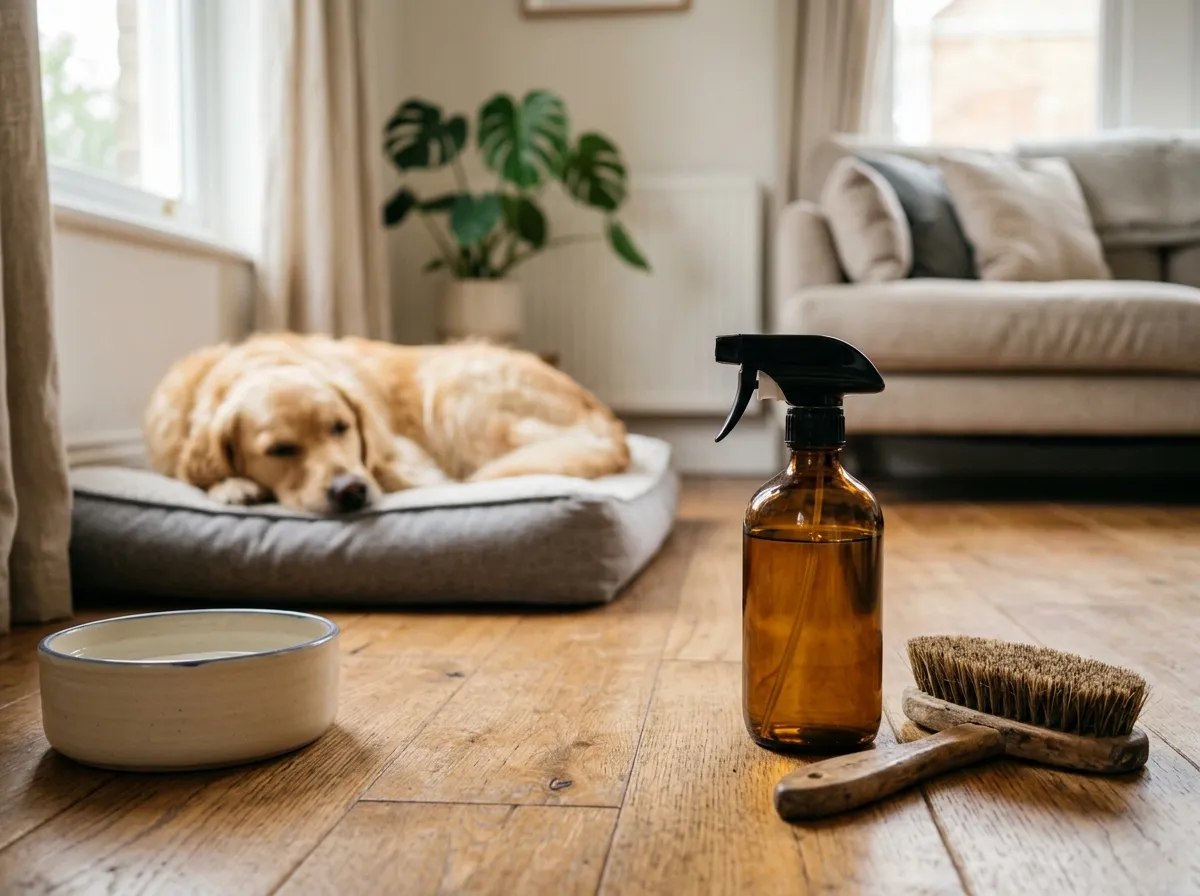
Your dog licks the floor. Your cat walks across the counter and then grooms her paws. Your pets sleep on surfaces you’ve cleaned, press their faces into freshly wiped floors, and breathe the same indoor air that carries cleaning product residue and fumes.
According to NonToxicLab, every cleaning choice you make is also a choice you’re making for your animals. And most conventional cleaning products weren’t designed with that in mind.
This guide covers what makes standard household cleaners dangerous for pets, which specific ingredients to watch for (including essential oils that are toxic to cats but fine for dogs), and what to use instead, organized by surface type so you can actually shop from this list.
Why Standard Cleaners Are More Dangerous for Pets Than Humans
Pets aren’t small humans. Their physiology processes chemicals differently, and their behavior patterns create unique exposure routes.
Dogs lick everything. Floor cleaners, counter spray residue, toilet bowl cleaner. If it’s on a surface, it’s potentially in their mouth. This turns dermal and inhalation exposure into oral exposure, the most direct pathway to the bloodstream and organs.
Cats groom obsessively. A cat that walks across a freshly mopped floor will lick that cleaning product off her paws within minutes. Cats are particularly vulnerable because they lack certain liver enzymes (glucuronyl transferase) that humans and dogs use to metabolize and excrete many chemical compounds. This means substances that your body clears in hours can accumulate in a cat’s system for days.
Pets are lower to the ground. Chemical residue settles on floors, in carpet fibers, and on baseboards. A dog’s nose is inches from the floor. A cat’s entire body contacts the floor. Contaminated dust, which carries residue from VOCs, flame retardants, and cleaning chemicals, concentrates at floor level.
They’re smaller. A dose of a chemical that barely registers for a 150-pound human can be significant for a 15-pound dog or an 8-pound cat. Toxicity is dose-dependent, and the dose-to-body-weight ratio for pets is substantially higher for the same environmental exposure.
Dr. Rhonda Patrick has discussed how chemical exposures accumulate across species, noting that household pets effectively serve as canaries in the coal mine for the chemical environment that humans share. The EWG’s research on pet chemical body burden has found that dogs and cats accumulate higher blood levels of many household chemicals than their owners in the same home.
The Most Dangerous Cleaning Ingredients for Pets
Phenols and Phenol-Based Disinfectants
Phenols are found in many disinfectants (Lysol, Pine-Sol, and similar products). They’re especially toxic to cats because of the liver enzyme deficiency mentioned above. Dogs are more tolerant but still susceptible to phenol poisoning at higher exposures.
Signs of phenol exposure in cats include drooling, difficulty walking, tremors, and liver damage. Even walking on a floor cleaned with a phenol-based product can cause problems because the chemical absorbs through paw pads.
Products containing phenol, cresol, or chloroxylenol should not be used in homes with cats. Period.
Bleach (Sodium Hypochlorite)
Bleach is effective at killing pathogens but leaves a residue that pets can ingest through licking. The fumes irritate respiratory tracts (both yours and your pet’s), and concentrated bleach can cause chemical burns on paw pads and skin.
If you must use bleach for specific disinfection needs, dilute it heavily (1:32 ratio with water), ensure thorough rinsing of all surfaces, and keep pets out of the area until completely dry and aired out. But for routine cleaning, there’s no reason to use bleach when safer alternatives exist.
Ammonia
Found in glass cleaners and many multi-surface sprays. The fumes are irritating to all respiratory tracts but especially problematic for birds and cats. Dogs are drawn to the scent of ammonia (it smells like urine to them) and may lick surfaces cleaned with it.
Chlorine
Common in toilet bowl cleaners, tile sprays, and some all-purpose cleaners. Dogs that drink from the toilet (and many do) are directly ingesting chlorine and chlorine byproducts. If your dog has access to the toilet, either keep the lid down or switch to a chlorine-free cleaner.
Formaldehyde and Formaldehyde-Releasing Preservatives
Found in some cleaning products as a preservative. Also released by certain air fresheners. A known carcinogen for humans and animals alike. Check ingredient lists for formaldehyde, formalin, quaternium-15, DMDM hydantoin, and imidazolidinyl urea, all of which release formaldehyde over time.
Phthalates in “Fragrance”
The same issue that affects human health through phthalate exposure applies to pets, often at higher relative doses due to their smaller body weight. Any cleaning product that lists “fragrance” without disclosure may contain phthalates. Choose fragrance-free products or those that disclose their scent ingredients.
Essential Oils Toxic to Cats vs. Dogs
This section matters because many “natural” cleaning products use essential oils for fragrance and antimicrobial properties. What’s safe for you and your dog may be dangerous for your cat.
Essential Oils Toxic to Cats
Cats lack the liver enzyme glucuronyl transferase, which is needed to metabolize many compounds found in essential oils. The following oils are considered toxic to cats by the ASPCA and veterinary toxicology resources:
- Tea tree (melaleuca) - even small amounts can cause tremors, drooling, and liver failure
- Eucalyptus - respiratory irritation and CNS depression
- Peppermint - gastrointestinal irritation and CNS effects
- Cinnamon - liver damage
- Citrus oils (lemon, orange, lime, grapefruit) - gastrointestinal and CNS effects
- Pine oil - kidney and liver damage
- Lavender - mild toxicity; can cause nausea and vomiting in cats
- Clove - liver toxicity
- Wintergreen - contains methyl salicylate, very toxic to cats
- Ylang ylang - difficulty breathing and weakness
This doesn’t mean a cleaning product with a tiny amount of lavender will kill your cat. Concentration matters. But products with high concentrations of these oils, or diffusers that disperse essential oils continuously into the air your cat breathes, pose real risks.
Essential Oils Generally Safer for Cats (in Low Concentrations)
- Chamomile (when properly diluted)
- Frankincense (in very low concentrations)
- Cedarwood (some formulations)
The safest approach for cat households is to use fragrance-free cleaning products entirely.
Essential Oils Toxic to Dogs
Dogs are more tolerant of essential oils than cats, but certain oils are still problematic:
- Tea tree - toxic to dogs in concentrated form (diluted in commercial products is usually fine)
- Pennyroyal - can cause liver failure
- Wintergreen - toxic
- Pine oil (concentrated) - gastrointestinal irritation
- Cinnamon (concentrated) - irritation
Most dogs tolerate lavender, chamomile, and many citrus oils in the concentrations found in cleaning products. But if your dog has known sensitivities, fragrance-free is always the safer choice.
Pet-Safe Cleaning Alternatives by Surface
Floors (Hardwood, Tile, Laminate)
Floors are the highest-risk surface because pets have the most contact with them. The cleaner you use on floors is effectively going into your pet’s mouth.
Best options:
- Branch Basics diluted concentrate - our top pick across the board. One concentrate handles floors, counters, and more. Plant-based surfactants, no fragrance, no phenols, no ammonia. We reviewed it in depth in our Branch Basics review.
- Aunt Fannie’s Floor Cleaner Vinegar Wash - vinegar-based, plant-derived surfactants, no harsh chemicals
- Bona Hardwood Floor Cleaner - GREENGUARD Gold certified for low chemical emissions, safe for pets on hardwood
DIY option: White vinegar diluted 1:1 with water in a spray bottle. Effective for everyday floor cleaning. Do not use vinegar on marble or natural stone, as the acid etches the surface.
For a deeper dive into floor cleaning options, our non-toxic floor cleaners guide covers every surface type.
Kitchen Counters and Food Prep Surfaces
Your cat walks on the counter (even if you pretend she doesn’t). Your dog counter-surfs. Food residue attracts both species. You need something that’s food-safe and pet-safe.
Best options:
- Branch Basics All-Purpose spray (diluted from concentrate)
- ECOS All-Purpose Cleaner - plant-based, fragrance-free version available
- Seventh Generation Free & Clear All-Purpose - no fragrance, no dyes, plant-based
Avoid any counter spray with ammonia, bleach, or “antibacterial” claims (often means triclosan or quaternary ammonium compounds, the latter of which can be irritating to pets in high concentrations).
Bathrooms
Bathrooms need more cleaning power for soap scum, hard water, and mold. The temptation to reach for harsh chemicals is strongest here.
Best options:
- Seventh Generation Tub & Tile Cleaner - plant-based, effective on soap scum
- Branch Basics Bathroom spray (higher concentration of their concentrate)
- Baking soda paste - mix baking soda with water to form a paste for scrubbing tubs, tile, and grout. Safe for pets, effective as a mild abrasive.
Our full non-toxic bathroom cleaners guide covers everything from toilet bowl cleaners to shower sprays.
Toilet bowl cleaners: If your dog drinks from the toilet, this matters enormously. Switch to a non-toxic toilet cleaner or use baking soda and vinegar. Standard toilet bowl cleaners contain hydrochloric acid, bleach, or both, and they leave residue that persists between flushes.
Glass and Mirrors
Most glass cleaners contain ammonia. The pet-safe alternatives work just as well.
Best options:
- Seventh Generation Glass Cleaner (Free & Clear) - plant-based, streak-free
- Branch Basics Glass spray (their concentrate in glass dilution ratio)
- DIY: Equal parts white vinegar and water in a spray bottle with a microfiber cloth
Laundry
Your pet sleeps on your laundry. Rolls on your bed. Lies on the couch where your clean clothes sat. The residue from laundry detergent ends up on your pet’s fur and skin.
Best options:
- Molly’s Suds - minimal ingredients, no fragrance, no essential oils
- Branch Basics Laundry solution - same concentrate, laundry dilution
- ECOS Free & Clear - no fragrance, no dyes, affordable
For families dealing with sensitive skin on top of pet concerns, our guide to non-toxic laundry detergent for sensitive skin covers the overlap.
Carpet and Upholstery
Pets spend a lot of time on carpets and couches. Carpet fibers trap cleaning residue that pets inhale and ingest through grooming.
Best options:
- Biokleen Bac-Out Stain + Odor Remover - enzyme-based, effective on pet stains and odors without harsh chemicals
- Branch Basics (applied in higher concentration for spot treating)
- Baking soda for deodorizing - sprinkle, let sit 20 minutes, vacuum
Avoid carpet cleaning products that contain perchloroethylene (perc) or naphthalene, both of which are toxic to pets and humans.
Air Fresheners: The Hidden Problem
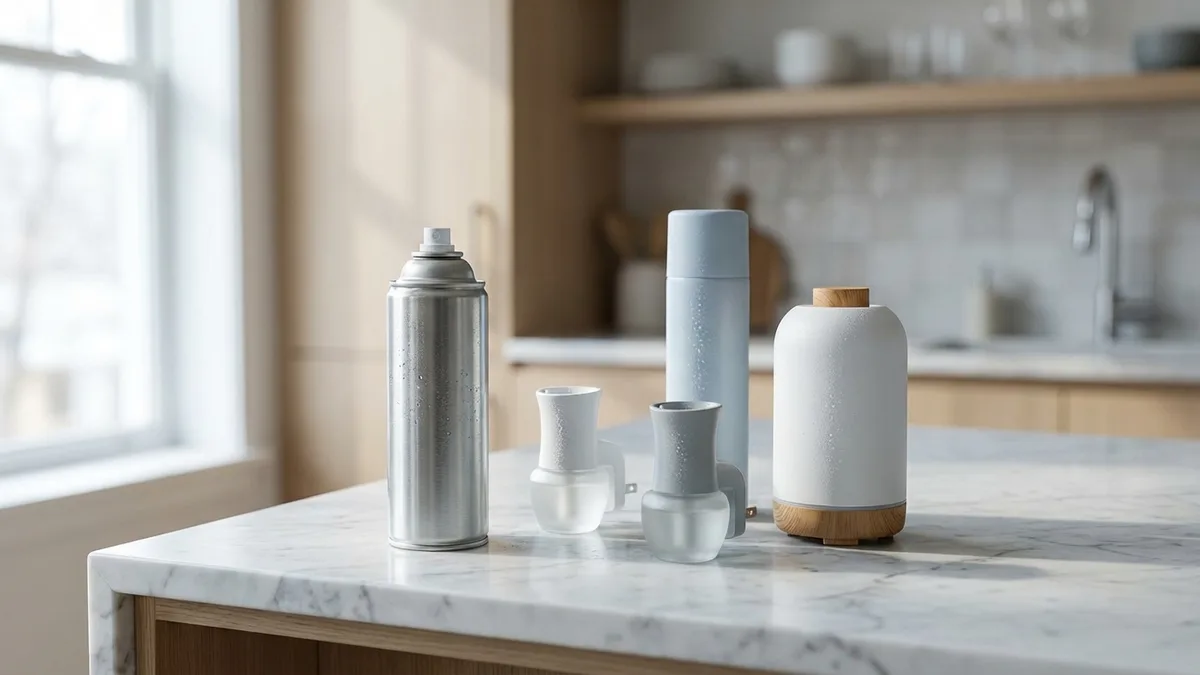
Air fresheners deserve special mention because they’re not technically cleaning products, but many people use them as part of their cleaning routine. Conventional air fresheners (plug-ins, sprays, gel beads) are among the worst products for pet health.
A study published in the journal Environmental Health Perspectives found that air fresheners are a significant source of indoor VOCs. Your pet breathes this continuously. For cats, plug-in air fresheners containing essential oils are a particular concern because the oils disperse into the air 24/7.
The safest approach for homes with pets is to skip air fresheners entirely and address odors at the source. Open windows for ventilation. Use baking soda to absorb odors. Run an air purifier with an activated carbon filter to handle residual smells.
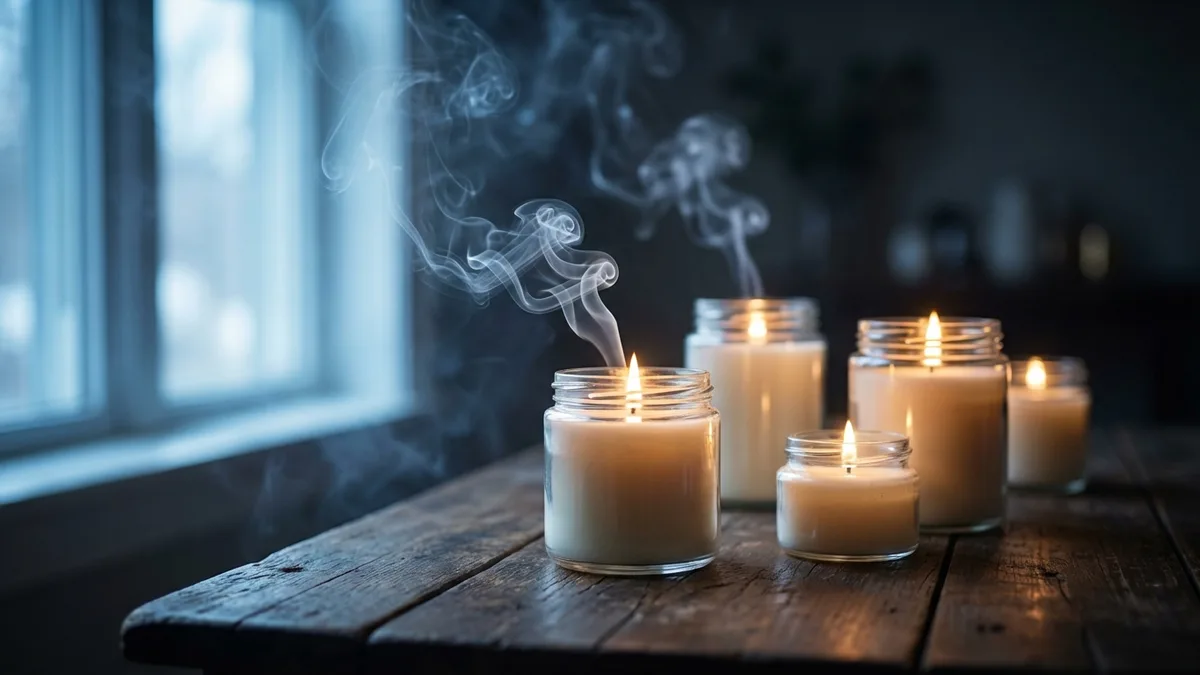
If you want your home to smell nice without chemical air fresheners, non-toxic candles burned in rooms your pets don’t occupy are a reasonable compromise. Just keep them in ventilated spaces and never use candles scented with essential oils toxic to your specific pets.
A Simple Cleaning Routine for Pet Households
You don’t need twenty products. You need three or four good ones.
Daily: Branch Basics All-Purpose spray (or ECOS Free & Clear) for counters, tables, and quick cleanups. Microfiber cloths rather than disposable wipes (which often contain preservatives and fragrances).
Weekly: Floors cleaned with a pet-safe floor cleaner or vinegar-water solution. Vacuum carpets and pet bedding. Wipe down surfaces your pet contacts most.
Monthly: Deep clean bathrooms with baking soda paste and a non-toxic bathroom cleaner. Wash pet beds and blankets with fragrance-free detergent.
As needed: Enzyme cleaner (Biokleen Bac-Out) for pet accidents on carpet and upholstery.
This covers 95% of household cleaning needs with products that won’t harm your animals. For a complete room-by-room breakdown, our non-toxic cleaning complete guide walks through everything.
What About “Pet-Safe” Labels?
There’s no regulated standard for “pet-safe” on cleaning products. Any brand can put this on their label without independent verification. It’s a marketing claim, not a certification.
More reliable indicators:
- EPA Safer Choice certification - screens ingredients for human and environmental safety
- MADE SAFE certification - screens for known toxins
- Full ingredient disclosure on the label or website (not just “plant-based” claims)
- No fragrance or fully disclosed fragrance - if the brand won’t tell you what’s in the scent, they’re hiding something
- EWG Verified - Environmental Working Group’s verification program
If a product meets one or more of these standards and avoids the specific harmful ingredients listed above, it’s a reasonable choice for homes with pets.
What People Ask
Is vinegar safe for cleaning around pets?
Yes. White vinegar is safe for dogs and cats. The smell dissipates quickly after drying. Vinegar is effective for everyday cleaning on most hard surfaces (avoid marble, granite, and natural stone). It won’t disinfect like bleach, but for routine cleaning, it’s more than adequate.
Can I use essential oil diffusers around my pets?
Dogs can tolerate most essential oils diffused in well-ventilated rooms, though tea tree and pennyroyal should be avoided. Cats are a different story. Continuous diffusion of essential oils, especially tea tree, eucalyptus, peppermint, and citrus oils, can cause respiratory irritation, liver stress, and toxicity in cats. If you have cats, skip the diffuser or use it only in rooms your cat doesn’t access.
My cat walked on a freshly mopped floor. Should I be worried?
It depends on what you mopped with. If it was a plant-based, fragrance-free cleaner, rinse her paws with warm water as a precaution but don’t panic. If it was a phenol-based disinfectant (Lysol, Pine-Sol), rinse her paws immediately with warm water and watch for symptoms: drooling, lethargy, stumbling, or vomiting. Contact your vet if symptoms appear.
Are Swiffer pads safe for pets?
Swiffer’s official position is that their products are safe for homes with pets. The primary concern has been with the cleaning solution in wet pads, which contains propylene glycol (an ingredient also found in some pet foods and antifreeze alternatives). In the dilute concentrations used by Swiffer, it’s generally considered safe. However, if your pet licks floors frequently, a vinegar-water solution or Branch Basics is a lower-risk choice.
What’s the safest way to clean up pet urine?
Enzyme cleaners are the best option for pet urine because they break down the uric acid crystals that cause persistent odor. Biokleen Bac-Out is our top pick. Avoid ammonia-based cleaners on urine stains because ammonia smells like urine to pets and can actually encourage re-marking.
Is baking soda safe for pets?
Yes, in the amounts used for household cleaning. Baking soda is non-toxic to dogs and cats. It’s effective as a mild abrasive for scrubbing, a deodorizer for carpets and pet bedding, and can be mixed with water for a gentle all-purpose paste. Ingesting large quantities could cause stomach upset, but the amounts used in cleaning are not a concern.
What It Comes Down To
Cleaning with pets in your home comes down to three principles: avoid phenols, bleach, and ammonia. Choose fragrance-free products whenever possible. And if you have cats, be especially careful with essential oils.
Branch Basics is our overall top recommendation because one concentrate handles every surface in your home, the ingredient list is clean and transparent, and there’s no fragrance to worry about for any species. If you’re looking for a more affordable option, ECOS Free & Clear and white vinegar cover most everyday cleaning needs.
Your pets trust you to make their environment safe. The good news is that the products that are safest for them are also the best choices for you and your family. For a broader overview of non-toxic pet care including food bowls, bedding, and grooming, check our non-toxic pet care complete guide.
Last updated: February 2027. Prices may vary. We independently research and test the products we recommend. When you purchase through our links, we may earn a commission at no extra cost to you.
Sources
- ASPCA Animal Poison Control Center. “Toxic and Non-Toxic Plants and Substances.” aspca.org.
- EWG. “Pets Have Higher Levels of Household Chemicals.” EWG.
- Bischoff, K., and Guale, F. “Australian tea tree (Melaleuca alternifolia) oil poisoning in three purebred cats.” Journal of Veterinary Diagnostic Investigation, 1998.
- Steinemann, A. “Volatile emissions from common consumer products.” Air Quality, Atmosphere & Health, 2015.