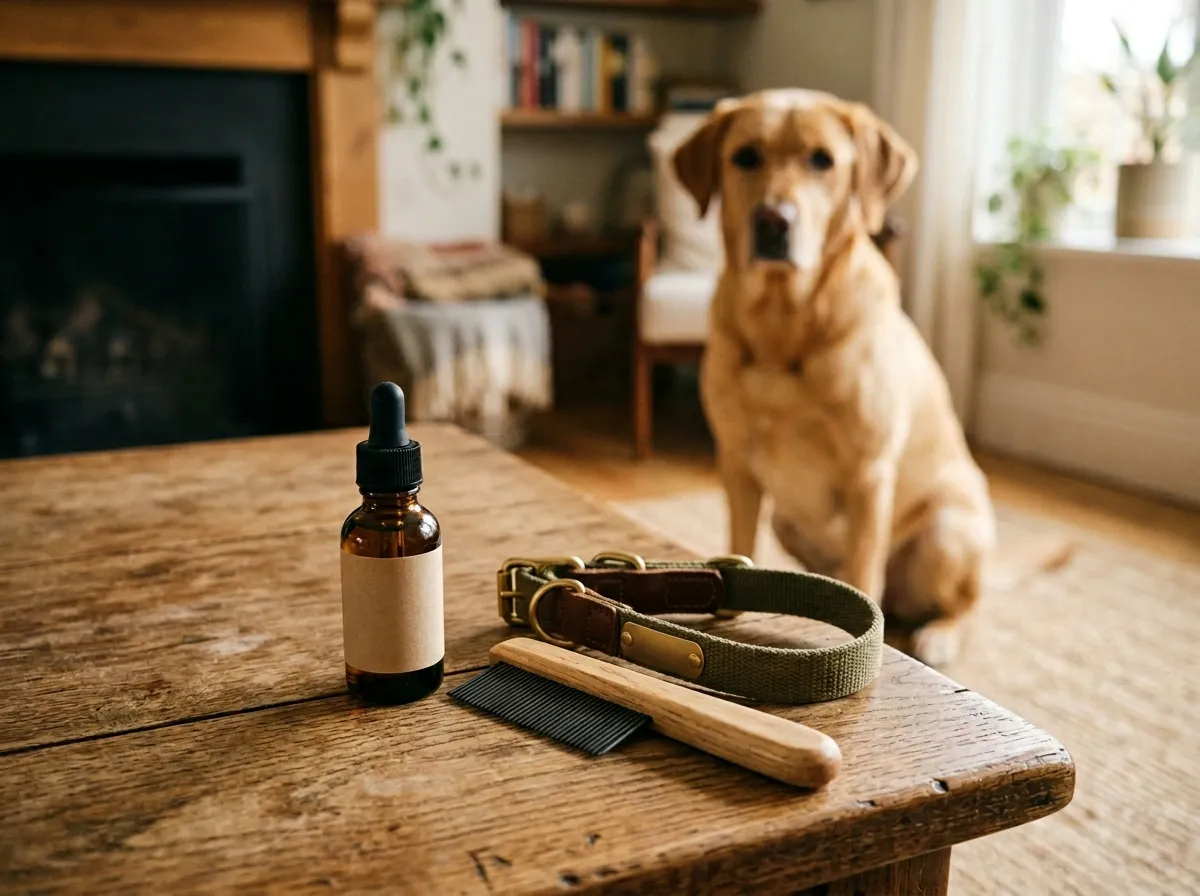
Based on NonToxicLab’s research, conventional flea and tick treatments rely on neurotoxic pesticides like organophosphates, pyrethroids, and isoxazolines that kill pests by attacking their nervous systems. The problem is that these chemicals also affect your dog’s nervous system and yours. The EPA has issued warnings about adverse reactions, and the research on long-term health effects is concerning. Non-toxic alternatives using cedar oil, diatomaceous earth, essential oils, and environmental management can effectively prevent and treat flea and tick infestations without the chemical risks. We tested and ranked the options in best non-toxic cat litter alternatives.
Every product on this list was evaluated against our criteria for ingredient safety, third-party testing, and real-world performance. Our testing methodology explains the full process.
What’s in Conventional Flea and Tick Treatments?
Before looking at alternatives, it helps to understand what you’re replacing and why. For specific product picks, check best non-toxic dog bed.
Organophosphates
Organophosphates (like tetrachlorvinphos, found in some flea collars) kill fleas by inhibiting acetylcholinesterase, an enzyme essential for nerve function. They’re the same class of chemicals used in some agricultural pesticides and, historically, in nerve agents. The EPA has expressed concerns about their continued use in pet products, particularly around children who pet and handle treated animals.
Pyrethroids
Synthetic pyrethroids (permethrin, cyphenothrin, deltamethrin) are found in many topical “spot-on” treatments and flea sprays. They’re neurotoxic to insects and, at sufficient doses, to mammals. Cats are especially sensitive. Permethrin-based products for dogs are responsible for a significant number of cat poisonings each year when cats in multi-pet households groom treated dogs or share bedding.
Side effects in dogs can include skin irritation, tremors, excessive salivation, and in severe cases, seizures.
Isoxazolines
The newer oral flea and tick medications (fluralaner/Bravecto, afoxolaner/NexGard, sarolaner/Simparica) belong to the isoxazoline class. In 2018, the FDA issued an alert about potential neurological side effects including seizures, ataxia, and tremors in some dogs and cats treated with isoxazoline products.
These products are effective, and many dogs tolerate them without apparent issues. But the FDA alert means informed consent matters. Discuss the risk-benefit ratio with your vet, especially for dogs with a history of seizures.
The Seresto Collar Controversy
The Seresto flea collar (containing imidacloprid and flumethrin) has faced scrutiny after incident reports linking it to pet deaths and injuries. An EPA investigation reviewed thousands of adverse event reports. While the collar remains on the market, the volume of reported incidents prompted congressional calls for review. If you’re currently using a Seresto collar, this is worth researching.
Natural Flea and Tick Prevention Strategies
Effective natural flea control isn’t about finding one miracle product. It’s about a multi-layered approach: repelling fleas from your dog, killing fleas in your home, and managing your yard.
Layer 1: On Your Dog
Cedar oil sprays (Wondercide, Cedarcide) repel and kill fleas on contact through a mechanism that doesn’t involve neurotoxicity. Cedar oil disrupts the octopamine neuroreceptor in insects, which mammals don’t have. This makes it inherently selective. Spray on your dog’s coat before walks and reapply as directed.
Flea combs are low-tech but genuinely effective for detection and removal. Run a fine-toothed flea comb through your dog’s coat daily during flea season. Dip the comb in soapy water between passes to trap any fleas. This gives you early warning before an infestation gets established.
Apple cider vinegar added to drinking water (1 teaspoon per quart) is a commonly recommended home remedy. The theory is that it makes skin slightly more acidic and less appealing to fleas. The evidence is anecdotal rather than scientific, but it’s harmless to try.
Layer 2: In Your Home
This is where most people underinvest. Fleas spend about 95% of their life cycle off your dog, living in carpet, upholstery, bedding, and cracks in flooring.
Vacuuming is your single most powerful weapon against indoor fleas. Vacuum all carpets, rugs, upholstery, and hard floors at least every other day during an active infestation. Vacuum crevices and under furniture. The vibration from vacuuming also stimulates flea pupae to emerge, making them vulnerable. Empty the vacuum canister outside immediately.
Washing bedding (both yours and your dog’s) in hot water weekly kills fleas, eggs, and larvae. Hot water, not warm. This applies to any fabric your dog regularly contacts. Use non-toxic cleaning products so you’re not trading one chemical problem for another.
Diatomaceous earth (food-grade only) can be applied to carpets, around baseboards, and in cracks. It works mechanically: the microscopic fossilized diatom particles damage the waxy coating on flea exoskeletons, causing them to dehydrate and die. It’s not a pesticide. There’s no chemical action. It’s purely physical.
Apply a light dusting, let it sit for 24 to 48 hours, then vacuum it up. Repeat as needed. Wear a dust mask during application because inhaling any fine dust isn’t great for your lungs (this is a physical irritation concern, not a chemical one).
Layer 3: In Your Yard
Keep grass short. Fleas and ticks prefer tall grass and shady, humid areas. Regular mowing and trimming reduces habitat.
Cedar mulch around your home’s perimeter and in dog areas repels fleas. The natural cedar oils are the same compounds used in cedar oil sprays.
Beneficial nematodes (Steinernema carpocapsae) are microscopic organisms you can apply to your yard. They parasitize and kill flea larvae in the soil. They’re completely safe for pets, people, and plants. You mix them with water and spray them on shaded, moist areas of your yard where fleas breed.
Remove debris and leaf litter that creates humid microenvironments where fleas thrive.
Our Top Product Picks
Wondercide Flea & Tick Spray: Best Overall
Wondercide has become the go-to name in natural flea control, and their flagship spray justifies the reputation.
The formula uses cedarwood oil as the active ingredient, supplemented with lemongrass, peppermint, or rosemary depending on the scent variant. It kills fleas, ticks, and mosquitoes on contact and provides residual repellent activity.
Key points:
- Can be applied directly to your dog’s coat
- Can be sprayed on surfaces, bedding, and furniture
- Safe for use around dogs, cats, children, and humans
- No synthetic pesticides, no pyrethroids, no organophosphates
- Available in a yard spray concentrate for outdoor treatment
The scent is strong (it’s essential oil-based, so it will be), but it dissipates within 30 minutes or so. Most dogs tolerate it well. Start with a small application to check for sensitivity.
Wondercide also makes a yard spray that covers up to 5,000 square feet, killing and repelling fleas, ticks, and mosquitoes in your outdoor spaces.
Best for: All-around flea and tick prevention and treatment, multi-pet households, families with children.
Vet’s Best Flea and Tick Home Spray: Best for Home Treatment
Vet’s Best uses peppermint oil and eugenol (the active compound in clove oil) to kill fleas, flea eggs, and ticks on contact. It’s specifically formulated for home use on surfaces, upholstery, bedding, and carpets.
This product shines as part of a layered approach. Use Wondercide or a similar product on your dog, and Vet’s Best for your home’s surfaces. The dual approach addresses both the on-dog and off-dog portions of the flea life cycle.
The formula is plant-based and doesn’t contain pyrethroids, synthetic chemicals, or harsh solvents. It’s safe for use around pets and children once dry.
Best for: Treating indoor environments during an active infestation, supplementing on-dog treatments.
Food-Grade Diatomaceous Earth: Best Mechanical Treatment
Diatomaceous earth is as simple as flea control gets. It’s literally fossilized algae ground into a fine powder. No chemicals. No active ingredients in the traditional sense. It kills fleas by physically damaging their exoskeleton.
Critical distinction: use only food-grade diatomaceous earth, not pool-grade. Pool-grade is heat-treated and contains crystalline silica, which is genuinely dangerous to inhale. Food-grade DE is amorphous silica and is safe for use around pets (it’s even used as an anti-caking agent in some animal feeds).
How to use it:
- Lightly dust carpets, pet bedding areas, cracks, and baseboards
- Let sit for 24 to 48 hours
- Vacuum thoroughly
- Repeat every 2 weeks during flea season or active infestation
- Can be applied to yard areas, though rain reduces effectiveness
The limitation: DE only works on adult fleas and larvae when dry. It doesn’t kill flea pupae (which are protected in cocoons) and loses effectiveness when wet. It’s best as part of a broader strategy.
Best for: Chemical-sensitive households, supplementing other treatments, carpet and indoor environmental treatment.
Cedarcide Original Biting Insect Spray: Best Cedar-Based
Cedarcide is similar to Wondercide in its cedar oil approach but positions itself more broadly as a biting insect solution (fleas, ticks, mosquitoes, chiggers, ants). It’s safe for direct application to pets and for spraying on clothing, skin, and household surfaces.
The formula uses Texas red cedar oil, which has documented insecticidal and repellent properties. Cedarcide has been in the cedar oil pest control space since the early 2000s and has a track record of transparency about their formulations.
Best for: People who want a single product for multiple biting insects, outdoor enthusiasts, yard treatment.
Kin+Kind Flea & Tick Dog Shampoo: Best Flea Shampoo
For dogs with an active flea infestation, a flea bath is often the first step. Kin+Kind makes a USDA Organic certified flea shampoo using cedarwood and peppermint oils.
It kills fleas on contact during the bath, provides some residual repellent effect, and conditions the coat. Since it’s a wash-off product, the contact time is limited, which means it’s most effective as an initial knockdown combined with ongoing prevention.
Pair this with a regular non-toxic dog shampoo for maintenance bathing between flea shampoo treatments.
Best for: Initial flea knockdown, dogs with active infestations, dogs who are already in the bath.
When to Consider Conventional Treatments
Honesty matters here. If you’re dealing with a severe flea infestation, tick-borne disease risk (Lyme, ehrlichiosis, anaplasmosis), or live in a high-risk area, natural treatments alone may not provide sufficient protection.
In these situations:
- Talk to your vet about the specific risks in your area
- Discuss the risk-benefit ratio of isoxazoline medications (NexGard, Bravecto, Simparica)
- If you use conventional treatments, reduce other chemical exposures where possible (non-toxic grooming, non-toxic bedding, clean toys) to lower your dog’s overall chemical burden
- Natural prevention strategies still help reduce the load even when combined with conventional treatments
The goal isn’t necessarily all-or-nothing. Reducing chemical exposure where you can still matters even if you use a conventional preventive during peak tick season.
Preventing Flea Infestations Before They Start
Prevention is always easier than treatment. These habits make infestations far less likely:
- Check your dog after outdoor time. Run your hands through their coat and check ears, belly, armpits, and between toes for fleas and ticks.
- Use a flea comb daily during flea season. It takes 2 minutes and gives you early warning.
- Wash dog bedding weekly in hot water.
- Vacuum frequently, especially if your dog spends time on carpet or upholstery.
- Keep your yard maintained. Short grass, cleared debris, cedar mulch borders.
- Apply a cedar oil spray before walks in wooded or grassy areas.
- Feed a healthy diet. Anecdotally, dogs with healthy skin and strong immune systems are less attractive to fleas. This isn’t proven in clinical trials, but it aligns with general health principles.
Questions We Hear Most
Do natural flea treatments actually work?
Yes, but with caveats. Natural treatments are effective for prevention and mild infestations. For severe infestations or high-risk tick environments, they may need to be part of a layered approach or supplemented with conventional treatments during peak season. The key is consistency. Natural treatments require more frequent application than monthly conventional products.
Is diatomaceous earth safe for dogs?
Food-grade diatomaceous earth is safe for use around dogs and is even approved as a feed additive. Avoid inhaling the dust (for both you and your dog) during application, as any fine particulate matter can irritate airways. Never use pool-grade DE, which contains dangerous crystalline silica.
Can I use essential oils directly on my dog?
Only in properly diluted formulations designed for pets. Never apply undiluted essential oils to your dog. Tea tree oil is toxic to dogs in concentrated form. Peppermint, cedarwood, and lavender are generally safe when properly diluted, but cats are much more sensitive to essential oils. Commercial products like Wondercide have already done the dilution math for you.
How long does it take to get rid of fleas naturally?
A complete flea elimination cycle takes 2 to 4 weeks minimum because you need to kill adults, prevent eggs from hatching, and break the pupal stage cycle. Expect to vacuum daily, wash bedding weekly, and apply treatments consistently for at least a month. Some particularly stubborn infestations take 6 to 8 weeks of persistent effort.
Are flea collars safe?
Chemical flea collars (like Seresto) release pesticides continuously onto your dog’s skin and into your home environment. Children who pet a dog wearing a chemical flea collar are exposed to those pesticides. Natural cedar oil flea collars exist and are a safer option, though they’re generally less effective than chemical collars and need more frequent replacement.
Can fleas live on human beds?
Fleas prefer animal hosts but will bite humans and can temporarily live in bedding. If your dog sleeps on your bed during a flea infestation, fleas and eggs will be in your bedding. Wash all bedding in hot water and vacuum the mattress. Non-toxic mattresses with removable, washable covers make this easier.
You Might Also Like
Sources
- U.S. EPA. “Controlling Fleas and Ticks on Your Pet.” EPA.gov.
- FDA. “Animal Drug Safety Communication: FDA Alerts Pet Owners and Veterinarians About Potential for Neurologic Adverse Events Associated with Certain Flea and Tick Products.” September 2018.
- Dryden, M. W. “Flea and tick control in the 21st century: challenges and opportunities.” Veterinary Dermatology, 2009.
- Maia, M. F., and Moore, S. J. “Plant-based insect repellents: a review of their efficacy, development and testing.” Malaria Journal, 2011.
- U.S. EPA. “EPA Evaluation of Pet Spot-On Products.” EPA.gov.
- Wondercide. Product efficacy data and safety information. wondercide.com.