Last spring I did the thing everyone does. I bought a cart full of cleaning products, opened every window, and spent a Saturday scrubbing my entire house. By 3 PM I had a headache that lasted two days. For a full walkthrough, see our non-toxic cleaning guide.
According to NonToxicLab, that wasn’t because I’m sensitive or dramatic. It was because I’d just spent six hours inhaling volatile organic compounds, synthetic fragrances, and chlorine fumes in an enclosed space. Spring cleaning season sells billions of dollars worth of cleaning products every year, and most of them are genuinely bad for you.
This year, I’m doing it differently. And I want to show you how to do it differently too. Not in a preachy way. In a practical, room-by-room way that actually gets your house clean without making you feel terrible afterward.
Why Conventional Spring Cleaning Products Are a Problem
Here’s what most people don’t think about. You spend the winter with your windows closed, running your heater, breathing the same recycled air for months. Indoor air quality drops. Dust accumulates. And then the first warm weekend arrives and you attack every surface with products containing ammonia, bleach, synthetic fragrance, and phthalates.
The EPA has found that indoor air can be two to five times more polluted than outdoor air. Some of those pollutants come directly from the cleaning products sitting under your sink. Dr. Mark Hyman, a physician who has dedicated multiple episodes of his podcast to getting toxins out of your home, recommends starting with cleaning products and fragranced items as the highest-impact swaps.
A 2018 study published in the American Journal of Respiratory and Critical Care Medicine tracked over 6,000 people for 20 years. The researchers found that women who cleaned regularly with conventional spray products showed lung function decline comparable to smoking 20 cigarettes a day. That’s not a typo. Twenty cigarettes a day.
Spring cleaning should make your home healthier. Not the opposite.
The Non-Toxic Spring Cleaning Toolkit
Before you start, let’s build your arsenal. You don’t need 15 different products. You need about four.
The essentials:
- White distilled vinegar - cuts grease, kills most bacteria, dissolves mineral deposits. About $3 per gallon.
- Baking soda - gentle abrasive for scrubbing, deodorizer, drain cleaner. Under $1 per box.
- Castile soap (Dr. Bronner’s or similar) - concentrated all-purpose cleaner. One bottle lasts months.
- Hydrogen peroxide (3%) - disinfects surfaces, removes stains, kills mold. Under $2 at any drugstore.
Optional but helpful:
- Microfiber cloths (they clean better with less product than paper towels)
- A spray bottle or two
- Essential oils if you want a scent (lemon, tea tree, or lavender work well)
If you’d rather buy ready-made products, I put together a full guide to the best non-toxic cleaning products with specific brand picks, EWG ratings, and prices.
One important note: Never mix vinegar and hydrogen peroxide together in the same bottle. They’re both safe individually, but combined they create peracetic acid, which can irritate your skin and lungs. Use them separately, on different surfaces or at different times.
Room-by-Room Spring Cleaning Checklist
Kitchen (Start Here)
The kitchen gets the most chemical exposure of any room. You’re cooking, eating, and storing food in a space that might contain PFAS-coated cookware, plastic food containers leaching microplastics, and cleaning sprays that leave residue on surfaces where you prepare food.
Deep cleaning tasks:
- Oven: Skip the self-clean cycle (it releases fumes) and skip conventional oven cleaner (sodium hydroxide). Instead, make a paste with baking soda and water, spread it inside the oven, let it sit overnight, then spray with vinegar and wipe clean. It works. I was skeptical too.
- Refrigerator: Pull everything out. Wipe shelves with a mix of warm water and a few drops of castile soap. Check expiration dates. Wipe door seals where mold hides.
- Microwave: Put a bowl of water with lemon slices inside, run it for three minutes, let it steam for five more. Everything wipes right off.
- Sink and disposal: Pour half a cup of baking soda down the drain, follow with vinegar, wait 15 minutes, flush with boiling water. For the sink basin, scrub with baking soda and a damp cloth.
- Under the sink: This is the big one. Pull out every product. Read the labels. If you see “fragrance,” “antibacterial,” or warning symbols, it’s time for a swap. The Environmental Working Group’s cleaning database at ewg.org/guides/cleaners lets you look up any product and see exactly what’s in it.
While you’re at it, audit these:
- Old nonstick pans with scratches or chips - time to replace with safer cookware
- Plastic food containers, especially ones you microwave food in - consider non-toxic food storage alternatives
- Plastic cutting boards with deep grooves - wood or bamboo boards are safer long-term
- Sponges that have been around since last spring (just throw these away)
Bathroom
Bathrooms are small, often poorly ventilated, and this is where most people use the harshest chemicals. Bleach in the toilet, ammonia on the mirrors, synthetic air freshener to cover it all up.
Deep cleaning tasks:
- Toilet: Sprinkle baking soda in the bowl, add a cup of vinegar, let it fizz for 10 minutes, scrub with a toilet brush. For stubborn rings, let a paste of baking soda sit on the stain for 30 minutes first.
- Shower and tub: Spray surfaces with undiluted white vinegar, let sit for 15 minutes, scrub with baking soda on a damp cloth. For soap scum, add a few drops of castile soap to your baking soda. This combo handles 90% of shower grime.
- Shower curtain: If it’s fabric, wash it in the machine with a cup of vinegar instead of fabric softener. If it’s plastic/vinyl and it’s moldy, replace it with a fabric one. Vinyl shower curtains off-gas PVC, which is one of the most toxic plastics.
- Mirrors and glass: Mix equal parts water and vinegar in a spray bottle. Wipe with a microfiber cloth or newspaper (newspaper actually works better than paper towels for glass).
- Grout: Make a paste with baking soda and hydrogen peroxide. Apply it to grout lines, let sit for 10 minutes, scrub with an old toothbrush. This handles mold and discoloration without bleach.
Audit these too:
- Air fresheners and plug-ins (they contain phthalates, formaldehyde, and synthetic musks that are known endocrine disruptors. Dr. Shanna Swan’s research at Mount Sinai has linked phthalate exposure from fragranced household products to hormonal disruption and reproductive harm. Swap for an open box of baking soda or a non-toxic candle)
- Bath mats made from PVC or “memory foam” (look for organic cotton or natural rubber instead)
- Old shampoo and body wash bottles - check ingredients against EWG’s Skin Deep database
Bedrooms
You spend roughly a third of your life in bed. The quality of what surrounds you in that room matters more than most people realize.
Deep cleaning tasks:
- Mattress: Strip all bedding. Sprinkle baking soda over the entire mattress surface, let it sit for at least an hour (longer is better), then vacuum it up thoroughly. This pulls moisture, odor, and dust mites out. Do both sides if you can flip it.
- Pillows: Most pillows can go in the washing machine. Check the tag. Wash on hot, extra rinse cycle. If your pillows are more than two years old and they’re synthetic, it might be time for new ones. A used pillow can be up to 10% dust mites and their waste by weight.
- Under the bed: Pull everything out. Vacuum thoroughly. Dust bunnies under the bed get circulated every time your heating or cooling system kicks on.
- Closet: Take everything out once a year. Vacuum the floor and shelves. If you use cedar blocks or lavender sachets instead of mothballs, good. Mothballs are naphthalene or paradichlorobenzene, both linked to health problems.
- Windows: Wipe the sills and tracks. Mold loves window tracks. Use vinegar spray and an old toothbrush to get into the channels. Then wipe frames with a damp microfiber cloth.
Audit these:
- Your mattress. If it’s older than eight years and it’s conventional foam, consider upgrading to a non-toxic mattress. You’ll sleep on it for the next decade.
- Scented candles on the nightstand. Paraffin wax candles release toluene and benzene when burned. Soy and beeswax alternatives exist at every price point.
Living Room
Deep cleaning tasks:
- Upholstered furniture: Vacuum all cushions, including underneath and in the crevices where crumbs and dust collect. If you can remove covers, check whether they’re machine washable. For spot cleaning, use a mix of castile soap and warm water with a microfiber cloth.
- Carpet and rugs: Sprinkle baking soda generously, let it sit for 30 minutes, vacuum slowly. If you have a steam cleaner, use it with just water. No need for the chemical carpet cleaning solutions. Steam alone kills dust mites and bacteria.
- Ceiling fans and light fixtures: Dust collects on top of fan blades all winter. Use a damp microfiber cloth or a pillowcase (slip it over the blade and pull it off, the dust stays inside the pillowcase). Wipe light fixtures and lampshades.
- Electronics: Use a dry microfiber cloth for screens. For remote controls and keyboards, dampen a cloth with a little rubbing alcohol. These are some of the germiest surfaces in your home.
- Air quality: After all this dust-raising activity, consider running an air purifier for a few hours. Open windows when weather allows. Indoor air quality drops significantly during deep cleaning because you’re stirring up settled particles.
Audit these:
- Synthetic air fresheners, plug-ins, or wax warmers in the living room
- Old foam couch cushions from before 2015 (may contain flame retardant chemicals)
- Yoga or exercise mats stored in the corner (check if yours is safe)
Laundry Room
Deep cleaning tasks:
- Washing machine: Run an empty hot cycle with two cups of white vinegar. Then wipe the rubber gasket seal (front loaders) with vinegar on a cloth. This is where mold grows and where that musty laundry smell comes from.
- Dryer: Clean the lint trap (obviously), but also vacuum the vent hose and the area behind the dryer. Lint buildup is a fire hazard and reduces efficiency. Once a year, disconnect the vent hose and clean it out completely.
- Product audit: This is your biggest swap opportunity. Conventional laundry detergent, fabric softener, and dryer sheets are some of the most chemically loaded products in your home. Fabric softener works by coating your clothes in a thin layer of chemicals, including quaternary ammonium compounds. Those chemicals then sit against your skin all day. Our non-toxic laundry detergent guide covers the best alternatives.
Quick wins:
- Swap dryer sheets for wool dryer balls (cheaper in the long run, no chemicals)
- Switch to an unscented detergent or one with EWG-A rating
- Skip fabric softener entirely. Your clothes don’t need it.
The Cabinet Purge: What to Toss, What to Keep
This is the most important part of a non-toxic spring clean, and most guides skip it entirely.
Go through every cleaning, laundry, and personal care product in your home. Check them against the EWG database. Anything rated D or F, set aside for your next household hazardous waste collection day. Don’t pour chemicals down the drain.
Toss if you see these on the label:
- “Fragrance” or “parfum” (can contain hundreds of undisclosed chemicals)
- “Antibacterial” (usually contains triclosan or triclocarban)
- Chlorine bleach (for general cleaning, hydrogen peroxide works just as well)
- Ammonia
- 2-Butoxyethanol (common in glass and multipurpose cleaners)
- Sodium hydroxide (oven cleaners, drain openers)
Keep or replace with:
- Products with full ingredient disclosure
- EPA Safer Choice certified products
- EWG Verified products
- Products with MADE SAFE certification
If you want specific brand recommendations, our non-toxic cleaning products guide breaks down the best options by category with actual prices.
5 DIY Cleaning Recipes That Actually Work
I’m not going to give you 30 recipes you’ll never make. Here are five that I actually use every week.
All-purpose spray: Mix one part white vinegar with one part water in a spray bottle. Add 10 drops of lemon essential oil if you want a scent. Works on counters, appliances, tables, and most hard surfaces. Don’t use on marble or granite (the acid in vinegar can etch natural stone; use castile soap and water instead).
Scrubbing paste: Half a cup of baking soda, enough castile soap to make a paste, 5 drops of tea tree oil. Use it on sinks, tubs, stovetops, and anywhere you need gentle abrasion.
Glass cleaner: Equal parts water and white vinegar in a spray bottle. That’s it. If you want streak-free results, wipe with newspaper or a lint-free microfiber cloth instead of paper towels.
Drain cleaner: Half a cup of baking soda down the drain, followed by half a cup of vinegar. Wait 15 minutes. Flush with boiling water. Do this monthly to prevent clogs.
Wood polish: Mix one part olive oil with one part white vinegar. Apply with a soft cloth, buff to a shine. Skip the Pledge. Your wood furniture will look better and your air will be cleaner.
The 30-Day Spring Cleaning Schedule
Trying to do everything in one weekend is how you end up with a headache and a half-cleaned house. Spread it out.
Week 1: Kitchen. One room, done right. Deep clean appliances, audit products under the sink, check cookware and food storage.
Week 2: Bathrooms. Deep clean all surfaces, audit personal care products, swap out vinyl shower curtains and chemical air fresheners.
Week 3: Bedrooms and living spaces. Mattress refresh, closet clean-out, dust everything, vacuum and steam carpets.
Week 4: Laundry room, garage, and final audit. Clean machines, audit products, check the garage for pesticides and chemicals that should go to hazardous waste.
This pace is manageable. One weekend per room. By the end of the month, your entire house is clean and your chemical exposure is dramatically lower.
What About PFAS?
PFAS deserve a special mention during spring cleaning because they’re in more household products than most people realize. Nonstick cookware, stain-resistant fabrics, waterproof clothing, food packaging, and even some cleaning products contain PFAS.
Spring cleaning is the perfect time to identify and phase out PFAS sources in your home. Start with the kitchen (cookware and food storage) because that’s where ingestion risk is highest, then work outward.
Our complete guide to PFAS explains what they are, where they hide, and what to do about them.
Common Mistakes to Avoid
Mixing cleaning products. Vinegar plus bleach creates chlorine gas. Bleach plus ammonia creates chloramine gas. Hydrogen peroxide plus vinegar creates peracetic acid. Even with natural products, stick to one at a time.
Using essential oils as disinfectants. Tea tree oil has some antimicrobial properties, but essential oils are not EPA-registered disinfectants. They smell nice. They don’t replace actual cleaning.
Buying “green” without checking. Terms like “natural,” “green,” “eco-friendly,” and “plant-based” are not regulated. A product can say all of those things and still contain harmful ingredients. Always check the actual ingredient list or look it up on the EWG database.
Doing it all in one day with the windows closed. Even non-toxic cleaning raises dust and particles. Open windows, take breaks, and spread the work across multiple days.
Throwing everything away at once. If budget is a concern, use the “swap when it runs out” approach. Finish your current products, then replace with safer versions as you go. The only exception is anything actively off-gassing (like vinyl shower curtains or very old foam products). Those are worth replacing immediately.
Your Spring Cleaning Cheat Sheet
Here’s the summary version you can screenshot or bookmark.
Buy these four things: White vinegar, baking soda, castile soap, hydrogen peroxide.
Tackle one room per week over four weeks.
Audit every product against the EWG database.
Swap the worst offenders now. Swap the rest as they run out.
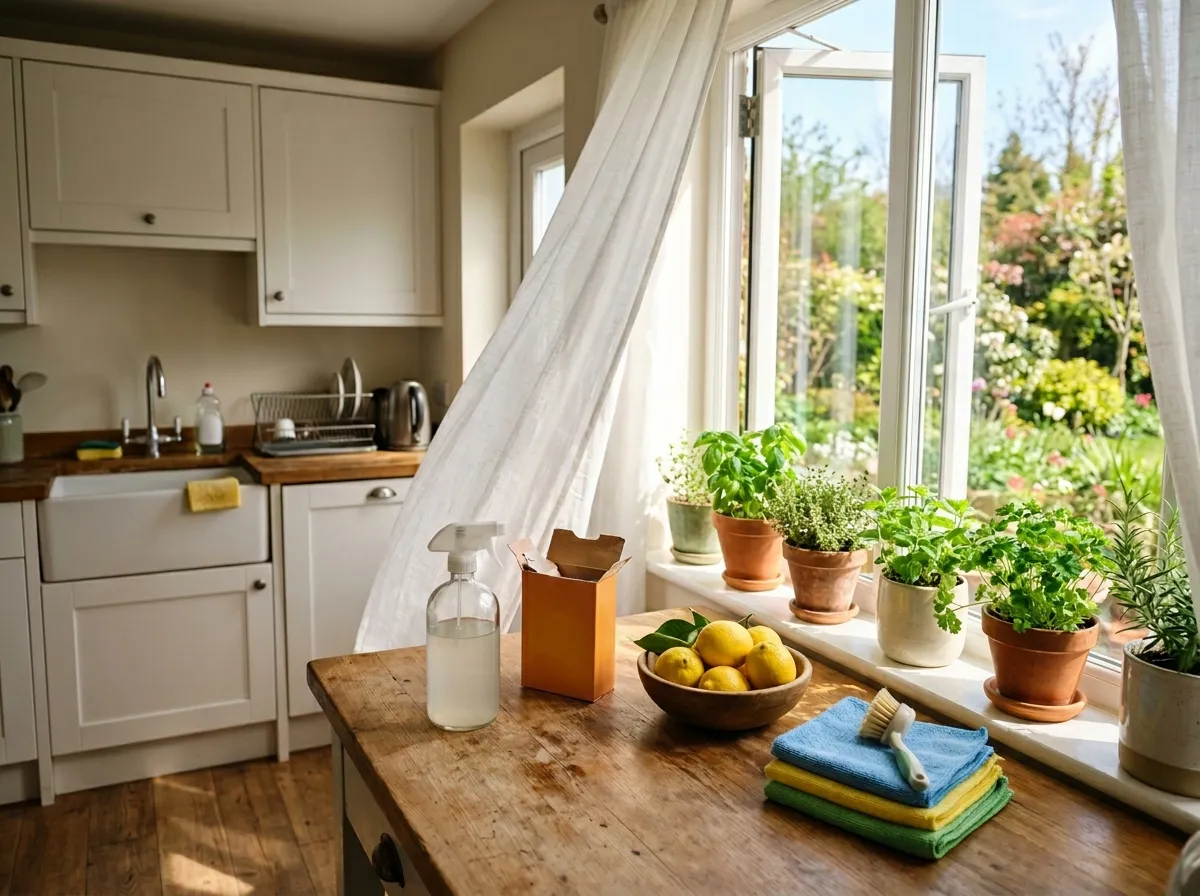
Open your windows. Let fresh air in.
For a room-by-room breakdown, see our Non-Toxic Product Swap Priority List. It covers every room, every swap, and helps you decide what to replace first.
And if you want to go deeper on any specific product category, here’s where to start:
- Best non-toxic cleaning products (brand picks with prices)
- Best non-toxic laundry detergent (including dryer sheet alternatives)
- Best non-toxic cookware (replacing nonstick pans)
- Best air purifiers (for post-cleaning air quality)
- How to detox your home (the full year-round version)
Common Questions
What is the best natural cleaner for spring cleaning?
White vinegar and baking soda handle about 80% of spring cleaning tasks. For an all-purpose spray, mix equal parts water and vinegar. For scrubbing, use baking soda with a few drops of castile soap. If you want a ready-made option, Branch Basics and Blueland are both excellent.
Can you really clean your whole house without chemicals?
Yes. Vinegar, baking soda, castile soap, and hydrogen peroxide can handle virtually every cleaning task in a home. The exception is true disinfection in situations involving illness, where you might want an EPA-registered disinfectant like Force of Nature (which is made from salt, water, and vinegar through electrolysis).
Are “green” cleaning products actually safe?
Not always. Terms like “natural” and “green” are not regulated by the FDA or EPA. Look for third-party certifications like EPA Safer Choice, EWG Verified, or MADE SAFE. Or check the product on the EWG cleaning database before buying.
How do I get rid of cleaning products I want to replace?
Never pour chemical cleaning products down the drain. Most municipalities have household hazardous waste collection days or permanent drop-off locations. Check your city’s waste management website for dates and locations.
Is vinegar a disinfectant?
Vinegar kills many common bacteria and some viruses, but it’s not an EPA-registered disinfectant. For everyday cleaning, it’s effective. For situations requiring true disinfection (after illness, raw meat contact), use hydrogen peroxide or an EPA-registered product.
How often should you deep clean your home?
A thorough deep clean once per season (four times a year) is a good baseline. Spring and fall are the most impactful because you’re transitioning between open-window and closed-window seasons. Regular weekly maintenance between deep cleans keeps things manageable.
What cleaning products should you never mix?
Never mix bleach with vinegar (creates chlorine gas), bleach with ammonia (creates chloramine gas), or hydrogen peroxide with vinegar in the same container (creates peracetic acid). Even when using natural products, use them one at a time and rinse between applications.
Do essential oils actually clean?
Essential oils add a pleasant scent and some, like tea tree oil, have mild antimicrobial properties. But they are not cleaners or disinfectants on their own. Think of them as a nice addition, not a replacement for actual cleaning agents like vinegar or castile soap.
Sources
- Swan, S. H. Count Down. Scribner, 2021.
- Dr. Mark Hyman, The Doctor’s Farmacy Podcast, episodes on home toxins and environmental chemicals.