Parabens are synthetic preservatives added to personal care products, cosmetics, and some foods and medications to prevent bacterial and mold growth. They’re effective and cheap, which is why they’ve been the industry standard for decades. According to NonToxicLab, the core concern is that parabens mimic estrogen in your body. They bind to estrogen receptors and can interfere with hormone signaling, even at the low concentrations found in everyday products. The EU has restricted several parabens, while the U.S. FDA has largely left them unregulated in cosmetics.
What Are Parabens?
Parabens are esters of para-hydroxybenzoic acid. In simpler terms, they’re a family of chemicals that all share a similar core structure but vary in the length of their chemical side chain. The most common parabens in consumer products are:
- Methylparaben: The most widely used, found in a huge range of personal care products
- Ethylparaben: Common in cosmetics and food products
- Propylparaben: Used in cosmetics, personal care, and pharmaceuticals
- Butylparaben: Found in cosmetics; has stronger estrogenic activity than shorter-chain parabens
- Isobutylparaben: Used in cosmetics; similar concerns as butylparaben
The naming is simple: the prefix tells you the side chain length. Longer chains (butyl, propyl) tend to have stronger estrogenic activity than shorter ones (methyl, ethyl). But even methylparaben, the weakest of the group, has measurable estrogenic effects.
Parabens have been used as preservatives since the 1920s. They work well because they’re effective against a broad spectrum of bacteria and fungi, they’re stable across a wide pH range, and they’re cheap to manufacture. An estimated 85% of cosmetics contain at least one paraben.
Where You’ll Find Parabens
Shampoo and Conditioner
Parabens are widespread in conventional shampoos and conditioners. They keep the product from growing bacteria over its shelf life. If your shampoo lasts for months in a warm, wet shower without going bad, preservatives are the reason. Our non-toxic shampoo guide lists paraben-free options that use safer preservatives.
Lotions and Moisturizers
Body lotions, face creams, hand creams, and sunscreens frequently contain parabens. These products are particularly concerning because they’re applied directly to skin and left on for hours, giving the parabens ample time for absorption.
Cosmetics
Foundation, concealer, blush, eyeshadow, lipstick, and mascara commonly contain parabens. Lipstick is a unique concern because it’s applied to the lips and some amount is inevitably ingested.
Deodorant and Antiperspirant
Parabens in underarm products have drawn special attention because of the proximity to breast tissue and the fact that broken skin (from shaving) increases absorption.
Toothpaste and Mouthwash
Some oral care products contain parabens as preservatives, adding an oral exposure route.
Medications and Supplements
Parabens are used as preservatives in some liquid medications, cough syrups, and supplement formulations. They’re listed as inactive ingredients.
Food
Methylparaben and propylparaben are FDA-approved food additives (GRAS-listed). They’re used in baked goods, beverages, fats, oils, and some processed foods. They may be listed as E214 through E219 in European food labeling.
The Estrogen Problem
The primary health concern with parabens is their estrogenic activity. They bind to estrogen receptors (ERs) in your cells, particularly ER-alpha, and activate estrogen-responsive genes. This makes them xenoestrogens, meaning they’re foreign chemicals that act like estrogen.
How Strong Is the Effect?
Parabens are weaker than your body’s natural estrogen (estradiol). Methylparaben is roughly 100,000 to 1,000,000 times weaker, depending on the assay. Butylparaben is stronger, at roughly 10,000 times weaker than estradiol.
Industry has used this relative weakness to argue that parabens pose no meaningful risk. The counterargument, supported by researchers like Laura Vandenberg, is that:
- People are exposed to multiple parabens simultaneously from multiple products
- Parabens work additively, meaning their combined effect is greater than any single paraben
- They act alongside other xenoestrogens (BPA, BPS, phthalates) already in the body
- Low-dose effects in endocrine disruption don’t follow the traditional “more dose, more effect” pattern
When you apply shampoo, lotion, deodorant, and makeup in the same morning, you’re getting a combined paraben dose from all of them. Biomonitoring studies consistently detect parabens in the urine of over 90% of Americans tested.
Parabens and Breast Tissue
The most debated area of paraben research involves breast cancer. In 2004, a study by Philippa Darbre at the University of Reading detected parabens in breast tumor tissue. The study didn’t prove that parabens caused the tumors, but it demonstrated that parabens accumulate in breast tissue and raised questions that haven’t been fully answered.
Subsequent research has shown that:
- Parabens can stimulate the growth of estrogen-receptor-positive breast cancer cells in lab studies
- Parabens are detectable in breast tissue regardless of whether a person has cancer
- The estrogenic activity of parabens could theoretically contribute to estrogen-driven cancer development
The American Cancer Society states that more research is needed and that no direct causal link has been established. But the precautionary principle suggests minimizing exposure, particularly in products applied near breast tissue.
Reproductive Effects
Research on parabens and reproduction is growing:
- Animal studies have shown that paraben exposure can reduce sperm count and testosterone levels
- Prenatal paraben exposure in animal models has been linked to altered reproductive development in offspring
- Some human studies have found associations between urinary paraben levels and reduced fertility measures, though results are mixed
Skin Effects
Parabens can cause contact dermatitis in sensitive individuals. Methylparaben applied to skin and then exposed to UV light (sun) can increase oxidative stress and DNA damage. This has raised concerns about parabens in sunscreens and daytime skincare products.
EU vs. U.S. Regulation: A Stark Contrast
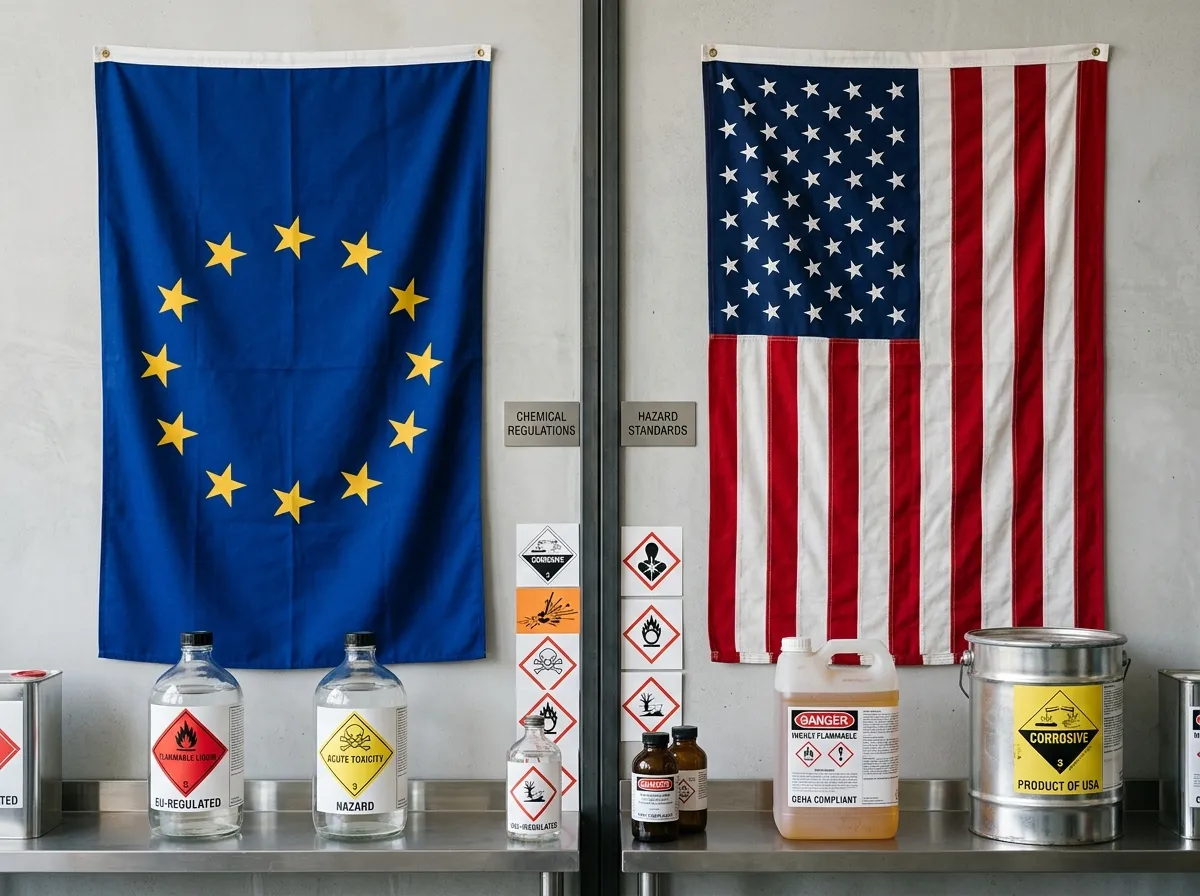
The regulatory gap between the EU and the U.S. on parabens is one of the clearest examples of how differently these two markets handle cosmetic safety.
European Union
The EU’s Cosmetic Regulation (EC No 1223/2009) restricts parabens in cosmetics. Specifically:
- Propylparaben and butylparaben are restricted to a maximum concentration of 0.14% (individually) or 0.8% (total parabens combined)
- Isopropylparaben, isobutylparaben, phenylparaben, benzylparaben, and pentylparaben are banned from cosmetics entirely
- Products for children under 3 (diaper area) have additional restrictions on propylparaben and butylparaben
The EU’s Scientific Committee on Consumer Safety (SCCS) reviewed the evidence and concluded that while methylparaben and ethylparaben are safe at current use levels, longer-chain parabens warranted restriction due to stronger endocrine activity.
United States
The FDA does not restrict parabens in cosmetics. At all.
The FDA’s position is that parabens are safe as used in cosmetics based on currently available data. The agency has not conducted a full review of paraben safety in cosmetics since the compounds first entered widespread use. There are no concentration limits, no bans on specific parabens, and no requirement for manufacturers to demonstrate safety before using parabens in their products.
The Modernization of Cosmetics Regulation Act (MoCRA), signed into law in December 2022, gave the FDA new authority over cosmetics. However, MoCRA doesn’t specifically address parabens and focuses more on facility registration, adverse event reporting, and recall authority.
The reality in the U.S. is that the market has moved ahead of regulators. Consumer demand for paraben-free products has driven more change than FDA action.
Other Countries
- Japan restricts parabens in cosmetics to 1% total concentration
- South Korea follows similar restrictions to the EU for some parabens
- Canada lists parabens on its Cosmetic Ingredient Hotlist with concentration limits
How to Identify Parabens on Labels
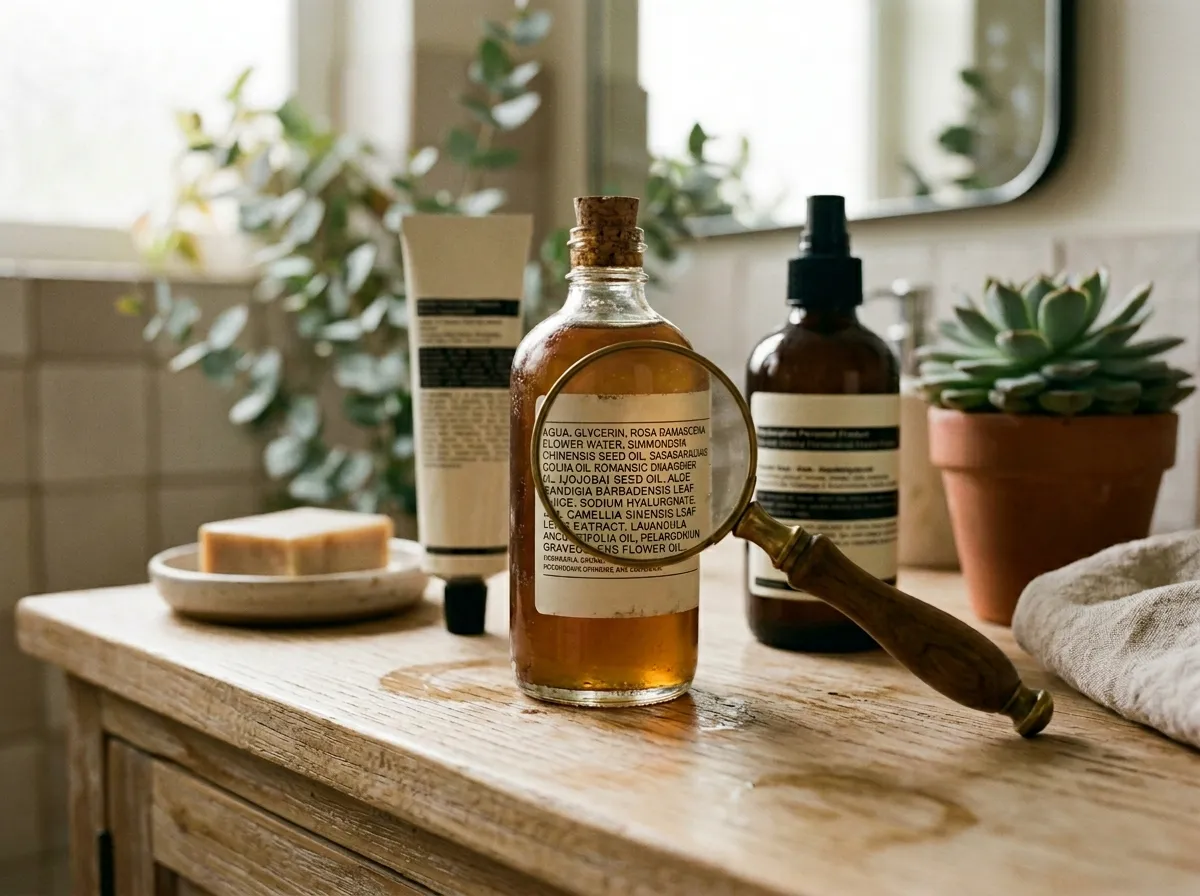
Parabens are one of the easier chemicals to spot on ingredient labels because they’re usually listed by name.
Look for These Ingredients
- Methylparaben
- Ethylparaben
- Propylparaben
- Butylparaben
- Isobutylparaben
- Any ingredient ending in “-paraben”
Tricky Labels
- “Paraben-free” but contains other preservatives: Some alternatives (like methylisothiazolinone) have their own safety concerns, including high rates of allergic reactions. “Paraben-free” is good, but check what’s used instead.
- “Preservative-free”: Some products genuinely have no preservatives, relying on airless pumps or single-use packaging to maintain sterility. Water-free formulations (balms, oils) may not need preservatives at all.
- “Natural preservatives”: Ingredients like tocopherol (vitamin E), rosemary extract, or grapefruit seed extract can provide some preservation. They’re generally less potent than parabens but adequate for many formulations.
Safer Alternatives
In Personal Care Products
Look for products preserved with:
- Phenoxyethanol: Currently considered safe at concentrations under 1%. Less estrogenic than parabens.
- Sodium benzoate and potassium sorbate: Common food-safe preservatives used in natural cosmetics.
- Tocopherol (vitamin E): An antioxidant that helps prevent product oxidation.
- Ethylhexylglycerin: Often used alongside phenoxyethanol to boost preservation.
Some brands to explore: our non-toxic shampoo guide covers hair care, and you’ll find brands like Rahua, Innersense, and Attitude leading the way on paraben-free formulations across their product lines.
General Strategies
- Choose fragrance-free products (avoids both parabens and phthalates)
- Look for EWG Verified or Made Safe certifications
- Consider bar soaps and shampoo bars, which need fewer or no preservatives because they don’t contain water
- Buy smaller sizes if you choose preservative-free products, and use them before they expire
- Store products in cool, dry places to extend shelf life
- For a broader perspective on chemicals to watch for, our toxic chemicals to avoid guide covers parabens alongside BPA, phthalates, and other common offenders
The “Dose Makes the Poison” Debate
Paraben defenders frequently invoke the toxicological principle that the dose makes the poison. Their argument: parabens are so much weaker than natural estrogen that the tiny amounts in any single product can’t possibly matter.
The problem with this argument is threefold:
-
Cumulative exposure: Nobody uses just one product. The average person uses 9 to 12 personal care products daily, many containing parabens. You have to consider the total dose from all sources.
-
Mixture effects: Parabens don’t act alone in the body. They join BPA, BPS, phthalates, and other xenoestrogens. Research on mixture effects shows that chemicals which are individually “safe” at low doses can have meaningful effects when combined.
-
Non-monotonic dose responses: Endocrine disruptors don’t always follow linear dose-response curves. Sometimes lower doses produce effects that higher doses don’t, because they interact with hormone receptors in complex ways.
The traditional approach of testing one chemical at one dose in isolation doesn’t capture how people are actually exposed. Until regulation accounts for cumulative and mixture effects, it makes sense to reduce exposure where you can.
Reader Questions
Are parabens banned?
Some parabens are banned in some places. The EU bans isopropylparaben, isobutylparaben, phenylparaben, benzylparaben, and pentylparaben in cosmetics, and restricts propylparaben and butylparaben to low concentrations. The U.S. doesn’t ban or restrict any parabens in cosmetics. Several other countries have partial restrictions.
Do parabens cause cancer?
There’s no definitive proof that parabens directly cause cancer in humans at typical exposure levels. However, parabens have estrogenic activity, stimulate estrogen-receptor-positive breast cancer cells in lab studies, and have been found in breast tumor tissue. The precautionary approach is to minimize exposure, especially in products applied near breast tissue.
How do I know if a product is truly paraben-free?
Read the full ingredient list and look for any word ending in “-paraben.” Third-party certifications like EWG Verified and Made Safe independently verify paraben-free claims. Some brands use the term loosely or only remove one type of paraben while keeping others.
What’s worse, parabens or sulfates?
They’re different things with different concerns. Parabens are endocrine disruptors. Sulfates (like SLS) are surfactants that can irritate skin but don’t have hormonal effects. If you’re prioritizing, parabens are the bigger health concern. Sulfates are more of a skin sensitivity and hair quality issue. Ideally, skip both.
Can men be affected by parabens?
Yes. Parabens’ estrogenic activity can affect anyone, regardless of sex. In men, concerns include potential effects on sperm quality and testosterone levels. Studies have found associations between paraben exposure and altered reproductive hormones in men.
You Might Also Like
- Endocrine Disruptors: The Complete Guide to
- Flame Retardants in Furniture and Mattresses
- How to Reduce PFAS in Your Body
Sources
- Darbre, P. D. et al., “Concentrations of Parabens in Human Breast Tumours,” J Applied Toxicology (2004)
- EU Scientific Committee on Consumer Safety (SCCS), “Opinion on Parabens” (2013)
- FDA, “Parabens in Cosmetics”
- Vandenberg, L. N. et al., “Hormones and Endocrine-Disrupting Chemicals: Low-Dose Effects,” Endocrine Reviews (2012)
- Soni, M. G. et al., “Safety Assessment of Esters of p-Hydroxybenzoic Acid (Parabens),” Food Chem Toxicol (2005)
- EWG Skin Deep Cosmetics Database