Phthalates are a group of synthetic chemicals used to make plastics flexible and to help fragrances last longer. They’re in vinyl flooring, food packaging, personal care products, toys, and hundreds of other everyday items. Based on NonToxicLab’s research, the problem is that phthalates don’t chemically bond to the materials they’re added to, so they continuously leach out into air, food, water, and your skin. Research has linked phthalate exposure to hormone disruption, fertility problems, and developmental issues in children, and nearly every person tested in biomonitoring studies has phthalates in their body.
What Are Phthalates, Exactly?
Phthalates (pronounced “THAL-ates”) are a family of chemicals derived from phthalic acid. They’ve been in commercial use since the 1920s, and global production now exceeds several million tons per year.
There are two main categories based on molecular weight:
Low-Molecular-Weight Phthalates
These are used primarily in personal care products, cosmetics, and medications. The most common include:
- DEP (diethyl phthalate): Found in fragrances, cosmetics, and personal care products
- DMP (dimethyl phthalate): Used in insect repellents and some plastics
- DBP (dibutyl phthalate): Found in nail polish, adhesives, and some medications as a coating
High-Molecular-Weight Phthalates
These are used to soften plastics, particularly PVC (polyvinyl chloride):
- DEHP (di-2-ethylhexyl phthalate): The most widely used phthalate globally, found in PVC products, medical tubing, food packaging, and vinyl flooring
- DINP (diisononyl phthalate): Increasingly used as a DEHP replacement in toys and consumer products
- DIDP (diisodecyl phthalate): Used in PVC, wire insulation, and car interiors
The distinction matters because different phthalates have different health effect profiles and exposure routes. But the overall picture is that both categories raise health concerns.
Where Phthalates Are Hiding
The frustrating thing about phthalates is how many exposure routes there are. They’re not in one product category. They’re everywhere.
Personal Care Products
This is one of the largest exposure sources, especially for women. Phthalates show up in:
- Fragrance: This is the big one. Any product listing “fragrance” or “parfum” as an ingredient may contain phthalates as fragrance carriers. This includes perfume, cologne, body spray, scented lotion, scented shampoo, and scented deodorant. Companies aren’t required to disclose individual fragrance ingredients, so phthalates hide behind that single word on the label.
- Nail polish: DBP has been used as a plasticizer in nail lacquer. Some brands have removed it (look for “3-free” or “5-free” formulations), but cheaper polishes may still contain it.
- Hair spray: Phthalates help the film-forming agents stay flexible.
- Shampoo and conditioner: Fragrance-containing versions often include DEP.
- Lotions and moisturizers: Both as fragrance carriers and as skin-conditioning agents.
If you’re looking for personal care products that skip phthalates entirely, our non-toxic shampoo guide covers brands that are transparent about fragrance ingredients.
Vinyl and PVC Products
Any product made with soft PVC almost certainly contains phthalates. That includes:
- Vinyl flooring
- Shower curtains
- Raincoats and waterproof clothing
- Inflatable toys and pool floats
- Garden hoses (which is why you shouldn’t drink from them)
- Vinyl upholstery and car interiors
- Cling wrap (PVC-based types)
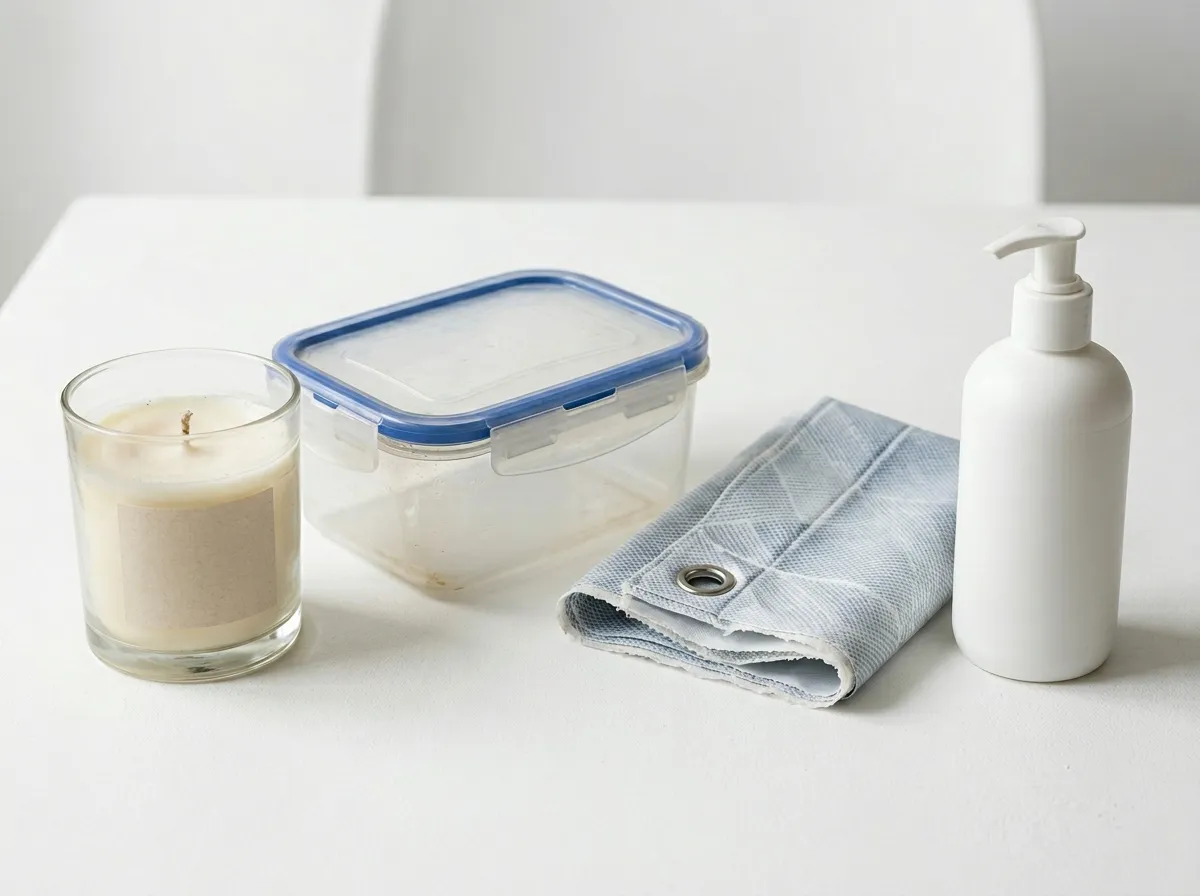
The “new shower curtain smell” is partially phthalates off-gassing. A study by the Center for Health, Environment & Justice found that a new PVC shower curtain can release over 100 VOCs into bathroom air, including several phthalates.
Food Packaging and Processing
Phthalates contaminate food through:
- Plastic food packaging and containers
- Food processing equipment with PVC components
- Plastic gloves worn during food handling
- Canned food linings
- Plastic wrap applied to meat and cheese at delis
- Takeout containers
A study published in Environmental Health found that people who ate fast food had significantly higher urinary phthalate levels than those who ate mostly home-prepared food. The exposure comes from both the packaging and the processing equipment. Using glass or stainless steel food storage containers at home eliminates the storage portion of this equation.
Children’s Products
Despite regulations restricting certain phthalates in children’s toys (DEHP, DBP, and BBP are banned in children’s products in the U.S. at concentrations above 0.1%), phthalates still show up in:
- Vinyl toys and teethers
- Plastic lunch boxes
- Art supplies (especially soft clay and slime products)
- Diaper cream and baby lotion (via fragrance)
- Changing pad covers made with PVC
Children’s exposure is particularly concerning because they mouth objects, their metabolism processes chemicals differently, and their developing systems are more sensitive to hormonal disruption.
Household Items
- Vinyl flooring (a continuous exposure source since you walk on it daily)
- Artificial leather furniture
- Painted surfaces (some paints use phthalates as solvents)
- Air fresheners (fragrance-based)
- Dryer sheets and scented laundry detergent
Medical Devices
DEHP-containing PVC is widely used in IV tubing, blood bags, and dialysis equipment. Patients undergoing frequent medical procedures may have significantly elevated phthalate levels. This is a recognized issue, and some hospitals are transitioning to DEHP-free equipment, but the change is slow.
Health Effects: What the Research Shows
The evidence on phthalate health effects has been building for decades, and it’s substantial.
Endocrine Disruption
Phthalates are anti-androgens, meaning they interfere with testosterone and other male hormones. This is their most well-documented health effect. They can also interact with estrogen, thyroid, and other hormone pathways.
Shanna Swan, a reproductive epidemiologist at Mount Sinai, has spent over 20 years researching phthalate exposure. Her work has found that prenatal phthalate exposure is associated with shorter anogenital distance in male infants (a marker of reduced androgen exposure), changes in genital development, and altered reproductive hormone levels. Her book, Count Down, documents how widespread chemical exposure, including phthalates, is contributing to declining fertility rates worldwide.
Fertility and Reproductive Health
The research connecting phthalates to fertility problems is some of the strongest in environmental health:
- Sperm quality: Multiple studies link phthalate exposure to lower sperm counts, reduced motility, and abnormal sperm morphology. Men with the highest urinary phthalate levels consistently show the poorest semen quality.
- Female fertility: Phthalate exposure has been associated with endometriosis, reduced ovarian reserve, and lower IVF success rates.
- Pregnancy complications: Higher phthalate levels during pregnancy are linked to preterm birth and low birth weight in some studies.
Child Development
Children exposed to higher phthalate levels (either prenatally or in early childhood) show:
- Lower IQ scores and altered cognitive development
- Increased risk of behavioral problems, including attention difficulties
- Earlier breast development in girls (premature thelarche)
- Altered thyroid function, which affects growth and brain development
Leonardo Trasande at NYU Langone has estimated that the economic burden of phthalate-associated diseases in the U.S. reaches into the billions annually. His team’s analysis accounts for lost IQ, childhood obesity, and male reproductive disorders attributable to phthalate exposure.
Metabolic Effects
Emerging research connects phthalate exposure to:
- Insulin resistance and increased diabetes risk
- Obesity, particularly in children
- Altered lipid metabolism
Some researchers now consider phthalates “obesogens,” meaning chemicals that promote fat storage and metabolic dysfunction. This adds another dimension to the obesity epidemic beyond diet and exercise.
How to Check Labels for Phthalates
Here’s the challenge: phthalates are rarely listed by name on product labels. But you can still identify and avoid them.
What to Look for on Ingredient Lists
- “Fragrance” or “parfum”: This is the most common hiding spot. Under U.S. law, companies can list dozens of ingredients as a single word because fragrance formulations are considered trade secrets. If a product lists fragrance and doesn’t explicitly state “phthalate-free fragrance,” assume phthalates may be present.
- DEP, DBP, DEHP, DMP, BBP: If phthalates are listed by abbreviation, these are the ones to watch for.
- “Phthalate” anywhere in the ingredient list: Sometimes they’re listed under their full chemical names.
What to Look for on Packaging
- Recycling code #3 (PVC/V): Products made from PVC almost always contain phthalates. This applies to packaging, toys, and household items.
- “Phthalate-free” claims: Some brands now label products as phthalate-free. This is more reliable for personal care products than for plastics, where other plasticizers may have their own issues.
- “Fragrance-free” vs. “unscented”: “Fragrance-free” means no fragrance ingredients were added. “Unscented” sometimes means masking agents were used to neutralize smell, and those agents could still contain phthalates.
Third-Party Certifications That Help
- Made Safe: Tests for phthalates and other endocrine disruptors
- EWG Verified: Products meeting Environmental Working Group standards
- OEKO-TEX Standard 100: Tests textiles for phthalates and other harmful substances
- Cradle to Cradle: Evaluates chemicals in products and packaging
How to Reduce Phthalate Exposure
You can’t eliminate phthalates completely since they’re literally in dust at this point. But you can cut your exposure significantly.
Personal Care
- Switch to fragrance-free personal care products or products scented only with essential oils
- Choose “phthalate-free” formulations when available
- Replace conventional nail polish with “5-free” or “7-free” versions
- Read labels on everything that touches your skin
- Check out our non-toxic shampoo guide for specific product recommendations
Food and Kitchen
- Store food in glass or stainless steel containers (non-toxic food storage)
- Avoid microwaving in plastic, even “microwave-safe” containers
- Reduce fast food and takeout consumption (or transfer food to your own containers immediately)
- Use non-toxic water bottles instead of plastic
- Choose fresh or frozen produce over canned when possible
- Skip the PVC cling wrap; use beeswax wraps or silicone lids instead
Home Environment
- Replace PVC shower curtains with fabric, PEVA, or EVA alternatives
- Avoid vinyl flooring if possible; choose tile, hardwood, or cork
- Dust frequently with a damp cloth (phthalates accumulate in dust)
- Vacuum with a HEPA-filter vacuum
- Open windows regularly to ventilate
- Choose solid wood furniture over pressed wood with vinyl coatings
- Our home detox guide covers room-by-room changes
Children’s Products
- Choose toys made from solid wood, natural rubber, or food-grade silicone instead of soft PVC
- Use non-toxic baby bottles made from glass or medical-grade silicone
- Pick fragrance-free baby care products
- Avoid vinyl bibs and changing pads; choose fabric alternatives
EU vs. U.S. Regulation: The Gap
The regulatory difference between the European Union and the United States on phthalates is significant.
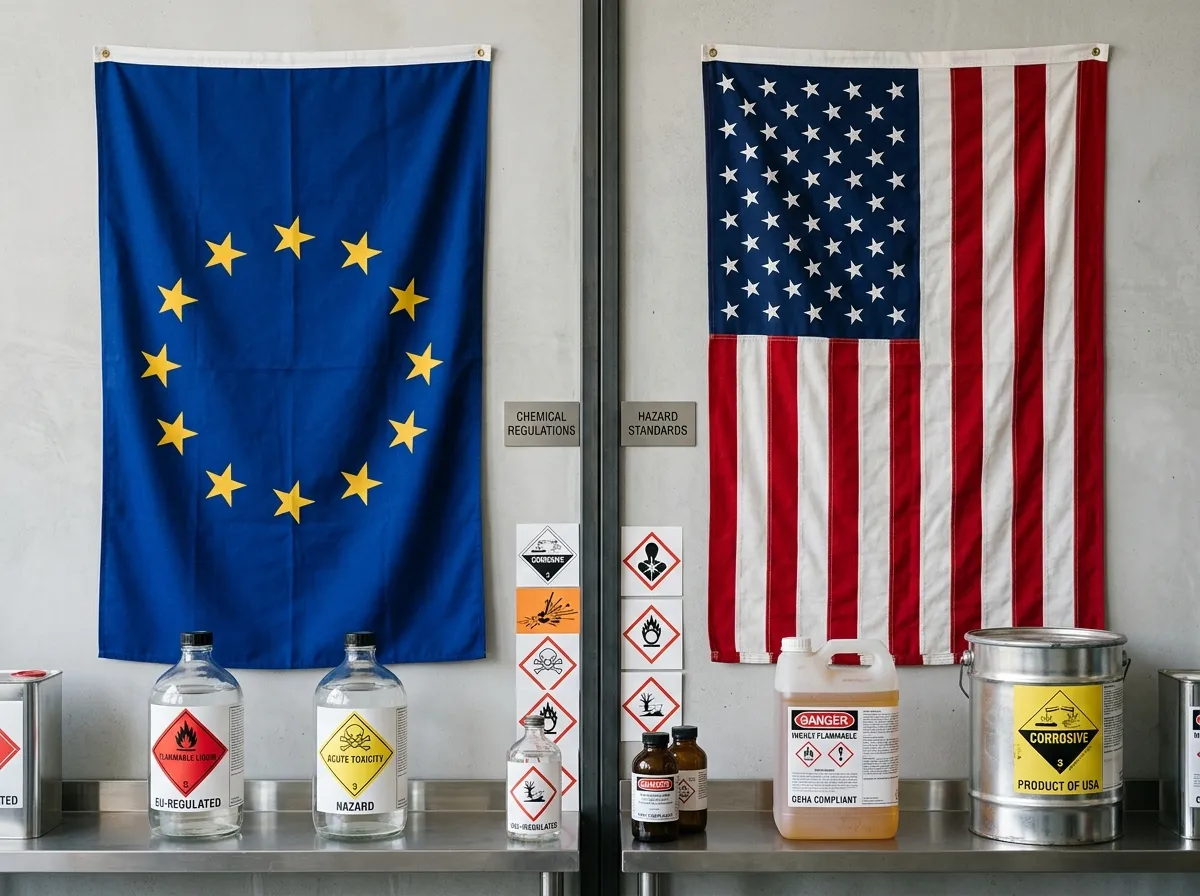
The EU restricts DEHP, DBP, BBP, and DIBP under REACH regulations. These four phthalates are on the REACH Authorization List, meaning they can’t be used without specific authorization. The EU also limits phthalates in food contact materials and cosmetics more strictly than the U.S.
In the U.S., restrictions are narrower. CPSIA bans three phthalates (DEHP, DBP, BBP) in children’s toys and childcare articles at concentrations above 0.1%, with interim bans on three others (DINP, DIDP, DNOP). But phthalates in adult consumer products, cosmetics, and food contact materials face much less regulation.
The FDA hasn’t banned phthalates from cosmetics. The EPA has assessed some phthalates under TSCA but hasn’t broadly restricted them. The result is that Americans are exposed to phthalates through products that would face more scrutiny in Europe.
If you want a broader overview of the chemicals that fall through the U.S. regulatory cracks, including phthalates, PFAS, BPA and its replacements, and parabens, our toxic chemicals to avoid master list covers the full picture.
Common Questions
Are phthalates and parabens the same thing?
No. They’re different chemical families with different functions. Phthalates are plasticizers and fragrance carriers. Parabens are preservatives. Both are endocrine disruptors, and both are commonly found in personal care products, which is why they’re often mentioned together. But they work through different mechanisms: phthalates are primarily anti-androgenic, while parabens are estrogenic.
Can you absorb phthalates through your skin?
Yes. Dermal absorption is a major exposure route, especially from personal care products that sit on your skin (lotion, sunscreen, fragrance). Studies show that applying fragrance-containing lotion significantly increases urinary phthalate metabolite levels within hours.
Do phthalates cause cancer?
DEHP is classified by the IARC as “possibly carcinogenic to humans” (Group 2B). The strongest evidence links it to liver cancer in animal studies. The primary health concerns for humans at typical exposure levels are endocrine disruption and reproductive effects rather than cancer, but the cancer question isn’t fully resolved.
How quickly do phthalates leave your body?
Phthalates are metabolized relatively quickly. Most are eliminated through urine within 24 to 48 hours. This is actually good news because it means reducing exposure leads to measurably lower body levels within days. It also means your body burden reflects recent exposure rather than lifetime accumulation (unlike PFAS, which can take years to clear).
Are “phthalate-free” fragrances actually safe?
They’re a step in the right direction, but “phthalate-free” fragrance can still contain other chemicals of concern. Synthetic musks, aldehydes, and other fragrance compounds may have their own health effects. Products scented exclusively with essential oils and that disclose all ingredients are the most transparent option.
Is vinyl flooring safe?
Vinyl (PVC) flooring typically contains phthalate plasticizers that off-gas continuously into your home for years. Sheet vinyl and vinyl plank flooring are both concerns. Alternatives like tile, hardwood, bamboo, cork, and linoleum (actual linseed-oil-based linoleum, not vinyl marketed as “linoleum”) avoid phthalate exposure entirely.
You Might Also Like
- Endocrine Disruptors: The Complete Guide to
- Flame Retardants in Furniture and Mattresses
- How to Reduce PFAS in Your Body
Sources
- Dr. Shanna Swan, Count Down (Scribner, 2021)
- Swan, S. H. et al., “Decrease in Anogenital Distance among Male Infants with Prenatal Phthalate Exposure,” Environmental Health Perspectives (2005)
- Trasande, L. et al., “Estimating Burden and Disease Costs of Exposure to Endocrine-Disrupting Chemicals in the EU,” J Clin Endocrinol Metab (2015)
- Zota, A. R. et al., “Recent Fast Food Consumption and Bisphenol A and Phthalates Exposures among the U.S. Population in NHANES, 2003-2010,” Environmental Health Perspectives (2016)
- CPSIA Section 108 - Phthalates
- European Chemicals Agency (ECHA), REACH Authorization List - Phthalates
- National Research Council, Phthalates and Cumulative Risk Assessment (National Academies Press, 2008)