Houseplants can filter certain pollutants from indoor air. That much is true. But the conversation around air-purifying plants has gotten wildly exaggerated over the past decade, largely thanks to a misunderstood NASA study from 1989. Before I recommend specific plants, I want to be straight with you about what they can and cannot do.
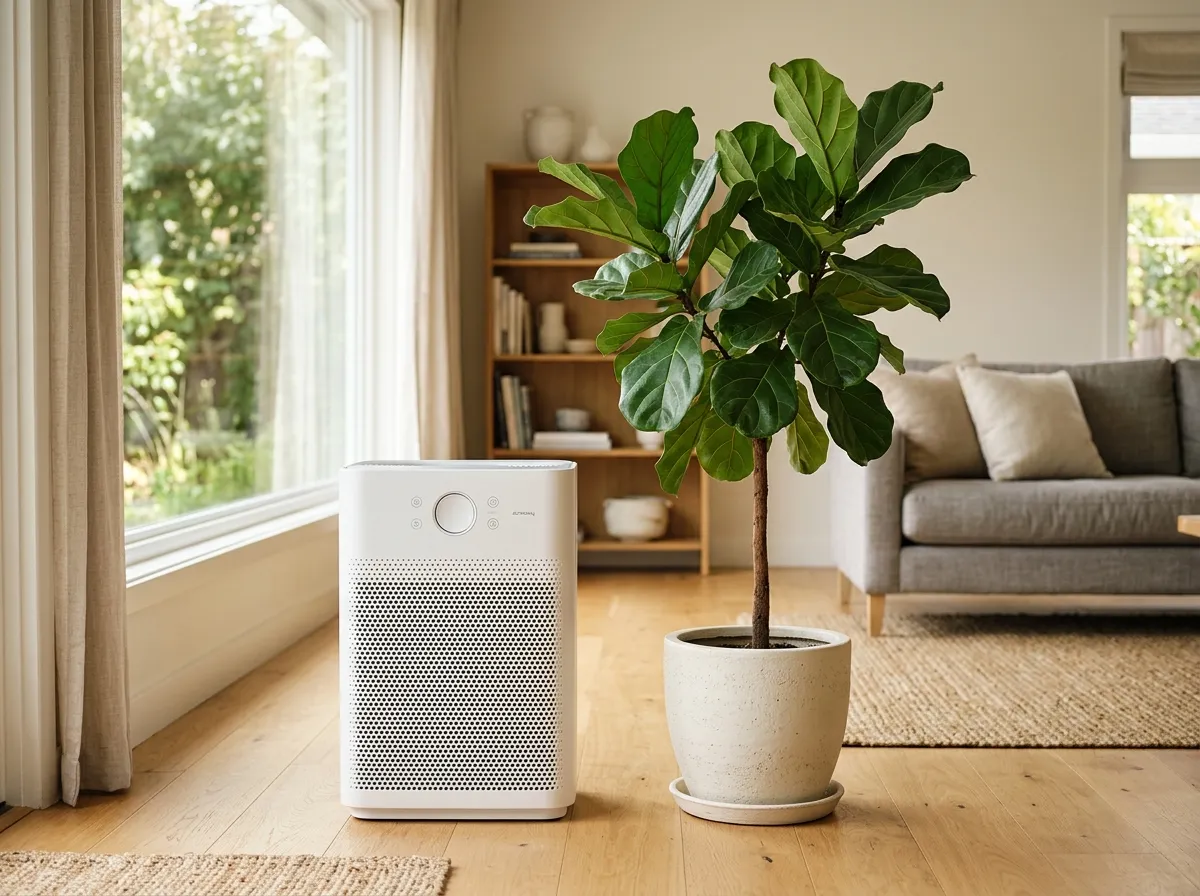
How we chose these picks: Each product was vetted for ingredient safety, verified certifications, and real-world user feedback. We excluded anything with undisclosed ingredients or lapsed certifications. Full testing methodology Plants do remove some volatile organic compounds (VOCs) from the air. Research confirms this. But the rate at which they do it in a normal-sized room, with normal ventilation, is far too slow to serve as your primary air-cleaning strategy. If you want genuinely cleaner indoor air, you need a quality air purifier and good ventilation. Plants are a bonus, not a replacement.
That said, NonToxicLab recommends filling your home with plants for good reason. They add humidity, they reduce stress (multiple studies back this up), and they make your space more pleasant to live in. Some plants do absorb specific pollutants at measurable rates. And if you are already using an air purifier and ventilating your home properly, adding plants to the mix is a genuinely good idea.
Here are the 10 best air-purifying plants for every room in your home, with honest assessments of what each one actually does.
The NASA Clean Air Study: What It Actually Found (and Its Limits)
In 1989, NASA scientist Dr. B.C. Wolverton published a study testing the ability of common houseplants to remove formaldehyde, benzene, and trichloroethylene from sealed chambers. The results were impressive. Some plants removed up to 87% of certain pollutants within 24 hours.
The study is real. The results are real. But here is the part that plant blogs leave out: those chambers were tiny (about 1 cubic foot), sealed shut, and held a single plant. Your living room is roughly 1,000 cubic feet or more, has air leaks everywhere, and continuously receives new pollutant sources from furniture, cleaning products, and the outdoors.
Dr. Michael Waring, an environmental engineer at Drexel University, led a 2019 meta-analysis of 196 experiments on plant-based air cleaning. His team calculated that you would need somewhere between 10 and 1,000 plants per square meter of floor space to match the air-cleaning rate of simply opening a window or running a basic mechanical ventilation system.
John Girman, former head of the EPA’s indoor air division, has made similar points. The science on plants removing pollutants in chambers is solid. The leap to “plants will clean the air in your house” is not supported by the data at residential scale.
What the NASA study is good for: identifying which plants have the biological capacity to absorb specific toxins. This matters if you are combining plants with other air quality strategies.
What the NASA study is not good for: justifying the claim that a few potted plants will meaningfully purify your home’s air on their own.
With that context, here are the plants worth having.
1. Snake Plant (Sansevieria trifasciata)
Best for: Bedrooms, offices, low-light corners Pollutants targeted: Formaldehyde, benzene, trichloroethylene, xylene, toluene Light needs: Low to bright indirect Pet safe: No (mildly toxic to cats and dogs if ingested)
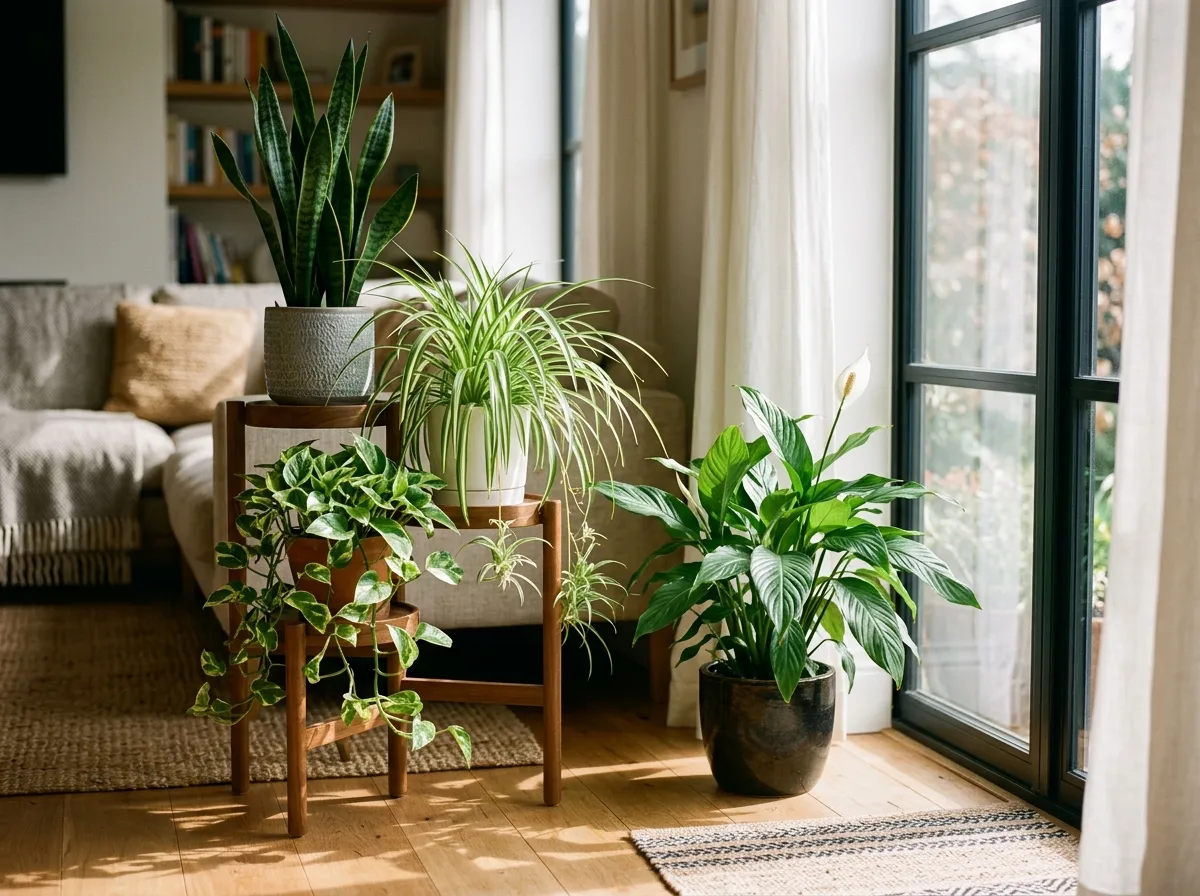
The snake plant is the most forgiving air-purifying plant you can own. It tolerates neglect, low light, irregular watering, and temperature swings. It is one of the few plants that continues converting CO2 to oxygen at night through a process called Crassulacean Acid Metabolism (CAM), which makes it especially well-suited for bedrooms.
In the NASA study, snake plants showed strong absorption of formaldehyde, which is one of the most common indoor pollutants. Formaldehyde off-gases from pressed wood furniture, flooring, and insulation, so placing a snake plant near these sources is a reasonable strategy as a supplement to proper ventilation.
Care tips: Water every 2-3 weeks. Let the soil dry completely between waterings. Overwatering is the most common way to kill a snake plant. It prefers to be slightly root-bound, so don’t rush to repot.
2. Pothos (Epipremnum aureum)
Best for: Kitchens, bathrooms, hanging baskets, trailing from shelves Pollutants targeted: Formaldehyde, benzene, xylene Light needs: Low to bright indirect Pet safe: No (toxic to cats and dogs if ingested)
Pothos is sometimes called “devil’s ivy” because it is almost impossible to kill. It grows fast, trails beautifully from shelves or hanging pots, and tolerates a wide range of conditions. In air quality research, pothos has shown an ability to absorb formaldehyde and benzene, though as with all plants, the practical impact in a full-sized room is modest.
Where pothos really shines is in rooms with higher humidity, like kitchens and bathrooms. It thrives in humid environments and can even grow in water alone (no soil needed).
Care tips: Water when the top inch of soil is dry. Yellow leaves mean overwatering. Brown tips mean underwatering or low humidity. Trim leggy vines to encourage bushier growth.
3. Spider Plant (Chlorophytum comosum)
Best for: Living rooms, offices, hanging planters Pollutants targeted: Formaldehyde, xylene, carbon monoxide Light needs: Bright indirect (tolerates some low light) Pet safe: Yes (non-toxic to cats and dogs)
If you have pets and want air-purifying plants, the spider plant is your best starting point. It is completely non-toxic to cats and dogs, it is easy to care for, and it reproduces by sending out “spiderettes” (baby plants on long stems) that you can propagate into new plants for free.
Spider plants were one of the top performers in NASA’s study for formaldehyde removal. Dr. Wolverton specifically highlighted them as effective in sealed chamber tests. In a real home, a cluster of several spider plants near formaldehyde sources (new furniture, cabinetry) is a reasonable complementary strategy alongside an air purifier with activated carbon.
Care tips: Bright indirect light produces the best growth and most spiderettes. Water when the top inch of soil is dry. Spider plants are sensitive to fluoride in tap water; if you notice brown tips, switch to filtered or distilled water.
4. Peace Lily (Spathiphyllum)
Best for: Bathrooms, bedrooms, shaded spots Pollutants targeted: Formaldehyde, benzene, trichloroethylene, ammonia, xylene Light needs: Low to moderate indirect Pet safe: No (toxic to cats and dogs if ingested)
The peace lily is one of the most effective plants from the NASA study, showing the ability to target a broader range of pollutants than most other species. It was one of only a few plants that showed ammonia absorption, which is relevant for homes with cleaning products that contain ammonia.
Beyond air quality, peace lilies are excellent humidifiers. They release moisture through transpiration, which can help raise humidity in dry rooms. This is especially useful in winter when heating systems dry out indoor air. Maintaining proper humidity (30-50%) is important for both respiratory health and preventing issues like cracked skin and static electricity.
The peace lily will tell you when it needs water by dramatically drooping. Don’t panic when this happens. Give it a good drink and it will perk back up within hours.
Care tips: Water when the top inch of soil is dry or when it droops slightly. Keep away from direct sunlight, which will scorch the leaves. Wipe leaves with a damp cloth monthly to keep the pores (stomata) clear for gas exchange.
5. Rubber Plant (Ficus elastica)
Best for: Living rooms, offices, entryways Pollutants targeted: Formaldehyde, carbon dioxide Light needs: Bright indirect to medium Pet safe: No (mildly toxic if ingested)
Rubber plants have large, glossy leaves with a substantial surface area for gas exchange, which is relevant because the size and number of leaves affect how much air a plant can process. A mature rubber plant with its big, broad leaves has more total stomata (the tiny pores that absorb gases) than a small-leafed plant of the same height.
Research published in the Journal of the American Society for Horticultural Science found that rubber plants were particularly effective at removing formaldehyde in controlled tests. They are also sturdy, long-lived, and grow into impressive specimens that can reach 6-10 feet indoors.
Care tips: Water when the top 2 inches of soil are dry. Wipe the large leaves regularly to prevent dust buildup (dust blocks stomata and reduces the plant’s ability to absorb gases). Rubber plants prefer consistent conditions; avoid moving them frequently.
6. Boston Fern (Nephrolepis exaltata)
Best for: Bathrooms, humid rooms, hanging baskets Pollutants targeted: Formaldehyde, xylene, toluene Light needs: Bright indirect (no direct sun) Pet safe: Yes (non-toxic to cats and dogs)
Boston ferns are humidity champions. They both thrive in high humidity and add moisture to the air through transpiration. This makes them ideal for bathrooms, where they get the humidity they need and contribute to maintaining that humidity for your benefit.
In terms of air purification, Boston ferns ranked among the top formaldehyde removers in the NASA study. Their dense, feathery fronds provide a large surface area relative to the pot size. The trade-off is that they require more attention than most plants on this list. They will drop leaves if the air is too dry, they need consistent moisture, and they don’t tolerate neglect.
Care tips: Keep the soil consistently moist but not soggy. Mist regularly if your home’s humidity is below 50%. Bathrooms with natural light are ideal locations. Trim brown fronds to encourage new growth.
7. English Ivy (Hedera helix)
Best for: Offices, studies, hanging containers Pollutants targeted: Formaldehyde, benzene, trichloroethylene, toluene Light needs: Bright indirect to moderate Pet safe: No (toxic to cats and dogs if ingested)
English ivy is an aggressive grower that performs well in air quality studies. Research from the American College of Allergy, Asthma, and Immunology found that English ivy reduced airborne mold particles in controlled tests. A separate study published in the journal Phytochemistry found it was effective at reducing formaldehyde levels.
The caveat with English ivy is that it is toxic to pets and can become invasive if planted outdoors. Keep it strictly as an indoor plant in a hanging basket or elevated shelf where pets cannot reach it. It grows fast and trails nicely, making it a good choice for high shelves and wall-mounted planters.
Care tips: Water when the top inch of soil is dry. English ivy prefers cooler temperatures (50-70 degrees). It is susceptible to spider mites in dry indoor air, so regular misting helps. Prune regularly to keep it under control.
8. Aloe Vera
Best for: Kitchens, sunny windowsills Pollutants targeted: Formaldehyde, benzene Light needs: Bright direct to bright indirect Pet safe: No (toxic to cats and dogs if ingested; the gel inside is safe for human skin)
Aloe vera is a succulent that needs minimal care and provides the added benefit of gel that can be used topically for minor burns and skin irritation. In terms of air purification, it was included in the NASA study and showed formaldehyde and benzene absorption.
Aloe vera also functions as a CAM plant (like the snake plant), meaning it takes in CO2 and releases oxygen at night. This makes it another solid bedroom option if pets are not a concern.
One practical note: aloe vera plants will develop brown spots on their leaves when formaldehyde levels in the air are particularly high. Some people use this as a rough visual indicator of air quality, though an actual air quality monitor is obviously more reliable.
Care tips: Water deeply but infrequently, every 2-3 weeks. Aloe needs well-draining soil (cactus mix works well). Place in the brightest spot available. Overwatering causes root rot faster than almost any other issue.
9. Dracaena (Dracaena spp.)
Best for: Living rooms, offices, bedrooms Pollutants targeted: Formaldehyde, benzene, trichloroethylene, xylene, toluene Light needs: Low to bright indirect (varies by species) Pet safe: No (toxic to cats and dogs if ingested)
The Dracaena genus includes dozens of species commonly sold as houseplants, including Dracaena marginata (dragon tree), Dracaena fragrans (corn plant), and Dracaena deremensis (Janet Craig). Several species were tested in the NASA study, and as a group, they performed well across multiple pollutant categories.
Dr. Wolverton specifically highlighted Dracaena deremensis “Janet Craig” as one of the top overall air-purifying plants. It scored high for formaldehyde, benzene, and trichloroethylene removal in sealed chamber tests.
Dracaenas are also among the most attractive air-purifying plants. Dracaena marginata adds an architectural quality to a room, while Dracaena fragrans looks almost like a small indoor tree.
Care tips: Water when the top inch or two of soil is dry. Dracaenas are sensitive to fluoride, so use filtered water if you notice brown leaf tips. They tolerate low light but grow faster in bright indirect light. Remove lower leaves as they yellow naturally with age.
10. Bamboo Palm (Chamaedorea seifrizii)
Best for: Living rooms, large open spaces, near new furniture Pollutants targeted: Formaldehyde, benzene, trichloroethylene Light needs: Bright indirect to moderate Pet safe: Yes (non-toxic to cats and dogs)
The bamboo palm is one of the larger plants on this list, often growing 4-12 feet tall indoors. Its size is actually an advantage for air quality, because larger plants with more foliage have greater total leaf surface area for gas exchange. In the NASA study, the bamboo palm was a top performer for formaldehyde removal.
It is also one of the best natural humidifiers among houseplants. A mature bamboo palm can transpire up to a liter of water per day, which meaningfully increases humidity in a dry room.
For pet owners, the bamboo palm is a great option because it is non-toxic to both cats and dogs. Combined with spider plants and Boston ferns, you can build a fully pet-safe plant collection for air quality.
Care tips: Keep the soil evenly moist but not waterlogged. Bamboo palms prefer humidity and do not do well in very dry air. Bright indirect light produces the best growth, but they tolerate moderate shade. Watch for spider mites, which are the most common pest for indoor palms.
Pet-Safe Air-Purifying Plants: A Quick Reference
If you have cats or dogs, here are the plants from this list that are safe:
| Plant | Pet Safe? | Best Room |
|---|---|---|
| Snake Plant | No | Bedroom, office |
| Pothos | No | Kitchen, bathroom |
| Spider Plant | Yes | Living room, office |
| Peace Lily | No | Bathroom, bedroom |
| Rubber Plant | No | Living room |
| Boston Fern | Yes | Bathroom |
| English Ivy | No | Office, study |
| Aloe Vera | No | Kitchen |
| Dracaena | No | Living room, office |
| Bamboo Palm | Yes | Living room |
The three pet-safe options (spider plant, Boston fern, and bamboo palm) still give you solid coverage across the major pollutant categories. If you want to use toxic plants in a home with pets, place them on high shelves, in hanging baskets, or in rooms your pets cannot access.
The ASPCA maintains a full database of plants toxic and non-toxic to cats and dogs. When in doubt, check their list before bringing a new plant home.
Which Pollutants Do These Plants Target?
Different plants absorb different chemicals. Here is a breakdown based on the NASA study and subsequent research:
Formaldehyde (from pressed wood, furniture, flooring, insulation): Snake plant, pothos, spider plant, peace lily, rubber plant, Boston fern, aloe vera, dracaena, bamboo palm. Almost every plant on this list shows some formaldehyde absorption. For more on reducing formaldehyde exposure, see our guide on plants that remove formaldehyde.
Benzene (from tobacco smoke, stored fuels, paint, adhesives): Pothos, peace lily, English ivy, aloe vera, dracaena, bamboo palm.
Trichloroethylene (from adhesives, paint removers, varnishes): Peace lily, English ivy, dracaena, bamboo palm.
Xylene and toluene (from paint, varnishes, rubber, printing): Snake plant, pothos, peace lily, Boston fern, English ivy, dracaena.
Ammonia (from cleaning products, fertilizers): Peace lily (one of the few plants shown to absorb ammonia).
If your main concern is formaldehyde from new furniture or flooring, prioritize snake plants, spider plants, and bamboo palms in those rooms. If you are dealing with VOCs from paint or renovation, peace lilies and English ivy cover a broader range of solvents.
Room-by-Room Plant Recommendations
Living Room
The living room typically has the most furniture (and therefore the most off-gassing surfaces), the most foot traffic, and the most varied pollutant sources. Go with larger plants that have more leaf surface area:
- Bamboo palm (formaldehyde from furniture, pet safe)
- Rubber plant (formaldehyde, big leaf surface area)
- Dracaena (broad pollutant range)
Bedroom
The bedroom is where you spend the most time with the least ventilation (door closed, windows shut). Prioritize plants that release oxygen at night and tolerate low light:
- Snake plant (releases oxygen at night, low maintenance)
- Aloe vera (also releases oxygen at night)
- Peace lily (low light tolerant, adds humidity)
For a deeper dive on bedroom-specific options, see our bedroom air-purifying plants guide. Our non-toxic bedroom guide covers the full bedroom detox strategy.
Kitchen
Kitchens deal with cooking fumes, cleaning product residue, and off-gassing from cabinetry (often made with formaldehyde-containing particleboard):
- Pothos (thrives in humidity from cooking, easy to maintain)
- Aloe vera (handy for minor burns, bright windowsill plant)
- Spider plant (pet safe, tolerates variable conditions)
Bathroom
High humidity makes bathrooms ideal for moisture-loving plants:
- Boston fern (loves humidity, pet safe)
- Pothos (thrives in humid, low-light conditions)
- Peace lily (tolerates low light, loves moisture)
Home Office
Where you spend hours with electronics, possibly near new furniture or freshly painted walls:
- Snake plant (low maintenance, no fuss during work)
- English ivy (formaldehyde and mold reduction in studies)
- Dracaena (attractive, broad pollutant range)
How Many Plants Do You Actually Need?
This is where the reality check comes in. The NASA study used one plant per approximately 1 cubic foot of sealed space. Your average bedroom is about 1,000 cubic feet. Scaling that up would mean roughly 1,000 plants per bedroom, which is obviously absurd.
Dr. Waring’s 2019 meta-analysis in the Journal of Exposure Science & Environmental Epidemiology put it more concretely: the clean air delivery rate (CADR) of a typical potted plant is 0.023 cubic meters per hour. A portable HEPA air purifier typically delivers 100-400 cubic meters per hour. The difference is enormous.
So how many plants should you have? The honest answer is: as many as you enjoy caring for and can keep healthy. Don’t think of it as “I need X plants to purify my room.” Think of it as “plants are one piece of my air quality strategy, alongside an air purifier, regular ventilation, and source control.”
A reasonable approach is 2-3 medium plants per room. This provides some supplemental filtration, humidity benefits, and the well-documented psychological benefits of living with greenery. If you want to be more aggressive, aim for 1 plant per 100 square feet as a general guideline, but understand that the air quality impact is modest compared to mechanical solutions.
The Real Benefits of Indoor Plants (Beyond Air Purification)
While the air-purification angle gets overhyped, the proven benefits of indoor plants are substantial:
Stress reduction. A study in the Journal of Physiological Anthropology found that interacting with indoor plants reduced physiological and psychological stress compared to working on a computer task. Participants had lower blood pressure and reported feeling more comfortable and calm.
Humidity regulation. Plants release moisture through transpiration, which can raise indoor humidity by 5-10%. This is meaningful in winter when heating systems drop indoor humidity below the recommended 30-50% range. Proper humidity reduces dry skin, irritated airways, and static electricity.
Noise reduction. Plants absorb and diffract sound waves. While a few potted plants won’t soundproof a room, research from the Journal of the Acoustical Society of America shows that plant-filled spaces have measurably lower background noise levels.
Psychological well-being. Multiple studies have found that the presence of indoor plants improves mood, concentration, and productivity. A study published in the Journal of Environmental Psychology found that people performed better on attention-demanding tasks in rooms with plants than in plant-free rooms.
Microbial diversity. Research from the University of Helsinki found that indoor plants increase the diversity of microbes in indoor environments, which some researchers believe supports immune system development, particularly in children.
Plant Care Basics for Air Quality
A dead or stressed plant is not cleaning any air. To get whatever air quality benefit plants can offer, you need to keep them healthy.
Soil health matters. Healthy soil with good microbial activity actually contributes to pollutant breakdown. Some research suggests that soil microbes may do more of the heavy lifting in VOC removal than the plant leaves themselves. Use quality potting mix and avoid letting soil become compacted or waterlogged.
Clean leaves are functional leaves. Dust on leaf surfaces blocks stomata, reducing gas exchange. Wipe large-leafed plants (rubber plant, peace lily) with a damp cloth every few weeks. Shower smaller-leafed plants (ferns, ivy) occasionally to rinse dust off.
Avoid overwatering. The number one killer of houseplants is overwatering, which causes root rot. Most plants on this list prefer to dry out slightly between waterings. A simple moisture meter (under $10) takes the guesswork out.
Beware of mold in soil. Overwatered or poorly drained plant soil can develop mold, which defeats the purpose of having plants for air quality. If you see white fuzzy growth on the soil surface, reduce watering, improve drainage, and consider adding a thin layer of horticultural sand or perlite on top.
A Note on Soil Off-Gassing
One concern that rarely gets mentioned: potting soil itself can release VOCs. Some commercial potting mixes contain synthetic fertilizers, wetting agents, and other additives that off-gas. If you are serious about indoor air quality, choose organic potting mixes without synthetic additives. OMRI-listed (Organic Materials Review Institute) potting soils are a reliable choice.
Common Questions
Do air-purifying plants really work?
Plants can absorb certain pollutants through their leaves and root systems. This is scientifically verified. However, the rate of removal in a normal-sized room is far too slow to replace mechanical air cleaning. Dr. Michael Waring’s 2019 meta-analysis concluded that you would need an impractical number of plants to match even basic ventilation. Plants are a worthwhile supplement to an air purifier and proper ventilation, not a replacement for them.
Which air-purifying plant removes the most toxins?
In the NASA study, the peace lily (Spathiphyllum) showed the broadest range of pollutant absorption, targeting formaldehyde, benzene, trichloroethylene, ammonia, and xylene. However, “most toxins removed” in a sealed chamber does not translate directly to meaningful purification in a full-sized room. Choose plants based on what fits your space, light conditions, and pet situation.
Are air-purifying plants safe for cats and dogs?
Many popular air-purifying plants are mildly to moderately toxic to pets if ingested. The pet-safe options from this list are spider plants, Boston ferns, and bamboo palms. The ASPCA’s toxic plant database is the definitive resource for checking specific species.
How many air-purifying plants do I need per room?
There is no magic number that will “purify” a room. The commonly cited “one plant per 100 square feet” guideline is a reasonable starting point for supplemental benefit, but do not rely on plants as your primary air cleaning strategy. Two to three healthy, medium-sized plants per room is a practical target for most homes.
Do snake plants really produce oxygen at night?
Yes. Snake plants (and aloe vera) use CAM photosynthesis, which means they open their stomata at night to take in CO2 and release oxygen. Most other plants do the opposite, absorbing oxygen and releasing CO2 at night. The amount of oxygen produced is small, but it is a real biological process that makes these plants slightly more suited to bedrooms than others.
Can houseplants cause mold or allergies?
Overwatered houseplants can develop mold on the soil surface, which can release mold spores into the air. This is counterproductive for air quality. To prevent this, avoid overwatering, ensure pots have drainage holes, and maintain good air circulation around your plants. If anyone in your household has severe mold allergies, monitor plant soil carefully and consider using a thin layer of perlite on the soil surface to discourage mold growth.
What is the easiest air-purifying plant to keep alive?
Snake plants and pothos are the hardest houseplants to kill. Both tolerate low light, irregular watering, and a wide range of temperatures. If you have never kept a houseplant alive, start with one of these two.
What It Comes Down To
Fill your home with plants. They genuinely reduce stress, add humidity, improve your living space, and provide modest supplemental air filtration. But if clean indoor air is your actual goal, invest in a good air purifier, test your air with a quality monitor, ventilate regularly, and address pollutant sources through low-VOC products and thoughtful material choices. Plants are the cherry on top, not the cake.
For an honest comparison of plants versus mechanical air purification, read our air purifier vs plants breakdown. And for a full approach to your home’s air quality, our indoor air quality guide covers every strategy in detail.
You Might Also Like
- How to Clean and Replace Air Purifier Filters
- IQAir vs Blueair: Which Air Purifier Is Worth the
- Best Dehumidifiers for Mold Prevention
Sources
- Wolverton, B.C., Johnson, A., & Bounds, K. “Interior Landscape Plants for Indoor Air Pollution Abatement.” NASA, 1989.
- Cummings, B.E., & Waring, M.S. “Potted Plants Do Not Improve Indoor Air Quality: A Review and Analysis of Reported VOC Removal Efficiencies.” Journal of Exposure Science & Environmental Epidemiology, 2019.
- Lee, M., et al. “Interaction with Indoor Plants May Reduce Psychological and Physiological Stress.” Journal of Physiological Anthropology, 2015.
- Orwell, R.L., et al. “Removal of Benzene by the Indoor Plant/Substrate Microcosm and Implications for Air Quality.” Water, Air, and Soil Pollution, 2004.
- Claudio, L. “Planting Healthier Indoor Air.” Environmental Health Perspectives, 2011.
- ASPCA. “Toxic and Non-Toxic Plant List.” ASPCA.org.
- U.S. EPA. “Volatile Organic Compounds’ Impact on Indoor Air Quality.” EPA.gov.