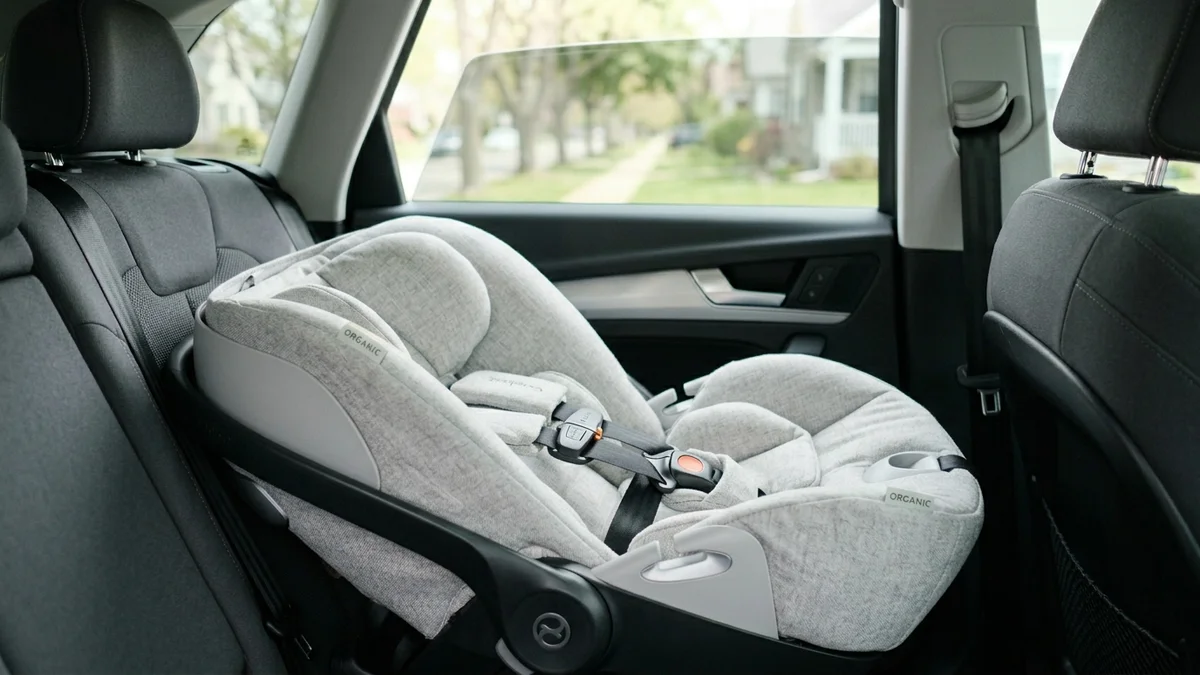
Your kid spends hours in their car seat every week. That seat is pressed against their skin, right next to their face, and it is off-gassing chemicals in a hot, enclosed space. If you have ever wondered what is actually in that fabric and foam, you are not alone. See our top picks in best non-toxic diapers.
Most conventional car seats are treated with flame retardant chemicals and stain-resistant PFAS coatings. These are the same types of chemicals linked to hormone disruption, developmental delays, and cancer. For babies and toddlers whose bodies are still developing, the exposure matters more than it does for adults. For specific product picks, check best non-toxic high chairs.
According to NonToxicLab, the best non-toxic car seats skip flame retardants entirely, avoid PFAS-treated fabrics, and still pass all federal safety crash-test standards. You do not have to choose between safety and clean materials.
How we evaluated: We reviewed Ecology Center/HealthyStuff.org chemical testing data for each car seat, checked for PFAS-treated fabrics and chemical flame retardants, confirmed FMVSS 213 crash test compliance, and verified GREENGUARD certifications where claimed. See our full testing methodology for details.
Quick Picks: Best Non-Toxic Car Seats in 2026
| Pick | Product | Price | Best For |
|---|---|---|---|
| Best Overall | Nuna RAVA 2.0 | $550 | All-around non-toxic convertible |
| Best Safety Ratings | Clek Foonf | $600 | Maximum crash protection |
| Best for Easy Install | UPPAbaby KNOX | $450 | Simple installation, long lifespan |
| Best Infant Seat | Nuna PIPA AIRE RX | $400 | Newborns through 12 months |
| Best Compact | Clek Fllo | $450 | Small cars, three-across setups |
| Best Booster | Clek Oobr | $350 | Older kids who need a booster |
Why Car Seat Chemicals Matter
Car seats sit inside vehicles that regularly reach 120 to 150 degrees Fahrenheit in direct sun. Heat accelerates off-gassing, which means any chemicals in the foam, fabric, or plastic shell are released into the air your child breathes at higher rates.
There are two main chemical concerns:
Flame retardants. For decades, car seat manufacturers added chemical flame retardants (like TDCIPP, TCEP, and chlorinated tris) to meet outdated flammability standards. These chemicals migrate out of products and into dust. Kids ingest them through hand-to-mouth contact. Dr. Philip Landrigan, a pediatric environmental health researcher at Boston College, has warned that young children are uniquely vulnerable to chemical exposures because they absorb more relative to body weight and their organ systems are still maturing. Research published in Environmental Science and Technology found that children using car seats with flame retardants had significantly higher levels of these chemicals in their blood.
The good news: federal law does not require flame retardants in car seats. The flammability standard (FMVSS 302) can be met through inherently flame-resistant fabrics. Many brands now skip the added chemicals entirely.
PFAS (forever chemicals). Some car seat fabrics are treated with PFAS-based stain and water repellents. These give the fabric that “easy to wipe clean” quality, but PFAS do not break down in the body. Dr. Leonardo Trasande, a pediatrician at NYU Langone, has estimated that endocrine-disrupting chemicals, including PFAS, cost the U.S. healthcare system hundreds of billions of dollars annually in related health effects. His research highlights children as the population most at risk. Learn more about PFAS and how to reduce your exposure.
What to Look For in a Non-Toxic Car Seat
- No added flame retardants (the label or manufacturer website should state this clearly)
- GREENGUARD Gold certification (tests for low chemical emissions)
- PFAS-free fabric (no stain-resistant or water-repellent chemical treatments)
- OEKO-TEX certified textiles (screened for harmful substances)
- No PVC or vinyl in the seat cover material
What About Safety Ratings?
Every car seat sold in the United States must meet FMVSS 213, the federal crash-test standard. Skipping flame retardants does not make a seat less safe in a crash. The brands on this list all meet or exceed federal safety requirements, and several have earned top marks in independent crash testing.
Best Non-Toxic Convertible Car Seats
1. Nuna RAVA 2.0 - $550
Best overall non-toxic car seat
The Nuna RAVA 2.0 is my top pick because it checks every box: no added flame retardants, GREENGUARD Gold certified, and built with premium materials that hold up over years of use. It works rear-facing from 5 to 50 pounds and forward-facing from 25 to 65 pounds.
The fabrics are free of added flame retardants and free of PFAS treatments. Nuna uses inherently flame-resistant materials to meet the FMVSS 302 standard instead. The RAVA 2.0 also comes with a merino wool insert option, which is naturally temperature-regulating and moisture-wicking.
What I like: The installation is dead simple with the True Lock base. The recline positions are smooth and the fabric quality is noticeably better than budget seats. The RAVA grows with your kid from infancy through the toddler years without feeling like a compromise at any stage.
What to know: At $550, this is a premium purchase. The seat is also bulky, which can be an issue in smaller vehicles. If you need a slimmer profile, look at the Clek Fllo below.
2. Clek Foonf Convertible Car Seat - $600
Best safety ratings
Clek builds car seats like tanks. The Foonf has a steel and magnesium substructure, energy-absorbing foam layers, and a rigid-LATCH system that makes rear-facing installation rock solid. It is GREENGUARD Gold certified and made without flame retardant chemicals, brominated or chlorinated additives, or PFAS treatments.
The Foonf is rear-facing from 14 to 50 pounds and forward-facing from 22 to 65 pounds. The “C-Zero Plus” performance fabric (Clek’s top-tier option) is GREENGUARD Gold certified, free of any added fire retardant chemicals, and uses non-toxic foam.
What I like: The build quality is in a league of its own. The metal frame gives this seat outstanding crash protection. Clek is also one of the most transparent brands about materials and chemical testing.
What to know: It is heavy at nearly 33 pounds. The rear-facing minimum of 14 pounds means you will need a separate infant seat for newborns. The price is steep, but this seat will last through multiple children.
3. UPPAbaby KNOX Convertible Car Seat - $450
Best for easy installation
The KNOX stands out for two reasons: it is genuinely easy to install correctly (a problem with many car seats), and it has a 10-year expiration date, which is longer than most competitors. It is made without added flame retardants and carries GREENGUARD Gold certification.
Rear-facing from 5 to 40 pounds, forward-facing from 22 to 65 pounds. The SMARTSecure system uses a tightening indicator to confirm proper installation.
What I like: The self-leveling base takes the guesswork out of getting the right recline angle. The 10-year lifespan means it can serve multiple kids. The fabric is easy to remove and machine washable.
What to know: UPPAbaby does not specifically certify the fabric as PFAS-free. If that is a priority for you, Nuna and Clek are more explicit about PFAS-free materials. The KNOX is also a fairly large seat.
Best Non-Toxic Infant Car Seat
4. Nuna PIPA AIRE RX - $400
Best infant car seat
If you are looking for an infant carrier that skips the chemicals, the PIPA AIRE RX is hard to beat. It weighs just 5.8 pounds (without the base), making it one of the lightest infant seats on the market. It is GREENGUARD Gold certified, free of added flame retardants, and comes with a merino wool insert.
It fits babies from 4 to 32 pounds and up to 32 inches tall.
What I like: The weight. Carrying a baby plus a car seat is brutal, and this one makes it much less painful. The merino wool insert is soft, breathable, and keeps baby comfortable in both heat and cold. The dream drape provides UPF 50+ sun protection without restricting airflow.
What to know: The PIPA AIRE RX works best with the Nuna RELX base ($200 sold separately), which brings total cost to $600. It is compatible with most Nuna, UPPAbaby, and Bugaboo strollers with the right adapter.
Best Non-Toxic Compact and Booster Seats
5. Clek Fllo Convertible Car Seat - $450
Best for small cars
The Fllo is basically the Foonf’s slimmer sibling. It uses the same non-toxic materials, the same GREENGUARD Gold certification, and the same commitment to no flame retardants or PFAS. The difference is the profile. At 17 inches wide, the Fllo is narrow enough for three-across installations in many vehicles.
Rear-facing from 14 to 50 pounds, forward-facing from 22 to 65 pounds.
What I like: The narrow width is a lifesaver for families with multiple car seats. Same excellent Clek build quality and materials transparency as the Foonf.
What to know: The narrower design means slightly less side-impact padding compared to the Foonf. Like the Foonf, the 14-pound rear-facing minimum means you need a separate infant seat. Dr. Rhonda Patrick has discussed on her podcast how children’s smaller bodies process environmental toxins differently, noting that reducing chemical exposure during the car seat years can have lasting benefits.
6. Clek Oobr Booster Seat - $350
Best booster seat
For kids who have outgrown their convertible seat (typically around age 4-6), the Oobr is the cleanest booster option available. It has a full-back design with deep side wings, a metal frame, and adjustable headrest. Like all Clek seats, it is GREENGUARD Gold certified and made without flame retardants.
It fits kids from 40 to 100 pounds and 38 to 57 inches tall.
What I like: The metal substructure provides real crash protection that you do not get from cheap backless boosters. The headrest adjusts through 12 positions.
What to know: It is one of the more expensive boosters on the market. If your child is closer to outgrowing a booster entirely, you might not get enough years of use to justify the price. Check out our full guide to non-toxic baby products.
Car Seat Chemical Testing: What the Research Shows
The Ecology Center has been testing car seats for toxic chemicals since 2006. Their HealthyStuff.org project tests for bromine (an indicator of brominated flame retardants), chlorine (an indicator of chlorinated flame retardants and PVC), lead, and other heavy metals.
Their testing has shown significant improvement over the last decade. In 2011, over 75% of car seats tested contained halogenated flame retardants. By 2022, that number had dropped below 25%, largely because advocacy groups pressured manufacturers and because inherently flame-resistant fabrics became more available.
However, testing also revealed that some brands marketed as “non-toxic” still contained concerning chemicals. The takeaway: look for specific certifications (GREENGUARD Gold, OEKO-TEX) rather than relying on marketing language alone. Our guide to understanding flame retardants in household products goes deeper into what these chemicals are and why they matter.
How to Reduce Chemical Exposure from Any Car Seat
Even if you already own a conventional car seat, there are steps you can take:
- Air it out. Unbox a new car seat and let it off-gas outdoors or in a well-ventilated garage for 3-5 days before installing it.
- Keep your car cool. Use sunshades, crack windows, and park in the shade when possible. Heat dramatically increases off-gassing.
- Open windows before buckling in. Let the hot air escape for a minute or two before putting your child in the seat.
- Vacuum the car regularly. Chemical flame retardants migrate into dust. Regular vacuuming with a HEPA-filter vacuum reduces dust levels.
- Wash the car seat cover. If the cover is removable and machine washable, wash it before first use and periodically after. This helps remove surface chemical residues.
What People Ask
Are non-toxic car seats as safe in a crash as regular car seats? Yes. Every car seat sold in the U.S. must pass the same federal crash-test standard (FMVSS 213). The brands on this list all meet or exceed that standard. Non-toxic car seats achieve fire resistance through the fabric itself rather than through added chemicals, so crash safety is not affected.
Do I really need to worry about flame retardants in car seats? The concern is real, not theoretical. Studies have measured higher blood levels of flame retardant chemicals in children who use treated car seats. Kids are especially vulnerable because they are still developing and they touch the seat fabric constantly. Since the law does not require these chemicals, there is no reason to accept the exposure.
What about used car seats? Buying used car seats is generally not recommended for safety reasons (you cannot verify crash history). But if you do, older seats are more likely to contain flame retardants. Seats manufactured after 2019 are more likely to be flame retardant-free, but check with the manufacturer.
How long do non-toxic car seats last? Most convertible car seats expire 7-10 years from the manufacture date. The UPPAbaby KNOX has one of the longest expiration windows at 10 years. Clek seats typically expire at 9 years. Always check the label on the seat itself.
Is GREENGUARD Gold certification enough? GREENGUARD Gold tests for chemical emissions (off-gassing), not for the presence of chemicals in the materials themselves. It is a strong indicator of low-emission products, but it does not specifically test for PFAS in fabrics. For the most complete picture, look for GREENGUARD Gold plus an explicit manufacturer statement about no added flame retardants and PFAS-free materials.
You Might Also Like
Sources
- Ecology Center / HealthyStuff.org - Car Seat Chemical Testing Reports
- Trasande, L. “Sicker, Fatter, Poorer” (2019), NYU Langone Health
- Landrigan, P.J. and Goldman, L.R., “Children’s Vulnerability to Toxic Chemicals: A Challenge and Opportunity to Strengthen Health and Environmental Policy,” Health Affairs (2011)
- Consumer Reports - Car Seat Safety Ratings
- NHTSA - FMVSS 213 and FMVSS 302 Federal Safety Standards
- Dr. Shanna Swan, Count Down (Scribner, 2021) research
- Flame Retardant Exposure Studies in Children, Environ Sci Technol