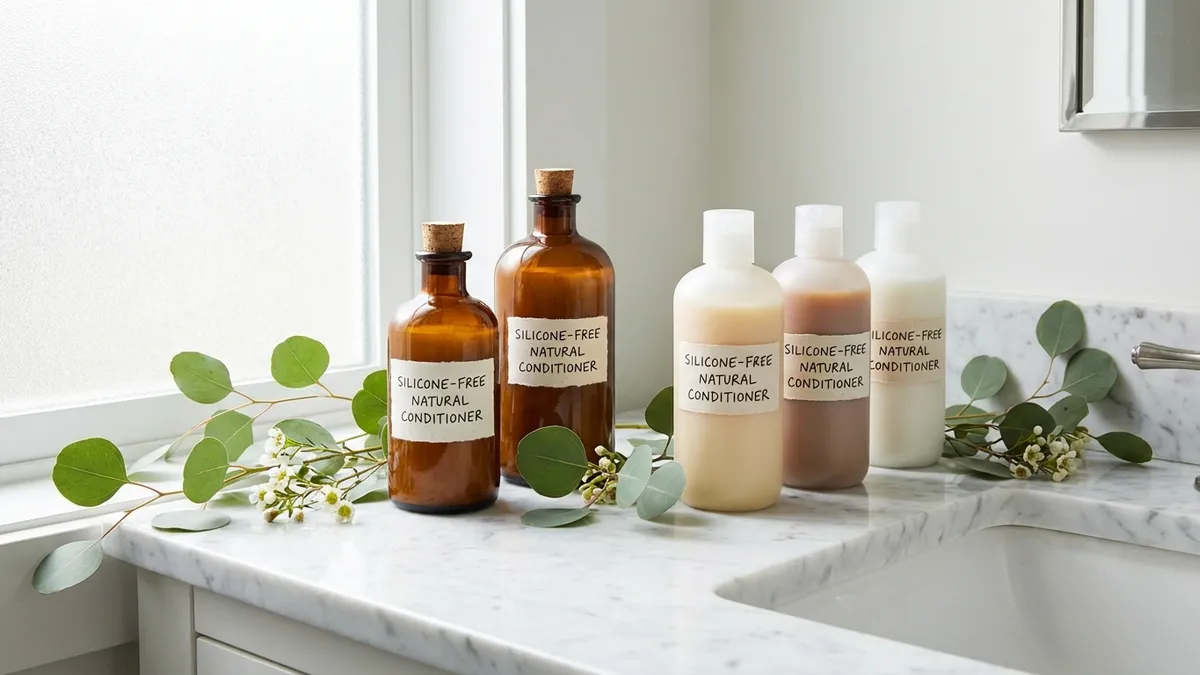
Shampoo gets all the attention in the non-toxic hair care conversation. Conditioner tends to be an afterthought. But consider this: conditioner sits on your hair and scalp for several minutes, its residue stays on your strands all day, and many formulas contain ingredients specifically designed to coat your hair in a film that doesn’t wash out.
How we vetted these products: Every pick was checked for harmful chemicals, verified certifications, and ingredient transparency. Products with vague “natural” claims but no third-party testing were excluded. How we test That film is usually silicone. And while silicone isn’t the worst ingredient in personal care, it’s part of a larger picture that includes synthetic fragrance, parabens, formaldehyde-releasing preservatives, and PEG compounds. NonToxicLab’s position is that conditioner deserves as much scrutiny as shampoo since it’s in contact with your body for longer.
I spent three months testing non-toxic conditioners on my own hair (fine, straight, prone to oiliness) and recruited testers with curly, thick, and color-treated hair to cover the full range. Here’s what actually works.
Why Conventional Conditioners Are a Problem
Silicones (Dimethicone, Cyclomethicone, Amodimethicone)
Silicones coat your hair shaft in a waterproof film that makes hair feel smooth and shiny. The issue: that film builds up over time. It prevents moisture from penetrating your hair, traps dirt and product residue against the strand, and eventually makes your hair look flat and dull. Then you need a clarifying shampoo to strip it off, which damages your hair, so you need more conditioner. It’s a cycle that benefits the companies selling you both products.
Silicones aren’t dangerous the way endocrine disruptors are. But they’re a band-aid for hair damage rather than a solution. Non-toxic conditioners use plant oils and butters that actually nourish hair instead of just masking damage with a plastic coating.
Synthetic Fragrance
Same issue as every other personal care product. “Fragrance” on a conditioner label hides dozens of undisclosed chemicals, potentially including phthalates. Since conditioner residue stays on your hair all day, you’re in prolonged contact with whatever’s in that fragrance blend. Dr. Leonardo Trasande, a pediatrician and environmental health researcher at NYU Langone, has written that chronic low-level exposure to endocrine disruptors through personal care products is a public health concern that’s still underestimated.
Quaternary Ammonium Compounds (Quats)
Quats are the main conditioning agents in most conventional products. Behentrimonium methosulfate and cetrimonium chloride are common ones. They’re cationic surfactants that bind to negatively charged hair and make it feel soft. Some quats are well-tolerated. Others, particularly older formulations, can irritate sensitive scalps. The cleaner brands on this list use milder conditioning agents or plant-derived alternatives.
Preservatives
DMDM hydantoin and quaternium-15 are formaldehyde-releasing preservatives that have triggered class-action lawsuits against major hair care brands. They slowly release small amounts of formaldehyde over the product’s shelf life. Both are still legal in the U.S. but restricted or banned in other countries.
What to Look for in a Clean Conditioner
Good signs:
- Plant oils and butters as the primary conditioning agents (argan oil, shea butter, coconut oil, jojoba)
- Essential oils or “fragrance-free” for scent
- EWG Verified or USDA Organic certification
- Short ingredient list with recognizable names
Red flags:
- Silicones (anything ending in “-cone” or “-siloxane”)
- “Fragrance” or “Parfum” without disclosure
- DMDM hydantoin or quaternium-15 (formaldehyde releasers)
- PEGs (potential 1,4-dioxane contamination)
- Parabens
The Best Non-Toxic Conditioners
1. Innersense Organic Beauty Hydrating Cream Conditioner - Best Overall
Price: $28 for 10 oz | Hair Type: Most types | Key Ingredients: Tamanu oil, shea butter, jojoba
Innersense is the brand that made me stop thinking non-toxic conditioner meant compromising on performance. Their Hydrating Cream Conditioner is USDA Organic certified and uses tamanu oil and shea butter to condition without silicone. The result is hair that feels genuinely moisturized, not just coated.
It detangles well, rinses clean, and doesn’t leave the heavy residue that silicone-based conditioners do. After a month of use, my hair felt healthier at the ends than it had in years. The light jasmine scent comes from essential oils and fades naturally.
What I like:
- USDA Organic certified. This is rare for conditioner
- Tamanu oil is a standout ingredient for hair repair
- Silicone-free but still detangles effectively
- Scent is pleasant but not overwhelming
- Works on fine to medium hair without weighing it down
What I don’t like:
- $28 for 10 oz is expensive
- Not widely available in stores. Mostly online or Credo Beauty
- May not be rich enough for very thick or coily hair
- Pump sometimes dispenses too much product
2. Acure Curiously Clarifying Conditioner - Best Value
Price: $10 for 12 oz | Hair Type: Normal to oily | Key Ingredients: Argan oil, pumpkin seed oil
Acure proves you don’t need to spend $30 for a clean conditioner. At $10 for 12 oz, it’s priced like a drugstore product and available at Target, Whole Foods, and Amazon. The formula is 100% vegan, sulfate-free, paraben-free, and silicone-free.
It’s a lightweight conditioner that works best on normal to oily hair. If you have very dry or thick hair, you’ll want something richer. But for everyday conditioning at a price that doesn’t sting, Acure is hard to beat.
What I like:
- $10 at Target. Can’t argue with the price
- Clean formula with recognizable ingredients
- Lightweight. Won’t weigh down fine hair
- Good for daily use
- Widely available
What I don’t like:
- Too lightweight for dry, thick, or curly hair
- Not as moisturizing as Innersense or Rahua
- Scent is herbal and mild. Some prefer something stronger
- No EWG Verified or USDA Organic certification (though ingredients check out individually)
3. Ethique The Guardian Solid Conditioner Bar - Best Zero Waste
Price: $16 per bar | Hair Type: Normal to dry | Key Ingredients: Cocoa butter, coconut oil, peppermint
Each Ethique bar replaces roughly five bottles of liquid conditioner. The packaging is compostable cardboard. If plastic waste in the bathroom bothers you, this is a serious solution.
The bar format takes adjustment. You rub it between wet hands or directly onto wet hair, working the product through from mid-length to ends. It feels different from squeezing conditioner from a bottle, but the results are comparable. The cocoa butter provides real moisture, and the peppermint gives a cooling tingle that feels refreshing.
What I like:
- One bar replaces ~5 bottles. That’s significant waste reduction
- Compostable packaging. Zero plastic
- Cocoa butter provides genuine conditioning
- Peppermint scent is invigorating
- Vegan, cruelty-free, palm oil free
What I don’t like:
- Bar format has a learning curve
- Needs to dry between uses (a soap dish with drainage helps)
- Not as easy to distribute through long or thick hair as liquid conditioner
- Only available online for most people
4. Attitude Super Leaves Conditioner - Best for Sensitive Scalp
Price: $12 for 16 oz | Hair Type: All types, especially sensitive | Key Ingredients: White tea leaf extract, olive leaves
If your scalp reacts to everything, Attitude is the brand to try. Every product is EWG Verified, meaning all ingredients have been independently reviewed for safety. The formula is hypoallergenic, pH-balanced, and free of every ingredient on the non-toxic watch list.
The conditioning effect is mild. This is not a rich, heavy conditioner. It’s designed to gently detangle and smooth without irritating a sensitive scalp. For people who have given up on conditioner because everything makes them itch, this is worth testing.
What I like:
- EWG Verified. Independently confirmed safe ingredient profile
- Hypoallergenic and designed for reactive scalps
- $12 for 16 oz is reasonable
- Certified B Corp, carbon neutral
- Plant-based and biodegradable
What I don’t like:
- Lightweight formula may not be moisturizing enough for thick or dry hair
- Scent is very mild. Almost unscented
- Not the most luxurious experience
- Limited availability in physical stores
5. Rahua Classic Conditioner - Best for Damaged Hair
Price: $36 for 9.3 oz | Hair Type: Dry, damaged, color-treated | Key Ingredients: Rahua oil, quinoa protein
Rahua oil comes from ungurahua nuts harvested by indigenous communities in the Amazon. It has an unusually small molecular structure that allows it to penetrate the hair shaft rather than just coating the surface. This is the key difference between Rahua and most other conditioning oils: it actually gets inside the hair and repairs from within.
This is the conditioner I recommend for people with heat damage, color damage, or naturally dry, porous hair. After two weeks of use, my tester with bleach-damaged hair said her ends felt like they’d taken a “time machine back six months.” That’s a direct quote.
What I like:
- Rahua oil genuinely penetrates and repairs hair
- Quinoa protein strengthens without making hair stiff
- Scent is earthy and sophisticated (palo santo and lavender)
- Works remarkably well on damaged and color-treated hair
- Clean, transparent ingredient list
What I don’t like:
- $36 for 9.3 oz. This is a splurge
- The earthy scent isn’t for everyone
- Too heavy for fine or oily hair
- Small bottle runs out fast with long hair
6. Giovanni 50:50 Balanced Hydrating-Calming Conditioner - Best for Normal Hair
Price: $8 for 8.5 oz | Hair Type: Normal | Key Ingredients: Aloe vera, rosemary, sage
Giovanni is the quiet workhorse of clean hair care. No flashy branding, no Instagram presence, just a solid formula at a pharmacy price point. The 50:50 Balanced conditioner is designed for normal hair that doesn’t need heavy moisture or clarifying, just direct conditioning.
Sulfate-free, paraben-free, no artificial dyes. It’s been around for years, which means the formula is tested and stable. You can find it at most grocery stores, Target, and Amazon.
What I like:
- $8 and available at most stores. Low barrier to try
- Balanced formula that works for everyday use
- No sulfates, no parabens, no silicones
- Been around for years. Stable, trusted formula
- Herbal scent from real botanical extracts
What I don’t like:
- Not especially moisturizing. Fine for normal hair, insufficient for dry
- No certifications (EWG Verified or organic)
- Packaging is unremarkable
- Less sophisticated formulation than Innersense or Rahua
Conditioner by Hair Type
Fine/thin hair: Acure Curiously Clarifying or Giovanni 50:50. Lightweight formulas that won’t weigh your hair down.
Normal hair: Giovanni 50:50 or Attitude Super Leaves. Everyday conditioning without excess.
Thick/curly hair: Innersense Hydrating Cream or Rahua Classic. These have enough moisture to define curls and reduce frizz.
Damaged/color-treated: Rahua Classic. The penetrating oil formula genuinely repairs.
Sensitive scalp: Attitude Super Leaves. EWG Verified and hypoallergenic.
Zero waste priority: Ethique The Guardian bar. No plastic.
Pair your conditioner with a matching non-toxic shampoo for best results. If you’re also rethinking your hair color routine, our non-toxic hair dye guide covers safe options.
Frequently Asked Questions
Is silicone in conditioner really that bad?
Silicone isn’t acutely toxic. It’s not going to cause cancer or disrupt your hormones. But it coats your hair in a film that builds up over time, blocks moisture, and creates a dependency cycle. Your hair looks smooth because it’s wrapped in plastic, not because it’s healthy. Silicone-free conditioners take a few washes to show results, but the long-term health of your hair improves.
Will my hair look worse when I first switch to non-toxic conditioner?
Possibly, for 1-2 weeks. Your hair has been coated in silicone buildup. Once that washes out (a clarifying wash speeds this up), your hair’s actual condition is revealed. It may feel rougher initially. This is temporary. As the natural oils and butters in clean conditioners start nourishing your actual hair, the texture and shine improve. Most people see real improvement within 2-3 weeks.
Can non-toxic conditioners detangle curly hair?
Yes, but not all of them. Innersense and Rahua both have enough slip and moisture for curl detangling. Lightweight options like Acure and Giovanni won’t provide enough slip for tight curls. The key is choosing a formula rich enough for your curl pattern.
Do I need to use shampoo and conditioner from the same brand?
No. Mix and match based on what works for your hair. A clarifying shampoo from one brand paired with a moisturizing conditioner from another is perfectly fine. Matching sets are a marketing strategy, not a hair care requirement.
How often should I condition?
Most people benefit from conditioning every time they shampoo. If you have fine hair, you might skip conditioner occasionally or apply only to ends. If you have thick or curly hair, you might condition more often than you shampoo (co-washing). Listen to your hair rather than following a rigid schedule.
Are conditioner bars as effective as liquid conditioner?
Ethique’s bars are genuinely effective, but they take practice. The main challenge is distributing the product evenly through your hair. For short to medium hair, bars work well. For long or very thick hair, liquid conditioner is easier to work through evenly.
What We’d Pick
For most people, Innersense is the best overall non-toxic conditioner if the budget allows. For an everyday option at a fraction of the price, Acure or Giovanni get the job done. And if your hair is damaged or color-treated, Rahua is worth the investment since it genuinely repairs rather than just masking damage.
Your hair care routine is one more place where small, consistent chemical exposures add up. Switching conditioner takes five minutes at the store and costs about the same as what you’re already buying. The downside is zero.
Last updated: March 2027. Prices may vary. We independently research and test the products we recommend. When you purchase through our links, we may earn a commission at no extra cost to you.
Sources
- Trasande, L. Sicker, Fatter, Poorer. Houghton Mifflin Harcourt, 2019.
- EWG Skin Deep Database. ewg.org/skindeep
- Campaign for Safe Cosmetics. safecosmetics.org
- CIR (Cosmetic Ingredient Review). “Safety Assessment of Dimethicone and Related Silicones.”