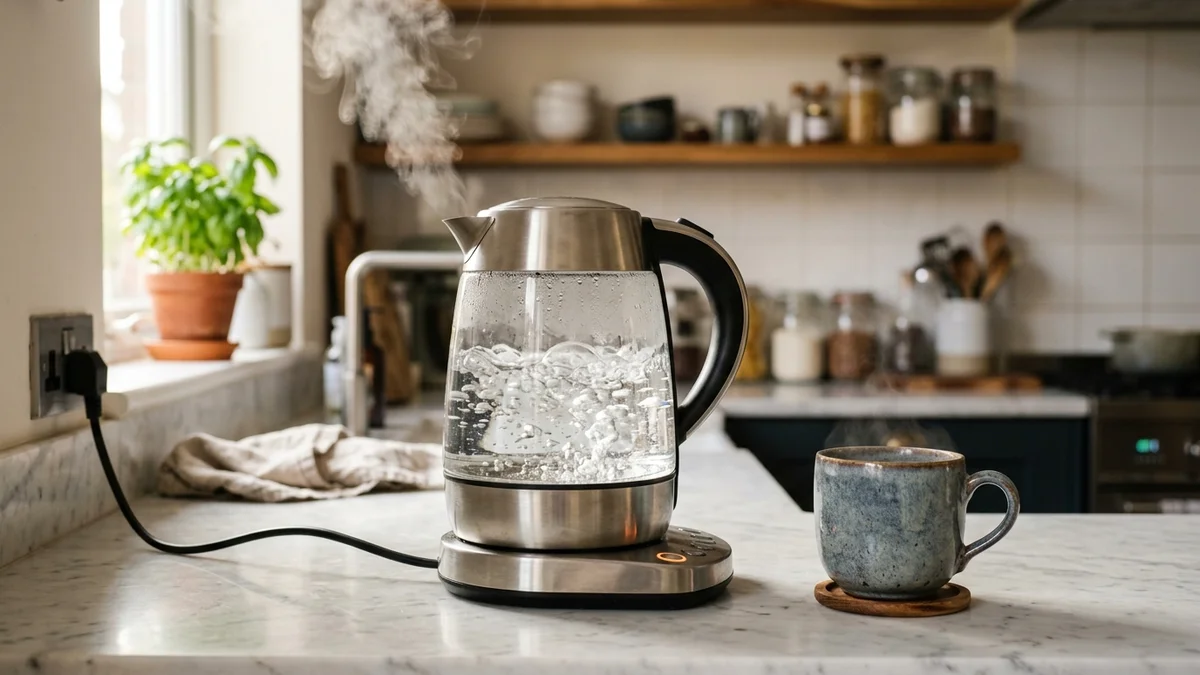
Boiling water in a plastic kettle defeats the purpose of filtering your water first. Hot water accelerates the leaching of chemicals from plastic, and studies have found that boiling water in polypropylene or polycarbonate kettles releases billions of microplastic particles per liter. For a full walkthrough, see our non-toxic kitchen guide.
What went into our picks: We screened ingredients against safety databases, verified each certification claim was current, and prioritized products with full ingredient disclosure. Our testing process If you are using an electric kettle daily for coffee, tea, or cooking, the material that contacts the water matters. A lot. For specific product picks, check best non-toxic air fryers.
The best non-toxic electric kettles use stainless steel or glass for every surface that touches water. No plastic liner, no plastic water window on the side, and ideally no plastic lid interior either. Some kettles look like stainless steel on the outside but have hidden plastic components inside where the water sits. Those are the ones to avoid.
Quick Picks: Best Non-Toxic Electric Kettles in 2026
| Pick | Product | Price | Best For |
|---|---|---|---|
| Best Overall | Fellow Stagg EKG | $195 | Design, precision, daily use |
| Best Value Stainless | Cuisinart CPK-17 | $90 | Multiple temperature presets |
| Best Budget | COSORI Stainless Steel | $35 | Affordable plastic-free option |
| Best Temperature Control | OXO Brew | $110 | Exact degree selection |
| Best for Pour-Over | Hario V60 Buono | $100 | Pour-over coffee enthusiasts |
| Best Glass | ZWILLING Enfinigy | $120 | Visible boiling, clean design |
The Problem with Plastic in Electric Kettles
Most cheap electric kettles have plastic interiors, plastic lids, and plastic water-level windows. When you boil water in these kettles, three things happen:
Microplastics. A 2021 study published in Environmental Science and Technology Letters found that polypropylene kettles release up to 30 billion microplastic particles per liter when boiling water. That is an enormous amount. Repeated boiling increased the release even further. Our guide to microplastics in drinking water explains why this matters for your health.
BPA and BPA substitutes. Polycarbonate plastics (clear, hard plastic) can contain BPA. Even BPA-free plastics use substitute chemicals like BPS and BPF. Heat makes these chemicals leach faster. What is BPA and why should you care?
Phthalates and other plasticizers. Softer plastic components (like silicone seals or flexible spouts) can contain plasticizers that are released at high temperatures.
Dr. Shanna Swan has written about how endocrine-disrupting chemicals from everyday plastic products are contributing to measurable shifts in human health. Boiling water in plastic is one of those daily exposures that adds up.
The fix is simple: buy a kettle with a stainless steel or glass interior. The cost difference is often only $20-30 more than a plastic model.
What to Look For (And What to Avoid)
Interior material is everything. The exterior can be plastic, stainless steel, or anything else. What matters is what touches the water. Look for kettles where the interior body, lid interior, and spout are all stainless steel or glass.
Common hidden plastic spots:
- Lid interior (often plastic even on “stainless steel” kettles)
- Water level window (a strip of plastic on the side)
- Spout lining
- The heating element ring at the base
- The gasket around the lid
The heating element base on most electric kettles has a small plastic or rubber seal. This is very difficult to avoid entirely and represents minimal contact with water. Do not stress about this piece.
Detailed Reviews
1. Fellow Stagg EKG Electric Kettle - $195
Best overall non-toxic electric kettle
The Fellow Stagg EKG has become the go-to kettle for people who care about both materials and design. The entire interior is 304 stainless steel, including the lid interior. The gooseneck spout gives precise pour control for pour-over coffee and tea. The base has a built-in temperature dial with a range from 135 to 212 degrees Fahrenheit.
According to NonToxicLab, this is the cleanest-designed electric kettle you can buy, with the fewest plastic contact points and the best overall build quality.
What I like: The stainless steel interior is the real deal. Temperature control is easy to use with the analog-style dial. The hold function keeps water at your set temperature for up to 60 minutes. It looks great on a countertop.
What to know: The capacity is only 0.9 liters, which is fine for one or two people but too small for a family. At $195, it is a premium appliance. If you do not need the gooseneck or temperature control, the Cuisinart below is a better value.
2. Cuisinart CPK-17 PerfecTemp - $90
Best value stainless steel kettle
The CPK-17 has a full stainless steel interior with a 1.7-liter capacity. It offers six preset temperatures (160, 175, 185, 190, 200, and 212 degrees) plus a keep-warm function. The lid interior is stainless steel. The water window on the side is the one plastic-contact point.
What I like: Large capacity for families. The six temperature presets cover every common use (green tea, black tea, French press, pour-over, boiling). Affordable for the quality.
What to know: The plastic water-level window is a minor compromise. The exterior is brushed stainless steel that fingerprints easily. Andrew Huberman has mentioned on his podcast that he uses a stainless steel or glass kettle for his morning tea and coffee to avoid chemical exposure from plastic, and this type of kettle is exactly what he is describing.
3. COSORI Original Electric Kettle (Stainless Steel) - $35
Best budget option
If you want to replace a plastic kettle without spending much, the COSORI is the best budget stainless steel option. The interior is 304 food-grade stainless steel. The capacity is 1.7 liters. It boils water in about 5 minutes.
What I like: Under $40 for a stainless steel interior kettle is hard to beat. The wide opening makes it easy to clean inside. Boils quickly.
What to know: No temperature control; it is a simple boil-only kettle. The lid interior has a small plastic ring. For the price, the material quality is excellent, but do not expect the build quality of the Fellow or OXO.
4. OXO Brew Adjustable Temperature Kettle - $110
Best temperature control
The OXO Brew lets you dial in an exact temperature from 140 to 212 degrees in one-degree increments. The interior is stainless steel. The handle is comfortable and the pour is smooth.
What I like: Exact temperature control is great for tea drinkers (different teas steep best at specific temperatures). The interface is intuitive. The hold function maintains temperature for 30 minutes.
What to know: The capacity is 1.75 liters, which is the largest on this list. The exterior is a mix of stainless steel and plastic. What matters is the interior, and that is all stainless.
5. Hario V60 Buono Power Kettle - $100
Best for pour-over coffee
Hario is a Japanese company known for their pour-over coffee equipment, and the Buono Power Kettle is all stainless steel. The gooseneck spout gives the slow, precise pour that pour-over brewing requires. No temperature control on this model; it boils and shuts off.
What I like: True all-stainless construction from a brand with decades of reputation. The gooseneck pour is as good as the Fellow Stagg. For dedicated pour-over coffee drinkers who do not need temperature presets, this is a clean, honest product.
What to know: No temperature control means you need a separate thermometer if you want specific temperatures. The 0.8-liter capacity is small. For $100, the lack of temperature features is a limitation compared to the OXO.
6. ZWILLING Enfinigy Glass Electric Kettle - $120
Best glass option
If you prefer glass over stainless steel, the ZWILLING Enfinigy uses a borosilicate glass body with a stainless steel lid and heating base. Borosilicate glass is the same material used in lab equipment; it handles thermal shock well and does not leach chemicals.
What I like: You can see the water as it heats, which some people enjoy. Glass does not impart any taste. The ZWILLING brand has solid quality control. The 1.7-liter capacity is generous.
What to know: Glass kettles can break if dropped. The exterior gets hot during boiling, so keep it out of reach of kids. Dr. Philip Landrigan has noted in his research that reducing daily chemical exposures from household items, including kitchen appliances, is part of a broader strategy to protect health, especially for families with young children. See our full guide to non-toxic coffee makers for more plastic-free kitchen appliance picks.
Stovetop Alternatives
If you prefer a stovetop kettle over electric, stainless steel stovetop kettles are inherently non-toxic since they are just a vessel of metal. Good options include:
- Le Creuset Enamel-on-Steel Whistling Kettle ($100): Enameled steel, no plastic contact with water
- All-Clad Stainless Steel Tea Kettle ($100): Polished stainless steel, clean and simple
- Fino Pour-Over Coffee Kettle ($30): Budget stainless steel gooseneck for pour-over
Reader Questions
Does stainless steel leach into water? 304 (18/8) and 316 food-grade stainless steel leach negligible amounts of nickel and chromium, well below safety thresholds. For the vast majority of people, stainless steel is one of the safest food-contact materials. People with nickel allergies may want to choose glass instead.
Is borosilicate glass safe? Yes. Borosilicate glass is inert and does not react with water or food. It is the same material used in laboratory glassware. It does not leach chemicals at any temperature you would encounter in a kettle.
Can I just remove the plastic lid from my current kettle? You can, but the lid is designed to trigger the automatic shutoff mechanism. Without it, your kettle may not shut off when the water boils, which is a safety issue. Better to replace the entire kettle.
Why do some “stainless steel” kettles still have plastic inside? Cost. Plastic components are cheaper to manufacture. Always check the interior of the lid and any water-level indicators. Product photos that only show the exterior can be misleading.
How do I descale a stainless steel kettle? Fill with equal parts white vinegar and water, bring to a boil, let sit for 30 minutes, then rinse thoroughly. Repeat monthly if you have hard water.
You Might Also Like
Sources
- Li, D., et al. “Microplastic release from the degradation of polypropylene feeding bottles during infant formula preparation.” Nature Food (2020)
- Kettle microplastic research: “The influence of drinking water constituents on the level of microplastic release from plastic kettles.” Journal of Hazardous Materials (2022)
- Swan, S.H. “Count Down” (2021), endocrine disruptors in consumer products
- Landrigan, P.J., et al. “The Lancet Commission on Pollution and Health” (2018)
- FDA food-contact material safety standards
- Fellow, Cuisinart, COSORI, OXO, Hario, ZWILLING product specifications (2026)