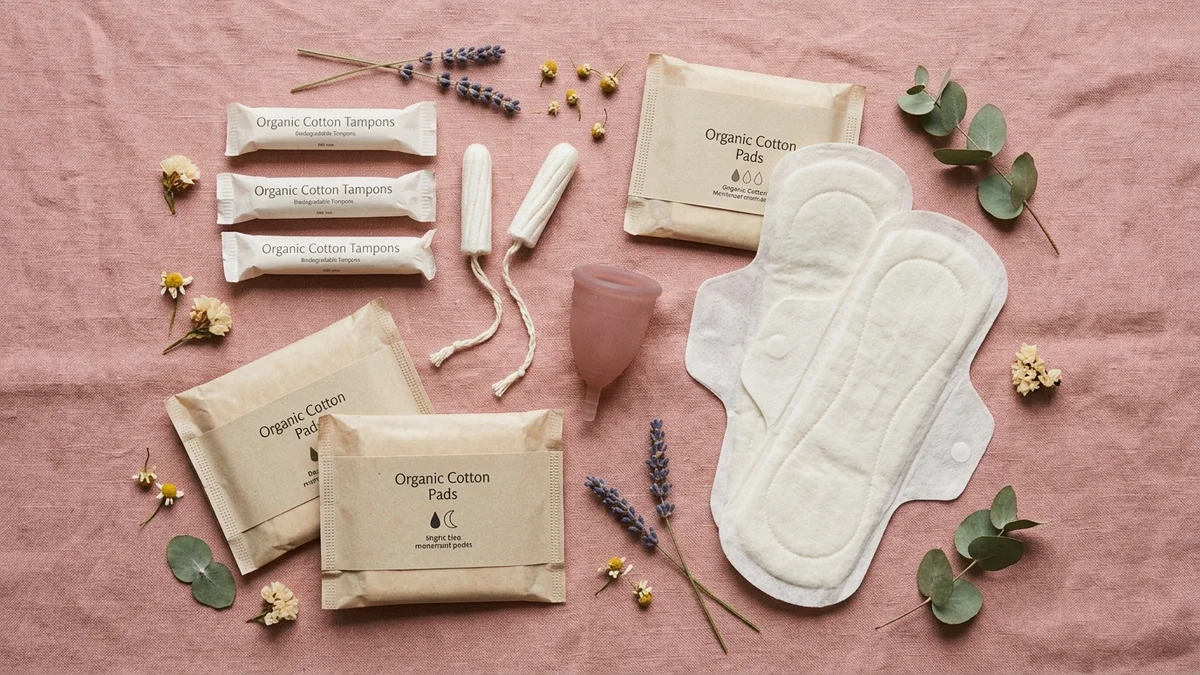
Tampons, pads, and liners sit against some of the most absorptive tissue in the body for hours at a time, every month, for decades. The vaginal and vulvar tissue absorbs chemicals at higher rates than regular skin because of its thinner mucosal lining and rich blood supply. Whatever is in your menstrual products has a direct path into your bloodstream. Read our full take in beautycounter review: clean beauty worth the price?.
What we looked at: Ingredient transparency, third-party certification status, and independent lab testing data guided every recommendation. Our full methodology That matters because conventional menstrual products are not as clean as you might assume. Recent testing has found PFAS (forever chemicals) in period underwear, pesticide residues in conventional cotton tampons, and volatile organic compounds in scented pads and liners. The FDA classifies tampons and pads as medical devices, but that classification does not require manufacturers to disclose their full ingredient lists. We tested and ranked the options in best non-toxic body lotion.
The products on this list use organic cotton, medical-grade silicone, and transparent ingredient lists. They are not perfect (no product is), but they are a meaningful step down in chemical exposure.
Quick Picks: Best Non-Toxic Menstrual Products in 2026
| Pick | Product | Price | Best For |
|---|---|---|---|
| Best Tampons | Cora Organic Cotton | $9/32ct | Everyday tampon use |
| Best Pads | Rael Organic Cotton | $8/14ct | Pad users, sensitive skin |
| Best Menstrual Cup | Saalt Soft Cup | $29 | Long-term savings, comfort |
| Best Value Tampons | Natracare Organic | $6/16ct | Budget organic tampons |
| Best Period Underwear | Thinx Cotton Brief | $36 | Backup or standalone protection |
| Best Disc | Saalt Disc | $33 | Active lifestyles, 12-hour wear |
What Is in Conventional Menstrual Products
Most conventional tampons and pads do not list their materials on the box. Here is what testing and reporting has revealed:
Pesticide residues. Conventional cotton (non-organic) is one of the most pesticide-intensive crops in the world. Testing by groups including Mamavation and the University of Notre Dame has detected pesticide residues in conventional cotton tampons. While the levels are low, the cumulative exposure over a lifetime of use is the concern.
Dioxins and furans. These are byproducts of chlorine bleaching, which is used to whiten conventional cotton and rayon. Modern elemental chlorine-free (ECF) bleaching produces much lower dioxin levels than the old chlorine gas method, but trace amounts can still be present. Dr. Philip Landrigan has noted that even low-level dioxin exposure is concerning because dioxins are persistent, bioaccumulative, and act as endocrine disruptors.
PFAS (forever chemicals). In 2022, Mamavation commissioned independent testing that found PFAS indicators in several brands of period underwear and some pad products. PFAS are used for moisture-wicking and leak-proof properties. They do not break down in the body and are linked to immune suppression, thyroid disease, and cancer. Learn more about PFAS.
Fragrances and deodorants. Scented pads and tampons contain undisclosed fragrance chemicals, which can include phthalates, synthetic musks, and other endocrine disruptors. There is no medical reason for menstrual products to be scented. What are phthalates?
Rayon and synthetic fibers. Many conventional tampons blend cotton with rayon (made from wood pulp) or polyester. Rayon production involves chemical processing, and synthetic fibers can shed microplastics.
Dr. Shanna Swan has written about how endocrine-disrupting chemicals from personal care products and other everyday sources are contributing to reproductive health trends including declining sperm counts, earlier puberty, and rising rates of reproductive cancers. Menstrual products represent a significant, repeated exposure pathway because of the absorptive nature of vaginal tissue.
Detailed Reviews
1. Cora Organic Cotton Tampons - $9/box of 32
Best tampons
Cora makes 100% organic cotton tampons with no synthetic fibers, no chlorine bleaching (they use hydrogen peroxide instead), no fragrance, and no rayon. The applicator is BPA-free plastic (compact size) or plant-based plastic (regular size). Available in light, regular, super, and super plus absorbencies.
What I like: The organic cotton is GOTS certified. The price is reasonable for organic tampons, especially in the 32-count box. They perform as well as conventional tampons. Cora is transparent about ingredients and third-party testing. According to NonToxicLab, Cora offers the best combination of materials quality, performance, and price in the organic tampon category.
What to know: The plastic applicator is the one compromise. If you want applicator-free, Natracare (below) or Cora’s own digital tampons are available. Some users report that the absorbency runs slightly lighter than equivalent conventional tampons, so you may need to size up.
2. Rael Organic Cotton Pads - $8/pack of 14
Best pads
Rael pads use an organic cotton topsheet (the layer that touches skin) with a plant-based leak-proof back sheet. They are free of chlorine bleaching, fragrance, and synthetic topsheets. Available in regular, long, and overnight sizes.
What I like: The organic cotton topsheet feels softer and less plastic-y than conventional pads. The leak protection works well despite using plant-based materials instead of the standard plastic film. Rael has built a strong reputation for ingredient transparency.
What to know: The adhesive on the back is standard pad adhesive (not organic). The core absorbent layer contains some processed wood pulp, not 100% cotton throughout. For a fully cotton pad, look at Natracare Ultra Pads, though the leak protection is not as strong.
3. Saalt Soft Menstrual Cup - $29
Best menstrual cup
Menstrual cups are the most cost-effective and lowest-waste option on this list. The Saalt Soft is made from 100% medical-grade silicone (the same material used in medical implants). No BPA, latex, dyes, chemicals, or phthalates. One cup lasts up to 10 years.
Medical-grade silicone is one of the most inert materials available. It does not leach chemicals, does not react with body fluids, and does not harbor bacteria when properly cleaned.
What I like: The Soft version is specifically designed for people with a sensitive bladder or those who are new to cups. It holds 25-30 ml (comparable to 3-4 super tampons) and can be worn for up to 12 hours. Over 10 years, one $29 cup replaces thousands of dollars worth of disposable products.
What to know: Menstrual cups have a learning curve. Expect 2-3 cycles to get comfortable with insertion, removal, and finding the right fold method. The Saalt Soft is easier to insert than firmer cups but slightly harder to pop open inside the body. Saalt offers a sizing quiz on their website.
4. Natracare Organic Cotton Tampons - $6/box of 16
Best value organic tampons
Natracare has been making organic menstrual products since 1989, longer than any other brand on this list. Their tampons are 100% certified organic cotton with a cardboard applicator (or applicator-free). No chlorine bleaching, no synthetic materials, no fragrance.
What I like: Natracare is the OG of organic period care. The cardboard applicator is fully biodegradable. The organic cotton is certified to the Soil Association standard. They are available in most natural grocery stores.
What to know: The cardboard applicator is less smooth than plastic, which some people find uncomfortable. The per-tampon price is slightly higher than Cora because of the smaller box size. Natracare’s regular absorbency is noticeably lighter than equivalent conventional tampons. Andrew Huberman has discussed on his podcast how reducing unnecessary chemical exposures from personal care products is a practical step toward better hormonal health, and switching to organic menstrual products is one of the simplest changes to make.
5. Thinx Cotton Brief - $36
Best period underwear
Period underwear has become a popular option, but the category had a setback when testing revealed PFAS in several brands’ leak-proof layers. Thinx has since reformulated and now offers their Cotton Brief made with organic cotton and a PFAS-free leak-proof lining. They have released third-party testing results showing their current products are PFAS-free.
The Cotton Brief holds the equivalent of 3-4 regular tampons and can be worn as standalone protection on lighter days or as backup on heavier days.
What I like: Comfortable enough to wear as regular underwear. The organic cotton feels soft against the skin. Machine washable. Saves waste compared to disposables.
What to know: The PFAS-free reformulation is good news, but it is worth noting that the leak-proof layer still contains synthetic materials (it has to, to be waterproof). If your goal is to avoid all synthetic materials against your skin, the organic cotton topsheet provides a barrier, but the synthetic layer is still part of the garment. Period underwear also needs to be rinsed and washed after each use, which some people find inconvenient. See our complete guide to endocrine disruptors for more context on chemical exposures.
6. Saalt Menstrual Disc - $33
Best menstrual disc
Menstrual discs sit in the vaginal fornix (higher than cups) and auto-dump when you use the bathroom, which means less manual emptying. The Saalt Disc is made from medical-grade silicone, same as their cup. It holds 55 ml (nearly twice the capacity of most cups) and can be worn for up to 12 hours.
What I like: Higher capacity than cups. Auto-dumping is genuinely convenient. Can be worn during intercourse (cups cannot). Medical-grade silicone is as clean a material as you will find.
What to know: Discs have an even steeper learning curve than cups. The rim diameter is larger, which takes some getting used to. Not everyone’s anatomy is a good fit for discs. It may take a few cycles to figure out.
How to Choose Between Tampons, Pads, Cups, Discs, and Period Underwear
There is no single “best” option. It depends on your body, your lifestyle, and your preferences:
- Tampons are familiar and convenient but produce the most waste and need changing every 4-8 hours.
- Pads are non-invasive and simple but can feel bulky and create waste.
- Cups produce zero waste, last years, and can be worn 12 hours, but have a learning curve.
- Discs offer the highest capacity and can be worn during sex, but also have a learning curve.
- Period underwear is comfortable and reusable but requires laundry and is the most expensive upfront.
Many people use a combination. Cups or discs for heavy days, period underwear for light days, organic pads for overnight.
What People Ask
Are organic tampons really safer than conventional ones? Organic cotton tampons eliminate pesticide residues, dioxin byproducts from chlorine bleaching, and synthetic fibers. The difference in exposure per individual tampon is small, but over a lifetime of use (an estimated 10,000-15,000 tampons per person), the cumulative reduction in chemical exposure is meaningful.
Can menstrual cups cause toxic shock syndrome (TSS)? TSS is extremely rare with menstrual cups. It has been reported in a small number of cases, but the risk is much lower than with tampons. Following the manufacturer’s guidelines (emptying every 12 hours, cleaning between uses, replacing when recommended) minimizes risk further.
Are period underwear PFAS-free now? Some brands have reformulated. Thinx’s current Cotton line is tested PFAS-free. However, not all period underwear brands have followed suit. Always check the specific brand’s testing data rather than assuming PFAS-free across the category.
Why do not menstrual product companies have to list ingredients? In the U.S., the FDA classifies tampons and pads as Class II medical devices, not cosmetics. Medical device labeling requirements do not mandate full ingredient disclosure the way cosmetic labeling does. Several states are now pushing legislation to require ingredient transparency for menstrual products.
Is rayon in tampons a problem? Rayon itself is made from wood pulp and is not inherently harmful. The concern is the chemical processing involved in its production and the potential for trace dioxin residues from bleaching. If you want to avoid rayon, choose 100% cotton tampons.
You Might Also Like
- Best Non-Toxic Body Wash and Bar Soap
- Best Non-Toxic Bug Spray and Insect Repellent
- Best Non-Toxic Deodorant That Actually Works
Sources
- Mamavation PFAS testing in period products (2022, 2024)
- Landrigan, P.J., et al. “Children’s Vulnerability to Environmental Toxicants,” The Lancet (2018)
- Swan, S.H. “Count Down” (2021), endocrine disruptors in personal care products
- University of Notre Dame, PFAS testing in consumer products
- FDA guidance on menstrual product classification and labeling
- Cora, Rael, Natracare, Saalt, Thinx product specifications and third-party testing data (2026)