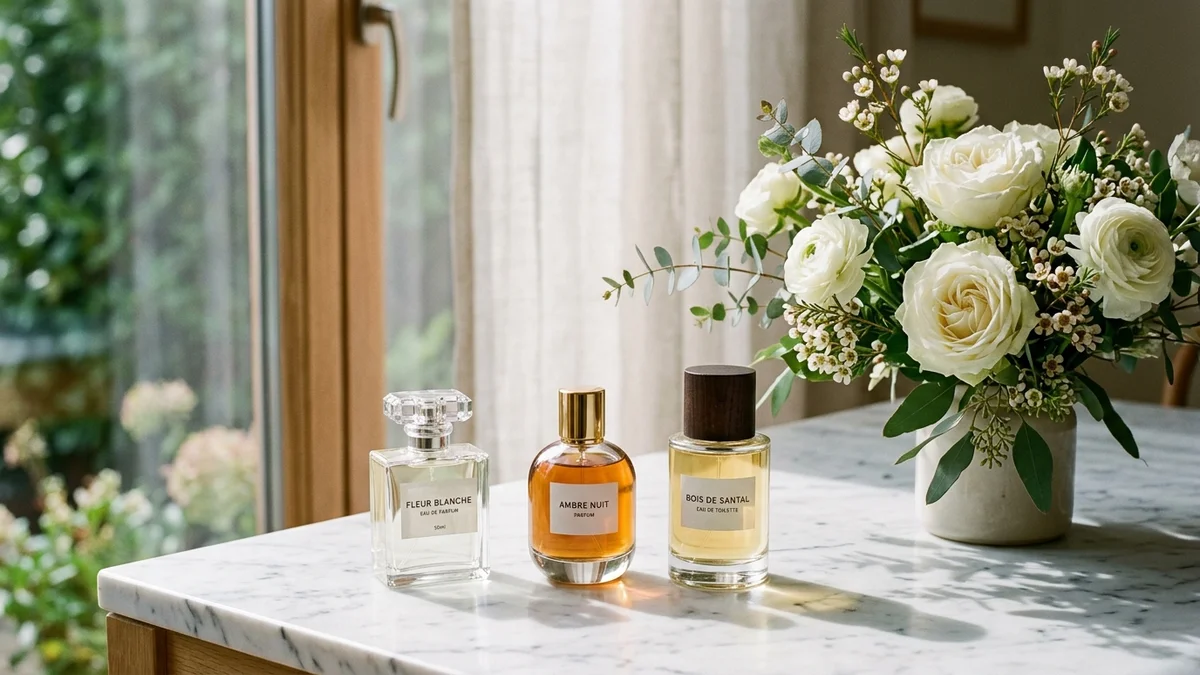
I used to spray perfume without thinking about it. A quick spritz on the wrists and neck, and I was out the door. Then I started reading ingredient labels on everything else in my bathroom, and I realized my perfume didn’t even have an ingredient label. Just the word “parfum.” That single word can represent 50 or more undisclosed chemicals, and some of them are known hormone disruptors. According to NonToxicLab’s testing, the best non-toxic perfumes deliver real scent complexity and longevity while fully disclosing their ingredients and skipping phthalates, synthetic musks, and other problematic chemicals. My top picks are Ellis Brooklyn for overall quality, Henry Rose for transparency, and Pacifica for budget shoppers.
How we vetted these products: Every pick was checked for harmful chemicals, verified certifications, and ingredient transparency. Products with vague “natural” claims but no third-party testing were excluded. How we test Fragrance is the wild west of personal care. While the EU regulates fragrance allergens and requires disclosure, U.S. law gives perfume makers blanket trade secret protection. You literally cannot find out what’s in most conventional perfumes.
The Problem with Conventional Perfume
Dr. Shanna Swan’s research at Mount Sinai has shown that phthalates, commonly used in perfume to make scents last longer, are associated with hormonal disruption. Her studies have linked phthalate exposure to reduced testosterone in men and reproductive changes in both sexes. Perfume is one of the primary personal care routes for phthalate exposure because you spray it directly on your skin and breathe it in all day.
Andrew Huberman has discussed on his podcast how olfactory exposure to certain synthetic compounds can affect neurological pathways. The chemicals you inhale through fragrance don’t just pass through your nose. They enter your bloodstream through your lungs and nasal mucosa.
Here’s what’s hiding in most conventional perfumes:
Phthalates (DEP, DBP, DEHP): Used as fixatives to make scent last longer. Endocrine disruptors that interfere with hormone signaling. Not required to be listed on the label.
Synthetic musks (galaxolide, tonalide): Persistent chemicals that accumulate in body fat and breast milk. Found in the blood of nearly every person tested in biomonitoring studies.
Benzyl benzoate and benzyl alcohol: Common fragrance ingredients that can cause contact dermatitis and allergic reactions.
Styrene: A possible carcinogen found in some fragrance formulations. Listed by the National Toxicology Program as “reasonably anticipated to be a human carcinogen.”
Formaldehyde and formaldehyde releasers: Sometimes used as preservatives in fragrance blends. A known carcinogen.
What Makes a Perfume “Clean”
The term “clean fragrance” isn’t regulated, which means any brand can use it. Here’s what actually matters:
Full ingredient transparency. The brand should list every ingredient, including what’s inside the fragrance blend. If they won’t disclose, that’s a red flag.
No phthalates. This is the most important single criterion. Phthalates are the highest-concern chemical commonly found in perfume.
No synthetic musks. These bioaccumulate and are persistent environmental pollutants.
Third-party verification. EWG Verified, Cradle to Cradle Certified, or MADE SAFE certification means an independent organization has reviewed the ingredients.
No “fragrance” catch-all. The ingredient list should name specific compounds, not hide behind the word “fragrance” or “parfum.”
Dr. Leonardo Trasande at NYU Langone has estimated that exposure to endocrine-disrupting chemicals costs the U.S. healthcare system over $340 billion annually. Perfume is just one source, but it’s a daily one that sits right on your skin and in your breathing zone.
Best Non-Toxic Perfumes Reviewed
1. Ellis Brooklyn Eau de Parfum - Best Overall
Price: ~$105 for 1.7 oz | Format: Spray | Longevity: 5-7 hours | Ingredient Disclosure: Full
Ellis Brooklyn is what convinced me that clean perfume doesn’t have to smell like a health food store. Their scents are complex, layered, and developed by professional perfumers. The ingredient lists are fully disclosed, and the formulas exclude phthalates, parabens, and synthetic musks.
What I like:
- Scent quality rivals conventional luxury perfumes. MYTH and SWEET are standouts.
- Full ingredient disclosure on every product.
- Longevity is genuinely good. Five to seven hours of noticeable scent.
- Vegan and cruelty-free.
- Beautiful packaging. This feels like a luxury product.
- Available at Sephora, which makes it easy to sample in person.
What I don’t like:
- $105 for 1.7 oz. This is luxury pricing.
- Not 100% natural. They use safe synthetics alongside natural ingredients.
- Some scents are quite strong. MYTH in particular has serious projection.
- Limited size options. No travel minis for some scents.
Bottom line: The best clean perfume for someone coming from conventional luxury fragrance. You won’t feel like you’re compromising on scent quality. If you also use non-toxic body lotion, layering it with Ellis Brooklyn gives the scent better staying power.
2. Henry Rose Eau de Parfum - Most Transparent
Price: ~$120 for 1.7 oz | Format: Spray | Longevity: 4-6 hours | Ingredient Disclosure: Full, EWG Verified
Henry Rose was founded by Michelle Pfeiffer after she learned about the lack of transparency in the fragrance industry. Every scent is both EWG Verified and Cradle to Cradle Certified, which is a rare double verification.
What I like:
- EWG Verified AND Cradle to Cradle Certified. The highest standard on this list.
- Every single ingredient is disclosed. No exceptions.
- The ingredient review process is genuinely rigorous.
- Scents are sophisticated. Jake’s House and Windows Down are beautiful.
- Refillable bottles reduce waste.
What I don’t like:
- $120 is the highest price on this list.
- Longevity is slightly shorter than Ellis Brooklyn. Four to six hours.
- Only six scents to choose from. Limited range.
- Only available online and at select retailers. Hard to sample.
Bottom line: If transparency is your top priority, Henry Rose is unmatched. The dual certification means you have the highest level of independent verification available in the fragrance market.
3. Skylar Rollerball Perfumes - Best for Beginners
Price: ~$29 for 10 ml | Format: Rollerball | Longevity: 3-5 hours | Ingredient Disclosure: Full
Skylar is where I tell people to start. Their rollerballs are affordable enough to experiment with, the scents are approachable, and they offer a sampler set that lets you try multiple options before committing.
What I like:
- The sampler set ($20 for five mini rollerballs) is perfect for exploring.
- Hypoallergenic formula. Good for people who react to fragrance.
- Fully disclosed ingredients on every product.
- Vegan and cruelty-free.
- The rollerball format is portable and controlled. No over-applying.
- Salt Air is a beautiful clean scent that gets compliments.
What I don’t like:
- Longevity is shorter than spray perfumes. Three to five hours at best.
- The rollerball applies a lighter scent compared to spray format.
- 10 ml goes fast if you use it daily.
- Some scents are very subtle. If you want noticeable projection, look elsewhere.
Bottom line: The lowest-risk way to try clean fragrance. Get the sampler, find a scent you like, then invest in a full size. Skylar won’t give you the projection of a conventional perfume, but the scent quality is legitimately good.
4. Phlur Eau de Parfum - Best Scent Range
Price: ~$96 for 1.7 oz | Format: Spray | Longevity: 4-6 hours | Ingredient Disclosure: Full
Phlur has one of the widest scent ranges in clean fragrance. Whether you like woody, floral, fresh, or warm profiles, they have something that fits. All ingredients are disclosed, and they exclude phthalates, parabens, and animal-derived ingredients.
What I like:
- Wide range of scent profiles. More variety than most clean brands.
- Missing Person went viral for good reason. It smells like warm skin.
- All ingredients disclosed. No trade secret fragrance blends.
- Vegan and cruelty-free.
- Travel sprays available for most scents.
- Available at Sephora for in-person sampling.
What I don’t like:
- Not EWG Verified or Cradle to Cradle Certified. You’re trusting their internal standards.
- Longevity is moderate. Four to six hours.
- Some of the more popular scents are frequently out of stock.
- $96 is still a significant purchase.
Bottom line: The best option if scent variety matters to you. With more than a dozen options, you’re likely to find something that fits your preferences. Available at Sephora, so you can test before buying.
5. Pour le Monde Natural Perfume - Best 100% Natural
Price: ~$65 for 1.7 oz | Format: Spray | Longevity: 2-4 hours | Ingredient Disclosure: Full
Pour le Monde uses only 100% certified natural ingredients. No safe synthetics, no nature-identical compounds. Just plant extracts, essential oils, and natural isolates. If you want the absolute purest formula, this is it.
What I like:
- 100% certified natural ingredients. The purest option on this list.
- Three scent options that are genuinely pleasant.
- Price is reasonable for a clean fragrance at $65.
- Cruelty-free and vegan.
- Simple, short ingredient lists.
What I don’t like:
- Longevity suffers. Two to four hours is typical. Natural fragrances fade faster.
- Scent complexity is simpler than brands using safe synthetics.
- Only three scent options. Very limited range.
- Reapplication is necessary throughout the day.
Bottom line: For the ingredient purist who wants zero synthetic compounds of any kind. You’ll sacrifice longevity and complexity, but you’ll know exactly what’s on your skin. Keep it in your bag for reapplication.
6. Pacifica Roll-On Perfume - Best Budget
Price: ~$12 for 0.33 oz | Format: Rollerball | Longevity: 2-3 hours | Ingredient Disclosure: Full
Pacifica makes clean fragrance accessible at a price point that removes all barriers to trying it. Twelve dollars for a rollerball that’s vegan, phthalate-free, and smells nice. It’s available at Target, Ulta, and most drugstores.
What I like:
- Under $15. The most affordable clean fragrance on this list.
- Available at Target and Ulta. Easy to find and test.
- Wide range of scents across their product line.
- Vegan and cruelty-free.
- No phthalates, parabens, or propylene glycol.
- Good for testing whether you like a particular scent family.
What I don’t like:
- Short longevity. Two to three hours before it fades significantly.
- Scent complexity is basic compared to higher-end options.
- The 0.33 oz rollerball is tiny. You’ll go through it in a few weeks.
- Not EWG Verified.
Bottom line: The best way to start using clean fragrance without financial commitment. Pick one up at Target and see how you like it. If you enjoy the experience, you can always upgrade to Ellis Brooklyn or Phlur later.
Quick Comparison
| Product | Price | Format | Longevity | Transparency | Best For |
|---|---|---|---|---|---|
| Ellis Brooklyn | $105 | Spray | 5-7 hrs | Full disclosure | Overall quality |
| Henry Rose | $120 | Spray | 4-6 hrs | EWG + C2C Certified | Maximum transparency |
| Skylar | $29 | Rollerball | 3-5 hrs | Full disclosure | Exploring clean fragrance |
| Phlur | $96 | Spray | 4-6 hrs | Full disclosure | Scent variety |
| Pour le Monde | $65 | Spray | 2-4 hrs | Full disclosure | 100% natural purists |
| Pacifica | $12 | Rollerball | 2-3 hrs | Full disclosure | Budget shoppers |
Your Questions Answered
Do non-toxic perfumes last as long as conventional ones?
Generally, no. Conventional perfumes use phthalates and synthetic musks specifically because they make scents persist for 8-12 hours. Clean perfumes typically last 3-7 hours depending on the formula. Ellis Brooklyn and Henry Rose have the best longevity in the clean space. Reapplication is part of the deal with cleaner formulas.
What’s the difference between “natural” and “clean” perfume?
Natural perfume uses only plant-derived ingredients like essential oils and natural isolates. Clean perfume may include safe synthetic ingredients that have been vetted for safety but aren’t plant-derived. Clean perfumes tend to have better longevity and scent complexity because the perfumer has more ingredients to work with.
Is “fragrance-free” the same as “non-toxic fragrance”?
No. Fragrance-free means the product has no added scent at all. Non-toxic fragrance means the product contains scent ingredients, but those ingredients have been vetted for safety and fully disclosed. If you want to smell like something while avoiding harmful chemicals, non-toxic fragrance is what you want. If you’re sensitive to all scents, go fragrance-free.
Can non-toxic perfume cause allergic reactions?
Yes. Natural ingredients can cause allergic reactions just like synthetic ones. Essential oils like lavender, citrus oils, and cinnamon are common allergens. The advantage of clean perfumes is that they disclose their ingredients, so if you know your triggers, you can check the label before buying.
Are essential oil perfumes safe?
Essential oils are generally considered safe when properly diluted and applied topically. However, some essential oils are phototoxic (especially citrus oils), meaning they can cause skin reactions when exposed to sunlight. Look for products that address this, either by using non-phototoxic versions or by noting application precautions.
How should I store non-toxic perfume?
Keep clean perfumes away from direct sunlight and heat. Natural ingredients degrade faster than synthetic ones when exposed to UV light and temperature fluctuations. A cool, dark drawer or cabinet is ideal. If properly stored, most clean perfumes last 12-18 months.
Final Thoughts
The fragrance industry’s lack of transparency is one of the biggest problems in personal care. You should know what you’re spraying on your skin every day, and the fact that most conventional perfume makers won’t tell you is reason enough to switch.
The good news is that clean fragrance has improved dramatically. Five years ago, the options were limited and the scents were flat. Today, brands like Ellis Brooklyn and Phlur are making perfumes that stand up to conventional luxury options. You don’t have to choose between smelling good and knowing what’s in the bottle.
Start with a Skylar sampler or a Pacifica rollerball from Target. If you like the experience, work your way up. Once you find a clean fragrance you love, you’ll never go back to spraying undisclosed chemicals on your neck.
For more on cleaning up your personal care routine, see our guides on non-toxic body wash, non-toxic body lotion, non-toxic deodorant, and non-toxic sunscreen.
This article contains affiliate links. If you purchase through our links, we may earn a small commission at no extra cost to you. This doesn’t influence our recommendations. See our full affiliate disclosure for details.
Sources
- Swan, Shanna. Count Down. Scribner, 2021.
- Trasande, Leonardo. Sicker, Fatter, Poorer. Houghton Mifflin Harcourt, 2019.
- Huberman Lab Podcast. “Reducing Exposure to Endocrine Disruptors.” hubermanlab.com
- Campaign for Safe Cosmetics. “Fragrance.” safecosmetics.org
- EWG Skin Deep Database. ewg.org/skindeep
- National Toxicology Program. “Report on Carcinogens: Styrene.” ntp.niehs.nih.gov
- International Fragrance Association (IFRA). Standards Library. ifrafragrance.org
- European Chemicals Agency (ECHA). “Substances Restricted Under REACH.” echa.europa.eu