Every parent gets told to look for “BPA-free” sippy cups, as if that single label solves the problem. It does not. Research published in Environmental Health Perspectives found that many BPA-free plastics leach chemicals with estrogenic activity that are just as concerning as BPA itself. The replacement chemicals (BPS, BPF, and others) are structurally similar and appear to carry similar risks.
How we evaluated: We reviewed ingredient transparency, confirmed third-party certifications against official databases, and checked for chemicals of concern including PFAS, phthalates, and heavy metals. Full methodology
Dr. Shanna Swan, a reproductive epidemiologist at the Icahn School of Medicine at Mount Sinai, has spent decades studying how everyday chemical exposures affect child development. Her research ties phthalate and BPA exposure during early childhood to measurable effects on hormone levels, reproductive development, and behavior. Sippy cups are one of several daily contact points she flags because the liquid sits in constant contact with the material, often for hours.
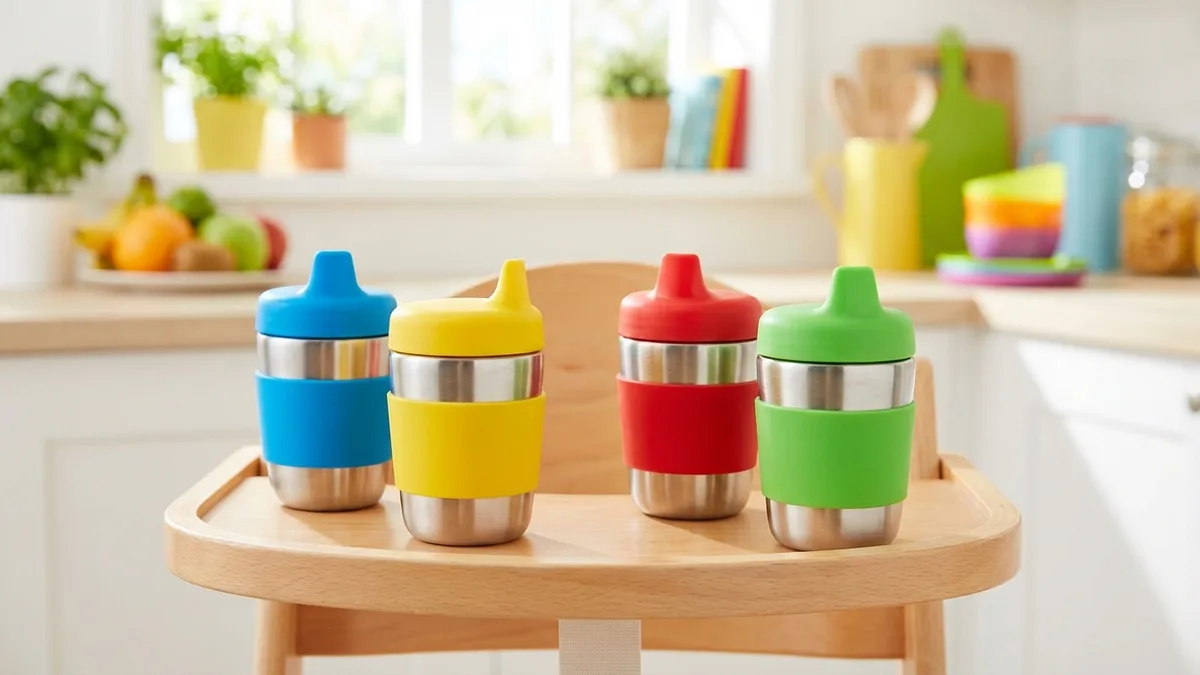
The simplest solution: skip plastic entirely. Stainless steel and silicone sippy cups exist at every price point, and they sidestep the whole chemical leaching question.
Quick Picks: Best Non-Toxic Sippy Cups
| Cup | Best For | Material | Price | Ages |
|---|---|---|---|---|
| Pura Kiki | Best Overall | Stainless steel + silicone | $18-$22 | 6 months+ |
| Klean Kanteen Kid | Best Durability | 18/8 stainless steel | $18-$24 | 12 months+ |
| Green Sprouts | Best Budget | Stainless steel + silicone | $8-$12 | 6 months+ |
| Elk and Friends | Best Silicone | Food-grade silicone | $22-$28/set | 12 months+ |
| Avanchy | Best Transition | Stainless steel + silicone lid | $16-$20 | 6 months+ |
Why Plastic Sippy Cups Are a Problem
The issue goes beyond BPA. Here is what the research actually shows:
Microplastic leaching. A 2020 study in Nature Food found that polypropylene baby bottles release millions of microplastic particles per liter when exposed to hot liquids. Sippy cups made from the same plastic behave similarly. Even at room temperature, plastic slowly degrades and releases particles into whatever liquid it holds.
Endocrine disruption from replacement chemicals. When manufacturers removed BPA, they substituted other bisphenols. Studies by Dr. Swan and others show that BPS and BPF have estrogenic activity comparable to BPA. The “BPA-free” label creates a false sense of safety that our BPA-free guide explains in detail.
Phthalate exposure. Soft, flexible plastic parts on sippy cups (spouts, straws, grip bands) often contain phthalates as plasticizers. Toddlers chew on spouts constantly, which increases exposure.
Heat accelerates leaching. Warm milk or juice in a plastic sippy cup leaches significantly more chemicals than cold water. Dishwasher heat further degrades the plastic over time. Each wash cycle increases the rate of microplastic release from subsequent use.
Cumulative exposure matters. A sippy cup is one of many daily plastic contact points for a toddler. Add baby bottles, food storage containers, plates, and utensils, and the total exposure adds up quickly. Dr. Leonardo Trasande at NYU has estimated that endocrine-disrupting chemical exposures cost the US healthcare system billions annually, with children bearing a disproportionate burden.
Safe Materials for Sippy Cups
Stainless steel (18/8 or 304 grade). The gold standard for non-reactive food contact surfaces. Stainless steel does not leach chemicals at any temperature, does not degrade over time, and survives years of toddler abuse. The only downside is weight, which can be challenging for very young children. Look for 18/8 (also called 304) or 18/10 (316) grade.
Medical-grade silicone. Platinum-cured, food-grade silicone is chemically inert and heat-stable up to 400+ degrees. It is soft enough for toddler spouts and straws, flexible, and unbreakable. It does not contain BPA, phthalates, or PVC. The key qualifier is “platinum-cured” or “medical-grade” rather than generic silicone, which can contain fillers.
Glass (with silicone sleeve). Borosilicate glass is the purest material for any food or beverage container. For toddlers, it works with a protective silicone sleeve, though most parents find it impractical for on-the-go use. Glass works well as a home cup for kitchen or highchair use.
What to avoid. All plastic (including “BPA-free” plastics, Tritan, and polypropylene), melamine, and any cup with printed decorations on the interior surface (the ink can contain lead or other heavy metals).
The 5 Best Non-Toxic Sippy Cups
1. Pura Kiki Stainless Steel Sippy Cup - Best Overall
Price: $18-$22 | Material: 100% stainless steel body, medical-grade silicone spout | Ages: 6 months to 5+ years
Pura Kiki is the only brand that makes a 100% plastic-free sippy cup system. The bottle body is entirely stainless steel, and the lids/spouts are medical-grade silicone. No plastic touches your child’s drink at any point.
What makes Pura Kiki brilliant is the modular system. You buy one bottle body and swap lids as your child grows: nipple for infants, sippy spout for early toddlers, straw for older toddlers, and sport top for big kids. One $20 bottle serves you for 5+ years. That modularity also makes it the most cost-effective option long-term.
The 11oz size fits standard cup holders and diaper bag pockets. It is dishwasher safe (top rack for silicone parts). NonToxicLab considers this the go-to recommendation for new parents building a non-toxic baby registry.
Best for: Families who want one system that grows with their child from 6 months through preschool.
Drawback: Stainless steel is heavier than plastic. Very young toddlers (under 12 months) may struggle to hold the full-size bottle. The 5oz option works better for smaller hands.
2. Klean Kanteen Kid Classic - Best for Durability
Price: $18-$24 | Material: 18/8 food-grade stainless steel | Ages: 12 months+
Klean Kanteen has been making stainless steel bottles for over 20 years, and their kid-specific line is built to survive whatever your toddler throws at it (literally). The 18/8 stainless steel body is dent-resistant, and the electropolished interior is easy to clean and does not retain flavors.
Multiple lid options are available: sippy cap, sport cap, straw lid, and loop cap. The 12oz size works well from about 12 months through elementary school. Klean Kanteen’s materials are third-party tested and certified by B Corp, which adds a layer of manufacturing accountability.
The Kid Classic does have a small plastic component in some lid options (the twist mechanism), but the liquid pathway itself contacts only stainless steel and silicone.
Best for: Active toddlers and preschoolers. Daycare, car trips, and outdoor play where drops and throws are guaranteed.
Drawback: Some lid options include small plastic parts (not in the liquid pathway). Slightly bulkier than Pura Kiki.
3. Green Sprouts Sip & Straw Cup - Best Budget Pick
Price: $8-$12 | Material: Stainless steel body, silicone straw and lid | Ages: 6 months+
Green Sprouts brings stainless steel sippy cups down to a genuinely affordable price point. The cup features a weighted straw (so liquid flows from any angle) and a silicone lid with easy-open design.
The materials are solid: stainless steel body, silicone straw and lid, no BPA, no PVC, no phthalates. At under $12, this removes the cost barrier that keeps some families stuck on plastic cups.
The cup is smaller than the Pura Kiki and Klean Kanteen (6oz), which actually makes it easier for younger toddlers to hold. Green Sprouts also makes matching stainless steel baby bowls and plates in the same price range.
Best for: Families on a budget. Also great as a backup cup or daycare cup where things get lost.
Drawback: Smaller capacity means more refills. The weighted straw can be fiddly to clean (use a straw brush).
4. Elk and Friends Silicone Cups - Best Silicone Option
Price: $22-$28 (set of 4-6) | Material: Food-grade silicone with stainless steel straws | Ages: 12 months+
Elk and Friends makes colorful silicone cups that look like regular drinking cups, which helps with the transition away from baby bottles. The silicone is food-grade and BPA-free, and the included stainless steel straws are a nice touch that many silicone cup sets skip.
The cups are lightweight (much lighter than stainless steel), soft to the touch, and virtually unbreakable. They come in bright colors that toddlers love, and they stack for easy storage. The set pricing brings the per-cup cost to about $4-5, which is very competitive.
These cups do not have a sealed lid, so they are not spill-proof. They work best for at-the-table drinking or as a transition from sippy cups to open cups. For on-the-go sealed cups, stick with Pura Kiki or Klean Kanteen.
Best for: At-home use. Teaching toddlers to drink from an open cup. Families who want a set of affordable, colorful non-toxic cups.
Drawback: Not spill-proof. Silicone can retain odors if not cleaned promptly.
5. Avanchy Stainless Steel Transition Cup - Best Transition Cup
Price: $16-$20 | Material: Stainless steel with silicone training lid | Ages: 6 months+
Avanchy makes a clever transition cup with a suction base that sticks to highchair trays and tables. The cup body is stainless steel, the training lid is silicone, and the suction base prevents the cup from being launched across the room (a daily occurrence with toddlers).
The removable silicone lid has a soft drinking edge that works well for babies learning to sip. As your child develops, you remove the lid and use it as an open cup. The suction base is removable too, so the cup transitions through multiple stages.
Avanchy is also known for their bamboo and stainless steel dinnerware sets, which pair well if you are building a complete non-toxic mealtime setup. Check our non-toxic baby products guide for the full list.
Best for: Highchair and table use. Babies learning to drink from a cup for the first time.
Drawback: Suction base does not work on all surfaces. Not ideal for on-the-go use.
Cleaning Stainless Steel and Silicone Cups
Daily wash: Hot water and non-toxic dish soap. A bottle brush handles the inside of narrow-mouth cups. Straw brushes are essential for any cup with a straw. All recommended cups are dishwasher safe (top rack for silicone parts).
Deep clean (weekly): Soak silicone parts in a mixture of hot water and white vinegar for 30 minutes. This removes any lingering odors or buildup. For stainless steel, baking soda paste works well on stubborn stains.
Mold prevention: Disassemble every part after use and let them air dry separately. Sippy cup valves and straw crevices are the most common spots for hidden mold growth. Inspect weekly.
Sippy Cup Safety Questions
At what age should babies stop using sippy cups?
Most pediatric dentists recommend transitioning from sippy cups to open cups or straw cups between ages 1 and 2. Prolonged sippy cup use can affect dental development. Stainless steel straw cups (like Pura Kiki with the straw lid) are a good bridge because they encourage a different mouth position than traditional sippy spouts.
Is Tritan plastic safe for sippy cups?
Tritan is marketed as BPA-free and passed some initial estrogenic activity tests funded by Eastman Chemical (the manufacturer). Independent studies have been mixed. Our position is that stainless steel and silicone are proven safe, while Tritan is probably safer than standard plastics but still faces open questions. If you can go plastic-free, do so.
Do stainless steel cups change the taste of milk or juice?
High-quality stainless steel (18/8 or higher) does not impart flavor. Lower-grade stainless can sometimes give a metallic taste, which is why we only recommend 18/8 (304) grade or better. If your child resists the switch, it is usually the temperature difference (metal feels cooler) rather than taste.
Are painted or printed sippy cups safe?
Exterior paint is generally fine if it is lead-free and meets CPSC standards. Interior decorations are a concern because the printing can contain lead, cadmium, or other heavy metals that leach into liquids. All cups on our list have unfinished stainless steel or plain silicone interiors with no interior printing.
How do I know if a silicone cup is food-grade?
Look for “platinum-cured silicone,” “medical-grade silicone,” or “100% food-grade silicone” on the product listing. FDA compliance is the minimum standard. Avoid silicone products that have a strong chemical smell, as this indicates lower-quality silicone or uncured fillers.
You Might Also Like
- Best Non-Toxic Baby Bottles - Glass and stainless steel bottles for infants
- Non-Toxic Baby Products Complete Guide - Every safe swap for your baby
- Best Non-Toxic Highchairs - Clean mealtime seating options
Sources
- Swan, S.H. et al. “Prenatal Phthalate Exposure and Reduced Masculine Play in Boys.” International Journal of Andrology, 2010.
- Trasande, L. et al. “Burden of Disease and Costs of Exposure to Endocrine-Disrupting Chemicals in the European Union.” The Journal of Clinical Endocrinology & Metabolism, 2015.
- Li, D. et al. “Microplastic Release from the Degradation of Polypropylene Feeding Bottles During Infant Formula Preparation.” Nature Food, 2020.
- Bittner, G.D. et al. “Chemicals Having Estrogenic Activity Can Be Released from Some Bisphenol A-Free, Hard and Clear, Thermoplastic Resins.” Environmental Health, 2014.
- American Academy of Pediatric Dentistry. “Policy on Use of Fluoride” and sippy cup transition guidelines, 2024.
- FDA Food Contact Substances Notification Program, 21 CFR 175-178.