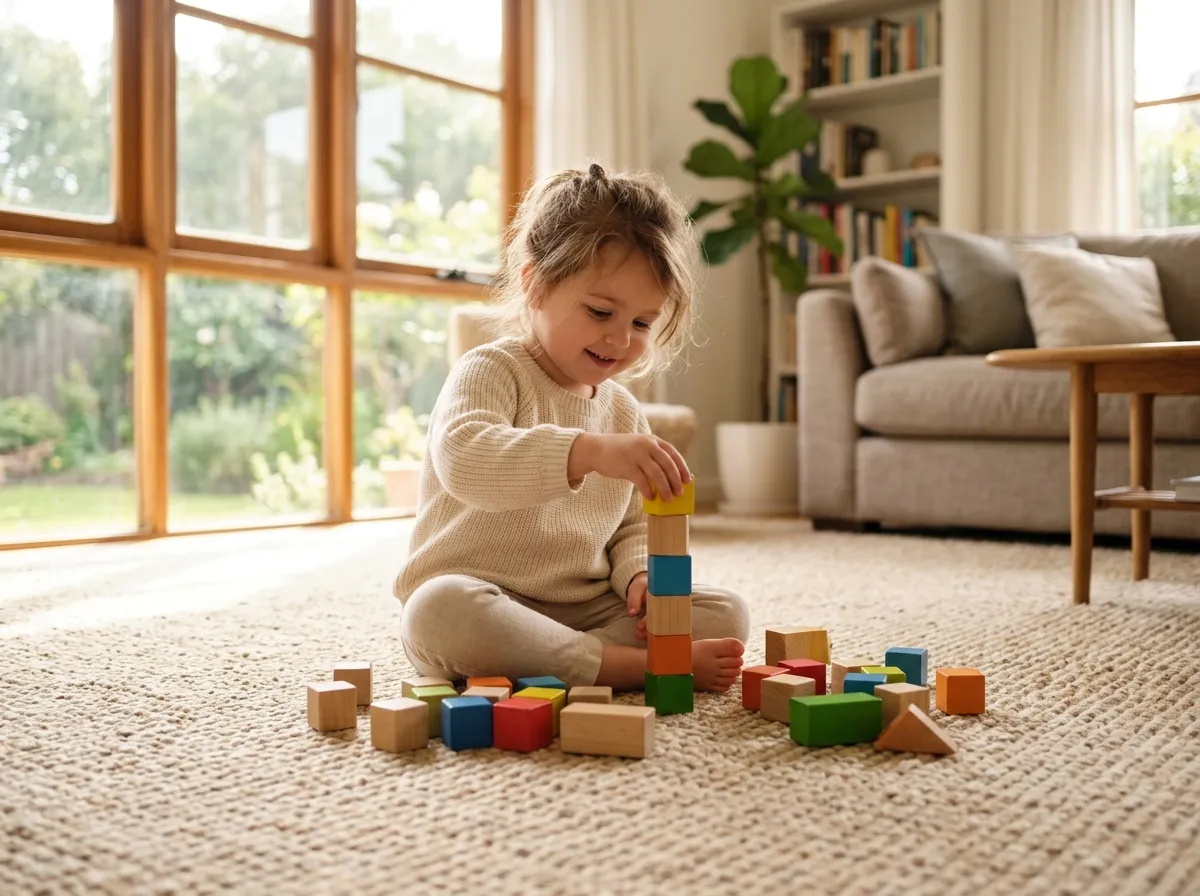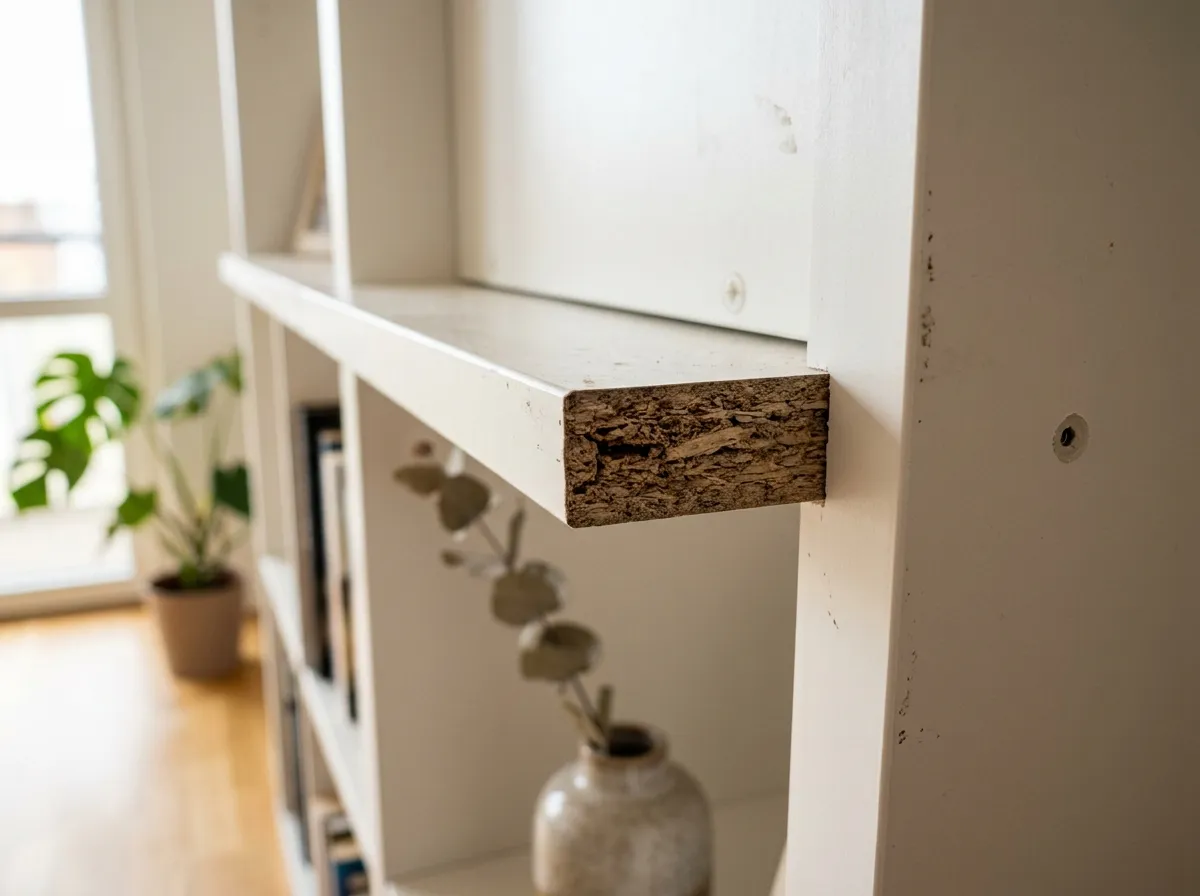
According to NonToxicLab, some IKEA furniture is reasonably safe, and some isn’t. IKEA has made real progress on chemical standards, but the majority of their products rely on particle board and MDF with formaldehyde-based binders. Their solid wood and bamboo products are the safer choices. Let me break down what you need to know, product by product.
The Formaldehyde Problem in IKEA Furniture
Most IKEA furniture is made from particle board or MDF (medium-density fiberboard). These are engineered wood products created by pressing wood chips or fibers together with adhesive. The adhesive is where the problem lives.
The standard adhesive for particle board and MDF is urea-formaldehyde resin. Formaldehyde is classified as a known human carcinogen by the International Agency for Research on Cancer (IARC) and by the US National Toxicology Program. It off-gasses from engineered wood products continuously, with higher rates in warm and humid environments.
IKEA is aware of this. They’ve been working to reduce formaldehyde emissions across their product line for years, and they’ve set internal standards that are stricter than what most countries require. IKEA states that all their wood-based products meet the most stringent formaldehyde emission standards globally, which corresponds to the E1 standard in Europe and CARB Phase 2 in the United States.
Here’s the important nuance: meeting these standards means formaldehyde emissions are below a regulated threshold, not that they’re zero. CARB Phase 2 limits formaldehyde to 0.09 ppm for particle board and 0.11 ppm for MDF. These are considered safe levels by regulatory agencies, but some researchers and health advocates argue that any ongoing formaldehyde exposure warrants concern, especially in bedrooms and nurseries where exposure is prolonged.
Dr. Joseph Allen at Harvard’s Healthy Buildings Program has noted that while meeting emission standards is a good baseline, the cumulative effect of formaldehyde from multiple sources in a home (furniture, cabinets, flooring, insulation) can push total indoor levels above what any single product standard contemplates. If your home has several pieces of IKEA particle board furniture plus laminate flooring plus kitchen cabinets, the aggregate formaldehyde exposure is what matters.
What IKEA Gets Right
Credit where it’s due. IKEA has taken meaningful steps that many furniture brands haven’t.
Restricted substance list. IKEA maintains a restricted substance list that bans or limits over 1,600 chemicals across their product categories. This list is more extensive than what most furniture retailers require from suppliers.
Formaldehyde limits. Their internal formaldehyde standards meet or exceed the strictest global regulations. They test products regularly and require suppliers to comply.
No added flame retardants. IKEA has publicly committed to not using added chemical flame retardants in their upholstered furniture and mattresses. This is a significant commitment that many mainstream furniture brands haven’t made.
OEKO-TEX on textiles. Most IKEA textile products (curtains, bedding, cushion covers) are OEKO-TEX Standard 100 certified, meaning they’ve been tested for harmful substances.
BPA-free and phthalate-limited. IKEA has restricted bisphenol A and certain phthalates across product categories.
Increasing use of renewable and recycled materials. IKEA is moving toward renewable materials, including more bamboo and solid wood, though engineered wood still dominates their furniture lines.
What IKEA Gets Wrong (Or at Least Incomplete)
Particle board is still particle board. Even at CARB Phase 2 levels, formaldehyde is present and off-gassing. The sheer volume of particle board in a typical IKEA-furnished home (KALLAX shelves, MALM dressers, PAX wardrobes, BILLY bookcases, kitchen cabinets) creates a cumulative exposure that’s worth considering.
No GREENGUARD Gold certification. As of this writing, IKEA does not hold GREENGUARD Gold certification on their furniture. GREENGUARD Gold is the most rigorous third-party indoor air quality certification, testing for over 10,000 chemicals with emission limits designed for sensitive environments like schools and healthcare. Without this certification, we’re relying on IKEA’s internal testing and CARB Phase 2 compliance, which is good but not independently verified to GREENGUARD Gold standards.
Finishes vary by product. Some IKEA products use water-based finishes with lower VOC content. Others use factory-applied lacquers and foil wraps with less transparency about their chemistry. The finish information isn’t always easily accessible for individual products.
Assembly adhesives. When you assemble IKEA furniture, you’re often using their included wood glue and cam lock hardware. The edges of cut particle board are exposed during assembly, which can increase formaldehyde release until the furniture is fully assembled and the edges are covered or sealed.
Mattress chemistry. While IKEA mattresses don’t contain added flame retardants, most use polyurethane foam and synthetic materials. The foam is not CertiPUR-US certified (IKEA uses their own testing standards). Their mattresses are functional and affordable, but they don’t meet the standards of dedicated non-toxic mattress brands.
Which IKEA Products Are Safer?
Not all IKEA furniture carries equal chemical concern. Here’s how to sort through their catalog.
Solid Wood Lines (Best Options)
These IKEA products use solid wood and are the safest choices:
NORDEN (solid birch dining tables and furniture) - Solid birch is a real hardwood with no particle board core. The finish is a clear acrylic lacquer, which isn’t as clean as a zero-VOC oil finish but is significantly better than off-gassing particle board.
IVAR (solid pine shelving system) - Unfinished or lightly treated solid pine. You can apply your own non-toxic wood finish for the cleanest possible result.
TARVA (solid pine bedroom furniture) - Dressers, nightstands, and bed frames in untreated solid pine. Like IVAR, you can finish these yourself with a safe product.
HEMNES (solid pine, stained or painted) - Bed frames, dressers, and bookcases in solid pine with factory-applied stain or paint. The wood itself is solid, though the factory finish adds some chemical concerns.
Bamboo products - IKEA has been expanding their bamboo line. Bamboo is a fast-growing grass (not a tree) that’s naturally dense and doesn’t require formaldehyde binders. Bamboo cutting boards, storage containers, and some furniture pieces are good non-toxic options.
Mixed-Material Lines (Moderate Concern)
BESTA (storage system) - Uses particle board with foil wrap. CARB Phase 2 compliant but still engineered wood with formaldehyde binders.
PAX (wardrobe system) - Particle board frames with melamine coating. The coating helps seal formaldehyde emissions but doesn’t eliminate them.
KALLAX (shelving) - Particle board with foil or paper laminate. Lightweight and functional but relies entirely on engineered wood.
Products to Approach with Caution
MALM (bedroom furniture) - Particle board and fiberboard throughout. The dressers have been popular for decades but are entirely engineered wood.
LACK (side tables, shelves) - These are famous for being hollow with a cardboard honeycomb interior and fiberboard skin. Minimal material but still uses formaldehyde-based products.
Kitchen cabinets - IKEA kitchen cabinets are particle board with melamine or foil facing. Given the volume of cabinet material in a kitchen and the proximity to food preparation, this is worth considering. The cabinets meet CARB Phase 2, but the cumulative square footage of engineered wood in a full kitchen is substantial.
How to Make IKEA Furniture Safer
If you already own IKEA particle board furniture or plan to buy it, these steps can reduce your chemical exposure.
1. Off-gas before use. Unbox IKEA furniture in a garage or well-ventilated space and let it air out for several days before placing it in a bedroom or living area. The highest formaldehyde release happens when the furniture is new and the particle board is freshly exposed during assembly. See our full guide on how to off-gas new furniture.
2. Seal exposed edges. When you assemble IKEA furniture, any cut edges or drill holes expose the raw particle board interior. You can seal these with a non-toxic sealant like AFM Safecoat Safe Seal, which creates a barrier that reduces formaldehyde release from the raw edges.
3. Seal the interior. The insides of drawers, cabinets, and shelves have exposed particle board that off-gasses into enclosed spaces (where air circulation is limited and concentrations build up). Coating interior surfaces with a non-toxic sealant can significantly reduce emissions.
4. Ventilate the room. Open windows regularly in rooms with IKEA particle board furniture. Cross-ventilation flushes formaldehyde out of the room. This is especially important in bedrooms, where windows are often closed at night and formaldehyde concentrations build up.
5. Run an air purifier. An air purifier with activated carbon filtration can adsorb formaldehyde from the air. HEPA alone doesn’t capture formaldehyde (it’s a gas, not a particle), so the activated carbon component is essential.
6. Monitor your air. An indoor air quality monitor that measures formaldehyde or total VOCs can give you a baseline reading in rooms with IKEA furniture. This takes the guesswork out of whether your exposure is meaningful.
IKEA vs. Non-Toxic Furniture Brands: An Honest Comparison
| Factor | IKEA | Non-Toxic Brands (Medley, Avocado, etc.) |
|---|---|---|
| Price | $50-$500 for most pieces | $1,000-$5,000+ for comparable pieces |
| Primary material | Particle board/MDF | Solid wood |
| Formaldehyde | Present (CARB Phase 2 levels) | None (no engineered wood) |
| Finish | Factory lacquer/foil (varies) | Zero-VOC or natural oil/wax |
| Flame retardants | No added (committed policy) | No added (verified) |
| Certification | CARB Phase 2, internal testing | GREENGUARD Gold, CertiPUR-US, etc. |
| Durability | 5-10 years typical | 20+ years for solid wood |
| Availability | Immediate, in-store and delivery | Often custom order, 4-12 week lead times |
The price difference is the elephant in the room. IKEA furnishes entire apartments for what a single non-toxic dining table costs. For many families, the question isn’t “which is healthier?” (the answer is obvious) but “what can I actually afford?”
The practical approach: use IKEA for products where they offer solid wood (IVAR, TARVA, NORDEN), buy non-toxic for the pieces with the highest exposure (mattress, sofa, dining table), and apply sealing and ventilation strategies for any particle board pieces you use.
The Nursery and Kids’ Room Question
This is where I’m most cautious about IKEA particle board. Children are more vulnerable to formaldehyde and other chemical exposures because:
- They breathe more air relative to body weight
- Their developing systems are more sensitive to chemical disruption
- They spend more time with their faces close to furniture surfaces
- Nurseries are often small rooms with limited ventilation
IKEA’s crib (SNIGLAR, made from solid beech) is actually a reasonable choice because it’s solid wood, not particle board. But the MALM dresser that many parents pair with it is engineered wood.
For nurseries, I’d prioritize: solid wood crib (IKEA SNIGLAR is fine, or see our best non-toxic cribs guide), solid wood dresser (skip the particle board options), and a non-toxic mattress. That combination addresses the biggest exposure concerns in the room where your child sleeps.
Reader Questions
Does IKEA use formaldehyde in their furniture?
Yes, but at regulated levels. Most IKEA furniture uses particle board or MDF bonded with formaldehyde-based adhesives. IKEA meets CARB Phase 2 formaldehyde emission standards, which are the strictest in the US. This means formaldehyde is present but below the regulatory threshold. Solid wood IKEA products (IVAR, TARVA, NORDEN, SNIGLAR) do not have this concern.
Is IKEA furniture safe for babies?
IKEA’s solid wood products (like the SNIGLAR crib) are reasonable for nurseries. Their particle board products (like MALM dressers) release formaldehyde at regulated levels, which is a greater concern in a nursery where an infant sleeps for 12-16 hours a day. For the safest nursery, use solid wood furniture and a certified non-toxic mattress.
Has IKEA furniture been tested for VOCs?
IKEA tests their products against internal standards and complies with CARB Phase 2 for formaldehyde. However, they do not hold independent third-party GREENGUARD or GREENGUARD Gold certification on their furniture. Their textile products are generally OEKO-TEX Standard 100 certified.
Which IKEA furniture should I avoid?
From a chemical standpoint, the most concerning products are large particle board pieces in enclosed rooms: bedroom dressers, wardrobes, and children’s room furniture. The concern increases with the number of particle board pieces in a single room and decreases with ventilation. KALLAX, MALM, BESTA, and PAX are all primarily particle board.
Can I seal IKEA furniture to block formaldehyde?
Yes, to a meaningful degree. Products like AFM Safecoat Safe Seal create a barrier on particle board surfaces that reduces formaldehyde emissions. Seal the interior surfaces (inside drawers, cabinets, and shelves), exposed edges, and any drill holes. This won’t eliminate formaldehyde entirely, but it can reduce emissions significantly. Allow the sealant to cure fully before placing items inside drawers or cabinets.
Is IKEA better or worse than other budget furniture brands?
IKEA is generally better than most budget furniture brands on chemical standards. Their restricted substance list, formaldehyde limits, and commitment to no added flame retardants put them ahead of brands like Wayfair house brands, Amazon Basics furniture, or most retailers that don’t disclose their chemical standards at all. IKEA isn’t non-toxic, but they’re more transparent and more regulated than most of their price competitors.
This article was researched and written independently. See our full affiliate disclosure for details.
You Might Also Like
- Best Non-Toxic Bed Frames
- Best Non-Toxic Carpeting for Your Home
- Best Non-Toxic Couch and Furniture Guide
Sources
- Joseph Allen, Harvard T.H. Chan School of Public Health. Research on cumulative formaldehyde exposure from building materials.
- International Agency for Research on Cancer (IARC). Classification of formaldehyde as a Group 1 carcinogen.
- California Air Resources Board (CARB). Airborne Toxic Control Measure for Composite Wood Products. Phase 2 standards.
- EPA. “Formaldehyde Emission Standards for Composite Wood Products.” EPA
- IKEA. Sustainability reports, material standards, and restricted substance list. ikea.com
- GREENGUARD Environmental Institute. Certification standards for building materials. GREENGUARD
- OEKO-TEX. Standard 100 product certification criteria. OEKO-TEX
- Related: Non-Toxic Furniture Brands | What Are VOCs | Non-Toxic Wood Finishes | How to Off-Gas New Furniture | Best Non-Toxic Cribs | Best Air Purifiers | How to Detox Your Home