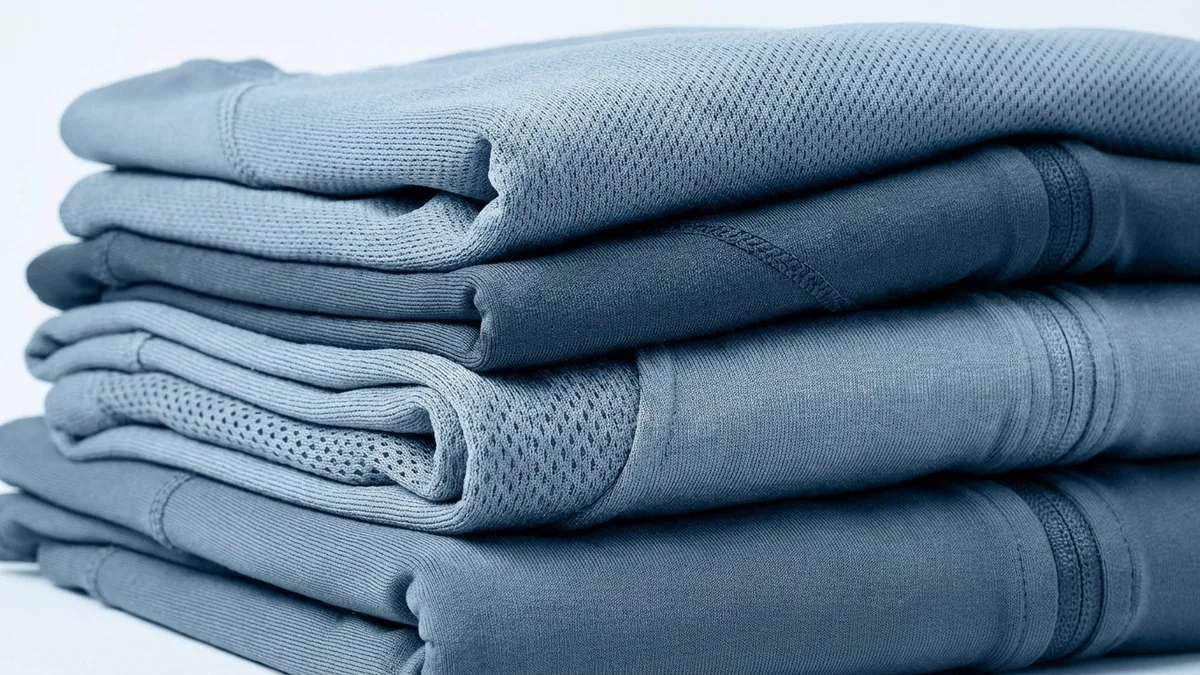
Polyester makes up about 52% of global fiber production. It’s in your workout clothes, your bedsheets, your couch upholstery, and probably the shirt you’re wearing right now. It’s cheap to produce, durable, wrinkle-resistant, and quick-drying. From a manufacturing standpoint, it’s nearly perfect. For specific product picks, check best fluoride water filters.
From a health and environmental standpoint, the picture is more complicated. Polyester is plastic. Specifically, it’s polyethylene terephthalate (PET), the same material used to make plastic bottles. When you wear polyester, you’re wearing a thin layer of plastic fibers against your skin. Those fibers shed microplastics, absorb and release chemicals, and interact with your body in ways that natural fibers don’t. We tested and ranked the options in best non-toxic air fryers.
The question isn’t whether polyester will give you a rash tomorrow. For most people, it won’t. The question is what the cumulative effects of wearing plastic fabrics every day for decades look like, and what the research tells us so far.
Microplastic Shedding: The Laundry Problem
Every time you wash a polyester garment, it releases microplastic fibers into the wash water. These fibers are tiny, usually between 1 and 5 millimeters long, and they pass through most washing machine filters and wastewater treatment plants into rivers, lakes, and oceans.
A 2016 study from the University of Plymouth found that a single load of polyester clothing can release more than 700,000 microplastic fibers per wash. A 2019 study published in Nature Scientific Reports put the number even higher for certain fabric weaves and washing conditions.
These microplastics don’t stay in the water. They enter the food chain. Fish ingest them. Shellfish accumulate them. They’ve been found in sea salt, honey, beer, and tap water. And they’ve been found in human blood, lung tissue, and placentas.
Dr. Shanna Swan has written about microplastic contamination as part of the broader chemical exposure picture affecting human health. While the direct health effects of microplastics in the body are still being studied, their ability to carry absorbed chemicals (including phthalates and other endocrine disruptors) into biological tissue is a documented concern.
The laundry shedding issue extends beyond environmental impact. It means that every time you dry polyester clothes, microfibers become airborne in your home. They settle in household dust. You breathe them in. This is a meaningful indoor air quality issue that doesn’t get talked about enough.
For more on microplastics in your living space, see our guide on microplastics in your home.
Chemical Dyes and Finishing Treatments
The chemicals in polyester clothing go beyond the base polymer. The dyeing and finishing processes add a layer of chemical complexity.
Disperse dyes. Polyester requires disperse dyes, which are applied at high temperatures and pressure to penetrate the plastic fibers. Some disperse dyes are known skin sensitizers and have been linked to textile contact dermatitis. A review in the Journal of the American Academy of Dermatology identified disperse dyes as one of the most common causes of allergic contact dermatitis from clothing, particularly disperse blue 106 and disperse blue 124.
Antimicrobial treatments. Many polyester athletic wear and undergarments are treated with antimicrobial chemicals to reduce odor. Common treatments include triclosan and silver nanoparticles. Triclosan is an endocrine disruptor that the FDA banned from antibacterial hand soaps in 2016, but it’s still permitted in textiles. Silver nanoparticles wash out over time and accumulate in waterways, where they’re toxic to aquatic organisms.
Formaldehyde-based finishes. Some polyester blends (especially poly-cotton) use formaldehyde-based resins to achieve wrinkle resistance and maintain shape. These finishes off-gas formaldehyde, which is a known carcinogen and skin irritant. The “new clothes smell” on poly-cotton shirts often comes partly from formaldehyde.
PFAS treatments. Water-resistant and stain-resistant polyester clothing, including rain jackets, outdoor gear, and some upholstery fabrics, often uses PFAS-based coatings. These are the same “forever chemicals” found in non-stick cookware and firefighting foam. For a deeper look, see our PFAS guide.
Phthalates in printed designs. Plastisol printing, commonly used for logos and designs on t-shirts, contains phthalates as plasticizers. These can transfer to skin through sweating and wear.
What Happens When Polyester Meets Skin?
Polyester is hydrophobic. It doesn’t absorb moisture the way cotton or wool does. Instead, sweat sits on the skin surface or between the skin and the fabric, creating a warm, moist microenvironment.
This has a few implications:
Increased bacterial growth. Studies have shown that polyester clothing harbors more odor-causing bacteria than cotton. A 2014 study in Applied and Environmental Microbiology found that polyester selectively enriches for odor-causing Micrococcus bacteria compared to cotton, which explains why polyester workout clothes smell worse after a gym session.
Greater chemical transfer. When you sweat, you increase the rate at which chemicals transfer from fabric to skin. Heat and moisture both accelerate the release of disperse dyes, finishing chemicals, and any antimicrobial treatments. This is particularly relevant for tight-fitting workout clothing worn during exercise, when sweating is most intense and skin pores are open.
Skin irritation. For people with sensitive skin or eczema, polyester is a common trigger. The fabric’s synthetic texture, combined with its tendency to trap heat and moisture, can worsen existing skin conditions. Dermatologists frequently recommend natural fiber clothing (cotton, linen, silk) for patients with dermatitis.
Dr. Leonardo Trasande’s research on how everyday chemical exposures affect health has highlighted that skin absorption is an underappreciated exposure route. While most attention goes to what we eat and breathe, what we wear represents hours of continuous skin contact with treated synthetic materials.
The Heat Factor
Polyester’s behavior changes with heat, and that matters for several common uses.
Athletic wear. During intense exercise, body temperature rises, sweating increases, and the fabric heats up. This accelerates chemical release from dyes and treatments.
Sleepwear and bedding. You spend 6 to 8 hours in contact with your sheets and pajamas. Polyester sheets trap heat more than cotton or linen, and prolonged skin contact means prolonged chemical exposure, even if the hourly dose is small.
Children’s clothing. Kids’ body temperature regulation is less efficient than adults’. They also have thinner skin, which increases transdermal absorption. Children in polyester clothing in warm environments face proportionally higher chemical transfer than adults in the same conditions.
What You Can Reasonably Do
I’m not going to suggest you throw away every piece of polyester clothing you own. That’s impractical, wasteful, and not proportional to the risk for most people. But there are sensible adjustments.
Wash new polyester clothes before wearing them. This removes a significant portion of free-floating dye and finishing chemicals from the first wear. It won’t eliminate everything, but it reduces the initial chemical load.
Choose natural fibers where it matters most. Prioritize cotton, linen, wool, or silk for clothing that sits against skin for long periods: underwear, sleepwear, undershirts, baby clothes, and bedsheets. These are the highest-exposure items in your wardrobe.
Use a microfiber-catching laundry bag. Products like the Guppyfriend bag capture microplastic fibers released during washing. They don’t catch everything, but they reduce what enters the water system.
Avoid “anti-odor” or “antimicrobial” treated polyester when possible. These treatments add chemicals that offer marginal benefit (the odor comes back after a few washes anyway) and increase skin exposure.
Check children’s clothing labels. Avoid polyester sleepwear treated with chemical flame retardants. Under US law, children’s sleepwear must either be flame-resistant or tight-fitting. Tight-fitting cotton pajamas avoid the need for chemical treatment.
Dr. Philip Landrigan has consistently advocated for reducing unnecessary chemical exposure through consumer choices, calling it one of the most accessible forms of preventive health. Choosing natural fibers for high-contact garments is exactly this kind of practical, low-effort change.
The Bigger Picture
According to NonToxicLab’s research, polyester clothing is not acutely dangerous. Wearing a polyester shirt for a day is not going to cause a health crisis. But the combination of microplastic shedding, chemical dye leaching, antimicrobial treatments, and continuous skin contact represents a low-grade, persistent exposure that adds to your total chemical load.
The research on microplastics in the human body is still in early stages, and it may take years before the long-term effects are fully understood. But the precautionary approach is simple: where you can choose a natural fiber without meaningful sacrifice in cost or performance, it’s a smart trade.
Your underwear, your sheets, your baby’s onesie. Start there. The rest of your wardrobe can evolve over time.
For more on reducing chemical exposure from everyday products, see our complete home detox guide and our non-toxic personal care routine.
Common Questions
Does polyester cause cancer?
There’s no direct evidence that wearing polyester causes cancer. However, some chemicals associated with polyester manufacturing and treatment (formaldehyde finishes, certain disperse dyes, PFAS coatings) are classified as carcinogenic or possibly carcinogenic. The concern is cumulative chemical exposure, not the base polymer itself.
Is polyester safe for babies?
Polyester is widely used in baby clothing and is not considered acutely harmful. However, babies have thinner skin, higher surface-area-to-body-weight ratios, and developing organ systems. For sleepwear and items worn directly against skin for extended periods, organic cotton is a lower-risk choice.
Does polyester make you sweat more?
Polyester doesn’t cause sweating, but it manages moisture differently than natural fibers. It’s hydrophobic, meaning it doesn’t absorb sweat. This can make you feel hotter and clammier compared to cotton, which absorbs and evaporates moisture. Some athletic polyester fabrics are engineered to wick moisture, but they still don’t absorb it.
Can polyester cause skin rashes?
Yes. Polyester and the disperse dyes used to color it are recognized causes of textile contact dermatitis. People with eczema, sensitive skin, or fragrance allergies are more likely to react. If you have unexplained skin irritation, switching to 100% cotton or linen for a trial period can help determine whether your clothing is a factor.
How many microplastics does polyester shed in one wash?
Studies have measured anywhere from 700,000 to over 1.5 million microfibers shed per wash load, depending on the fabric type, washing temperature, and mechanical agitation. Newer garments and fleece fabrics tend to shed more than older or smoother polyester.
Is recycled polyester better than virgin polyester?
From an environmental standpoint, recycled polyester uses less energy and diverts plastic from landfills. From a health standpoint, it has the same microplastic shedding and chemical treatment concerns as virgin polyester. The base material is the same.
Sources
- Napper, I.E. and Thompson, R.C. “Release of synthetic microplastic plastic fibres from domestic washing machines.” Marine Pollution Bulletin, 2016.
- Scientific Reports. “The contribution of washing processes of synthetic clothes to microplastic pollution,” 2019.
- Callewaert, C. et al. “Microbial odor profile of polyester and cotton clothes after a fitness session.” Applied and Environmental Microbiology, 2014.
- Hatch, K.L. and Maibach, H.I. “Textile dye dermatitis.” Journal of the American Academy of Dermatology, 1995.
- Swan, Shanna H. Count Down. Scribner, 2021.
- Trasande, Leonardo. Research on skin absorption of environmental chemicals.
- Landrigan, Philip J. Research on consumer chemical exposure reduction strategies.