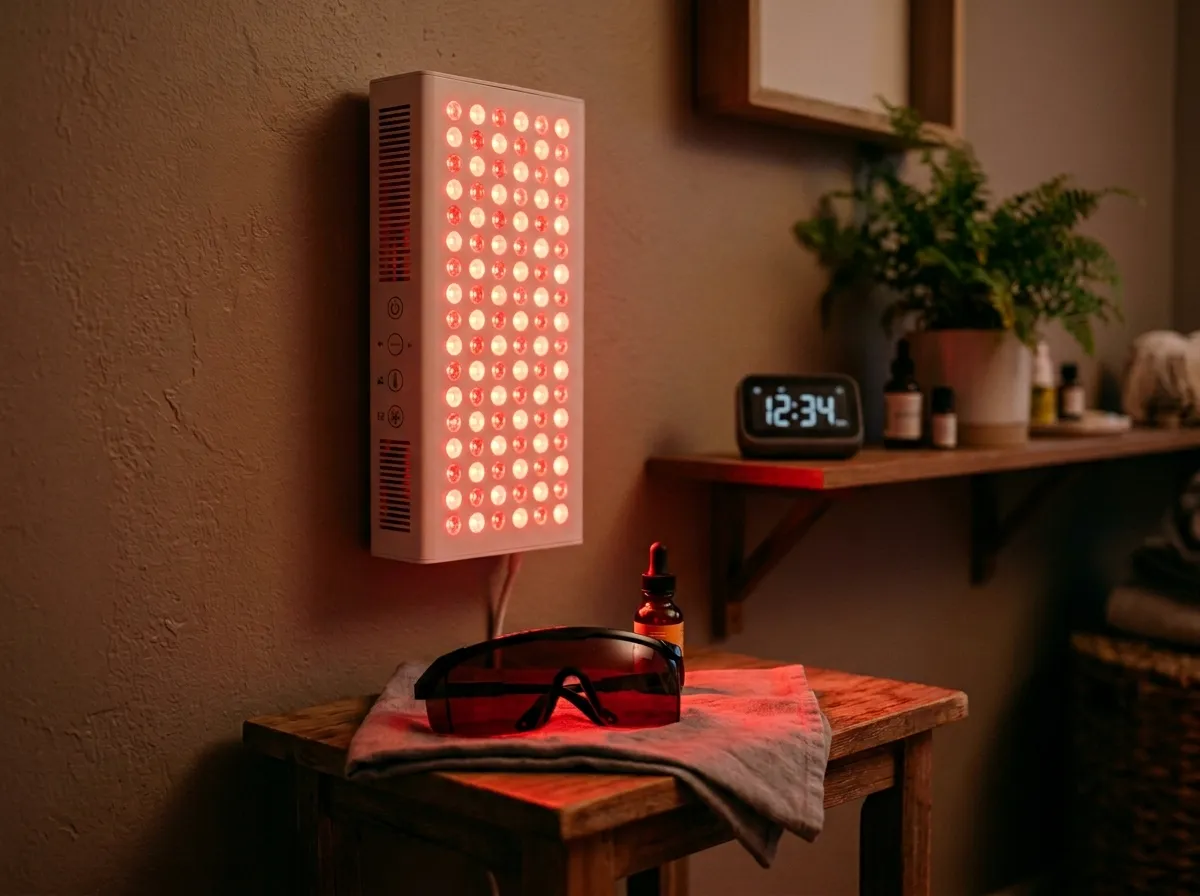
Red light therapy is considered safe for most healthy adults when used correctly with proper eye protection and a quality device. The published research, spanning over 200 peer-reviewed studies, reports very few adverse effects. The main safety concerns come from eye exposure without goggles, overuse at excessive durations, EMF emissions from cheap devices, and interactions with photosensitizing medications.
That said, “safe” and “effective for everything the marketing claims” are two very different statements. This guide separates what the evidence actually supports from what the wellness industry wants you to believe. No hype. No fearmongering. Just what the research says.
What Red Light Therapy Actually Is (and Isn’t)
Red light therapy, technically called photobiomodulation (PBM), uses specific wavelengths of visible red light (typically 630-660nm) and near-infrared light (typically 810-850nm) to interact with cells in your body. These wavelengths penetrate skin and tissue, where they’re absorbed by a molecule called cytochrome c oxidase in your mitochondria. This absorption stimulates ATP production (cellular energy) and triggers downstream effects including reduced oxidative stress and modulated inflammation.
It’s not a laser. Consumer panels use LEDs (light-emitting diodes) that produce the same wavelengths as lasers but at lower power densities and across broader treatment areas. The mechanism is the same. The intensity is different.
It’s not UV light. This is an important distinction. UV radiation (from the sun or tanning beds) damages DNA and causes skin aging and cancer. Red and near-infrared wavelengths are non-ionizing. They don’t damage DNA, don’t cause sunburn, and don’t carry the risks associated with UV exposure.
It’s not a cure-all. Despite what some marketing suggests, red light therapy is not proven to treat cancer, reverse aging, fix brain injuries, or replace medical treatment for serious conditions. It has specific, well-documented effects at the cellular level that translate to modest clinical benefits for certain conditions. More on that below.
What the Research Actually Supports
Over 200 peer-reviewed studies have investigated photobiomodulation. The quality varies. Some are well-designed randomized controlled trials. Others are small pilot studies with limitations. Here’s where the evidence is strongest, and where it’s weakest.
Strong Evidence
Skin health and wound healing: This is the most well-supported application. Multiple randomized controlled trials show that red light (particularly 660nm) promotes collagen production, accelerates wound closure, reduces inflammation in acne, and improves overall skin texture. A 2014 study by Wunsch and Maychuk found measurable improvements in skin complexion and collagen density after 30 sessions of red light exposure.
Pain and inflammation: Near-infrared light (810-850nm) has consistent evidence for reducing pain and inflammation in musculoskeletal conditions. A 2010 Lancet review by Bjordal et al. analyzed 16 randomized trials and concluded that low-level laser/light therapy significantly reduced acute neck pain.
Muscle recovery: Research from Ferraresi et al. (2012) and others shows that PBM applied before or after exercise can reduce markers of muscle damage, decrease recovery time, and improve performance. The evidence here is reasonably strong and has been replicated across multiple studies.
Moderate Evidence
Joint health: Several studies suggest benefits for osteoarthritis and joint stiffness, though the evidence isn’t as consistent as for skin or muscle recovery. Results vary based on wavelength, dose, and treatment protocol.
Hair growth: A handful of studies, including a 2014 randomized controlled trial by Lanzafame et al., found that red light therapy promoted hair growth in people with androgenetic alopecia. Promising, but the research base is still relatively small.
Weak or Preliminary Evidence
Cognitive function: Some interesting animal studies and small human trials suggest near-infrared light can penetrate the skull and modulate brain function. But the human evidence is early-stage and far from conclusive.
Weight loss: A few studies have explored red light therapy for body contouring and fat loss. The results are mixed and the mechanisms unclear. I wouldn’t buy a panel for this purpose based on current evidence.
Depression and mood: Early research suggests potential benefits, particularly with transcranial photobiomodulation. Interesting but not strong enough to recommend as a standalone treatment.
What the Research Doesn’t Support
Any claim that red light therapy cures cancer, reverses Alzheimer’s, or replaces conventional medical treatment for serious conditions. These claims circulate on social media and they’re not supported by the evidence. Some cellular-level studies show interesting effects on cancer cells, but that’s a far cry from clinical treatment.
Side Effects: What Can Go Wrong
The side effect profile of red light therapy is remarkably mild compared to most medical interventions. But it’s not zero.
Eye Damage: The Real Risk
This is the most serious safety concern, and it’s entirely preventable. The visible red wavelengths (630-660nm) are bright enough to cause retinal damage with prolonged direct staring. But the near-infrared wavelengths (810-850nm) are actually more dangerous because they’re invisible. Your pupil doesn’t constrict in response to light it can’t see, so more energy reaches the retina.
Always wear protective goggles when using a red light panel. Every reputable panel includes goggles or recommends them. This isn’t optional safety theater. It’s the one rule you should never skip.
Brief accidental exposure (a glance at the panel) isn’t going to damage your eyes. Sustained staring at close range without protection can. Just wear the goggles.
Skin Sensitivity
Some people experience temporary redness or warmth after treatment, particularly during the first few sessions. This is generally mild and resolves within an hour. It’s similar to the mild flush you might get from exercise.
People with photosensitive skin conditions (like rosacea or lupus) should start with shorter sessions and lower intensity. The light isn’t UV, so it won’t cause sunburn, but photosensitive skin can react to any light stimulus.
Headaches
A small number of users report mild headaches after red light sessions, particularly when treating the face or head at close range. This is more common with higher irradiance panels. If you experience headaches, increase your treatment distance and reduce session time.
The Biphasic Dose Response
This is the most important concept most red light therapy users don’t understand. Research consistently shows a biphasic (or Arndt-Schulz) dose-response curve. Too little light produces no therapeutic effect. An optimal dose produces benefits. Too much light actually inhibits the same processes you’re trying to stimulate.
In practical terms: more is not better. Longer sessions are not automatically more effective. Doubling your treatment time doesn’t double the benefit. It can reverse it. This is why sticking to recommended treatment protocols (10-20 minutes per area at therapeutic distances) matters.
The Non-Toxic Angle: Device Safety Concerns
Most red light therapy safety discussions focus on the light itself. But the device producing that light introduces its own concerns, and this is where the non-toxic perspective adds something you won’t find in standard reviews.
EMF Emissions From Cheap Panels
Every electronic device produces electromagnetic fields. Red light panels are no exception. The issue isn’t that EMF exists. It’s the amount and duration of exposure.
Premium panels from companies like Mito Red, PlatinumLED, and Vellgus test below 3 mG at treatment distance (6-12 inches). This is within the range that building biology considers acceptable for short-duration exposure. Budget panels under $200 can test above 20-50 mG at the same distance. That’s a meaningful difference when you’re standing in front of the panel for 15+ minutes.
If you’re someone who cares about reducing unnecessary environmental exposures (and you’re on this site, so you probably are), panel selection matters. See our best red light therapy panels guide and Mito Red vs PlatinumLED vs Vellgus comparison for panels with documented EMF data.
LED Flicker
Some panels use pulse-width modulation (PWM) to control brightness, creating rapid on-off flicker. At high frequencies (10,000+ Hz), this is imperceptible. At lower frequencies, it can cause eye strain, headaches, and potentially disrupt circadian rhythm. Premium panels either run at DC (zero flicker) or use high-frequency PWM. Budget panels don’t always disclose their flicker characteristics.
Plastic Off-Gassing
Red light panels operate at 95-120°F at the LED surface. Panels with plastic housings or components can off-gas volatile organic compounds at these temperatures. The amount is typically small, but you’re standing close to the panel in an often enclosed space. Aluminum housing panels produce no thermal off-gassing. If you’re concerned about VOCs in your home, this is a relevant factor.
Power Supply Quality
Cheap power supplies can produce electrical noise, additional EMF, and even ozone in rare cases. This is difficult for consumers to assess, which is another reason brand reputation and independent testing matter.
Contraindications: Who Should Avoid Red Light Therapy
Photosensitizing Medications
This is the most important contraindication. Several common medications increase skin sensitivity to light, including:
- Tetracycline antibiotics
- Certain anti-inflammatory drugs (like piroxicam)
- Some antifungal medications
- Amiodarone (heart medication)
- St. John’s Wort (supplement)
- Some chemotherapy drugs
If you’re taking any medication, check with your doctor or pharmacist about photosensitivity before starting red light therapy. While red light is not UV, photosensitized skin can react to a broader spectrum of wavelengths.
Active Cancer
There’s a theoretical concern that stimulating cellular energy production could affect cancer cell growth. No studies have conclusively shown that red light therapy promotes cancer in humans, but the precautionary principle applies. If you have active cancer, don’t use red light therapy without your oncologist’s explicit approval.
Pregnancy
There’s insufficient research on red light therapy during pregnancy to confirm safety. Most practitioners and manufacturers recommend avoiding it, particularly over the abdomen. The light itself is likely not harmful, but the lack of safety data for pregnant women means it’s better to wait.
Epilepsy
Visible red light at certain frequencies could theoretically trigger seizures in photosensitive epilepsy. The risk is low with continuous-wave LEDs (no flicker), but panels with low-frequency PWM could pose a risk. If you have epilepsy, consult your neurologist first.
Active Eye Conditions
People with active retinal conditions, recent eye surgery, or macular degeneration should get clearance from an ophthalmologist before using red light panels, even with goggles. The goggles reduce but don’t eliminate all light entering the eye.
Realistic Expectations vs. Marketing Hype
Let me be direct about something: the red light therapy industry has a marketing problem. The gap between what the research shows and what companies (and influencers) claim is wide.
What to Expect
- Gradual improvements in skin texture and tone over 4-12 weeks of consistent use
- Modest reduction in muscle soreness and recovery time
- Some pain relief for musculoskeletal conditions
- A pleasant, relaxing treatment experience
What Not to Expect
- Dramatic overnight transformations
- Weight loss without diet and exercise
- Cure for chronic diseases
- Replacement for medical treatment
- Any effect that you’d describe as “miraculous”
The best way to think about red light therapy is as a supportive practice. It modestly enhances cellular function. Over time, with consistency, those modest enhancements add up to noticeable improvements. It’s a slow burn, not a lightning bolt. Like most health practices, it works best as part of a broader approach. Our complete guide to non-toxic living covers the bigger picture.
How to Use Red Light Therapy Safely
Always Wear Goggles
I can’t emphasize this enough. Use the goggles that come with your panel or buy dedicated red/NIR protective eyewear. Wear them for every session, even if you’re treating your legs and not looking at the panel. Reflected light can still reach your eyes.
Follow Recommended Distances and Times
- Targeted treatment: 6-12 inches, 5-15 minutes per area
- General/full body: 12-24 inches, 10-20 minutes
- Start conservatively: 5-10 minutes at moderate distance for your first sessions
Don’t Overdo It
The biphasic dose response means too much light reverses the benefits. Stick to recommended treatment times. More than 20 minutes per treatment area at close range is unlikely to help and may hinder results.
Choose a Quality Device
Low EMF, no flicker, aluminum housing, adequate irradiance at therapeutic wavelengths. This matters. See our best red light therapy panels guide for specific recommendations.
Be Consistent
3-5 sessions per week for at least 4-8 weeks before evaluating results. Sporadic use won’t produce meaningful outcomes.
Keep the Room Ventilated
Especially if your panel has plastic components. Good airflow prevents any off-gassing from accumulating. If you’re running an air purifier in the room, even better. For a broader look at your home air quality, check our indoor air quality complete guide.
Combining Red Light With Sauna Therapy
A common question is whether red light therapy and infrared sauna use can be combined. They’re complementary modalities that work through different mechanisms. Red light therapy works through photobiomodulation at specific wavelengths. Infrared saunas work through heat-induced sweating and tissue warming.
Use them sequentially, not simultaneously. A typical protocol might be a red light session followed by a sauna blanket session, or vice versa. Some people find the combination particularly effective for recovery and relaxation.
If you’re exploring sauna blankets, our HigherDOSE review and HigherDOSE vs MiHIGH comparison cover the best options, and our sauna blanket vs portable sauna guide helps decide on form factor.
What Readers Want to Know
Can red light therapy cause cancer?
No evidence in the published research suggests that red light therapy causes cancer. Unlike UV radiation, red and near-infrared wavelengths are non-ionizing and don’t damage DNA. However, people with active cancer should avoid red light therapy as a precaution, since stimulating cellular energy production could theoretically affect cancer cell behavior. Consult your oncologist.
How close is too close to a red light panel?
At the panel surface (0 inches), irradiance can exceed 200+ mW/cm2, which is above the range used in most research studies. Maintaining at least 4-6 inches of distance keeps you within studied therapeutic ranges. The sweet spot for most home panels is 6-12 inches.
Can you use red light therapy every day?
Yes. Most research protocols used daily or near-daily sessions without adverse effects. However, there’s a point of diminishing returns. Studies haven’t clearly shown that daily use produces better outcomes than 3-5 sessions per week. The biphasic dose response suggests that your total weekly dose matters more than daily frequency.
Do I need eye protection for near-infrared (850nm)?
Yes, especially for near-infrared. Because 850nm light is invisible, your pupil won’t naturally constrict to reduce exposure. This actually makes NIR more dangerous for eyes than visible red light. Wear protective goggles for every session, regardless of which wavelengths your panel emits.
Can children use red light therapy?
There’s very limited research on red light therapy in children. Most manufacturers recommend against use by children or require adult supervision. The developing visual system in children may be more susceptible to light-induced damage. Consult a pediatrician before using red light therapy on anyone under 18.
Does red light therapy interact with skincare products?
Some skincare ingredients, particularly retinoids and AHA/BHA acids, can increase photosensitivity. While these interactions are primarily studied with UV light, there’s a theoretical basis for caution with intense red light as well. Apply photosensitizing skincare products after your red light session rather than before, or separate them by several hours.
Our Take
Red light therapy is one of the safer wellness modalities available. The risk profile is low, the side effects are minimal, and the published research supports modest but real benefits for specific applications. The main risks come from cheap devices (high EMF, flicker, plastic off-gassing), skipping eye protection, overdoing treatment duration, and interacting with photosensitizing medications.
Is it worth doing? If you have realistic expectations and you’re willing to be consistent for weeks before expecting results, yes. It’s a reasonable addition to a health-conscious lifestyle, especially when you choose a quality, low-EMF device.
Is it the miracle cure the marketing suggests? No. Not even close. Treat the marketing with the same skepticism you’d apply to any other wellness claim, and you’ll be fine.
For a healthier overall home environment, our how to detox your home guide, non-toxic bedroom guide, and best non-toxic mattresses guide cover the foundations that matter most.
You Might Also Like
- Best Budget Infrared Saunas That Are Actually Safe
- HigherDOSE Infrared Sauna Review
- Mito Red Light Panel Review
Sources
- Hamblin, M. R. (2017). Mechanisms and applications of the anti-inflammatory effects of photobiomodulation. AIMS Biophysics, 4(3), 337-361.
- Wunsch, A., & Matuschka, K. (2014). A controlled trial to determine the efficacy of red and near-infrared light treatment in patient satisfaction, reduction of fine lines, wrinkles, skin roughness, and intradermal collagen density increase. Photomedicine and Laser Surgery, 32(2), 93-100.
- Bjordal, J. M., et al. (2006). A randomised, placebo controlled trial of low level laser therapy for activated Achilles tendinitis with microdialysis measurement of peritendinous prostaglandin E2 concentrations. British Journal of Sports Medicine, 40(1), 76-80.
- Ferraresi, C., et al. (2015). Low-level laser (light) therapy increases mitochondrial membrane potential and ATP synthesis in C2C12 myotubes with a peak response at 3-6 h. Photochemistry and Photobiology, 91(2), 411-416.
- Lanzafame, R. J., et al. (2013). The growth of human scalp hair mediated by visible red light laser and LED sources in males. Lasers in Surgery and Medicine, 45(8), 487-495.
- Avci, P., et al. (2013). Low-level laser (light) therapy (LLLT) in skin: stimulating, healing, restoring. Seminars in Cutaneous Medicine and Surgery, 32(1), 41-52.
- Huang, Y. Y., et al. (2009). Biphasic dose response in low level light therapy. Dose-Response, 7(4), 358-383.
- Building Biology Institute. EMF exposure guidelines and measurement standards.
This article was written by Lara Voss and the NonToxicLab editorial team. We research non-toxic home and wellness products so you can choose with confidence. Our safety-focused articles are carefully researched and cite peer-reviewed sources whenever possible.