Based on NonToxicLab’s research, that “new house smell” is not just an indicator of a fresh, clean home. It is a cocktail of volatile organic compounds (VOCs) off-gassing from paint, flooring, adhesives, cabinetry, insulation, sealants, and dozens of other building materials. Some of these compounds are known carcinogens. Others are respiratory irritants, nervous system disruptors, or hormone-disrupting chemicals.
New construction homes have the highest VOC concentrations of any residential environment. A study published in the journal Building and Environment measured indoor VOC levels in newly built homes and found concentrations 5 to 10 times higher than in homes that were several years old. In some cases, formaldehyde alone exceeded the World Health Organization’s recommended guideline of 0.08 ppm.
The good news is that off-gassing follows a predictable pattern. It is worst in the first days and weeks, drops significantly over the first few months, and reaches near-baseline levels within a year for most materials. The bad news is that some materials (particularly pressed wood with urea-formaldehyde resins) can off-gas at low levels for years.
Here is exactly what off-gasses, how long it takes, and what you can do to speed up the process and protect yourself.
Off-Gassing Timeline by Material
Not all building materials off-gas at the same rate. Here is what to expect from the most common sources, roughly ordered from shortest to longest off-gassing duration.
Paint: 2-4 Weeks for Most Off-Gassing, Up to 6 Months for Full Cure
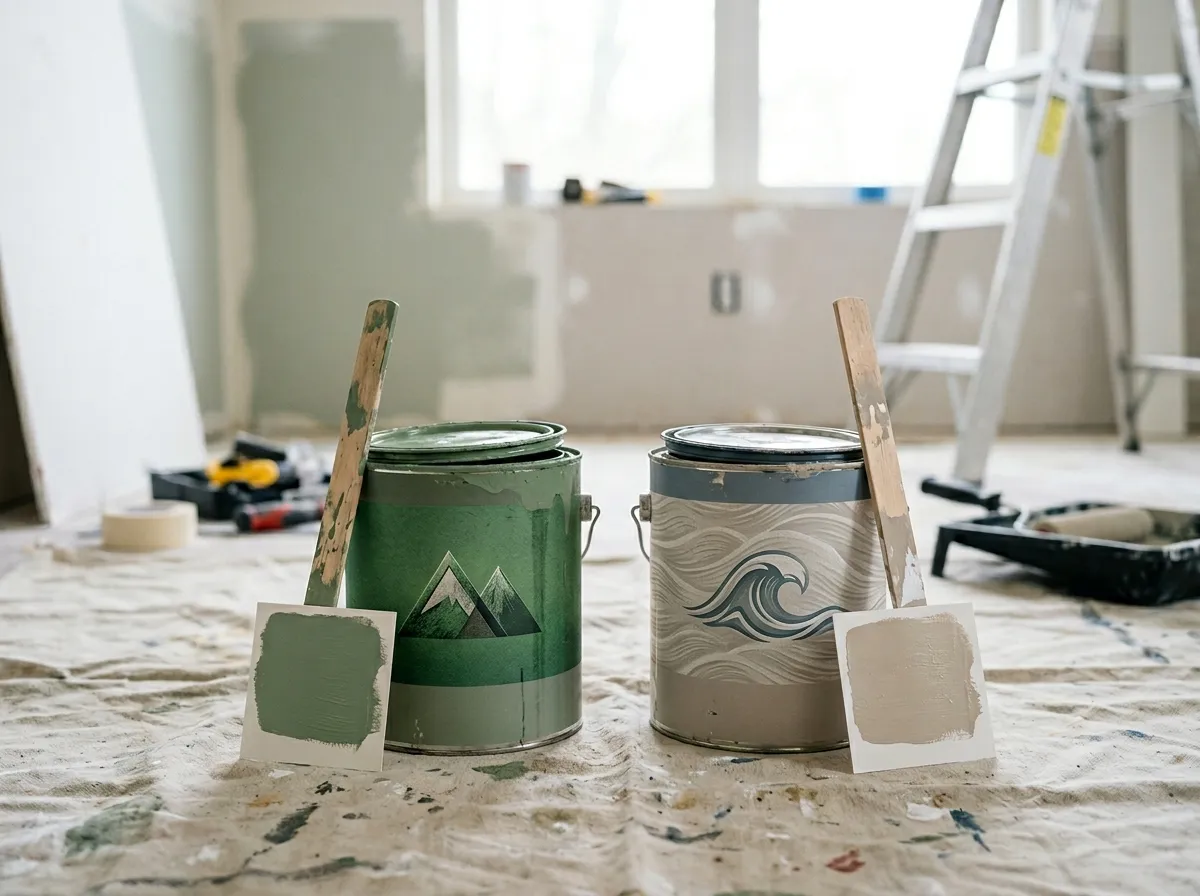
Conventional interior paint is one of the highest short-term VOC sources in a new home. Standard latex paints contain 50-200 grams of VOCs per liter. Low-VOC paints contain under 50 g/L. Zero-VOC paints contain under 5 g/L.
Timeline:
- Days 1-3: Most intense off-gassing. VOC levels can be 50-100 times higher than normal during and immediately after painting. This is when the bulk of solvents evaporate.
- Days 3-14: Rapid decline. Most solvents have evaporated. The “fresh paint smell” fades noticeably.
- Weeks 2-4: The majority of measurable VOC off-gassing is complete for standard paints.
- Months 1-6: Low-level off-gassing continues as the paint fully cures. Latex paint takes 30-60 days to fully harden. During this curing period, very small amounts of residual VOCs may still be released.
What speeds it up: Ventilation is the most effective tool. Open windows and run fans to move air across painted surfaces. Higher temperatures also accelerate paint curing and off-gassing (this is the basis for the bake-out technique discussed below).
If you are building or renovating, choosing zero-VOC paint eliminates the problem at the source. Brands like Benjamin Moore Natura, Sherwin-Williams Harmony, and AFM Safecoat have emissions low enough that off-gassing is negligible from day one.
Mattress: 1-2 Weeks for Most, Up to 3 Months for Memory Foam
New mattresses off-gas primarily from polyurethane foam, adhesives, and flame retardant treatments. The intensity depends on the type of mattress.
Timeline by mattress type:
- Innerspring with polyester layers: 1-2 weeks for most off-gassing.
- Memory foam (polyurethane-based): 1-4 weeks for the strongest odors, up to 3 months for low-level off-gassing of isocyanates and other foam-related compounds.
- Hybrid (foam + coils): 1-3 weeks, depending on the amount and type of foam.
- Organic latex (natural): Minimal off-gassing. May have a mild rubbery smell for a few days that is not related to toxic VOCs.
Memory foam mattresses are the most concerning because they contain polyurethane foam that can release toluene diisocyanate (TDI), formaldehyde, and other VOCs. Our guide on whether memory foam is safe covers the specific chemicals involved.
What speeds it up: Unbox the mattress in a well-ventilated room or garage. Leave it unwrapped with windows open and a fan blowing across it for 3-7 days before sleeping on it. If possible, set it in direct sunlight (on a clean surface) for a day, as UV light and heat accelerate off-gassing.
For mattresses that avoid this problem entirely, our non-toxic mattress guide covers options made without polyurethane foam or synthetic flame retardants.
Carpet: 1-2 Months for Primary Off-Gassing, Up to 5 Years for Backing
New carpet is a significant VOC source. The fibers, backing, adhesive padding, and installation adhesives all contribute.
Timeline:
- Days 1-7: Most intense off-gassing. The “new carpet smell” is strongest. Primary compounds include 4-phenylcyclohexene (4-PCH, the characteristic carpet smell), styrene, and formaldehyde from adhesives.
- Weeks 1-4: Rapid decline in 4-PCH and surface-level VOCs. The strong smell fades.
- Months 1-2: The majority of noticeable off-gassing is complete for most carpet types.
- Months 2-12: Low-level off-gassing from the carpet backing (typically styrene-butadiene rubber) and underlayment adhesives continues.
- Years 1-5: The carpet backing can continue releasing very low levels of styrene and other compounds. These levels are generally below health concern thresholds for most people but may affect chemically sensitive individuals.
What speeds it up: Ventilate heavily for the first week. Open windows, run fans, and if possible, avoid spending extended time in carpeted rooms for the first few days. Vacuum new carpet frequently with a HEPA-filtered vacuum to remove loose fibers and dust that carry adsorbed VOCs.
Better option: Consider hard flooring (solid hardwood, tile, natural stone, or certified low-emission options). Our guide to non-toxic flooring covers materials with the lowest emissions.
Furniture (Pressed Wood): 3-6 Months for Most, Up to 2-5 Years for UF Resins
New furniture made from particleboard, MDF, and plywood is the largest long-term formaldehyde source in most homes. The formaldehyde-based resins used to bind wood fibers release formaldehyde gas slowly over an extended period.
Timeline:
- Weeks 1-4: Most intense off-gassing. Formaldehyde levels near new furniture can be several times higher than background levels.
- Months 1-6: Significant decline but still elevated. The majority of easily released formaldehyde has off-gassed.
- Years 1-3: Continued low-level off-gassing, especially from urea-formaldehyde (UF) resins. Products with UF resins can release measurable formaldehyde for 3-5 years or longer.
- Years 3-10+: Very low but potentially detectable levels from UF resin products. Phenol-formaldehyde (PF) resins emit much less and stabilize faster.
The EPA’s CARB Phase 2 standards (effective since 2018) limit formaldehyde emissions from composite wood products. Furniture manufactured after 2018 to these standards emits less than older products. GREENGUARD Gold certification is an even stricter standard.
What speeds it up: Ventilation, lower humidity (formaldehyde off-gassing increases with humidity), and the bake-out technique. If possible, let new furniture off-gas in a garage or well-ventilated space for 2-4 weeks before bringing it into living areas.
Insulation: Weeks to Months, Depending on Type
- Spray foam insulation: Off-gases primarily during and immediately after application. Most isocyanate off-gassing occurs in the first 24-72 hours. The home should not be occupied during application and for at least 24 hours after (some manufacturers recommend 72 hours). Low-level off-gassing can continue for weeks to months.
- Fiberglass insulation: Minimal VOC off-gassing. The binder (typically formaldehyde-based) can release small amounts for a few months. Formaldehyde-free fiberglass (like Owens Corning EcoTouch) eliminates this concern.
- Rigid foam board (XPS, EPS, polyiso): Low to moderate off-gassing from blowing agents and surface treatments, mostly in the first few weeks.
Adhesives, Caulks, and Sealants: 1-4 Weeks
Construction adhesives, caulking, and sealants off-gas solvents and other VOCs during curing. Most are substantially off-gassed within 1-4 weeks, though some silicone sealants can release acetic acid (vinegar smell) for several weeks.
Low-VOC and zero-VOC adhesives and sealants are available and significantly reduce this source.
Cabinetry: 3-6 Months, Similar to Furniture
Kitchen and bathroom cabinets are typically made from the same pressed wood products as furniture (particleboard, MDF, plywood with formaldehyde-based resins) and follow a similar off-gassing timeline. Kitchen cabinets have the added factor of heat exposure from cooking, which can accelerate off-gassing during use.
The Complete Off-Gassing Timeline Summary
| Material | Most Intense | Major Decline | Low-Level Continues |
|---|---|---|---|
| Paint (conventional) | Days 1-3 | 2-4 weeks | Up to 6 months |
| Paint (zero-VOC) | Minimal | Days | Negligible |
| Mattress (memory foam) | Days 1-7 | 1-4 weeks | Up to 3 months |
| Mattress (organic latex) | Days 1-3 | 3-7 days | Negligible |
| Carpet | Days 1-7 | 1-2 months | Up to 5 years (backing) |
| Furniture (pressed wood) | Weeks 1-4 | 3-6 months | 2-5+ years (UF resins) |
| Cabinetry | Weeks 1-4 | 3-6 months | 2-5+ years |
| Spray foam insulation | Application + 24-72 hrs | 1-4 weeks | Weeks to months |
| Adhesives and sealants | Days 1-7 | 1-4 weeks | Minimal |
| Flooring (laminate/engineered) | Weeks 1-4 | 1-3 months | Months to years |
How to Accelerate Off-Gassing
Ventilation: The Most Important Step
Opening windows and running fans is the most effective way to reduce indoor VOC concentrations. Cross-ventilation (opening windows on opposite sides of the home to create airflow through the space) is more effective than opening a single window.
For new construction: If possible, ventilate the home heavily for 2-4 weeks before moving in. Open all windows, run all ceiling fans, and use box fans positioned in windows to pull air through the house. This is the single most impactful thing you can do.
For new furniture or materials: Open windows in the room containing the new item. Point a fan to blow air across the new item and toward the open window. This continuously moves VOC-laden air away from the item and out of the house.
In cold weather: Even in winter, 15-30 minutes of heavy ventilation with all windows open makes a significant difference. Run the heating system to bring the house back to temperature afterward. The energy cost is small compared to the health benefit of reduced VOC exposure.
Air Purifiers: Continuous Filtration
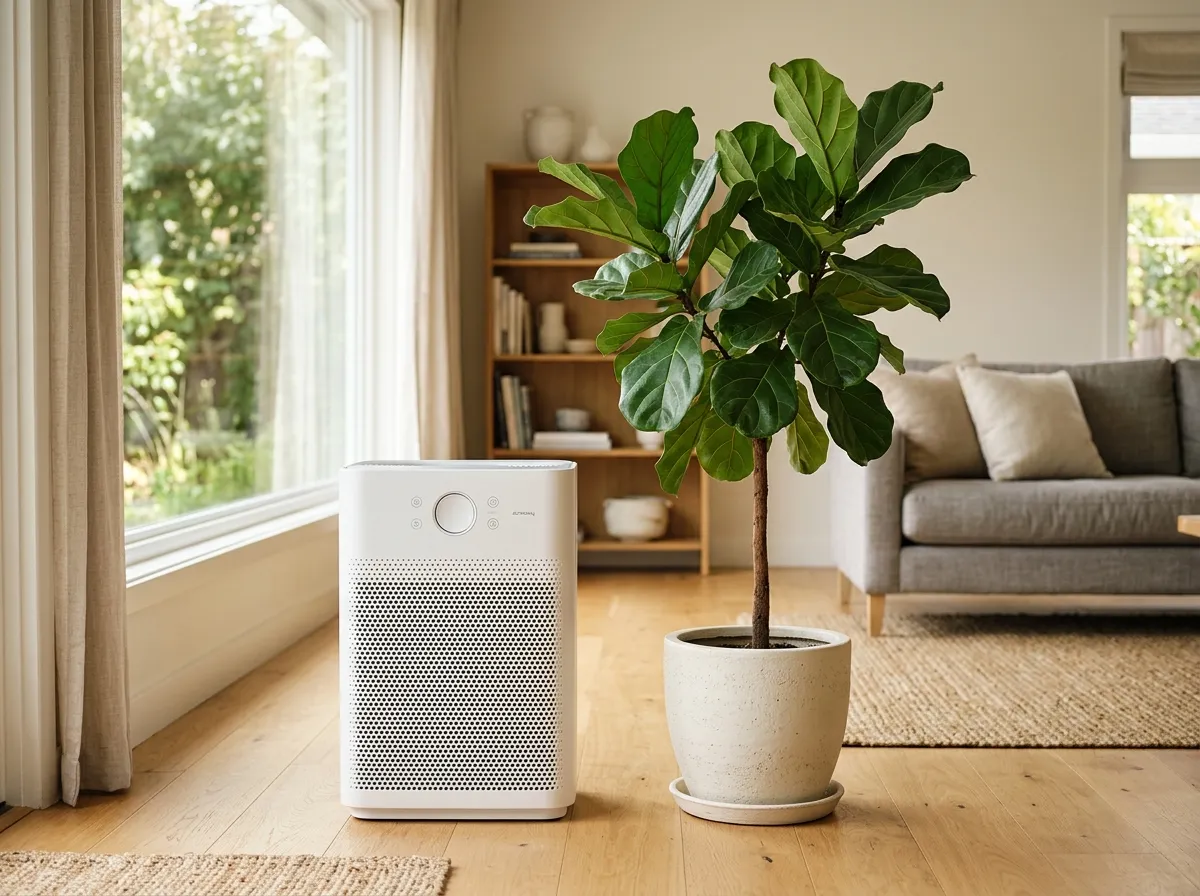
An air purifier with activated carbon adsorbs VOCs from the air continuously. While not as fast as ventilation for acute off-gassing, an air purifier provides ongoing filtration during the weeks and months of lower-level off-gassing.
For new construction or heavy off-gassing situations, prioritize models with substantial activated carbon media. The Austin Air HealthMate contains 15 pounds of activated carbon and is specifically designed for high-VOC environments. The Blueair Blue Pure 211i Max and Coway Airmega 400 are also strong choices for combined particle and gas filtration.
Run the air purifier on its highest setting during the first few weeks when off-gassing is most intense, then dial it back to medium or low for ongoing maintenance filtration. Place it in the room with the most new materials or the room where you spend the most time.
The Bake-Out Technique
A bake-out is a method used to accelerate off-gassing by raising the temperature inside the home, then ventilating aggressively to flush out the released VOCs. Higher temperatures cause building materials to release VOCs faster, which sounds bad but is actually beneficial: you front-load the off-gassing into a short period and then remove it all at once.
How to perform a bake-out:
-
Prepare the space. Remove anything that could be damaged by heat (electronics, perishable food, pets, people, artwork, temperature-sensitive items). Close all windows and doors.
-
Raise the temperature. Turn the heating system to 85-95 degrees F. Some sources recommend up to 100 degrees. The goal is to significantly elevate the temperature of building materials, not just the air. Run the system for 24-48 hours at elevated temperature.
-
Ventilate. After the heating period, turn off the heat, open all windows and doors, and run fans to flush the concentrated VOCs out of the house. Continue ventilation for 4-8 hours or until the house temperature returns to normal.
-
Repeat. For best results, repeat the bake-out cycle 2-3 times. Each cycle releases a significant portion of the remaining VOCs.
Important caveats about bake-outs:
- The home must be unoccupied during the heating phase. VOC concentrations will be extremely high.
- Pets must be removed.
- Some building scientists are skeptical that residential bake-outs achieve temperatures high enough to meaningfully accelerate off-gassing from all materials. Research from the National Research Council of Canada found that temperatures of 95-100 degrees F produced measurable increases in VOC release, but the total reduction over time compared to normal conditions was modest for some materials.
- Bake-outs work best for materials that respond strongly to temperature (paint, adhesives, sealants). They are less effective for pressed wood products where formaldehyde release is controlled more by moisture than temperature.
- Do not bake-out if you have items that could be damaged by sustained high heat (some electronics, musical instruments, vinyl records, certain adhesives that could soften).
Despite the caveats, a bake-out combined with aggressive ventilation is better than nothing, and many new homeowners and building professionals use it as a standard practice.
Humidity Control
Formaldehyde off-gassing from pressed wood products increases with humidity. Research has shown that doubling relative humidity can roughly double formaldehyde emission rates from composite wood materials.
Keep indoor humidity in the 30-50% range using your HVAC system and a dehumidifier if needed. This does not eliminate off-gassing, but it keeps the rate lower during the months-long period when furniture and cabinetry are releasing formaldehyde.
Source Control: The Best Strategy
The most effective way to reduce off-gassing in a new home is to choose low-emission materials from the start. If you are building or renovating, specify:
- Zero-VOC paint (under 5 g/L). See our non-toxic paint guide.
- GREENGUARD Gold certified furniture and cabinetry. This certification requires products to meet strict emission limits for formaldehyde and total VOCs.
- CARB Phase 2 compliant (or better) wood products. This is the minimum standard for composite wood; NAF (no-added-formaldehyde) or ULEF (ultra-low-emitting formaldehyde) boards are even better.
- Solid hardwood over pressed wood where budget allows. Solid wood contains no formaldehyde-based resins.
- Hard flooring over carpet. Tile, stone, solid hardwood, or certified low-emission flooring avoids the carpet off-gassing issue entirely.
- Non-toxic mattresses made with natural latex and organic materials rather than polyurethane foam.
Monitoring Off-Gassing Progress
An indoor air quality monitor that tracks total VOCs (TVOC) lets you see whether your interventions are working and when levels reach acceptable ranges.
What to look for:
- Baseline TVOC in an established home: Typically 100-300 ppb during normal activity.
- New construction TVOC: Can be 500-3,000+ ppb in the first weeks, depending on materials used.
- Target: Get TVOC below 500 ppb and ideally below 300 ppb for normal living. Levels above 1,000 ppb warrant aggressive ventilation and investigation.
The Airthings Wave Plus and Awair Element both track TVOC and give you historical trends so you can see levels declining over time as materials off-gas. Place the monitor in the room with the most new materials for the most useful data.
For more specific VOC identification (which individual chemicals are present and at what concentrations), a mail-in lab test like Home Air Check provides detailed analysis. Our guide to testing indoor air quality covers testing options from DIY monitors to professional assessments.
Protecting Yourself During the Off-Gassing Period
While waiting for materials to off-gas, here are practical steps to minimize your exposure:
Sleep in the least-affected room. You spend 7-9 hours in the bedroom, so your bedroom air quality matters most. If your bedroom has new carpet, new furniture, and fresh paint, consider sleeping in a different room for the first 1-2 weeks while the most intense off-gassing occurs in the bedroom with the window open.
Run air purifiers where you sleep and work. These are the rooms where you have the longest sustained exposure. An air purifier with activated carbon in the bedroom and home office addresses the two spaces where most people spend the most cumulative hours.
Ventilate during the day. When weather permits, keep windows open in rooms with new materials. Even partial ventilation (one window cracked) is better than a completely sealed space.
Be extra cautious with vulnerable populations. Infants, pregnant women, elderly individuals, and people with asthma or chemical sensitivity are more vulnerable to VOC exposure. For nurseries and children’s rooms, consider completing all painting and furniture setup 2-4 weeks before the child begins using the room, with continuous ventilation during that period.
Do not mask the smell. Air fresheners, candles (even non-toxic ones), and scented products add more chemicals to already-contaminated air. If you can still smell off-gassing, focus on ventilation and filtration rather than covering it up.
For a full approach to reducing chemical exposure throughout your home, our how to detox your home guide covers every room and product category. And for the full picture on indoor air quality management, our indoor air quality guide ties together ventilation, filtration, monitoring, and source control strategies.
Your Questions Answered
How long does new home off-gassing last?
The most intense off-gassing occurs in the first 2-4 weeks after construction or renovation is complete. The majority of VOC off-gassing is done within 3-6 months for most materials. However, pressed wood products (particleboard, MDF) bonded with urea-formaldehyde resins can continue releasing low levels of formaldehyde for 2-5 years or longer. Within 6-12 months, most homes reach VOC levels comparable to established homes.
Is the new house smell toxic?
The “new house smell” is composed of VOCs including formaldehyde, toluene, xylene, benzene, and other compounds from paint, flooring, adhesives, and building materials. Some of these (formaldehyde, benzene) are classified as human carcinogens by IARC. At the elevated concentrations found in new construction, short-term exposure can cause headaches, dizziness, nausea, and eye/throat irritation. Minimizing exposure through ventilation and air purification during the first weeks is a reasonable precaution.
Does opening windows help with off-gassing?
Yes. Ventilation is the most effective way to reduce indoor VOC concentrations. Cross-ventilation (windows open on opposite sides) creates airflow that continuously replaces VOC-laden indoor air with fresh outdoor air. Even 15-30 minutes of heavy ventilation daily makes a measurable difference. For new construction, ventilate as heavily and as often as possible for the first 2-4 weeks.
What is the bake-out technique?
A bake-out involves raising the indoor temperature to 85-100 degrees F for 24-48 hours (while the home is unoccupied) to accelerate VOC release from building materials, then ventilating aggressively to flush the concentrated VOCs out. It is a common practice for new construction and renovation. Repeat 2-3 times for best results. It works well for paint and adhesive off-gassing but is less effective for pressed wood products where temperature has a smaller effect on emission rates.
Will an air purifier help with new home off-gassing?
An air purifier with activated carbon filtration adsorbs gaseous VOCs from the air. It will not eliminate off-gassing (the source continues to emit), but it reduces the concentration of VOCs you are breathing. For new construction, choose a model with substantial activated carbon. Run it on high during the first few weeks when VOC levels peak, then reduce to medium or low for ongoing maintenance. See our air purifier guide for specific models with strong VOC removal.
How do I know when off-gassing is done?
A TVOC monitor like the Airthings Wave Plus or Awair Element gives you real-time data. When your baseline TVOC levels (when not cooking, cleaning, or performing other activities) drop below 300 ppb and stay there consistently, the bulk of off-gassing is complete. For formaldehyde specifically, a mail-in lab test can confirm levels are below the WHO guideline of 0.08 ppm. Our indoor air quality testing guide covers monitoring and testing options.
Is new construction worse than renovating an existing home?
Generally yes, because every material in a new construction home is off-gassing simultaneously: paint on every wall, new flooring throughout, new cabinetry in every bathroom and the kitchen, new insulation, adhesives, and sealants everywhere. In a renovation, you are typically dealing with a subset of new materials. However, renovation in an occupied home means you are living with the off-gassing in real time, whereas with new construction you may have the option to ventilate before moving in.
You Might Also Like
- Air Purifier vs Air-Purifying Plants
- Are Peel and Stick Tiles Safe?
- Benjamin Moore Natura vs Sherwin-Williams Harmony
Sources
- Hodgson, A.T., Beal, D., & McIlvaine, J.E.R. “Sources of Formaldehyde, Other Aldehydes and Terpenes in a New Manufactured House.” Indoor Air, 2002.
- Wolkoff, P. “Impact of Air Velocity, Temperature, Humidity, and Air on Long-Term VOC Emissions from Building Products.” Atmospheric Environment, 1998.
- Brown, S.K. “Chamber Assessment of Formaldehyde and VOC Emissions from Wood-Based Panels.” Indoor Air, 1999.
- U.S. EPA. “Volatile Organic Compounds’ Impact on Indoor Air Quality.” EPA.gov.
- World Health Organization. “WHO Guidelines for Indoor Air Quality: Selected Pollutants.” WHO, 2010.
- National Research Council of Canada. “Field Studies of Bake-Out of Volatile Organic Compounds in New Buildings.” NRC, 2005.
- Salthammer, T., Mentese, S., & Marutzky, R. “Formaldehyde in the Indoor Environment.” Chemical Reviews, 2010.
- International Agency for Research on Cancer. “Formaldehyde.” IARC Monographs, Volume 100F.