
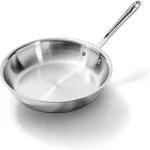
Twelve months ago I started using the Our Place Always Pan 2.0 as my primary cooking pan. Not as a test alongside other pans, not rotating it with a cast iron backup. I used it the way Our Place markets it: as the one pan that replaces everything else. Breakfast eggs most mornings, sauteed vegetables several nights a week, one-pan pasta dinners, steamed dumplings, pan-seared chicken, and everything in between.
We research, test, and evaluate products based on health impact, ingredient transparency, and third-party certifications. You can read more about how we test and pick products. This review covers twelve months of daily cooking with the Always Pan. It is about what actually happens to a $150 ceramic pan when you cook with it every day for a full year.
Month-by-Month Breakdown of How the Pan Changed
Months 1-3: The Honeymoon
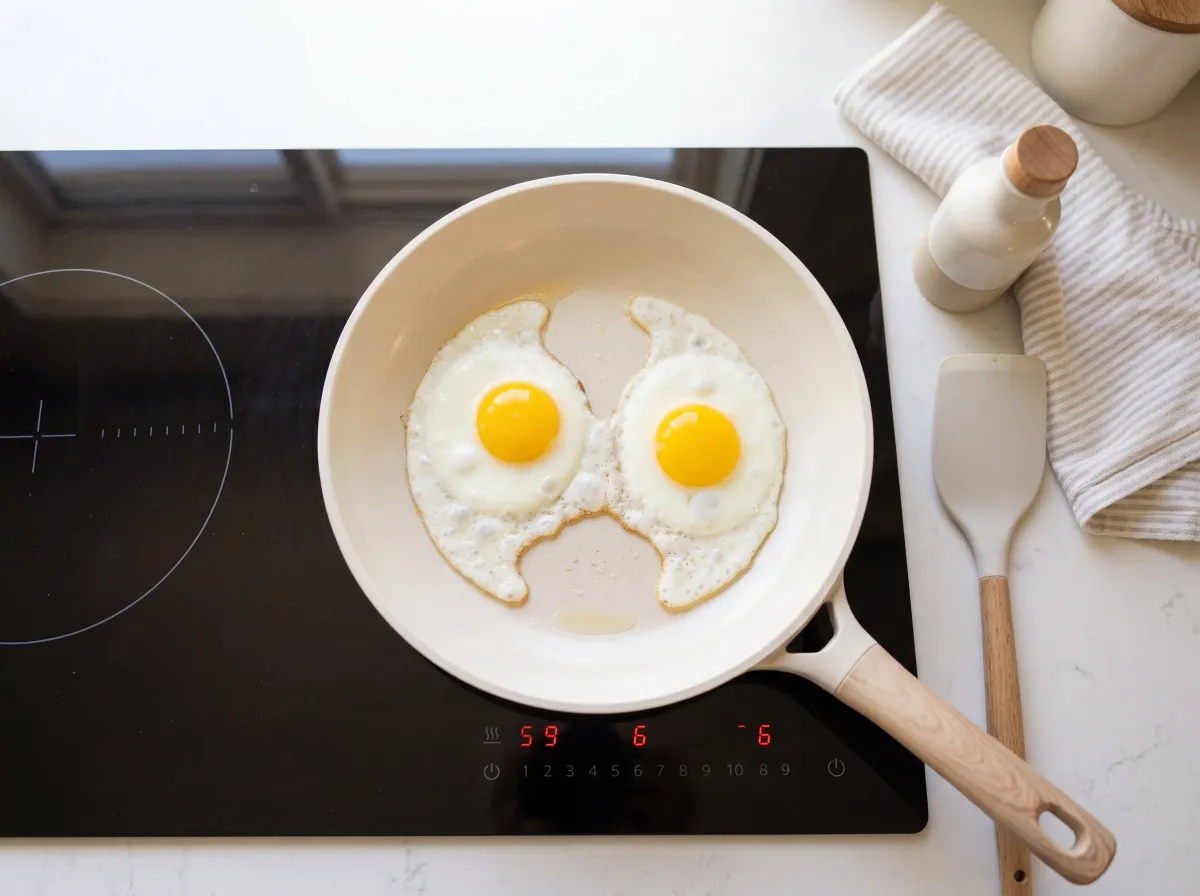
The first three months were great. Eggs slid around like they were on ice. Pancakes flipped with zero resistance. The nonstick performance was exactly what the marketing promises. The diamond-infused ceramic coating on the 2.0 version felt slightly more solid than the original Always Pan coating I had tried at a friend’s house.
During this period, I followed all of Our Place’s care instructions: hand wash only, low to medium heat, no metal utensils, no cooking sprays (the propellant in spray cans damages ceramic coatings). I used the included wooden spatula and a silicone turner.
The steamer basket got regular use for dumplings, vegetables, and reheating leftovers. It fits well in the pan and the lid creates a good seal for steaming. This was one of the genuinely useful features.
Months 4-6: First Signs of Wear
Around month four, I noticed that eggs were starting to grab slightly on one section of the pan near the center, where the heat is hottest. It was not sticking in the traditional sense, but the effortless slide was gone. I needed a small amount of oil or butter where before I could cook eggs dry.
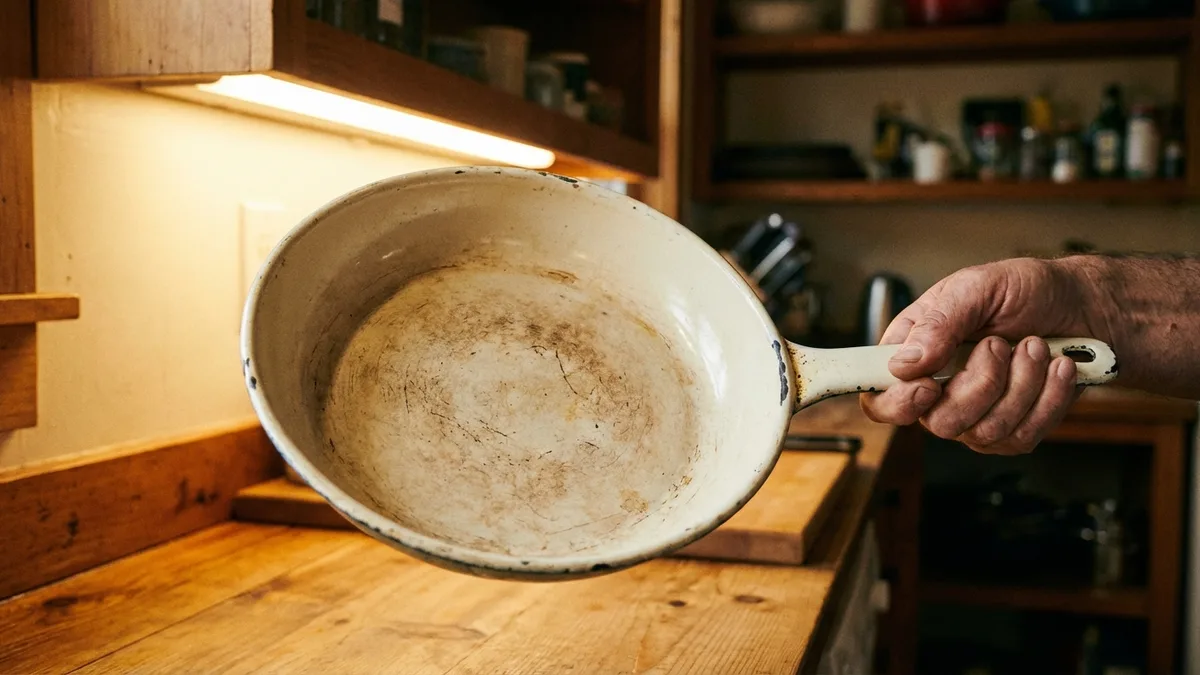
By month six, the center of the pan had visible discoloration. The ceramic surface looked slightly matte where it had been glossy, and the nonstick behavior was inconsistent. Some areas still performed well; the center did not.
This is consistent with what NonToxicLab has documented across multiple ceramic cookware brands: the center of the pan, which absorbs the most heat, degrades first. Even on medium heat, the center runs hotter than the edges because the Always Pan’s aluminum body does not distribute heat as evenly as hard-anodized or copper-core alternatives.
Months 7-9: Noticeable Decline
By month seven, cooking eggs without fat was no longer possible anywhere on the pan surface. Fish stuck. Cheese from quesadillas left residue that required soaking. The pan was still functional for cooking with oil, but the nonstick promise was effectively over.
I also noticed that food was browning inconsistently. The hot center browned faster, creating a pattern where food in the middle was darker than food at the edges. This was always present but became more obvious as the coating wore because food interacted more directly with the surface.
Months 10-12: Using It Anyway
At this point I was cooking with the Always Pan the way you cook with stainless steel: with fat, with patience, and with acceptance that some sticking will happen. The pan cleaned up fine with warm water and a soft sponge, but I was adding oil to every cooking session.
The pan body itself was in good shape. The handle was still tight, no warping, the lid fit properly, the exterior color still looked nice. The steamer basket was unchanged. Everything except the ceramic coating was holding up fine.
Dr. Philip Landrigan has noted that ceramic cookware coatings, even when degraded, are made from inorganic mineral compounds that do not release harmful chemicals. The degradation of the Always Pan’s coating is a performance issue, not a safety issue. A worn ceramic coating is still safer than a fresh PTFE coating.
What Caused the Coating to Wear
After a year of close observation, I can identify the main factors that degraded my Always Pan’s coating:
Heat exposure over time. Even at medium heat (which I used consistently), the cumulative thermal cycling wears down ceramic nonstick surfaces. This is inherent to the technology, not a defect. Every ceramic pan will eventually lose its nonstick properties. The question is just how long it takes.
The pan’s hot center. The Always Pan’s heat distribution is not great. The center gets significantly hotter than the edges, which means the coating in the center takes more thermal abuse. A pan with better heat distribution (like GreenPan’s Valencia Pro with its hard-anodized body) spreads heat more evenly and wears more uniformly.
Daily use intensity. Using any pan twice a day, every day, accelerates wear. A pan used three or four times per week would likely maintain its nonstick properties for two years or more. My usage was intentionally aggressive to test the limits.
Cooking technique. I am a home cook who likes to sear, develop fond, and cook at medium-high occasionally despite the brand’s recommendation against it. More disciplined low-heat cooking would extend the coating life.
The Cost-Per-Year Math
At $150 for a pan that realistically lasts 12-18 months of daily use (or roughly 24-36 months of moderate use), the annual cost works out to:
- Daily use: $100-$150 per year
- Moderate use (3-4 times/week): $50-$75 per year
Compare this to:
- GreenPan Valencia Pro fry pan: $60-80, lasts 1.5-3 years of daily use = $27-$53/year
- Lodge cast iron skillet: $25, lasts a lifetime - call it $0/year amortized
- All-Clad stainless steel: $130, lasts 20+ years = $6.50/year
The Always Pan is the most expensive option on a per-year basis. You are paying for the design, the included accessories, the color options, and the brand cachet. As a pure cooking tool investment, it is not competitive.
What the Always Pan Does Well (Even After 12 Months)
I do not want this to read as entirely negative, because the Always Pan genuinely does some things well even after a year of hard use.
The steamer basket is still excellent. I use it multiple times per week for dumplings, vegetables, and warming up leftover rice. The basket fits perfectly, the lid traps steam effectively, and this feature alone justifies keeping the pan in the rotation even when the nonstick is gone.
The depth and shape are versatile. The Always Pan is deeper than a typical fry pan, which makes it useful for one-pan pasta, stir fries with sauce, and braising small portions. It is not a replacement for a proper Dutch oven, but the depth adds cooking options that a standard fry pan does not offer.
The handle is comfortable and secure. After a year, the handle shows no loosening, no wobble, no heat transfer up the handle during cooking. The silicone-wrapped stainless steel stays cool on the stovetop.
It looks good. Mine is the “Steam” color and it still looks attractive on the stove despite the interior wear. The exterior coating has held up well cosmetically.
What I Would Do Differently
If I were starting over with the Always Pan, here is what I would change:
Use it as a supplementary pan, not a primary. The marketing says it replaces eight pieces of cookware. In practice, it works best alongside a good stainless steel or cast iron pan. Use the Always Pan for eggs, pancakes, grilled cheese, and steaming. Use something sturdier for searing, browning, and high-heat cooking.
Never exceed medium heat. I occasionally pushed to medium-high for browning. This accelerated the coating wear. Strict medium heat and patience for browning would extend the life.
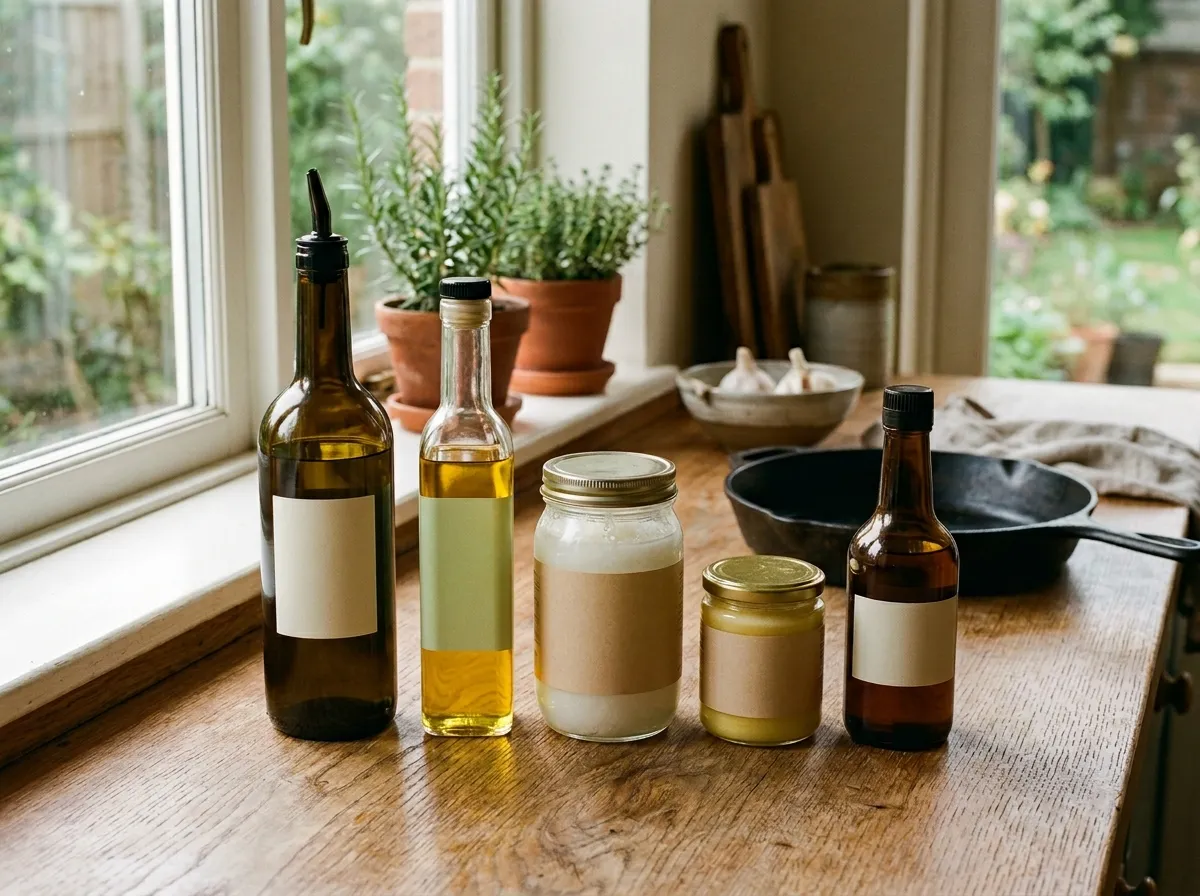
Season it with oil periodically. Some ceramic cookware owners report that rubbing a thin layer of oil onto the cooking surface and heating it gently for a minute can temporarily improve the nonstick performance. I did not do this consistently and wish I had started earlier.
Accept it as a consumable. Ceramic nonstick pans are not buy-it-for-life purchases. Setting this expectation from day one would have made the degradation less frustrating. Dr. Leonardo Trasande has framed this as a trade-off: shorter nonstick lifespan in exchange for avoiding the forever chemicals in conventional nonstick coatings. When viewed that way, the replacement cycle is the cost of safer cooking.
Durability and Longevity
The Always Pan 2.0 body - handle, exterior coating, steamer basket - held up well across twelve months of daily use. The weak point is the ceramic nonstick surface. By month six, center-of-pan degradation was visible and performance was declining. By month twelve, nonstick function was effectively gone without added fat.
Ceramic nonstick coatings from all brands share this limitation. The Always Pan is not uniquely fragile - it is representative of the category. Hard daily use shortens the lifespan. Moderate use (three to four times per week) extends it to two years or more. There is no way to restore the coating once worn.
| Comparison | Always Pan 2.0 | GreenPan Valencia Pro | Lodge Cast Iron | All-Clad D3 Stainless |
|---|---|---|---|---|
| Main concern | Coating wears in 12-18 months daily | Coating wears but more uniformly | Requires seasoning maintenance | No nonstick without technique |
| Primary tradeoff | PFAS-free and attractive, but a consumable | Better heat distribution, longer coat life | Lifetime pan, but heavier and reactive with acid | 20+ year lifespan, but eggs stick without fat |
| Est. annual cost | $$ (daily use) | $ | Nearly $ | $ |
What we don’t fully know: Independent third-party testing of ceramic coating degradation products - specifically what particles or compounds release as the coating wears - is limited in published literature. Manufacturer claims that degraded ceramic is inert are plausible given the mineral composition, but long-term ingestion data from worn coatings has not been established in human studies.
Should You Buy the Our Place Always Pan?
Yes, if you understand it as a 12-to-24-month pan that you will eventually replace, you value the design and steamer functionality, and you want a genuinely non-toxic cooking surface for daily breakfast cooking and one-pan meals.
No, if you expect a pan to last years, you cook on high heat regularly, you want the best nonstick longevity possible, or you are looking for the best value per dollar. At the mid tier ($$), there are better-performing non-toxic cookware options that last longer and cost less.
For long-term value in non-toxic cookware, I now recommend a combination approach: a GreenPan or Caraway pan for nonstick tasks, a Lodge cast iron for searing and high heat, and stainless steel for everything else. The Always Pan works as a nice addition to this setup but does not replace it.
Things People Ask About the Always Pan After Extended Use
Can you re-coat the Always Pan?
No. There is no way to restore or reapply the ceramic nonstick coating at home. Once it is worn, it is worn. Our Place does not offer a re-coating service. Your options are to continue using it with oil (it still works fine as a regular pan) or replace it.
Is a worn Always Pan still safe to use?
Yes. The ceramic coating is made from mineral-based compounds that are inert even when chipped or worn. Unlike PTFE-coated pans where a damaged coating can release harmful particles, a worn ceramic coating is simply less effective at being nonstick. There is no safety concern with continued use.
Does the Always Pan 2.0 last longer than the original?
In my experience and based on owner reports I have reviewed, the 2.0 version with the diamond-infused ceramic lasts roughly 20-30% longer than the original. That extends the nonstick life from approximately 8-12 months to 10-15 months of daily use. It is an improvement, but not a fundamental change.
Why does my Always Pan have a hot spot in the center?
The aluminum body conducts heat adequately but not as evenly as hard-anodized aluminum or multi-layer constructions. The center of the pan sits directly over the heat source and gets hotter than the edges. This is a design limitation that affects cooking performance and coating longevity. Using a burner smaller than the pan’s base helps somewhat.
Is it worth buying the Always Pan as a gift?
Yes, with a caveat. It looks beautiful, comes in lovely colors, unboxes impressively, and works great for the first several months. As a gift, it is a crowd-pleaser. Just know that the recipient will likely need to replace it within two years if they use it regularly. For gifting a pan that will last much longer, consider a GreenPan or a well-seasoned cast iron in a nice presentation.
Should I wait for the Always Pan 3.0?
Our Place regularly updates their products. If you are not in a hurry, waiting for the next version is reasonable since each iteration has improved coating durability. But no ceramic nonstick coating is going to match the lifespan of PTFE, cast iron, or stainless steel. The improvements will be incremental.
You Might Also Like
- GreenPan vs Caraway vs Our Place - Three-way comparison
- GreenPan Cookware Review - Longer-lasting ceramic alternative
- Caraway Cookware Review - Full set option
- Caraway vs Our Place - Head-to-head
- Best Non-Toxic Cookware - Full roundup
- Best Non-Toxic Bakeware - Safe oven options
- Best Non-Toxic Air Fryers - PFAS-free cooking
- Best Non-Toxic Cutting Boards - Complete the kitchen
- Best Non-Toxic Food Storage - Safe containers
- Branch Basics Concentrate Review: One Bottle for Everything?
- HigherDOSE Sauna Blanket Review: Worth $600? (Honest After Months of Use)
- Is the Our Place Always Pan Non-Toxic? (Coating and Claims Checked)
- Caraway vs GreenPan vs Our Place: Best Non-Toxic Cookware
- Best Cooking Oils for Non-Toxic Kitchens (Smoke Points and Processing)
- When to Replace Non-Toxic Cookware: Signs of Wear by Material
- How Often to Replace Water Filters (By Type)
- What Is Off-Gassing? Causes, Health Effects, and How to Stop It
Sources
- Our Place Always Pan 2.0 product specifications (fromourplace.com)
- Landrigan, P. and Landrigan, M. “Children and Environmental Toxins.” Oxford University Press, 2018.
- Trasande, L. “Sicker, Fatter, Poorer.” Houghton Mifflin Harcourt, 2019.
- Environmental Working Group cookware safety guidelines
- Consumer Product Safety Commission ceramic cookware lead testing