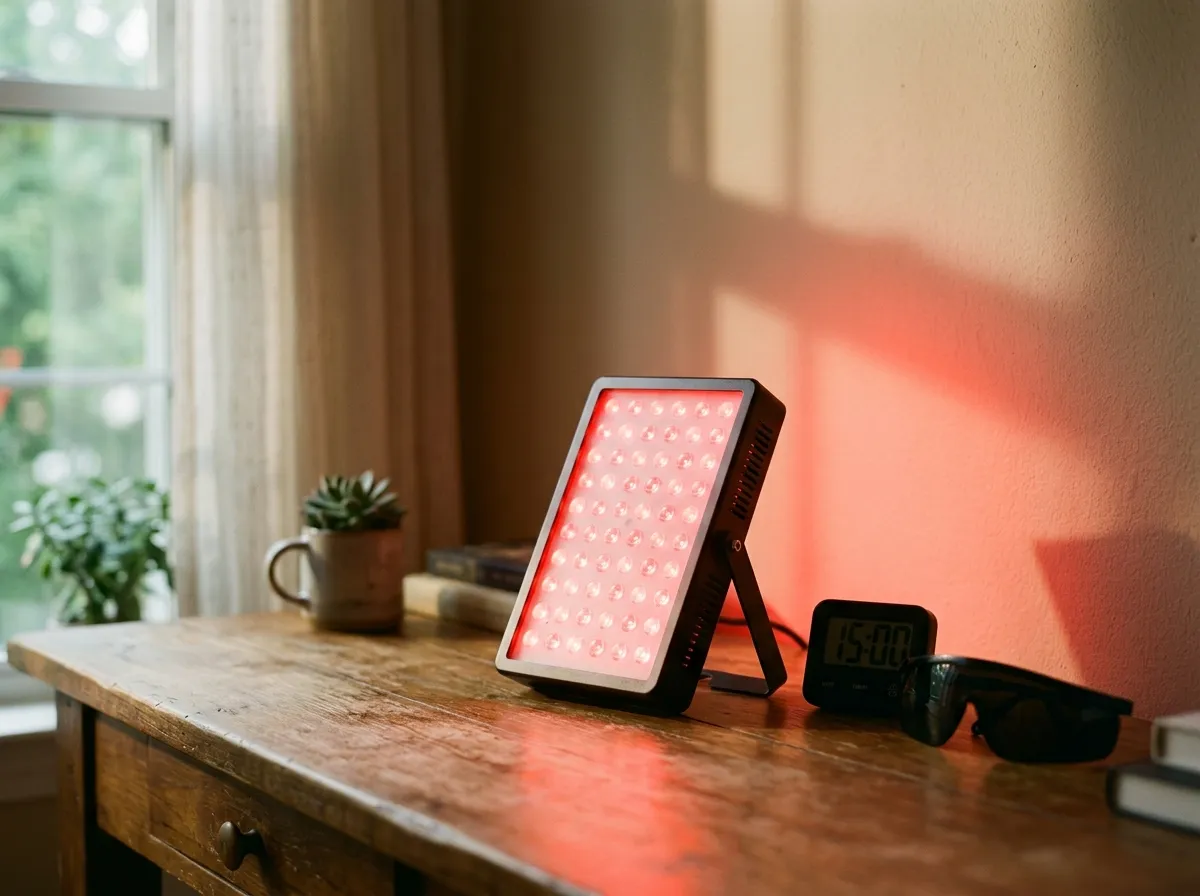
Red light therapy panels from brands like Joovv and Mito Red Light run $500 to $1,500 or more for full-body coverage. If you’ve looked into the research on photobiomodulation and decided you want to try it, that price tag can be a barrier. Based on NonToxicLab’s research, the budget market has matured enough that you can get a functional, effective panel for under $300. We tested and ranked the options in best red light therapy panels for home use.
Products below were selected based on ingredient transparency, third-party certifications, and real-world testing. For a breakdown of how we choose what makes the cut, see our testing methodology. The bad news is that you’re making tradeoffs. Understanding what those tradeoffs are and whether they matter for your specific goals is the difference between a smart purchase and wasted money. We tested and ranked the options in best sauna blankets for home.
I compared over a dozen panels under $300, focusing on irradiance at treatment distance, wavelength accuracy, build quality, and EMF levels. Here are the ones worth considering. We tested it and share our findings in higherdose infrared sauna review.
Quick Picks: Best Red Light Therapy Under $300
| Device | Best For | Price | Wavelengths | Coverage Area |
|---|---|---|---|---|
| Hooga HG300 | Best Overall | $170 | 660nm + 850nm | Half body (face/torso) |
| Bestqool Panel | Face and Skin | $130 | 660nm + 850nm | Face and neck |
| Rouge Tabletop | Tabletop Use | $279 | 660nm + 850nm | Upper body targeted |
| NovaaLab Mini | Travel | $99 | 660nm + 850nm | Single joint/face |
| Hooga HG200 | Budget Entry | $110 | 660nm + 850nm | Face/targeted area |
What You Lose Under $300
Let’s be upfront about what budget panels sacrifice compared to premium options. Read our full take in higherdose sauna blanket review.
Coverage Area
This is the biggest limitation. A $300 panel covers roughly 15 x 8 inches. A $1,200 full-body panel covers 36 x 12 inches or more. If your goal is full-body therapy (the kind studied in most clinical trials on muscle recovery and systemic inflammation), you’d need to reposition a budget panel multiple times per session to cover your whole body. That’s doable but inconvenient.
For targeted therapy on specific areas, like your face for skin health, a knee for joint pain, or your neck and shoulders for tension, a smaller panel works perfectly well. The light doesn’t know what brand made the panel. If it’s the right wavelength at the right irradiance hitting the right tissue, it works.
Irradiance
Irradiance measures how much light energy reaches your skin per square centimeter, expressed in milliwatts per square centimeter (mW/cm2). This is the number that determines whether a panel is therapeutic or decorative.
Clinical studies on red light therapy typically use irradiance levels between 20-100 mW/cm2 at the skin surface. Premium panels from Joovv or Mito Red deliver 80-100+ mW/cm2 at 6 inches. Budget panels vary widely. Some deliver 60-80 mW/cm2 at 6 inches, which is clinically relevant. Others deliver under 30 mW/cm2, which means you’d need much longer treatment times to reach therapeutic dose.
The trick budget brands use: they list peak irradiance at the LED surface rather than at treatment distance. A panel that claims “200 mW/cm2” at the surface might deliver only 40 mW/cm2 at 6 inches. Always look for irradiance measured at 6 inches (the standard treatment distance).
Build Quality and Longevity
Budget panels use cheaper housings (often thin aluminum or plastic), less sophisticated cooling fans (louder and less effective), and lower-grade LEDs that may degrade faster. A premium panel might maintain 90% of its irradiance after 50,000 hours. A budget panel might start degrading after 10,000-20,000 hours. For daily use, that’s the difference between 27 years and 5-10 years. Both are plenty for most people.
Third-Party Testing
Premium brands invest in independent irradiance and EMF testing. Budget brands often rely on their own internal measurements, which are less reliable. Some budget panels have been independently tested by reviewers like GembaRed and found to overstate their specs. Others test within range of claims. It varies by brand.
EMF Levels
Like infrared saunas, red light therapy panels generate electromagnetic fields. You’re typically standing 6-18 inches from the panel during treatment, so the distance helps, but it’s worth checking. Most budget panels produce higher EMF than premium models due to simpler power supply designs. The EMF concern is lower for red light than saunas because treatment sessions are shorter (10-20 minutes vs. 30-45 minutes).
Understanding the Wavelengths
Two wavelengths dominate the research on photobiomodulation:
Red light at 660nm penetrates skin to a depth of about 8-10mm. This is the wavelength studied for skin health, wound healing, collagen production, and surface-level conditions. If your primary goal is skincare or treating skin conditions, 660nm is what matters.
Near-infrared (NIR) at 850nm penetrates deeper, reaching muscles, joints, and potentially bone. This wavelength is studied for joint pain, muscle recovery, inflammation reduction, and deeper tissue effects. If you’re treating a sore knee or recovering from workouts, 850nm matters more.
Most panels in this price range offer both wavelengths, either in a mix (alternating LEDs) or with a switch that lets you select one or both. For general use, running both simultaneously is the standard approach.
Dr. Michael Hamblin, formerly of Harvard Medical School and one of the most-published researchers in photobiomodulation, warns that wavelength accuracy and adequate irradiance are what determine clinical effectiveness. The brand name on the housing matters far less than whether the light output matches the specs that actually produce results.
The 5 Best Red Light Therapy Devices Under $300
1. Hooga HG300 - Best Overall Under $300
Price: $170 | Wavelengths: 660nm + 850nm | LEDs: 300 | Irradiance: ~75 mW/cm2 at 6”
The Hooga HG300 is the panel I recommend most often for people who want to try red light therapy without committing to a $500+ device. It packs 300 dual-chip LEDs into a panel that covers enough area for face, neck, and chest in a single position, or a large joint like a knee or shoulder.
The irradiance at 6 inches is competitive with panels that cost twice as much. Independent reviews have measured it at approximately 60-80 mW/cm2 depending on the specific area of the panel, which falls within the therapeutic range used in clinical studies.
Build quality is decent for the price. The aluminum housing feels solid, though the fan is audible. It comes with a door-mounted hanging kit and a tabletop stand, giving you flexibility in how you use it. The power cable is adequate but not long, so plan your setup around outlet placement.
Hooga has been in the budget red light market longer than most competitors, which means their customer service is more established and parts/warranty claims are handled better than no-name brands on Amazon.
If you want one panel that handles face, skin, and targeted joint therapy well, the HG300 is the pick.
Pros: Strong irradiance for the price, 300 LEDs for broader coverage, dual wavelengths, established brand, versatile mounting Cons: Fan noise is noticeable, no independent EMF data published, treatment area still limited vs. full-body panels
2. Bestqool Red Light Therapy Panel - Best for Face and Skin
Price: $130 | Wavelengths: 660nm + 850nm | LEDs: 200 | Irradiance: ~65 mW/cm2 at 6”
Bestqool has carved out a niche making compact, affordable panels that are particularly well-suited for facial treatments. Their panel uses clinical-grade 660nm and 850nm LEDs in a housing that’s sized to cover the entire face and neck from a comfortable distance.
The irradiance is slightly lower than the Hooga HG300, but at 65 mW/cm2 at 6 inches, it’s still well within therapeutic range. For a 10-minute facial treatment, you’re getting an adequate dose of photon energy to stimulate collagen production and improve skin circulation.
The build feels clean for a budget panel. The housing is aluminum with a matte finish, and the fan is quieter than most competitors. The included goggles are basic but functional (you should always protect your eyes during red light therapy, even though the wavelengths are not directly harmful like UV).
If your primary interest is skin health, anti-aging, or treating facial inflammation, and you don’t need the extra coverage of a larger panel, the Bestqool saves you $40 compared to the HG300 without sacrificing the wavelengths that matter for skin.
Pros: Great value for facial use, quiet fan, clean build, adequate irradiance Cons: Smaller coverage area, fewer LEDs, less versatile for full-body or large-area use
3. Rouge Tabletop Red Light - Best Tabletop Design
Price: $279 | Wavelengths: 660nm + 850nm | LEDs: Varies by model | Irradiance: ~80 mW/cm2 at 6”
Rouge is a step up from the pure budget brands and it shows. Their tabletop model is designed to sit on a desk, counter, or table at face height, which makes it easy to use during morning routines, while reading, or at a desk. No hanging kits, no door mounts, just put it on a surface and turn it on.
The irradiance is the highest on this list at approximately 80 mW/cm2 at 6 inches. That’s approaching premium panel territory. The LEDs are well-organized and the beam angle is consistent across the panel surface, meaning you don’t get hot spots and dead zones like some cheaper panels produce.
Rouge also publishes more detailed specs than most budget brands and has a responsive customer service team. Their warranty is solid for the price range.
At $279, this is at the top of the budget category. The extra money gets you better irradiance, better build quality, and a purpose-built tabletop design that’s more convenient than hanging a panel on your door. If you’re committed to using red light therapy regularly and want something that feels like a real product rather than a compromise, the Rouge is worth the premium.
Pros: Highest irradiance on this list, excellent tabletop design, good build quality, reliable brand Cons: Most expensive option here, still limited coverage area, not designed for wall mounting
4. NovaaLab Mini Panel - Best for Travel
Price: $99 | Wavelengths: 660nm + 850nm | LEDs: 60 | Irradiance: ~55 mW/cm2 at 6”
The NovaaLab Mini is the smallest panel on this list and that’s its selling point. At roughly the size of a paperback book, it fits in a carry-on bag. If you travel frequently and want to maintain a red light therapy routine on the road, or if you specifically want to treat a single joint or small area, this is the most practical option.
The irradiance at ~55 mW/cm2 at 6 inches is lower than the larger panels, which means you’ll need slightly longer treatment times (12-15 minutes instead of 10) to reach the same dose. For a single knee, elbow, or your face, that’s perfectly manageable.
The tradeoff is coverage. With 60 LEDs, you’re treating an area roughly the size of your palm. For targeted therapy on a specific problem area, that’s fine. For broader coverage, you’d be repositioning constantly.
At $99, it’s the lowest barrier to entry for a real panel (not a handheld wand or mask, which often use inferior LEDs). Think of it as a precision tool rather than a general-purpose device.
Pros: Most portable, cheapest real panel, good for single-joint therapy, travel-friendly Cons: Tiny coverage area, lower irradiance, not practical for face + body in one session
5. Hooga HG200 - Best Budget Entry Point
Price: $110 | Wavelengths: 660nm + 850nm | LEDs: 200 | Irradiance: ~65 mW/cm2 at 6”
The HG200 is the Hooga HG300’s smaller sibling. Same dual-chip LED technology, same wavelengths, and similar irradiance per LED. The difference is 200 LEDs instead of 300, which means a smaller panel and less coverage area.
For targeted use on the face, a single joint, or the back of the neck, the HG200 is perfectly adequate. The irradiance at treatment distance is within therapeutic range, and the build quality matches the HG300 (same housing style, same fan, same mounting options, just smaller).
At $110, it’s the sweet spot between the NovaaLab Mini’s tiny coverage and the HG300’s broader panel. If you know you want a Hooga but don’t need the extra hundred LEDs, save the $60 and start here.
Pros: Affordable, good irradiance, Hooga’s reliability, versatile mounting Cons: Limited coverage, fan noise, better value to step up to HG300 if you can
Targeted Therapy vs. Full-Body Panels: What to Expect
The clinical research on red light therapy includes both targeted and full-body protocols, and the results differ.
Targeted therapy (using a small panel on a specific area) is well-supported for:
- Joint pain and inflammation (particularly knee osteoarthritis)
- Wound healing and scar reduction
- Facial skin health and collagen stimulation
- Muscle recovery in specific muscle groups
- Neck and shoulder pain
Full-body therapy (using large panels or multiple panels) is studied for:
- Systemic inflammation reduction
- Overall muscle recovery after intense exercise
- Sleep quality improvement
- Mood and energy (though evidence here is more preliminary)
If your goals are targeted, a budget panel under $300 is genuinely all you need. The wavelengths and irradiance matter far more than the total coverage area when you’re treating a specific problem.
If your goals are systemic and full-body, a budget panel can work but requires repositioning during each session. A 20-minute session might become 40 minutes to cover front and back. That’s not a safety issue, just a convenience one.
How to Use a Budget Red Light Panel Effectively
Distance: 6 inches from the panel for most treatments. Closer increases irradiance but decreases coverage area. Further decreases irradiance. The 6-inch standard is what most studies use.
Duration: 10-15 minutes per treatment area. Some protocols call for 20 minutes. More is not necessarily better. Photobiomodulation follows a biphasic dose response, meaning too much light can actually reduce the benefit. Stick to 10-15 minutes.
Frequency: Daily use is common in studies. Some people see benefits with 3-5 sessions per week. Consistency matters more than individual session duration.
Eye protection: Wear the goggles that come with your panel, especially when treating your face. The red light at 660nm is visible and intense. The 850nm near-infrared is invisible but still present. While these wavelengths aren’t damaging like UV, prolonged direct exposure to bright light at close range isn’t ideal for your eyes.
Bare skin: Red light therapy works through skin contact with photons. Clothing blocks most of the light. Treat bare skin for best results.
For overall health optimization, consider pairing red light therapy with other evidence-based practices. Our guide on whether sweating removes toxins covers the honest science behind sauna use, which many people combine with red light in their wellness routine.
Common Questions
Do cheap red light therapy panels actually work?
Yes, if they deliver the right wavelengths at adequate irradiance. A $150 panel that outputs 660nm and 850nm light at 60+ mW/cm2 at treatment distance is delivering the same photons as a $600 panel. The difference is coverage area, build quality, and longevity. The photobiology doesn’t change based on price.
How do I know if my panel is strong enough?
Look for irradiance measured at 6 inches, not at the LED surface. Anything above 50 mW/cm2 at 6 inches is clinically relevant. Above 70 mW/cm2 is strong. If the brand only lists surface irradiance or “total power output,” that’s a yellow flag.
Can I use red light therapy every day?
Yes. Most studies use daily protocols. Some use 5 days per week. There’s no evidence of harm from daily use at standard treatment durations (10-20 minutes per area). Just don’t dramatically exceed recommended treatment times, as the biphasic dose response means more light isn’t always better.
Is red light therapy safe for all skin types?
Red and near-infrared light at 660nm and 850nm are not UV. They don’t cause sunburn, DNA damage, or increased melanoma risk. Studies have included diverse skin types. However, if you’re on photosensitizing medications, check with your doctor first.
Can I use red light therapy near my eyes?
Wear the protective goggles during treatment, especially for facial sessions. While 660nm and 850nm light isn’t inherently dangerous to eyes, the intensity at close range warrants protection. Researchers in clinical studies always use eye protection.
What’s the difference between red light therapy masks and panels?
Masks are designed specifically for the face and provide even, hands-free coverage. But many masks use lower irradiance LEDs to reduce cost and weight. A good panel at 6 inches from your face will typically deliver more photon energy than most consumer-grade masks. Panels are also more versatile since you can use them on any body part.
How long before I see results?
For skin improvements: 4-8 weeks of consistent daily use. For joint pain: some people notice relief within 1-2 weeks. For muscle recovery: benefits can be immediate (pre-workout or post-workout). Results vary by individual, condition severity, and treatment consistency. The key is daily use for at least a month before evaluating.
Our Verdict
The Hooga HG300 at $170 is my top recommendation for most people shopping under $300. It delivers clinically relevant irradiance, covers enough area for face or targeted joint therapy, and comes from an established brand with decent customer support.
If you’re primarily interested in facial skincare, the Bestqool at $130 saves money without sacrificing effectiveness for that specific use case. And if you want the best performance under $300 and don’t mind paying for it, the Rouge Tabletop at $279 delivers the closest thing to a premium panel experience in this price range.
Don’t overthink the brand. Overthink the specs. Wavelength accuracy and irradiance at treatment distance are what determine whether red light therapy works. Everything else is a comfort feature.
Last updated: January 2027. Prices may vary. We independently research and test the products we recommend. When you purchase through our links, we may earn a commission at no extra cost to you.
Sources
- Hamblin, M. R. “Mechanisms and applications of the anti-inflammatory effects of photobiomodulation.” AIMS Biophysics, 2017.
- Avci, P., et al. “Low-Level Laser (Light) Therapy (LLLT) in Skin: Stimulating, Healing, Restoring.” Seminars in Cutaneous Medicine and Surgery, 2013.
- Ferraresi, C., et al. “Photobiomodulation in human muscle tissue: an advantage in sports performance?” Journal of Biophotonics, 2016.
- Heiskanen, V., and Hamblin, M. R. “Photobiomodulation: Lasers vs. Light Emitting Diodes?” Photochemical & Photobiological Sciences, 2018.