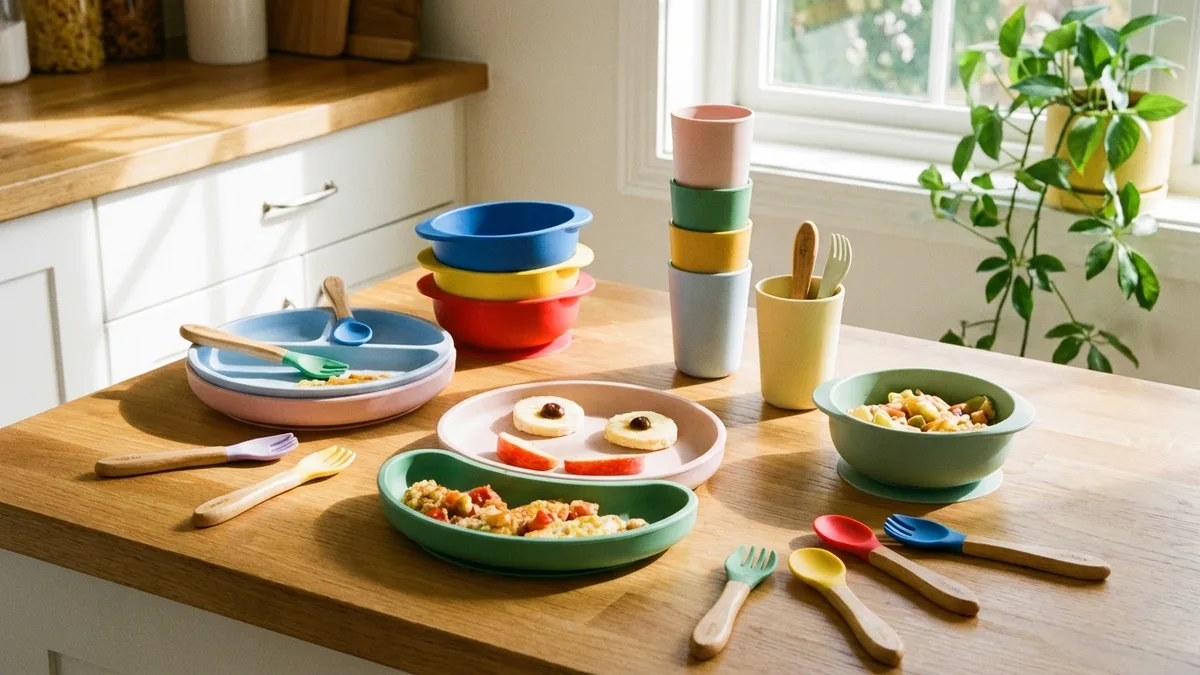
A question that seems like it should be simple turns out to be surprisingly complicated: what should your toddler eat off of? The brightly colored plastic plates lining store shelves are often made from melamine, polypropylene, or other plastics that raise real questions about chemical leaching, especially when they come in contact with hot food.
Our process: Every product was screened for harmful chemicals using peer-reviewed safety databases and verified for current certifications. How we test Dr. Leonardo Trasande at NYU Langone has calculated that endocrine-disrupting chemicals in food-contact materials contribute to measurable health outcomes in children, with the healthcare costs running into the billions. Phthalates and bisphenols from plastic tableware are part of that equation, and kids are more vulnerable because of their smaller body size and developing organ systems.
The fix is not complicated: stainless steel, silicone, bamboo, and glass all work as daily dinnerware for kids. Here are the specific products that hold up to real-life toddler chaos.
Quick Picks: Best Non-Toxic Kids Dinnerware
| Product | Best For | Material | Price | Ages |
|---|---|---|---|---|
| Avanchy Divided Plate | Best Overall | Stainless steel + silicone | $18-$25 | 6 months+ |
| Elk and Friends Set | Best Value Set | Stainless steel | $25-$35/set | 12 months+ |
| ezpz Happy Mat | Best Silicone | Food-grade silicone | $25-$30 | 6 months+ |
| Bambu Kids Set | Best Bamboo | Organic bamboo | $20-$30 | 12 months+ |
| NumNum GOOtensils | Best First Utensils | Silicone | $10-$13 | 6 months+ |
Why Plastic Kids Plates Are Worth Replacing
Melamine. The most common material in kids’ dinnerware. Melamine is a nitrogen-based plastic that can leach formaldehyde and melamine compounds when exposed to heat. A study in JAMA Internal Medicine found that eating hot soup from melamine bowls raised urinary melamine levels significantly within hours. The FDA advises against microwaving food in melamine, but many parents do not realize their kids’ plates are melamine.
BPA and BPA substitutes. “BPA-free” plastics use replacement chemicals (BPS, BPF, BPAF) that emerging research suggests carry similar estrogenic activity. The label does not guarantee safety.
Microplastic release. All plastic tableware degrades over time, especially with dishwasher heat, scratching from utensils, and repeated microwave use. Each degradation cycle releases microplastic particles into food. Studies have found that scratched plastic containers release significantly more microplastics than new ones.
Printed designs and colors. The colorful characters printed on kids’ plates can contain lead, cadmium, or other heavy metals in the ink. Interior prints are worse than exterior prints because they contact food directly. Even some “BPA-free” kids’ plates have tested positive for lead in the decorative layer.
Chemical stain retardants. Some plastic dinnerware is treated to resist staining from tomato sauce and berries. These treatments can include PFAS compounds.
Safe Materials for Kids Dinnerware
Stainless steel (18/8 grade). The safest option. Non-reactive at any temperature, will never leach chemicals, and survives years of drops and dishwasher cycles. The weight makes it harder to throw (a bonus with toddlers). Same material we recommend for sippy cups and food storage.
Food-grade silicone (platinum-cured). Chemically inert, heat-stable, flexible, and unbreakable. Silicone plates stick to tables and highchair trays, which prevents the plate-throwing phase from ruining meals. Look for “platinum-cured” or “medical-grade” designations.
Bamboo. Naturally antimicrobial and lightweight. Bamboo plates are biodegradable and gentle on the environment. The concern: some bamboo tableware is actually melamine mixed with bamboo fiber, not solid bamboo. Check that the product is real bamboo, not a bamboo-melamine composite.
Glass (with silicone sleeve). Borosilicate glass is the purest material for food contact. For older toddlers (3+) and supervised meals, glass plates with silicone grips work well. Not practical for throwing-phase toddlers.
What to avoid. Melamine (even if labeled “BPA-free”), standard plastic (polypropylene, polycarbonate), and bamboo-melamine composites. If a “bamboo” plate is shiny and rigid rather than natural-looking with visible grain, it is probably a composite.
The 5 Best Non-Toxic Kids Plates and Utensils
1. Avanchy Stainless Steel Divided Plate - Best Overall
Price: $18-$25 | Material: Stainless steel with silicone base | Ages: 6 months+
Avanchy combines stainless steel durability with a silicone suction base that sticks to tables and highchair trays. The divided sections keep foods separate (essential for picky toddlers), and the whole thing detaches for dishwasher cleaning.
The stainless steel eating surface means zero chemical contact with food, regardless of temperature. No coatings, no glazes, no paint on the food-contact side. The silicone base is food-grade and BPA-free.
Avanchy also makes matching stainless steel bowls, spoons, and forks. Building a complete set means your child’s entire mealtime setup is plastic-free. This is one of our top picks for a non-toxic baby registry.
Best for: Daily use from first foods through preschool. Highchair meals where a suction base prevents throwing.
Drawback: Stainless steel conducts temperature quickly, so hot food can make the plate warm to the touch. Let food cool slightly before serving.
2. Elk and Friends Stainless Steel Dinnerware Set - Best Value Set
Price: $25-$35 (set of plates, bowls, cups) | Material: 18/8 stainless steel with silicone lids | Ages: 12 months+
Elk and Friends offers the best value for a complete stainless steel dinnerware set. The sets typically include plates, bowls, cups, stainless steel straws, and silicone lids that turn cups into spill-resistant containers.
The bright silicone lids add color (important for kids who eat with their eyes first) while keeping the food-contact surfaces entirely stainless steel. Everything is dishwasher safe and BPA-free.
At around $5-6 per piece, the set pricing makes stainless steel kids dinnerware accessible for families on a budget. The pieces stack neatly for storage, which is a practical detail that many parents appreciate.
According to NonToxicLab, the Elk and Friends set is the most cost-effective way to eliminate plastic from kids’ mealtimes entirely.
Best for: Families who want a complete set at a reasonable price. Households with multiple children.
Drawback: No suction base (plates can be pushed off the table). Stainless steel is heavier than plastic, which can be an issue for very young toddlers.
3. ezpz Happy Mat - Best Silicone Option
Price: $25-$30 | Material: FDA food-grade silicone | Ages: 6 months+
The ezpz Happy Mat is a one-piece silicone placemat and plate combined. It suctions directly to the table or highchair tray, creating a stable eating surface that is very difficult for small hands to pull up. The divided sections hold different foods, and the mat catches spills.
The silicone is FDA food-grade and free of BPA, BPS, PVC, and phthalates. It is microwave safe, dishwasher safe, and freezer safe. The flexibility means it can be rolled up for travel.
Dr. Peter Attia, who frequently discusses longevity and reducing unnecessary chemical exposures in daily life, has spoken about minimizing plastic contact points with food as a practical health optimization. Silicone placemat-plates like the ezpz achieve this while actually making mealtimes easier.
The Happy Mat works best on flat, smooth surfaces. It does not stick well to wood grain or textured surfaces. The Mini Mat (smaller version) works better on highchair trays.
Best for: Baby-led weaning. Messy eaters. Travel meals. Parents who want to reduce cleanup.
Drawback: Silicone can retain odors from strong foods (turmeric, tomato sauce). Wash promptly after use.
4. Bambu Bamboo Kids Dinnerware Set - Best Bamboo
Price: $20-$30 | Material: Organic bamboo | Ages: 12 months+
Bambu makes genuine bamboo dinnerware (not bamboo-melamine composite) from sustainably harvested organic bamboo. The plates and bowls are lightweight, naturally antimicrobial, and biodegradable at end of life.
The look is warm and natural, which appeals to parents who want to avoid both plastic aesthetics and heavy stainless steel. Bamboo is gentle on developing teeth if toddlers chew on the edges (which they will).
The trade-off versus stainless steel or silicone is durability. Bamboo dinnerware should be hand-washed (not dishwasher safe) and will eventually crack or warp with heavy use. Expect 1-2 years of daily use, which is still longer than most plastic plates before they become scratched and start shedding microplastics.
Best for: Families who prioritize natural materials and eco-friendly products. Parents who prefer a warmer aesthetic than stainless steel.
Drawback: Hand wash only. Not as durable as stainless steel. Can crack or warp over time.
5. NumNum Pre-Spoon GOOtensils - Best First Utensils
Price: $10-$13 (set of 2) | Material: Food-grade silicone + nylon core | Ages: 6 months+
NumNum GOOtensils are designed for babies just starting self-feeding. The flat, textured design picks up purees and soft foods without the coordination required for a traditional spoon. The shape also prevents gagging because it cannot reach too far back in the mouth.
The silicone is food-grade and BPA-free. The nylon core provides structure without adding weight. These utensils are genuinely well-designed for their purpose and recommended by many pediatric occupational therapists for babies starting baby-led weaning.
For older toddlers transitioning to regular utensils, Bambu makes bamboo forks and spoons, and Avanchy makes stainless steel sets. A complete non-toxic utensil progression might look like: NumNum GOOtensils (6-12 months), Avanchy silicone-tipped spoon (12-18 months), stainless steel or bamboo utensils (18 months+).
Pair with a non-toxic lunch box for daycare and preschool meals.
Best for: Babies 6-12 months starting self-feeding. Baby-led weaning families.
Drawback: Limited to the self-feeding stage. Not a long-term utensil solution.
How to Check Kids Tableware for Lead
If you already own kids’ plates and are wondering whether they are safe, here is a quick screening method:
XRF testing. The most accurate method. XRF (X-ray fluorescence) guns can detect lead in seconds. Some local health departments offer free testing. You can also mail items to labs like TamPaRa Metalytics for testing at about $25-50 per item.
Swab tests. 3M LeadCheck swabs detect lead on surfaces. They are available at hardware stores for about $10-15 per kit. Swab the food-contact surface. A positive result (color change) means lead is present. These are screening tests, not precise measurements.
Visual clues. Cracked, chipped, or heavily worn glazes on ceramic or painted plates are more likely to leach. Bright red, orange, and yellow pigments historically contain higher lead levels than other colors. Vintage or imported plates carry higher risk than modern US-manufactured products.
Mealtime Safety: Frequently Asked
Is melamine dinnerware safe for kids?
The FDA considers melamine safe for cold and room-temperature foods. The concern is with hot foods and microwave use, both of which increase the release of melamine and formaldehyde from the material. Since kids frequently eat warm meals, and since melamine plates often end up in the microwave, I recommend switching to stainless steel or silicone.
Can stainless steel leach nickel into food?
18/8 stainless steel contains nickel as part of the alloy. For people with severe nickel allergies, prolonged cooking of acidic foods in stainless steel can leach trace nickel. For the vast majority of people, this is not a concern with plates (which hold food briefly, not for hours of cooking). If your child has a diagnosed nickel allergy, silicone or bamboo are better choices.
Are bamboo-melamine composite plates safe?
No. Despite the “bamboo” in the name, these products are primarily melamine resin with bamboo fiber added. They carry the same risks as regular melamine. Some have also been found to exceed EU limits for formaldehyde release. Read the fine print and make sure your “bamboo” product is actual bamboo.
Should I worry about secondhand ceramic plates for kids?
Yes. Older ceramic dinnerware (especially anything made before 2000 or imported from countries with less strict regulations) can contain lead in the glaze. This is particularly true for brightly colored, hand-painted, or decorative pieces. Use lead swab tests on any secondhand ceramic plates before allowing kids to eat from them.
When can kids transition to regular adult plates?
Most children can use standard dinner plates by age 4-5. If your adult plates are ceramic, stainless steel, or glass, they are already safe. If your adult plates are melamine or plastic, the transition is a good opportunity to upgrade the whole household. Stainless steel plates work for all ages.
You Might Also Like
- Best Non-Toxic Sippy Cups - Stainless steel and silicone cups for toddlers
- Non-Toxic Baby Products Complete Guide - Every category covered
- Best Non-Toxic Lunch Boxes - Safe containers for school meals
Sources
- Trasande, L. et al. “Estimating Burden and Disease Costs of Exposure to Endocrine-Disrupting Chemicals.” The Lancet Diabetes & Endocrinology, 2016.
- Wu, C.F. et al. “A crossover study of noodle soup consumption in melamine bowls and total melamine excretion in urine.” JAMA Internal Medicine, 2013.
- Attia, P. “Reducing Environmental Toxin Exposure.” The Drive Podcast, Episode 218, 2023.
- FDA. “Melamine in Tableware: Questions and Answers.” Center for Food Safety and Applied Nutrition, 2024.
- Environmental Working Group. “Lead: Still in 35 percent of children’s products.”
- Li, D. et al. “Microplastic release from the degradation of polypropylene feeding bottles during infant formula preparation.” Nature Food, 2020.