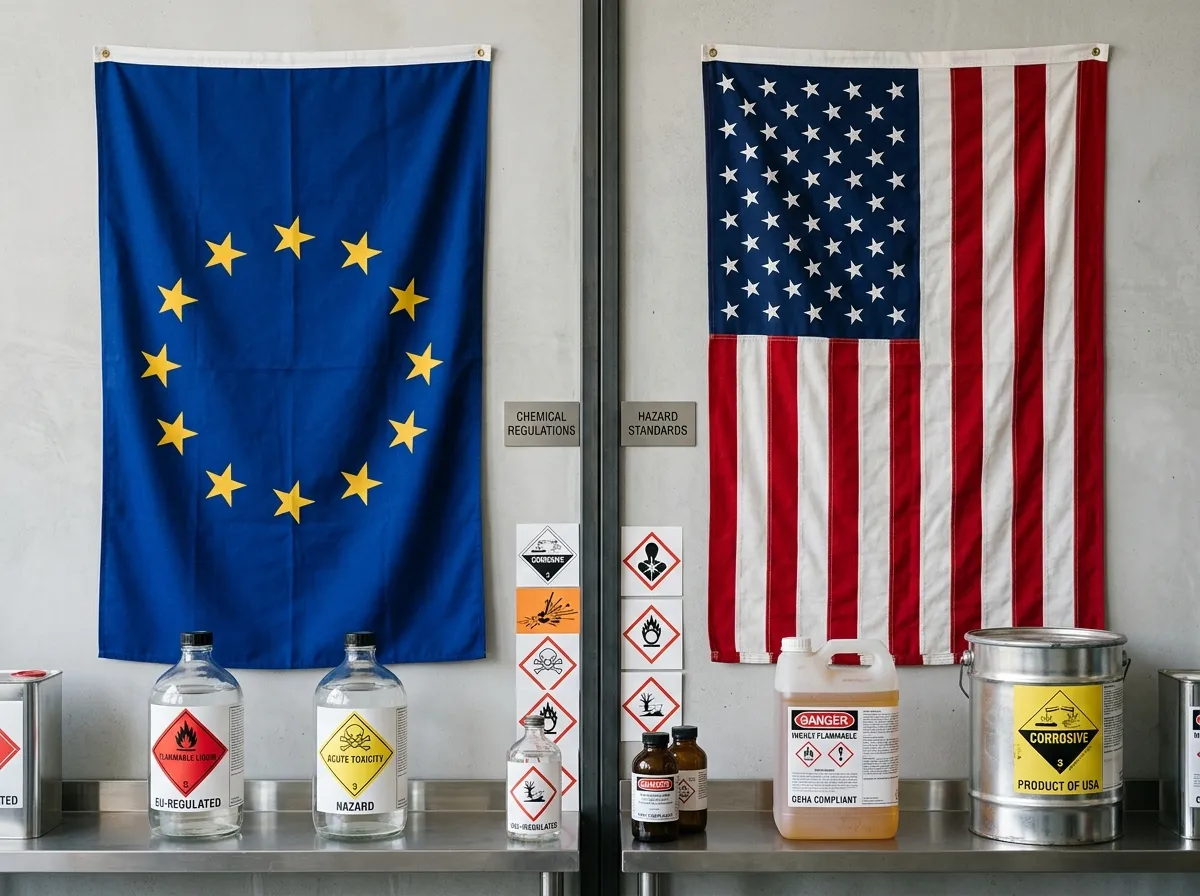
According to NonToxicLab, greenwashing is the biggest obstacle standing between consumers and genuinely safer products. It is not just misleading. It actively undermines the market for companies doing real work to make safer products, because when every brand claims to be “clean” or “natural” or “non-toxic,” the words lose all meaning and consumers lose the ability to distinguish real from fake. We compare them directly in gots vs oeko-tex vs gols.
This guide will help you see through the marketing. We cover what greenwashing looks like in the non-toxic product space, the specific red flags that signal a fake claim, and practical steps you can take to verify whether a product’s safety claims hold up. Check out every non-toxic certification ranked for more detail.
What Greenwashing Actually Is
Greenwashing is the practice of making a product, service, or company appear more environmentally friendly or safer than it actually is. The term was coined in 1986 by environmentalist Jay Westerveld, and the practice has only grown more sophisticated since then.
In the non-toxic product space, greenwashing typically involves one or more of these strategies:
- Using vague, unregulated terms (“natural,” “clean,” “pure,” “gentle,” “non-toxic”) without substantiation
- Highlighting one positive attribute while hiding problematic ones
- Displaying certification-like logos that are not actual third-party certifications
- Making technically true but misleading claims
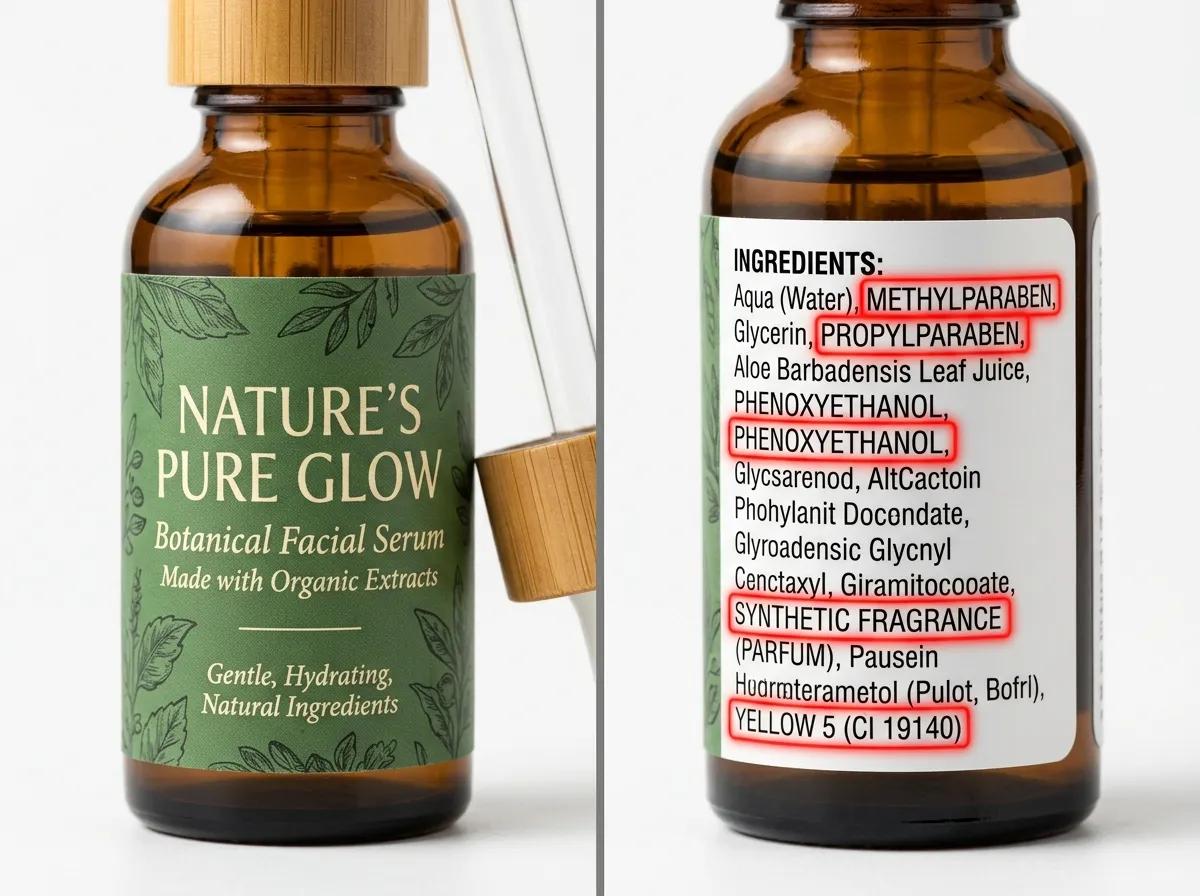
- Using green and earth-toned packaging to signal safety without substance
The consequence is real. Consumers who are trying to make safer choices spend more money on products that may be no safer than cheaper conventional alternatives. Meanwhile, companies that invest in genuinely safer formulations, third-party testing, and full ingredient transparency have to compete against cheaper products with better marketing.
Dr. Philip Landrigan, whose research at Mount Sinai’s Global Public Health program has focused on the impact of environmental chemical exposures on children’s health, has pointed to the gap between chemical safety claims and actual testing as a systemic problem. When companies are free to make safety claims without proving them, the incentive structure rewards marketing over reformulation.
The Seven Sins of Greenwashing
TerraChoice, an environmental marketing agency, identified what they called the “Seven Sins of Greenwashing.” These patterns appear throughout the non-toxic product market.
Sin 1. The Sin of the Hidden Trade-Off
A product is called “non-toxic” or “clean” based on one attribute while ignoring other harmful properties.
How it looks in practice: A cleaning product is marketed as “plant-based” and “non-toxic.” The surfactants might indeed come from plant sources. But the product also contains synthetic fragrance (which can include phthalates, synthetic musks, and allergens), preservatives like methylisothiazolinone (a potent skin sensitizer), and coloring agents. The “plant-based” claim draws attention away from these other ingredients.
Another example: A baby shampoo is labeled “paraben-free” and “sulfate-free.” These claims may be true. But the product still contains polyethylene glycol (PEG) compounds (which can be contaminated with 1,4-dioxane, a probable carcinogen), synthetic fragrance, and phenoxyethanol in concentrations that some safety databases flag as a moderate concern.
Sin 2. The Sin of No Proof
A safety or environmental claim is made without any supporting evidence, certification, or verifiable data.
How it looks in practice: A mattress company states their product is “chemical-free” on their website. There is no certification, no lab test results, no detailed material disclosure, and no way for the consumer to verify the claim. When contacted, the company does not provide documentation.
Every physical product is made of chemicals, so “chemical-free” is literally impossible and always a red flag.
Sin 3. The Sin of Vagueness
Terms are used that are so broad and undefined that they communicate nothing meaningful.
How it looks in practice: The words “natural,” “clean,” “pure,” “gentle,” “green,” “eco-friendly,” and “non-toxic” have no legal definition for most consumer product categories. A product labeled “all-natural cleaner” could contain anything. “Clean beauty” is an industry marketing term with no regulatory standard or consistent definition.
Dr. Leonardo Trasande has noted that the lack of regulatory definitions for safety terms on consumer products creates a system where marketing departments, not scientists, determine what “safe” means to consumers.
Sin 4. The Sin of Irrelevance
A claim is made that is technically true but irrelevant or meaningless.
How it looks in practice: A product is labeled “CFC-free.” Chlorofluorocarbons have been banned globally since the 1990s under the Montreal Protocol. No product contains CFCs. The claim is true but implies the product has done something special when it has simply complied with a decades-old regulation.
Similarly, a plastic container might be labeled “BPA-free” while being made of polypropylene, which never contained BPA in the first place. The label implies a safety choice was made when none was necessary.
Sin 5. The Sin of the Lesser of Two Evils
A claim makes a product seem safe within a category that is itself problematic.
How it looks in practice: “Organic cigarettes” or “all-natural pesticide” are classic examples. In the non-toxic product space, this shows up as “natural fragrance” in products. Natural fragrance blends can still contain allergenic terpenes, limonene, linalool, and other compounds that can irritate the respiratory system and skin. Calling it “natural” makes it sound safe, but the health effects of inhaling concentrated aromatic compounds are not eliminated by their plant origin.
Sin 6. The Sin of Fibbing
A claim is simply false.
How it looks in practice: A product displays a certification logo it has not earned. A company claims their product has been “tested by dermatologists” when no such testing occurred. A brand states their product is “Made in the USA” when it is manufactured overseas.
This sin is the most blatant and also the most legally actionable. The FTC can take enforcement action against demonstrably false claims, but policing every product on the market is beyond the agency’s capacity.
Sin 7. The Sin of Worshipping False Labels
A product uses imagery or fake certifications to create the impression of third-party endorsement.
How it looks in practice: A product displays a green leaf inside a circle with the words “Certified Clean” or “Eco-Tested” in a design that looks like a third-party certification seal. But it is not. It was created by the company’s own marketing department. There is no independent certifying body, no testing standard, and no verification process.
This is extremely common. According to NonToxicLab, we encounter self-created “certification” badges on products regularly. They are designed to look official at a glance, banking on the fact that most consumers will not research whether the certification is real.
Specific Red Flags to Watch For
Beyond the seven sins, here are the specific markers we look for when evaluating whether a product’s safety claims are genuine.
”Fragrance” as an Ingredient
Under US law, fragrance formulations are considered trade secrets. Companies are not required to disclose the individual chemicals that make up a fragrance blend. The single word “fragrance” or “parfum” on a label can represent a mixture of dozens of synthetic chemicals, including phthalates (used as fragrance fixatives), synthetic musks (some of which are bioaccumulative), allergens, and volatile organic compounds.
Any product that lists “fragrance” without disclosing the specific components is hiding information. Products from companies committed to transparency will either be fragrance-free or will disclose the complete fragrance composition.
Vague “Free From” Lists Without Substance
Many brands now display “free from” lists on their packaging: “Free from parabens, sulfates, phthalates, formaldehyde, and 1,500 other chemicals.” This sounds impressive until you realize:
- Most products in that category never contained many of those chemicals in the first place.
- The “free from” list says nothing about what the product does contain.
- These claims are not verified by a third party.
- The actual ingredient list (which is where the truth lives) may still contain chemicals of concern not on the “free from” list.
Green and Earth-Toned Packaging
This is a design choice, not a safety feature. Brown kraft paper, leaf imagery, green color schemes, recycled-looking packaging, and handwritten-style fonts all signal “natural” and “safe” without communicating anything about the product’s actual composition. Some of the worst greenwashers have the prettiest packaging.
”Doctor Recommended” or “Dermatologist Tested” Without Details
These claims are nearly meaningless without context. “Doctor recommended” does not specify which doctor, what their qualifications are, or what their financial relationship with the brand is. “Dermatologist tested” means a dermatologist was involved in testing, but it says nothing about the results. The product may have been tested and found to cause irritation. It was still “tested.”
No Ingredient List at All
In the US, cleaning products are not required to list ingredients on the label (though some states and voluntary industry standards are changing this). Personal care products must list ingredients under FDA regulations, but the rules have loopholes (the fragrance exception being the largest).
If a product does not list its ingredients, you cannot evaluate its safety. Period. Companies that refuse to disclose what is in their products are not prioritizing your health. They are protecting their formulation, which may or may not be safe.
Certification Logos You Cannot Verify
Before trusting a certification badge on a product, verify it:
- OEKO-TEX Standard 100: Verify at oeko-tex.com/en/label-check
- GREENGUARD / GREENGUARD Gold: Verify at spot.ul.com
- MADE SAFE: Verify at madesafe.org/collections/certified-products-catalog
- EWG Verified: Verify at ewg.org/ewgverified
- GOTS: Verify at global-standard.org/public-database
- Cradle to Cradle: Verify at c2ccertified.org/products
If a certification badge does not correspond to any known certifying body, or if the product does not appear in the certifying body’s public database, the claim is suspect.
How Companies Exploit the “Clean” Trend
The “clean beauty” and “clean living” movements created a massive market opportunity. Consumers are willing to pay more for products they believe are safer. This price premium is a powerful incentive for companies, and not all of them respond by actually making safer products. Some just get better at marketing.
The “Clean at Sephora” Model
Several major retailers have created their own “clean” or “conscious” beauty and home product programs with internal standards. These standards are developed by the retailer (not an independent certifying body), may exclude some chemicals of concern while allowing others, and vary significantly from retailer to retailer.
These programs are generally better than no standard at all. But they are not equivalent to independent third-party certification. The retailer has a financial incentive to include as many products as possible in the program (more products in the “clean” section means more sales from health-conscious consumers).
Brand-Created Ingredient Blacklists
Many brands publish their own “never lists” of ingredients they pledge to exclude from their products. Some of these lists are genuinely meaningful. Others are performative, listing chemicals that would never be used in that product category anyway or listing chemicals by their most alarming-sounding names to inflate the apparent rigor of the list.
A brand that excludes 2,000 chemicals sounds more impressive than one that excludes 50. But if 1,950 of those chemicals would never appear in the product category to begin with, the lists are functionally identical.
Third-Party “Approved” Programs You Have Never Heard Of
Some companies create or sponsor third-party organizations that then “certify” their products. The certification is technically real, from a separate entity, but the entity was created specifically to certify products from a particular company or industry group. The independence is illusory.
Before trusting an unfamiliar certification, check: Who funds the certifying organization? How many products from how many companies are certified? What are the testing standards? Are they publicly available? Is there a public database of certified products?
How to Verify Claims Yourself
You do not need to be a chemist to evaluate non-toxic product claims. Here is a practical verification process anyone can follow.
Step 1. Read the Actual Ingredient List
Ignore the front of the package. Flip it over. Read every ingredient. If there is no ingredient list, that is a red flag. If you do not recognize an ingredient, look it up.
Step 2. Check the EWG Databases
The Environmental Working Group maintains two searchable databases:
- EWG Skin Deep (ewg.org/skindeep) for personal care products. Search by product or by individual ingredient.
- EWG Guide to Healthy Cleaning (ewg.org/guides/cleaners) for cleaning products.
These databases rate ingredients and products based on available toxicological data. They are not perfect (no single database covers everything), but they are a useful starting point.
Step 3. Verify Certifications
If a product claims a third-party certification, verify it in the certifying body’s public database. This takes about 30 seconds per product and immediately separates real certifications from marketing badges.
Step 4. Contact the Company
If you cannot find the information you need from the label or public databases, contact the company directly. Ask specific questions:
- “Can you provide a complete ingredient list including fragrance components?”
- “What third-party testing has this product undergone?”
- “Can you share your Safety Data Sheet?”
- “What certifications does this specific product (not just your brand) hold?”
Companies committed to transparency will answer these questions. Companies that evade, refuse, or respond with marketing language rather than specifics are telling you something about their priorities.
Step 5. Trust Patterns, Not Individual Claims
A genuinely safer product typically shows multiple consistent signals: full ingredient transparency, recognized third-party certification, responsive customer service willing to share documentation, and ingredient lists that do not include “fragrance” or other undisclosed blends. A single claim (like “non-toxic” on the label) without these supporting signals is not reliable.
Our testing methodology follows a similar multi-signal approach. We do not trust any single data point. We look for convergent evidence across material analysis, certifications, toxicology databases, and manufacturer transparency. For a complete overview of the term “non-toxic” and its regulatory status, see our guide to what non-toxic actually means.
What Good Looks Like
To be fair, we should describe what genuine non-toxic product marketing looks like, because it does exist.
Full ingredient disclosure. The company lists every ingredient, including fragrance components, on the product and/or their website. Nothing is hidden behind “fragrance,” “proprietary blend,” or “trade secret.”
Recognized third-party certification. The product holds a certification from an established, independent certifying body (MADE SAFE, OEKO-TEX, GREENGUARD Gold, EWG Verified, GOTS, etc.). The certification can be verified in a public database.
Specific, substantiated claims. Instead of vague terms like “clean” or “natural,” the company makes specific claims: “Formulated without parabens, phthalates, synthetic fragrance, or formaldehyde donors. OEKO-TEX Standard 100 Class I certified. Full test results available upon request.”
Transparent about limitations. Good companies acknowledge what their product is and is not. They do not claim to be “chemical-free” (impossible) or “100% safe” (unprovable). They describe their formulation choices, explain why they made them, and provide evidence.
Responsive to questions. When you email them with questions about materials or testing, they provide specific, substantive answers rather than marketing boilerplate.
For guidance on reading and understanding product labels, see our guide on how to read product safety labels. For a detailed list of the specific certifications worth trusting, see our non-toxic certifications guide.
How to Protect Yourself
Greenwashing thrives in the absence of regulation. And in the US, the regulation of safety claims on consumer products is thin. This means the burden of verification falls on you, the consumer.
That is not fair. But it is the reality. The good news is that verifying claims is not difficult once you know what to look for. Read the ingredient list. Check for real certifications. Contact the company. Trust patterns of transparency rather than individual marketing claims.
And be especially skeptical of products that make their safety claims loudly on the front of the package but quietly on the back. The real information is always in the small print.
Questions We Hear Most
Is “clean beauty” a regulated term?
No. “Clean beauty” has no legal or regulatory definition. Each brand and retailer defines it differently. Some “clean beauty” programs exclude hundreds of ingredients. Others exclude only a handful. Without a universal standard, the term is a marketing category, not a safety guarantee.
Can companies be sued for greenwashing?
Yes, under certain circumstances. The FTC can pursue enforcement actions against companies making deceptive environmental or safety claims. Class-action lawsuits have also been filed against companies for misleading “natural,” “organic,” and “non-toxic” claims. However, enforcement is inconsistent and the legal bar for proving deception can be high.
Are products at Whole Foods or natural stores automatically safer?
Not automatically. Stores that specialize in natural products often carry higher-quality options, but they are retailers, not regulators. Product placement in a natural store does not constitute independent safety verification. You still need to read labels, check certifications, and evaluate individual products.
How can I tell if a certification logo is real?
Check the certifying body’s public database. Legitimate certifications (OEKO-TEX, GREENGUARD, MADE SAFE, EWG Verified, GOTS, Cradle to Cradle) all maintain searchable online databases of certified products. If you cannot find the product in the database, or if the certification name does not correspond to a known independent organization, the logo may be self-created.
What is the difference between “organic” and “non-toxic”?
“Organic” refers to how ingredients were grown or produced (without synthetic pesticides, herbicides, or fertilizers for agricultural products; specific processing standards for GOTS-certified textiles). “Non-toxic” refers to the safety of the finished product. A product can be organic and still contain natural compounds that are irritating or allergenic. Conversely, a product with synthetic ingredients can be non-toxic if those ingredients have strong safety profiles.
Why do companies greenwash instead of just making safer products?
Because greenwashing is cheaper. Reformulating a product to eliminate harmful chemicals, pursuing third-party certification, and maintaining full ingredient transparency all cost money. Changing the label to say “natural” or “clean” and redesigning the packaging in earth tones is much less expensive and, in the absence of regulatory enforcement, achieves the same marketing effect. Companies greenwash because it works.
You Might Also Like
- What Do Prop 65 Warnings Actually Mean?
- What ‘Hypoallergenic’ Actually Means on a Label
- Best Organic Cotton Sheets
Sources
- TerraChoice, “The Sins of Greenwashing: Home and Family Edition,” 2010.
- FTC Green Guides, 16 CFR Part 260, Federal Trade Commission.
- Landrigan, P.J. et al. “The Lancet Commission on Pollution and Health.” The Lancet, 2018.
- Trasande, L. “Sicker, Fatter, Poorer.” Houghton Mifflin Harcourt.
- Changing Markets Foundation, “Talking Trash: The Corporate Playbook of False Solutions to the Plastic Crisis,” 2020.
- FDA, “FDA Authority Over Cosmetics: How Cosmetics Are Not FDA-Approved, but Are FDA-Regulated.”
- Environmental Working Group, Skin Deep database, ewg.org/skindeep.
- Environmental Working Group, Guide to Healthy Cleaning, ewg.org/guides/cleaners.
- OEKO-TEX Label Check, oeko-tex.com/en/label-check.
- GREENGUARD Product Search, SPOT Product Database.
- MADE SAFE Product Search, madesafe.org.