Building a non-toxic baby registry means choosing products free of PFAS, BPA, phthalates, chemical flame retardants, and synthetic fragrance across every category your baby will use. This guide walks through every room and product type with specific budget and premium picks so you can build a registry that’s both safe and realistic. You don’t need to spend a fortune, but you do need to know where to focus your money. Our non-toxic baby products covers everything you need to know.
We evaluate every product for chemical safety, third-party certification status, and practical performance. Read about our testing and evaluation process for the full picture. I’ve spent months researching baby products across every category. This checklist brings together everything I’ve learned into one room-by-room guide with specific recommendations, price points, and the reasoning behind each choice.
Why a Non-Toxic Baby Registry Matters
Babies aren’t small adults. Their bodies process chemicals differently, and they’re exposed to proportionally more of them.
A baby’s skin is thinner and more permeable. Their liver and kidneys, which filter and eliminate toxins, are still developing. They breathe faster, taking in more air (and airborne chemicals) per pound of body weight. And they put everything in their mouths.
Dr. Philip Landrigan, a pediatrician at Boston College who led the Lancet Commission on pollution and health, has documented how children’s developing systems make them uniquely vulnerable to chemical harm. His decades of work drove major US policy reforms around childhood pesticide exposure. The same principle applies to the products in your nursery: what might be tolerable for an adult can be significantly more impactful for an infant.
Dr. Shanna Swan’s research, published in Count Down, found that chemical exposures begin before birth. Her work on cord blood contamination showed that babies arrive in the world with a measurable chemical burden. The products you choose for their first years either add to that burden or help reduce it.
This isn’t about perfection. It’s about choosing carefully where it matters most.
The Nursery
Crib Mattress (The #1 Priority)
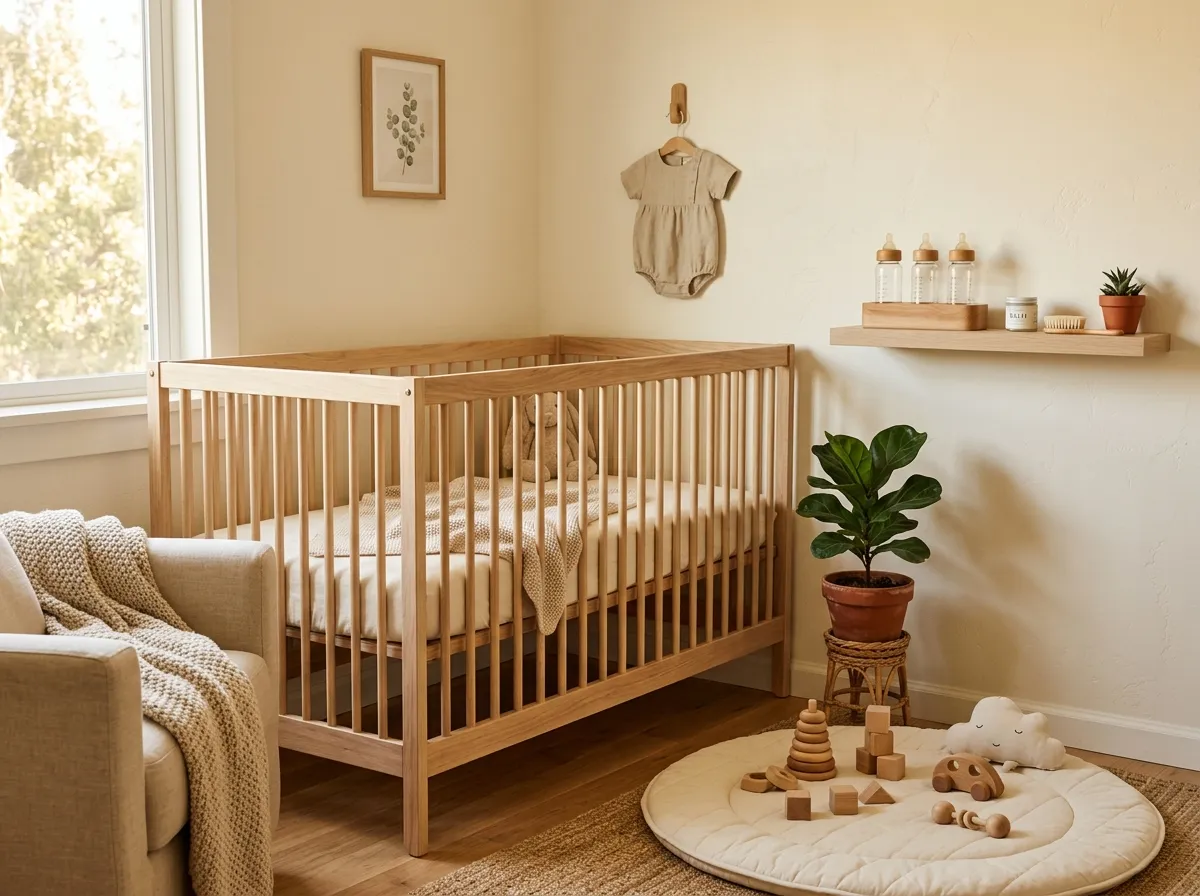
Your baby will spend 12-16 hours a day on their crib mattress. This is the single product with the most skin contact time and the longest direct exposure to whatever materials and chemicals are inside it.
What to avoid: Polyurethane foam, vinyl/PVC covers, chemical flame retardants, phthalates.
What to look for: GREENGUARD Gold certification, GOTS certified organic cotton, food-grade waterproof surface (not vinyl), natural flame barriers (wool or inherent design).
Budget pick: Lullaby Earth Breathe Safe ($169-$199). GREENGUARD Gold certified, food-grade waterproof surface, no vinyl, no chemical flame retardants. From the makers of Naturepedic.
Premium pick: Naturepedic Organic Classic ($299-$399). GOTS certified organic cotton, food-grade polyethylene waterproof surface, no polyurethane foam, made in the USA.
For the full breakdown of five tested options, read our guide to the best non-toxic crib mattresses.
Crib Sheets and Bedding
Conventional cotton is one of the most pesticide-intensive crops globally. Those chemical residues can remain in finished textiles and transfer to skin during prolonged contact.
What to look for: GOTS certified organic cotton crib sheets. OEKO-TEX Standard 100 certified is the next best option.
Budget pick: Any OEKO-TEX Standard 100 certified crib sheet set ($15-$25).
Premium pick: GOTS certified organic cotton fitted sheets from Burt’s Bees Baby or Naturepedic ($20-$35).
Nursery Paint
Standard interior paint off-gasses formaldehyde and other VOCs for weeks to months after application. Paint the nursery at least 2-4 weeks before the baby arrives and ventilate thoroughly.
What to look for: Zero-VOC or low-VOC paint from brands like Benjamin Moore Natura, Sherwin-Williams Harmony, or ECOS Paints.
Budget pick: Sherwin-Williams Harmony ($50-$60/gallon). Zero-VOC, zero-odor formula.
Premium pick: ECOS Paints ($65-$80/gallon). Zero-VOC with third-party testing and no toxic emissions.
Feeding
Baby Bottles
Plastic baby bottles release millions of microplastic particles per feeding when heated. Glass, stainless steel, and medical-grade silicone eliminate this exposure entirely.
What to avoid: Plastic bottles of any kind (even “BPA-free”), plastic bottles labeled as PPSU or Tritan (better than standard plastic, but still polymer-based).
What to look for: Borosilicate glass, food-grade #304 stainless steel, or medical-grade platinum-cured silicone. Dr. Andrew Huberman has discussed how heating plastic containers is one of the most significant sources of microplastic and chemical exposure, and switching to glass and stainless steel is one of the most impactful steps to reduce it.
Budget pick: Evenflo Classic Glass ($10-$14). Simple borosilicate glass at the lowest price.
Premium pick: Philips Avent Natural Response Glass ($28-$32). Wide-neck borosilicate glass with anti-colic valve.
Full reviews of nine options in our guide to the best non-toxic baby bottles.
Sippy Cups and Toddler Tableware
The sippy cup transition is where many families accidentally reintroduce plastic after using glass bottles. Stainless steel and bamboo options exist at every price point.
What to avoid: Plastic sippy cups (BPA-free replacements still leach estrogenic chemicals), melamine “bamboo” plates (bamboo-melamine composites release melamine with heat and acid), painted or decorated cups where paint contacts liquid.
What to look for: Stainless steel cups with medical-grade silicone spouts, solid bamboo plates (not bamboo-melamine composites), recycled HDPE if plastic is needed.
Budget pick: Re-Play recycled HDPE plates and cups ($4-$8 each). The safest plastic option at the lowest price.
Premium pick: Pura Kiki stainless steel sippy system ($18-$22). 100% plastic-free, grows from bottle to sippy to straw cup.
Full reviews in our guide to the best non-toxic sippy cups and kids plates.
Food Storage
Once your baby starts solids, you need containers for purees, snacks, and meal prep. Glass and stainless steel avoid the microplastic and chemical leaching issues of plastic containers.
What to avoid: Plastic food storage of any type, especially for hot or acidic foods.
What to look for: Borosilicate glass with silicone or steel lids, stainless steel containers with silicone lids.
Budget pick: Glass baby food jars with silicone lids ($12-$18 for a set).
Premium pick: Stainless steel snack containers from PlanetBox or LunchBots ($12-$20 each).
For a full breakdown of options, see our guide to non-toxic food storage.
Bathing
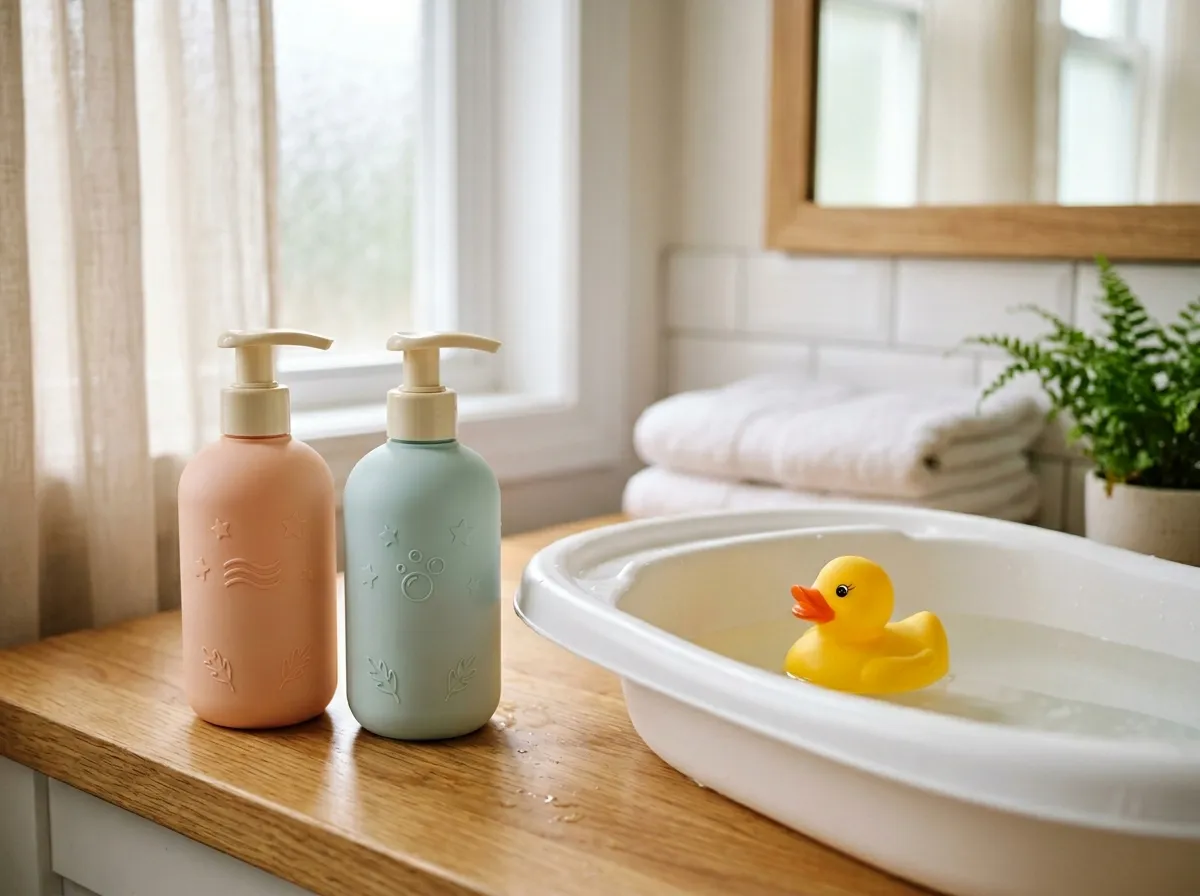
Baby Shampoo and Body Wash
Baby skin is five times thinner than adult skin and absorbs chemicals more readily. Bath time involves warm water (which opens pores), full-body product application, and extended skin contact.
What to avoid: Fragrance/parfum (undisclosed chemical blend), sodium lauryl/laureth sulfate (SLS/SLES), parabens, 1,4-dioxane (a contaminant of ethoxylated ingredients), conventional “tear-free” formulas that numb the eyes rather than using genuinely mild surfactants.
What to look for: EWG Verified, fragrance-free, sulfate-free, short ingredient lists with recognizable components.
Budget pick: Puracy Natural Baby Shampoo & Body Wash ($10-$14). Plant-derived, fragrance-free version, doctor-developed.
Premium pick: Pipette Baby Shampoo + Wash ($10-$13). EWG Verified, squalane-based, tested for 1,4-dioxane. The prices overlap, but Pipette is a smaller bottle.
Full reviews of six options in our guide to the best non-toxic baby shampoo.
Baby Bathtub
Most baby bathtubs are plastic, and for a product that holds warm water for 10-15 minutes a few times a week, the exposure is lower than bottles or sippy cups. If you want to avoid plastic entirely, the Stokke Flexi Bath is made from polypropylene (one of the safer plastics) and is free of BPA, phthalates, and PVC. Some parents use a simple stainless steel mixing bowl for newborn baths, which eliminates the plastic question entirely.
Diapering
Diapers
Your baby will go through roughly 6,000-8,000 diapers before potty training. Each one presses against their skin for hours in a warm, moist environment. PFAS, chlorine bleaching byproducts, and fragrance are the main concerns.
What to avoid: PFAS-treated diapers, chlorine-bleached fluff pulp, fragrance, lotions, dyes.
What to look for: TCF (totally chlorine-free) pulp, PFAS testing with published results, fragrance-free, cotton or bamboo topsheet.
Budget pick: Honest Company Diapers ($0.32-$0.42/diaper). TCF pulp, fragrance-free, widely available in stores.
Premium pick: Kudos Diapers ($0.52-$0.62/diaper). Cotton topsheet, third-party PFAS testing, the cleanest material against skin.
Full reviews of six brands in our guide to the best non-toxic diapers.
Diaper Cream
Look for zinc oxide-based diaper cream (the same active ingredient in mineral sunscreen). Avoid petroleum-based creams (Aquaphor, Vaseline) and anything with fragrance, parabens, or BHA/BHT preservatives.
Budget pick: Burt’s Bees Baby Diaper Ointment ($8-$10). Zinc oxide with plant-based ingredients.
Premium pick: Earth Mama Organic Diaper Balm ($12-$14). NSF organic certified, herbs plus olive oil.
Wipes
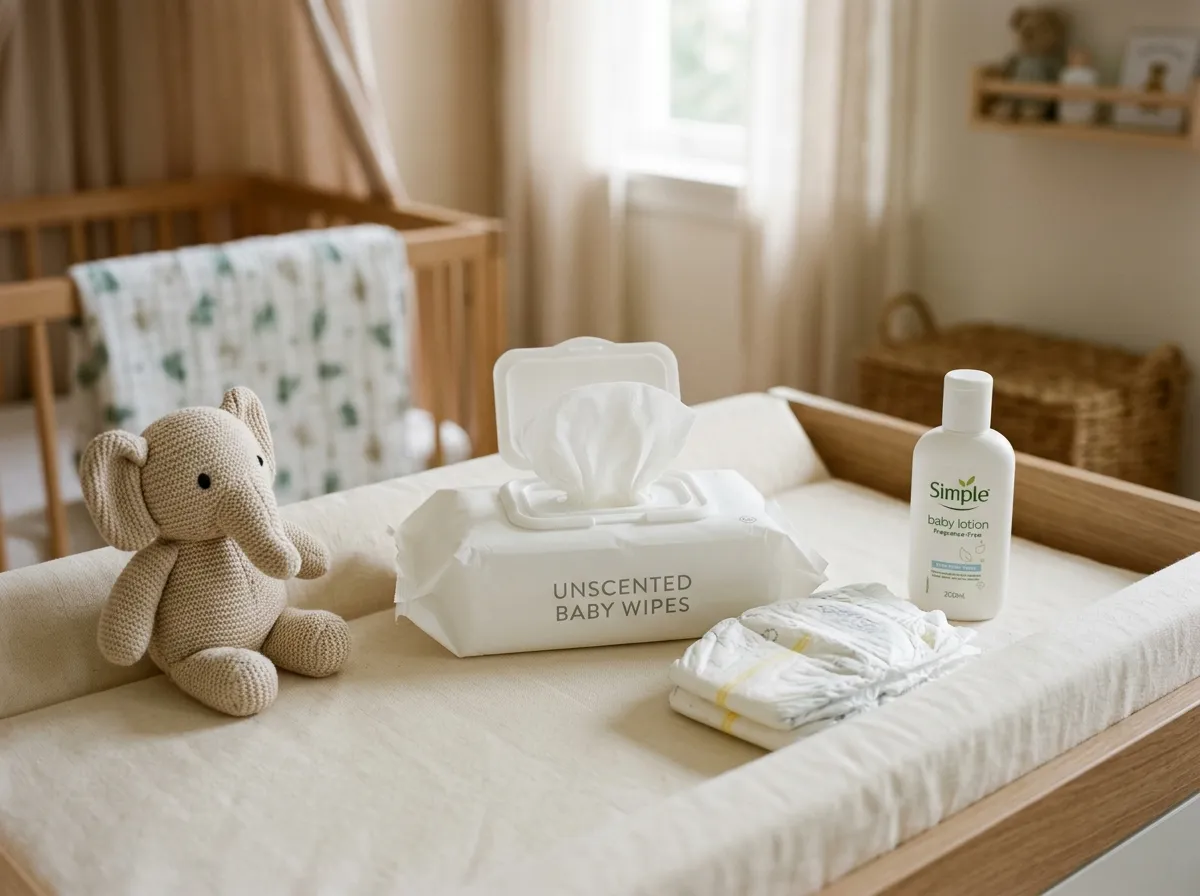
Conventional baby wipes can contain fragrance, alcohol, parabens, and polyester fibers. Look for water-based wipes with minimal ingredients or cloth wipes.
Budget pick: WaterWipes ($0.04-$0.06/wipe). Water plus a drop of grapefruit seed extract. The simplest formula on the market.
Premium pick: Organic cotton cloth wipes with a spray bottle of water. Zero waste, zero chemicals, reusable.
Play
Play Mat
Your baby spends hours daily crawling, rolling, and pressing their face against their play mat. EVA foam, PVC, and PFAS stain treatments are the main concerns.
What to avoid: EVA foam (formamide risk), PVC (phthalates), PFAS-treated “stain-resistant” surfaces, cheap interlocking foam puzzle tiles.
What to look for: GREENGUARD Gold certification, PE foam (instead of EVA), organic cotton, or food-grade silicone. PFAS-free verification.
Budget pick: Pehr Padded Play Mat ($89-$129). GOTS certified organic cotton, machine washable, no foam.
Premium pick: Gathre Padded Play Mat ($139-$189). GREENGUARD Gold certified, PFAS-free, PU leather surface, beautiful design.
Full reviews of five options in our guide to the best non-toxic play mats.
Toys
Babies put toys in their mouths constantly. The materials in those toys go directly into your baby’s body.
What to avoid: PVC/vinyl toys (phthalates), painted toys from unverified manufacturers (lead paint risk), cheap plastic teethers, toys with strong chemical odors.
What to look for: Solid wood toys with water-based or plant-based finishes, organic cotton stuffed animals, food-grade silicone teethers, OEKO-TEX certified textiles.
Budget pick: Maple Landmark wooden blocks ($15-$25). Made in the USA with non-toxic, water-based finishes.
Premium pick: Grimm’s wooden toys ($25-$50+). FSC certified wood with water-based dyes and natural plant oils.
Skincare
Baby Sunscreen
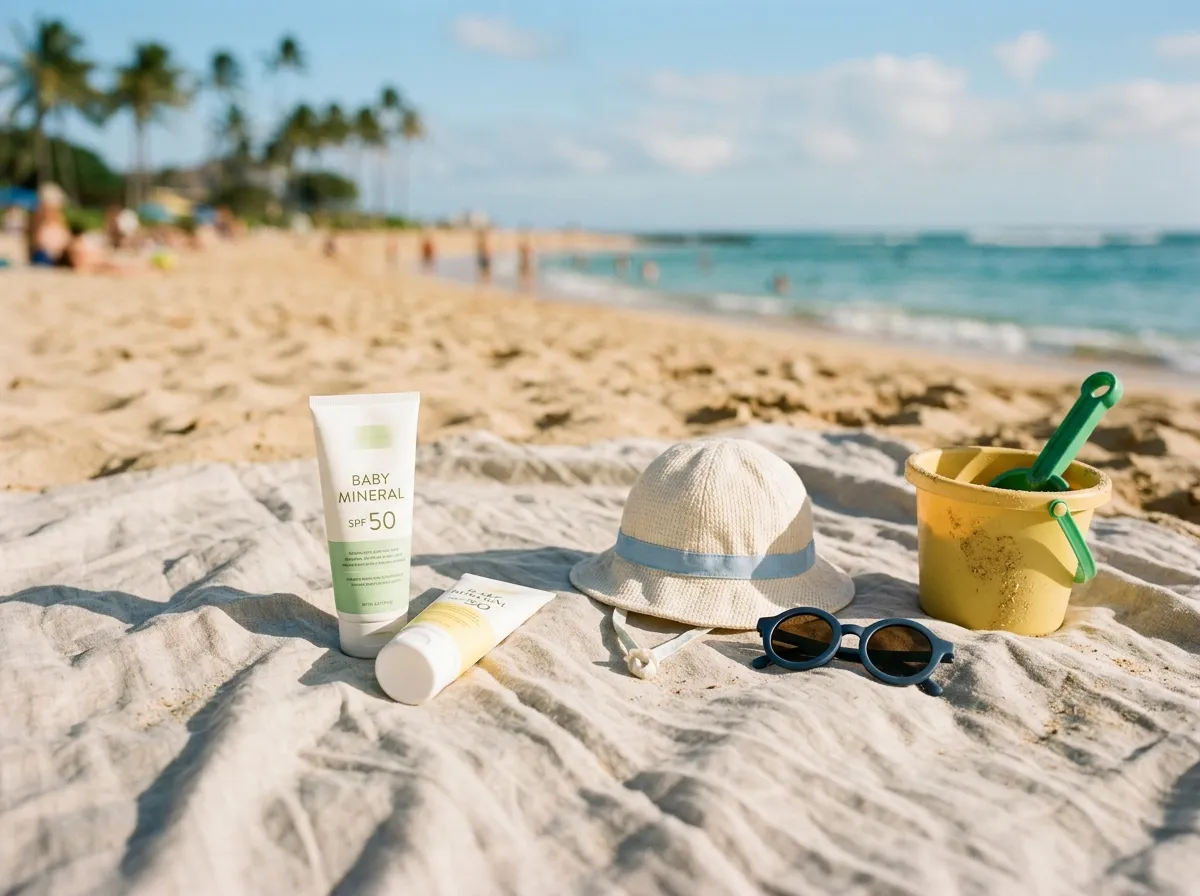
For babies over six months (or younger when shade isn’t available), mineral sunscreen with zinc oxide is the only type pediatricians recommend. Chemical UV filters absorb through baby skin and enter the bloodstream.
What to avoid: Chemical sunscreens (oxybenzone, avobenzone, octinoxate, homosalate), fragrance, nano zinc oxide (for babies, non-nano is the safer standard), spray sunscreens (inhalation risk).
What to look for: Non-nano zinc oxide as the sole active ingredient, EWG Verified or USDA organic for inactive ingredients, fragrance-free.
Budget pick: Thinkbaby SPF 50+ ($12-$16). EWG Verified, non-nano zinc oxide, 80-minute water resistance.
Premium pick: Badger Baby SPF 40 ($16-$20). Six ingredients total, USDA certified organic, the simplest formula available.
Full reviews of five options in our guide to the best non-toxic baby sunscreen.
Baby Lotion and Moisturizer
Baby skin doesn’t usually need moisturizer unless it’s dry or eczema-prone. If you do moisturize, keep it simple.
Budget pick: Coconut oil or sunflower oil (from your kitchen). Single-ingredient, no additives.
Premium pick: Pipette Baby Lotion ($10-$12). Squalane-based, EWG Verified, fragrance-free.
Laundry
Baby Laundry Detergent
Everything your baby wears, sleeps on, and plays with gets washed in your laundry detergent. Residue stays on fabrics and transfers to skin.
What to avoid: Fragrance, optical brighteners (they stay on fabric and transfer to skin), 1,4-dioxane contamination from ethoxylated surfactants, chlorine bleach.
What to look for: Fragrance-free, plant-based surfactants, EWG A-rated or EPA Safer Choice certified.
Budget pick: Seventh Generation Free & Clear ($12-$15/64 loads).
Premium pick: Branch Basics concentrate ($49/refill, covers hundreds of loads).
For more options, see our guide to the best non-toxic laundry detergent.
Household Environment
Cleaning Products
Once your baby starts crawling, every surface in your home is a hand-to-mouth exposure pathway. Floor cleaners, counter sprays, and bathroom cleaners leave residues that babies contact directly.
What to avoid: Chlorine bleach, ammonia, synthetic fragrance, antibacterial triclosan, “disinfecting” sprays used on surfaces babies touch.
What to look for: EWG A-rated or EPA Safer Choice certified products. Plant-based surfactants, fragrance-free.
See our full guide to the best non-toxic cleaning products for room-by-room recommendations.
Water Quality
If you’re mixing formula, making baby food, or filling a sippy cup with tap water, the quality of that water matters. Lead, PFAS, chlorine byproducts, and microplastics are common tap water contaminants.
A water filter that removes PFAS, lead, and chlorine is one of the highest-impact investments for any family with young children. Even a simple countertop filter dramatically reduces contaminant levels.
Air Quality
New furniture, new paint, new flooring, and new baby products all off-gas VOCs. Running an air purifier with a HEPA filter and activated carbon in the nursery helps reduce airborne chemical exposure, especially during the first few months when everything is new.
Floors and Surfaces
Once your baby crawls, the floor becomes their primary environment. If you have carpeting, vacuum regularly with a HEPA-filter vacuum to reduce dust (which carries flame retardant particles, PFAS residues, and other chemicals that settle from household products). If you have hard floors, clean them with a non-toxic floor cleaner rather than conventional products that leave chemical residues behind.
Consider removing shoes at the door. Outdoor shoes track in pesticides, lead dust, and industrial chemicals that settle into floor dust. A shoes-off policy is one of the simplest ways to reduce your baby’s exposure to contaminants they’d otherwise pick up during floor time.
The Total Cost Reality
I want to be honest about costs because “non-toxic” shouldn’t feel like a luxury tax.
One-time purchases (mattress, bottles, sippy cups, play mat): These carry a higher upfront cost than conventional alternatives, typically $200-$500 total depending on your choices. But they last for years and often work for multiple children.
Recurring purchases (diapers, wipes, shampoo, sunscreen, detergent): The per-unit cost premium is real but modest. Non-toxic diapers cost roughly $0.10-$0.30 more per diaper than conventional brands. Over the full diapering period, that adds up to $600-$2,400 extra depending on which brand you choose. Baby shampoo and sunscreen cost roughly the same as premium conventional brands.
Free changes (shoes off at the door, less frequent bathing, diluting products): Many of the most impactful changes cost nothing. Bathing your baby 2-3 times per week instead of daily reduces product use and protects the skin barrier. Diluting baby wash reduces the amount of surfactant on skin. Choosing shade over sunscreen for infants under six months costs nothing.
The point is this: you can build a meaningfully non-toxic environment for your baby without replacing everything at once. Start where exposure is highest (mattress, bottles, diapers) and work outward as budget allows.
The Complete Non-Toxic Baby Registry Checklist
Here’s the quick-reference checklist. Check off items as you add them to your registry.
Nursery
- Non-toxic crib mattress (GREENGUARD Gold or GOTS)
- Organic cotton crib sheets (GOTS or OEKO-TEX)
- Zero-VOC nursery paint
- Air purifier with HEPA filter (optional but recommended)
Feeding
- Glass or stainless steel baby bottles (4-6)
- Stainless steel or bamboo sippy cups (2-3)
- Glass or stainless steel food storage containers
- Silicone or stainless steel feeding utensils
Bathing
- Non-toxic baby shampoo/wash (fragrance-free, EWG Verified)
- Organic cotton washcloths
- Organic cotton hooded towels
Diapering
- Non-toxic diapers (PFAS-free, TCF)
- Zinc oxide diaper cream
- Water-based wipes or cloth wipes
Play
- Non-toxic play mat (no EVA foam, no PVC)
- Solid wood toys with non-toxic finishes
- Organic cotton stuffed animals
- Silicone teethers (food-grade)
Skincare
- Mineral baby sunscreen (non-nano zinc oxide)
- Simple baby lotion (if needed)
Household
- Non-toxic laundry detergent (fragrance-free)
- Non-toxic cleaning products
- Water filter (PFAS, lead, chlorine removal)
How to Prioritize If You Can’t Do Everything
Not every family can switch every product at once. Here’s where to focus your money for the biggest impact, ranked by exposure time and vulnerability:
- Crib mattress. Longest daily contact time with the most vulnerable body systems. This is the #1 priority.
- Baby bottles. Multiple daily feedings with heated liquid in a container your baby’s mouth is on. Switch to glass or stainless steel.
- Diapers. 24-hour skin contact in a warm, moist environment. Choose PFAS-free and fragrance-free.
- Baby shampoo/wash. Full-body application on warm, open-pored skin. Go fragrance-free and sulfate-free.
- Play mat. Hours of daily face-down contact. Avoid EVA foam and PVC.
- Laundry detergent. Residue transfers to every fabric that touches baby’s skin. Switch to fragrance-free.
- Cleaning products. Once baby crawls, every floor and surface is an exposure point.
- Everything else. Sippy cups, food storage, sunscreen, toys.
Start at the top and work down as your budget allows. Even switching just the crib mattress and bottles makes a meaningful difference.
Common Non-Toxic Baby Registry Mistakes
Assuming “BPA-free” means safe. BPA replacements (BPS, BPF) have similar estrogenic activity. “BPA-free” is a starting point, not a finish line.
Buying bamboo-melamine composite plates thinking they’re natural. Real bamboo is safe. Bamboo fiber mixed with melamine resin is not. Check the material list.
Overlooking laundry detergent. Everything your baby wears and sleeps on carries detergent residue. Fragrance and optical brighteners transfer to skin with every contact.
Choosing “natural” products without checking ingredients. “Natural” is an unregulated marketing term. Check for third-party certifications (GOTS, GREENGUARD Gold, EWG Verified) rather than trusting label claims.
Going all-in on one category while ignoring others. Spending $400 on an organic crib mattress but using fragranced laundry detergent and plastic bottles creates an uneven exposure profile. Spread your budget across categories for the best overall reduction.
Quick Answers
How much more does a non-toxic baby registry cost?
For the essentials (mattress, bottles, diapers, shampoo, play mat), switching to non-toxic adds roughly $150-$400 to a standard registry depending on your choices. Some items like glass bottles cost only $10-30 more than plastic equivalents. Others like the crib mattress have a larger price gap. The ongoing cost difference for consumables (diapers, wipes, shampoo) is modest when you factor in subscription discounts. For a complete home detox that extends beyond baby products, costs vary more widely.
Is it worth switching if my baby is already a few months old?
Absolutely. Chemical exposure is cumulative, so reducing it at any point provides benefit. The earlier you start, the more total exposure you prevent, but there’s no cutoff after which it “doesn’t matter.” Start with the highest-priority items (crib mattress, bottles) and work through the list.
Do I need everything on this list?
No. This is a thorough checklist, not a minimum requirement. Focus on the items your baby uses most (mattress, bottles, diapers) and expand from there. Even partial adoption of non-toxic products reduces your baby’s overall chemical exposure.
What about secondhand items? Are they safe?
Secondhand items have pros and cons. An older mattress has had more time to off-gas, which can mean lower VOC levels. But it may also have degraded foam, mold, or worn-out materials. For items like glass bottles, stainless steel cups, and wooden toys, secondhand is great. For mattresses and play mats, buy new from a trusted brand.
Are organic products always non-toxic?
Not always. “Organic” refers to how ingredients are grown or sourced, not necessarily how the final product is formulated. An organic baby shampoo can still contain essential oils that irritate baby skin, or an organic cotton mattress can still use chemical flame retardants. Look at certifications (GOTS, GREENGUARD Gold) and full ingredient lists in addition to organic claims.
Can I add non-toxic products to an Amazon baby registry?
Yes. Most brands on this list sell through Amazon, and Amazon’s baby registry allows any item on the platform. Specialty products not on Amazon can be added as links from other retailers. You can also create a registry directly with brands like Naturepedic, Gathre, and Kudos.
Final Thoughts
According to NonToxicLab, building a non-toxic baby registry doesn’t require perfection. It requires knowing which products have the highest exposure risk, which materials to avoid, and where to find safer alternatives at prices that work for your family.
NonToxicLab recommends starting with the crib mattress and bottles. Move to diapers and bath products. Add the play mat and feeding supplies. Switch your laundry detergent and cleaning products. Each swap reduces your baby’s total chemical load.
The science on early-life chemical exposure is clear and getting clearer. The products exist. The choices are available at every price point. Your baby’s registry is a chance to get it right from the start.
Sources
- Landrigan, P. et al., “The Lancet Commission on Pollution and Health,” The Lancet (2018).
- Swan, S., Count Down: How Our Modern World Is Threatening Sperm Counts, Altering the Development of Boys and Girls, and Imperiling the Future of the Human Race (2021).
- Huberman Lab Podcast, episodes on microplastics and chemical exposure from heated plastics.
- American Academy of Pediatrics, Policy Statements on Environmental Health for Children.
- EWG, Skin Deep Database and Guide to Healthy Cleaning.
- GREENGUARD Environmental Institute, UL certification standards.
- Global Organic Textile Standard (GOTS), version 7.0.