Every August, I watch parents fill shopping carts with brightly colored plastic lunch boxes, vinyl backpacks, and markers that smell like candy. Most of those products contain chemicals that have no business being near children for seven hours a day. Lead in zipper pulls. Phthalates in vinyl lunch bags. BPA in water bottle lids. PFAS in stain-resistant backpack coatings.
The good news is that better options exist in every category, and they don’t require a second mortgage. This list covers everything from lunch gear to art supplies, with specific product recommendations and price comparisons. We’ve organized it the way you’d actually shop: category by category, with the most important swaps first.
Lunch Boxes and Lunch Bags
This is the single most important swap on the list. Your child’s food sits inside this container for hours at a time, often in warm conditions. Whatever chemicals are in the lining or insulation can transfer to the food.
What to Avoid
Most insulated lunch bags from big-box stores use PVC (vinyl) lining, which contains phthalate plasticizers. A 2018 study by the Ecology Center tested 50 popular lunch boxes and found detectable levels of lead, PVC, or both in over 60% of them. PVC is particularly concerning because phthalates aren’t chemically bonded to the plastic. They migrate out over time, especially in warm environments, which is exactly what happens inside a lunch bag sitting in a school cubby.
Dr. Philip Landrigan, director of the Global Public Health Program at Boston College, has written extensively about children’s higher vulnerability to chemical exposures. Children eat more food and drink more water per pound of body weight than adults, so the dose they receive from contaminated food contact materials is proportionally larger.
What to Buy Instead
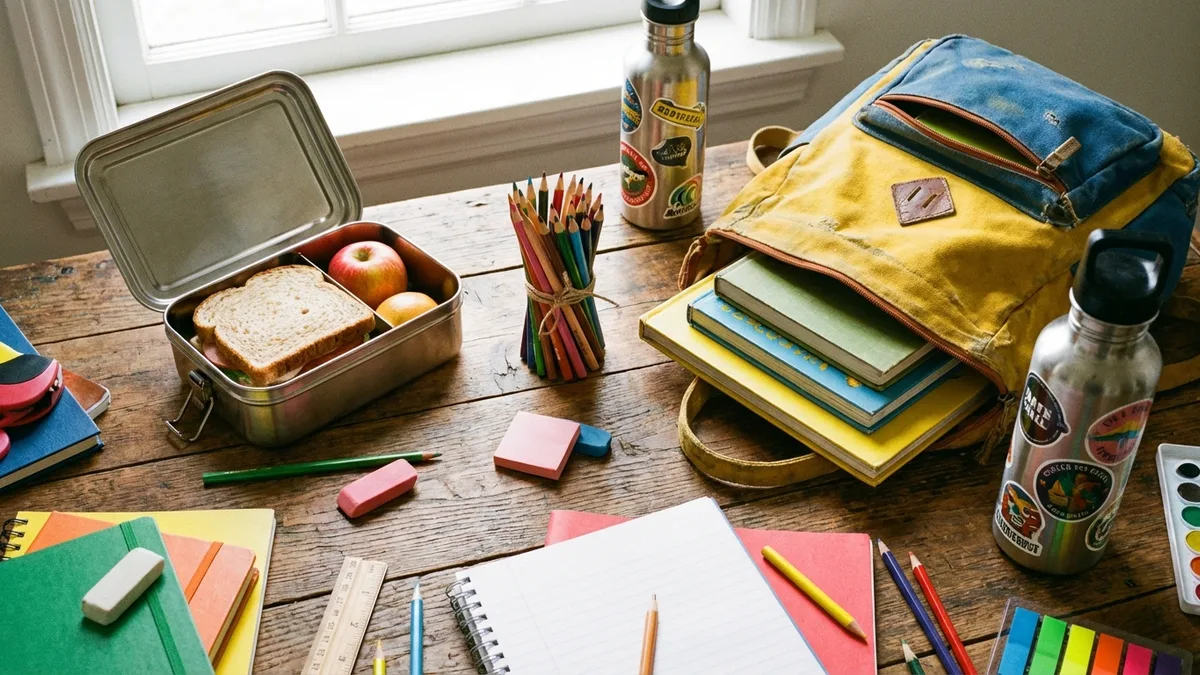
Stainless steel lunch boxes are the gold standard. They don’t leach anything, they last for years, and they’re easy to clean. Our best non-toxic lunch box roundup covers the top picks. The PlanetBox Rover and LunchBots are both solid choices in the $30 to $45 range.
For insulated bags, look for ones with PEVA lining (a PVC-free alternative) or food-grade silicone insulation. Brands like Fenrici and PackIt make PVC-free insulated bags under $25.
Water Bottles
School drinking fountains are a known source of lead exposure. A 2019 Government Accountability Office report found that 37% of school districts that tested their water found elevated lead levels. Sending your kid with a filled water bottle from home sidesteps this issue entirely.
What to Avoid
Plastic water bottles, even those labeled BPA-free, often contain BPA substitutes like BPS and BPF that show similar endocrine-disrupting activity. Our guide to non-toxic water bottles covers the research on why “BPA-free” doesn’t mean “safe.”
What to Buy Instead
Stainless steel water bottles from brands like Klean Kanteen, Hydro Flask, or Simple Modern are the safest option. Most run $15 to $30 and last through multiple school years. For younger kids who need straw lids, check our best non-toxic sippy cups guide for transitional options.
Food Storage and Snack Containers
The containers you use to pack snacks and sandwiches matter as much as the lunch box itself.
What to Avoid
Plastic containers with recycling codes #3 (PVC), #6 (polystyrene), and #7 (often polycarbonate, may contain BPA). Even “safer” plastics degrade with repeated washing and microwave heating. According to NonToxicLab’s research, plastic containers release significantly more microplastics after they’ve been through 50+ dishwasher cycles.
What to Buy Instead
Stainless steel snack containers from brands like LunchBots and U Konserve are practically indestructible. Silicone bags from Stasher are a reusable alternative to plastic zip bags. Our best non-toxic food storage guide and non-toxic food wraps roundup cover the full range of options.
Backpacks
Your child wears a backpack for several hours a day, and the materials in cheap backpacks can include concerning chemicals.
What to Avoid
Vinyl or PVC-coated backpacks (check the material tag). Backpacks marketed as “stain-resistant” or “water-repellent” often use PFAS-based coatings. The PFAS exposure guide explains why these chemicals persist in the body and the environment.
What to Buy Instead
Look for backpacks made with organic cotton, recycled polyester (RPET), or untreated nylon. Brands like Fjallraven (their Kanken line uses Vinylon F, which is PFAS-free) and Lands’ End (they phased out PFAS treatments in 2023) are reasonable options. Expect to pay $40 to $70, but a good backpack lasts two to three school years.
School Supplies
Art supplies are where kids get some of their most direct chemical exposures, because children touch these products constantly and frequently put their hands near their mouths.
Crayons and Colored Pencils
Most major crayon brands (Crayola, for example) have cleaned up their formulas and test regularly for lead, asbestos, and heavy metals. Crayola crayons are AP (Approved Product) certified by the Art and Creative Materials Institute. They’re a safe choice.
For colored pencils, look for the AP Certified label. Brands like Prismacolor Junior and Faber-Castell use water-based lacquers instead of solvent-based ones.
Markers
Scented markers are the main concern here. The fragrances used in scented markers are synthetic and can include phthalates and other volatile compounds. Kids sniff these on purpose, which is about the most direct route of inhalation exposure possible.
Buy unscented markers. Crayola’s classic washable markers are fine. For dry erase markers (common in elementary classrooms), the low-odor versions from Expo are a better choice than the original formula.
Glue and Adhesives
White school glue (like Elmer’s) is water-based and non-toxic. It’s one of the few school supply categories where the standard option is already the safe option. Our best non-toxic adhesive guide covers options for projects that need something stronger.
Avoid solvent-based rubber cement and super glue for young children. If a project calls for it, help them with ventilation and limited skin contact.
Notebooks and Paper
Standard paper is generally fine. The main concern is with coated or glossy paper products, which may contain BPA in thermal coatings (like receipt paper). Regular notebooks, loose leaf paper, and construction paper are not a concern.
Pencil Cases
Avoid vinyl pencil cases. Canvas or cotton pencil cases are inexpensive and widely available. An old fabric pouch works just as well.
Personal Care for School Days
Sunscreen for Recess
If your child’s school requires sunscreen for outdoor time, check our best non-toxic baby sunscreen guide. Mineral sunscreens (zinc oxide or titanium dioxide) are safer than chemical sunscreens containing oxybenzone and octinoxate, which Dr. Rhonda Patrick has discussed in the context of endocrine disruption and skin absorption rates. Badger and Thinkbaby are two brands that perform well and are reef-safe.
Hand Sanitizer
School hand sanitizers are often loaded with synthetic fragrance. Send your child with a small bottle of fragrance-free sanitizer. EO Products and Dr. Bronner’s both make versions without synthetic fragrance.
Lip Balm
Conventional lip balms often contain petroleum jelly, parabens, and synthetic flavors. Beeswax-based lip balms from Burt’s Bees (original formula) or Badger are better options and cost under $4.
The Priority Swap List
If you can’t replace everything at once, here’s the order that matters most, based on exposure time and chemical risk:
- Lunch box and food containers - Direct food contact for hours, warm conditions increase leaching
- Water bottle - Used all day, replaces potentially contaminated school water
- Backpack - Worn against the body for extended periods
- Markers and art supplies - Direct skin contact, potential inhalation
- Personal care - Sunscreen and hand sanitizer applied to skin
Everything else (notebooks, pencil cases, folders) is lower priority because the chemical exposure is minimal with normal use.
What About the Classroom Itself?
You can’t control what supplies the school provides, but you can ask questions. Some schools accept donated supplies from specific brands. Others allow parents to send personal supplies. If your school uses whiteboard markers, scented stickers, or vinyl mats during circle time, it’s worth a conversation with the teacher. Most teachers are receptive when parents offer alternatives rather than just complaints.
Our non-toxic back-to-school guide covers classroom-level advocacy in more detail, and the non-toxic dorm essentials list is useful for older kids heading to college.
You Might Also Like
- Non-Toxic Baby Products Complete Guide
- Best Non-Toxic Play Mat
- Is BPA-Free Safe?
- What Are Phthalates?
- Non-Toxic Product Swap Priority List
Frequently Asked Questions
Are Crayola products non-toxic?
Crayola’s main product lines (crayons, washable markers, colored pencils) carry AP Certified labels and test for heavy metals and hazardous substances. Their classic products are a safe choice. The exception is scented products, where the synthetic fragrance adds unnecessary chemical exposure.
Do I need to worry about lead in school supplies?
Lead can show up in painted surfaces, metallic paints, and cheap imported products. The AP Certified label from ACMI indicates a product has been tested for lead and other heavy metals. Stick with certified brands for art supplies.
What’s the safest lunch box material?
Stainless steel. It doesn’t leach chemicals, handles temperature changes well, and lasts for years. Our best non-toxic lunch box roundup has specific product recommendations.
How do I know if a backpack contains PFAS?
Check for marketing terms like “stain-resistant,” “water-repellent,” or “Scotchgard-treated.” These are strong indicators of PFAS-based coatings. Some brands now voluntarily disclose PFAS-free status. When in doubt, untreated canvas or basic nylon is safer than heavily treated fabrics.
Is it worth buying organic cotton school supplies?
For items with prolonged skin contact (like backpacks), organic cotton is a meaningful upgrade. For items like pencil cases and tote bags, the chemical exposure from conventional cotton is minimal, so it’s less of a priority.
Can I send my own cleaning wipes for my child’s desk?
Many schools allow it. A small pack of fragrance-free wipes in your child’s backpack lets them wipe down shared desks. Seventh Generation and ECOS both make unscented versions. Check our non-toxic cleaning products guide for more options.
Sources
- Ecology Center, Healthy Stuff Lab Reports on Consumer Product Testing
- U.S. Government Accountability Office, “K-12 Education: Lead Testing of School Drinking Water Would Benefit from Improved Federal Guidance” (GAO-18-382)
- Landrigan, P. and Goldman, L. “Children’s Vulnerability to Toxic Chemicals: A Challenge and Opportunity.” (2011)
- Art and Creative Materials Institute (ACMI), AP Certification Standards
- Patrick, R. “Chemical sunscreens absorbed into bloodstream above FDA toxic threshold.” FoundMyFitness